
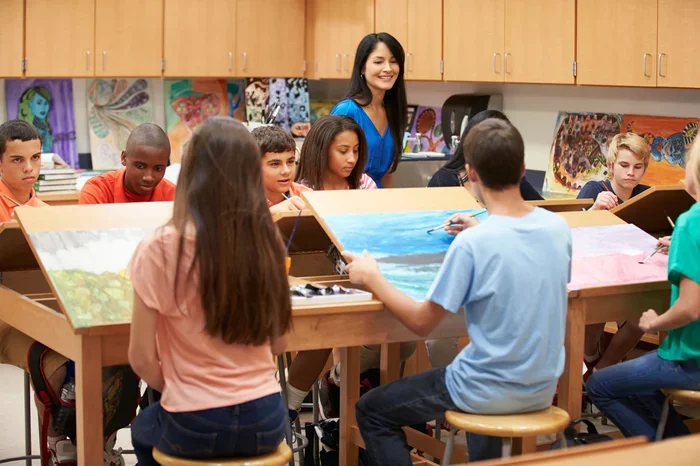
Art education is the teaching and learning of visual arts, creative expression, and design principles through structured instruction and hands-on practice. It builds critical thinking, emotional intelligence, and cultural awareness while empowering students to explore their imagination. Whether in schools or community programs, art education unlocks skills that benefit every area of life.
Key Takeaways
- Art education builds creative thinking: It teaches students to approach problems from new angles and develop original solutions.
- It supports academic growth: Studies show that creative learning improves performance in reading, math, and science.
- Emotional development is a core benefit: Art helps students express feelings, build confidence, and develop empathy.
- It is not just for artists: The skills gained through art education apply to careers in tech, business, healthcare, and more.
- Multiple formats exist: From traditional classrooms to online courses, there are many ways to engage with creative learning.
- Early exposure matters: Starting arts instruction at a young age sets a strong foundation for lifelong creative growth.
📑 Table of Contents
What Is Art Education?
Art education is a broad field that covers the teaching and learning of visual arts, creative expression, and design principles. It includes everything from drawing and painting to sculpture, digital design, and mixed media. At its core, art education gives people the tools to create, interpret, and appreciate visual work.
Unlike many subjects that focus on a single right answer, creative learning encourages open-ended thinking. Students explore ideas, experiment with materials, and learn to trust their own vision. This process builds skills that go far beyond the studio or classroom.
Art instruction can happen anywhere. It takes place in school classrooms, community centers, online platforms, and private studios. What matters most is that learners get hands-on experience and guided feedback. When done well, arts programs spark curiosity and build confidence in every participant.
Many people wonder if creative education is just about making pretty pictures. The truth is much deeper. Art education develops the whole learner. It strengthens problem-solving abilities, communication skills, and emotional intelligence. It also fosters cultural awareness by exposing students to diverse artistic traditions and perspectives.
Why Art Education Matters
Creative learning matters because it prepares people for a world that values innovation. In today’s economy, employers look for people who can think outside the box. The skills developed through arts instruction are exactly those skills. They include adaptability, visual literacy, and the ability to communicate ideas in new ways.
Furthermore, creative education levels the playing field. Every student, regardless of background, can find a voice through artistic expression. This makes arts programs one of the most inclusive and powerful tools in education.
The Core Components of Art Education
A well-rounded arts curriculum covers several key areas. Each one plays a unique role in building a student’s creative and intellectual foundation.
Visual Arts Fundamentals
Visual arts fundamentals include drawing, painting, printmaking, and photography. Students learn about line, shape, color, texture, and space. These basics give learners a shared language to talk about and create art. Think of it like learning the grammar of a language before writing essays.
In a strong arts program, students also study design principles. These include balance, contrast, rhythm, and unity. Understanding these concepts helps students make intentional choices in their work. It also trains their eye to notice detail in the world around them.
Art History and Cultural Context
No art education program is complete without art history. Students learn about artists and movements from different cultures and time periods. They study how social, political, and religious forces shaped creative work throughout history.
This study builds cultural awareness and empathy. When a student learns about African mask-making traditions or Japanese ukiyo-e prints, they gain a deeper understanding of human experience. This kind of learning connects directly to similes for education and metaphors for education, where comparisons help students grasp complex ideas more easily.
Critique and Art Appreciation
Learning to talk about art is just as important as making it. Critique sessions teach students to observe carefully, describe what they see, and offer thoughtful feedback. This process builds communication skills and encourages respectful dialogue.
Art appreciation also teaches students to see the world differently. They learn to notice beauty in everyday places. They understand that art can challenge assumptions and start conversations. This deeper engagement with visual culture makes students more thoughtful and informed citizens.
The Benefits of Art Education
The advantages of art education go well beyond learning to draw or paint. Research consistently shows that creative learning supports growth in many areas of life.
Cognitive and Academic Benefits
Studies have shown that students involved in arts instruction perform better in other academic areas. Creative learning strengthens the brain’s ability to think critically and solve complex problems. When students analyze a painting or plan a sculpture, they use the same reasoning skills needed in math and science.
Here are some specific cognitive benefits:
- Improved memory and attention: Creating art requires focus and recall, which strengthens neural pathways.
- Stronger spatial reasoning: Understanding composition and perspective builds skills used in engineering and architecture.
- Better pattern recognition: Art training helps the brain identify patterns, which aids in reading and data analysis.
- Enhanced problem-solving: Art has no single correct answer, so students learn to explore multiple solutions.
Emotional and Social Benefits
One of the most powerful aspects of arts programs is their impact on emotional well-being. Art gives students a safe space to express feelings they might not have words for. This emotional outlet reduces stress and builds resilience.
Social benefits are equally important. Group art projects teach collaboration, patience, and respect for different viewpoints. Students learn that everyone sees the world differently, and that is a strength, not a weakness. This kind of growth mirrors what happens when students explore similes about art or study metaphors about art, where comparing ideas helps them see multiple perspectives.
Career and Life Skills
The skills gained through art education are highly valued in the workplace. Employers increasingly seek candidates with creative thinking, visual communication, and design skills. These abilities are essential in fields like marketing, technology, architecture, film, and user experience design.
Beyond careers, creative learning teaches life skills. Students learn persistence when a project doesn’t go as planned. They develop adaptability when working with new materials or unexpected challenges. They build confidence by sharing their work and receiving constructive feedback. These are skills that serve people in every area of life.
Types of Art Education Programs
Not all arts instruction looks the same. Different programs serve different needs, ages, and goals. Here is a look at the most common types.
School-Based Art Programs
Most students first encounter art education in school. These programs are typically part of the standard curriculum and cover a range of media and techniques. School-based arts programs vary widely in quality and resources, but even basic programs offer valuable benefits.
Effective school programs integrate art with other subjects. For example, a history lesson on ancient Egypt might include a project where students create hieroglyphic-style artwork. This kind of arts integration makes learning more engaging and memorable for all students.
Community and After-School Programs
Community art programs fill an important gap. They offer creative learning opportunities outside of school hours and often serve students who might not otherwise have access. These programs can be run by nonprofits, libraries, or local organizations.
After-school arts programs are especially valuable for teens. They provide a positive, supervised environment where young people can explore their identity through creative expression. Many community programs also connect students with working artists, giving them real-world insight and inspiration.
Online and Digital Art Courses
The rise of digital platforms has expanded access to creative education dramatically. Students can now learn drawing, graphic design, and animation from anywhere in the world. Online courses offer flexibility and often feature professional instructors.
However, online learning has its limitations. It cannot fully replace the hands-on experience of working with physical materials or the social benefits of in-person critique sessions. The best approach often combines digital tools with traditional studio practice.
Specialized Art Schools and Workshops
For students serious about pursuing art as a career, specialized schools offer intensive training. These institutions focus deeply on specific disciplines like fine arts, illustration, or industrial design. Workshops also provide short-term, focused learning experiences for all skill levels.
These programs are demanding but incredibly rewarding. Students build technical skill, develop a personal style, and create portfolios that help them advance in their careers.
Common Misconceptions About Art Education
Despite its proven benefits, many myths still surround creative education. Let’s clear up some of the most common ones.
Misconception 1: Art Education Is Only for Talented Students
Many people believe you need natural talent to benefit from arts instruction. This is simply not true. Like any skill, creativity grows with practice and guidance. A good program meets students where they are and helps them improve, regardless of their starting point.
In fact, some of the most successful creative professionals were not child prodigies. They developed their abilities through dedication and quality instruction. The same is true for anyone willing to learn.
Misconception 2: Art Education Is Not Practical
Some people dismiss creative learning as impractical or a waste of time. This view ignores the reality of today’s economy. Creative skills are in high demand across industries. Companies need people who can design products, create compelling content, and solve problems in innovative ways.
Arts programs also teach discipline, time management, and attention to detail. These are practical skills that transfer directly to any career path. A well-rounded education must include creative learning to prepare students for the modern workforce.
Misconception 3: Art Education Only Involves Drawing
Drawing is just one part of a much larger field. Arts instruction includes sculpture, ceramics, photography, printmaking, digital design, film, animation, and more. Students can find the medium that resonates with them and build skills in that area.
This diversity is one of the greatest strengths of art education. It allows every student to find their own creative voice and express themselves in ways that feel authentic and meaningful.
How to Get the Most Out of Art Education
Whether you are a student, parent, or educator, there are steps you can take to maximize the benefits of creative learning. Here are some practical tips.
For Students
- Experiment with different media: Try painting, clay, digital tools, and collage. You might discover a passion you never expected.
- Ask questions during critique: Learning to give and receive feedback is a skill that takes practice.
- Visit museums and galleries: Seeing original artwork up close is a powerful way to deepen your understanding and appreciation.
- Practice regularly: Like any skill, creativity improves with consistent effort. Set aside time each week to create.
For Parents
- Provide art supplies at home: Simple materials like paper, crayons, and clay can spark hours of creative exploration.
- Celebrate the process, not just the product: Ask your child what they enjoyed about creating, not just what the final piece looks like.
- Expose them to diverse art: Visit exhibits, watch documentaries, and explore art from different cultures together.
- Encourage free play with art: Unstructured creative time is just as valuable as structured lessons. Let your child explore without rules.
For Educators
- Integrate art across the curriculum: Use visual projects to reinforce lessons in history, science, and literature.
- Create a safe space for expression: Students need to feel comfortable taking creative risks without fear of judgment.
- Teach art vocabulary explicitly: Help students build the language to describe and analyze visual work with confidence.
- Connect students with working artists: Guest speakers and field trips bring the real world of creative careers into the classroom.
Quick Tips for Boosting Creative Learning
Want to make the most of every creative learning opportunity? Keep these quick tips in mind.
- Keep a sketchbook: Drawing every day, even for just ten minutes, builds skill and confidence faster than almost anything else.
- Study artists you admire: Analyze their techniques and try to understand their choices. This is one of the fastest ways to grow.
- Embrace mistakes: Some of the best creative breakthroughs come from unexpected errors. Learn to see mistakes as opportunities.
- Join a community: Sharing your work with others provides motivation, feedback, and fresh ideas.
- Stay curious: Ask questions about everything. The more you observe the world, the more material you have for your art.
Expert Insights on Art Education
Educators and researchers consistently highlight the transformative power of creative learning. Dr. Elliot Eisner, a leading scholar in arts education, once said that the arts teach children to make good judgments about qualitative relationships. Unlike many subjects where rules dominate, creative learning reminds us that there are multiple solutions and multiple paths to understanding.
Research from the Arts Education Partnership shows that students with access to high-quality arts instruction score higher on standardized tests, attend school more regularly, and report greater engagement with learning. These findings make a strong case for expanding arts programs in schools and communities.
Experts also emphasize that creative education supports social-emotional development. Through artistic work, students build self-awareness, manage emotions, and develop empathy for others. These are skills that are increasingly recognized as essential for success in school and life.
Many educators also point out that arts instruction helps students develop a growth mindset. When a painting doesn’t turn out as planned, students learn to persevere, adapt, and try again. This resilience translates directly into academic and personal success.
Ultimately, the goal of art education is not to create professional artists. It is to develop creative, confident, and thoughtful individuals who can navigate an increasingly complex world with imagination and insight.
Conclusion
Art education is one of the most valuable and transformative forms of learning available. It builds cognitive skills, emotional intelligence, and cultural awareness while fostering creativity and self-expression. From school classrooms to community programs and online courses, arts instruction opens doors for learners of every age and background.
The benefits of creative learning extend far beyond the art room. Students who engage in arts programs develop stronger critical thinking, better communication skills, and greater resilience. These qualities serve them in every area of life, from academics to careers to personal relationships.
Whether you are a student exploring your first drawing, a parent looking for enriching activities, or an educator building a curriculum, art education offers something powerful for everyone. The key is to stay curious, practice regularly, and embrace the creative process with an open mind.
Start today. Pick up a pencil, visit a gallery, or enroll in a class. You might be surprised at how much this journey changes the way you see the world and your place in it.
Frequently Asked Questions
What exactly does art education include?
Art education covers a wide range of creative disciplines, including drawing, painting, sculpture, photography, digital design, printmaking, and more. It also includes art history, visual culture, and critique skills. A well-rounded program combines hands-on making with theoretical understanding.
At what age should children start art education?
Children can begin engaging with creative activities as early as toddlerhood. Formal art education programs typically start in elementary school, but informal exploration at home is valuable from a very young age. Early exposure helps develop fine motor skills, imagination, and confidence.
Does art education really improve academic performance?
Yes, research supports this claim. Studies from organizations like the Arts Education Partnership show that students involved in arts instruction tend to perform better in reading, math, and science. Creative learning strengthens critical thinking and problem-solving skills that apply across all subjects.
Can adults benefit from art education?
Absolutely. Adults can benefit from creative learning at any stage of life. Whether through community classes, online courses, or personal practice, arts instruction helps adults reduce stress, develop new skills, and explore creative expression. It is never too late to start.
Is art education only for students who want to become professional artists?
No, this is a common myth. Art education benefits everyone, regardless of career goals. The creative thinking, communication skills, and visual literacy developed through arts programs apply to fields like technology, business, healthcare, education, and many more.
How can schools strengthen their art education programs?
Schools can strengthen arts programs by hiring qualified art teachers, integrating art across the curriculum, providing adequate supplies and space, and partnering with local artists and organizations. Offering diverse media and connecting students with real-world creative experiences also makes a significant difference.
=== META TITLE ===
Understanding What Is Art Education and Its Benefits
=== URL SLUG ===
understanding-art-education-benefits
=== SEO TITLE ===
Understanding What Is Art Education and Its Benefits


