
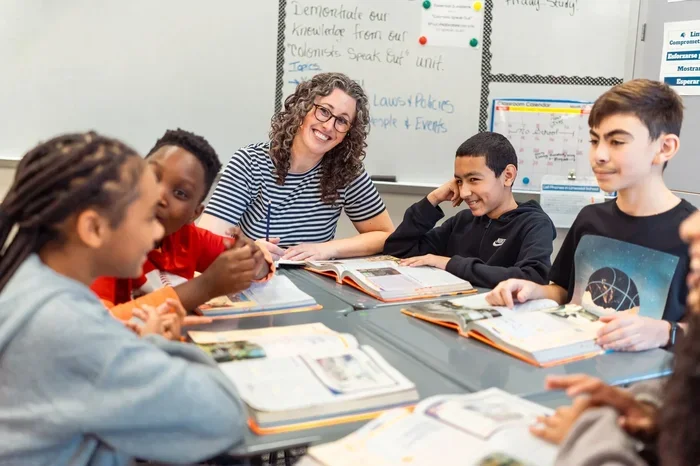
Flexible grouping in education is a dynamic teaching strategy where students are organized into small groups based on their current learning needs, skills, and interests. Unlike traditional ability grouping, these groups change frequently and adapt as students grow. This approach boosts student engagement, supports differentiated instruction, and helps every learner reach their full potential.
Flexible grouping in education has become one of the most talked-about strategies in modern classrooms. But what exactly does it mean, and why are so many teachers jumping on board? If you have ever wondered how to better reach every learner in your room, this is for you.
Flexible grouping is a teaching approach where students are organized into small, purposeful groups based on their current learning needs. These groups are not fixed. They shift and change as students grow, learn, and master new skills. The goal is simple: match the right students with the right instruction at the right time.
This method stands in sharp contrast to the old-style ability grouping that many of us experienced as students. You know the drill — you were sorted into high, middle, or low groups and rarely moved. Flexible grouping breaks that mold. It gives teachers a powerful tool to personalize learning without labels.
In this article, we will break down everything you need to know about flexible grouping. We will explore how it works, why it is effective, and how you can start using it in your own classroom. Whether you are a new teacher or a seasoned pro, there is something here for you.
Key Takeaways
- Flexible grouping is a responsive teaching method: Groups shift based on real-time student data and learning needs.
- It replaces rigid ability tracking: Students are not permanently labeled by skill level.
- Multiple grouping types exist: Including homogeneous, heterogeneous, interest-based, and skill-based groups.
- Research supports its effectiveness: Flexible grouping improves student outcomes and classroom dynamics.
- Implementation is straightforward: Teachers can start with simple strategies and build from there.
- Common mistakes are avoidable: With planning and consistency, flexible grouping becomes second nature.
📑 Table of Contents
What Is Flexible Grouping in Education?
At its core, flexible grouping is a way of organizing students for instruction based on their current performance, interests, and learning goals. The key word here is flexible. Groups are temporary and responsive. They form around specific needs and dissolve once those needs are met.
Think of it this way. A teacher might group students by reading level for a literacy lesson. But for math, those same students might be grouped by a completely different skill set. The next week, the groups might look entirely different. That is the beauty of this approach.
Flexible grouping is not tracking. Tracking puts students into permanent categories. Flexible grouping keeps the door open. Students move in and out of groups based on data, observation, and ongoing assessment. This means no student is ever stuck in a label.
Many educators also pair flexible grouping with differentiated instruction. Together, these two strategies create a classroom where every student gets what they need. Teachers can adjust content, process, and product for each group without losing momentum.
Some teachers also use similes for education to help students understand grouping concepts in a fun and relatable way. Similarly, metaphors for education and idioms for education can make abstract ideas feel more concrete for young learners. These language tools support the overall learning environment that flexible grouping creates.
Why Does It Matter?
Flexible grouping matters because it respects the fact that students learn at different paces and in different ways. A one-size-fits-all lesson simply does not work for every child. By using student grouping strategies, teachers can target instruction more precisely.
When students are grouped based on current needs, they are more likely to feel challenged but not overwhelmed. This balance is critical for academic performance and student achievement. Research consistently shows that students in responsive, flexible classrooms make stronger progress over time.
How Flexible Grouping Differs from Traditional Grouping
To really understand flexible grouping, it helps to see how it compares to older methods. Let us look at the key differences.
Traditional Ability Grouping
Traditional ability grouping, sometimes called homogeneous grouping, places students of similar skill levels together. This was common in the 20th century and is still used in some schools today. The problem? These groups rarely change.
Students in the “low” group often stay there for years. This can limit their growth and damage their confidence. Teachers may also lower expectations for these groups, which creates a self-fulfilling cycle of underperformance.
Flexible Grouping in Action
With flexible grouping, the structure is fluid. A student who struggles with fractions might join a support group for one week. Once they master the concept, they move to a new group. Meanwhile, a student who excelled last week might need extra help with a new topic this week.
This constant movement sends a powerful message: learning is growth, not a fixed state. It also allows teachers to use formative assessment data to make informed grouping decisions every single day.
Key Differences at a Glance
| Feature | Traditional Grouping | Flexible Grouping |
|---|---|---|
| Group Duration | Long-term, often permanent | Short-term, changes frequently |
| Basis for Grouping | Fixed ability labels | Current skill data and needs |
| Student Movement | Rarely changes | Regular and data-driven |
| Impact on Mindset | Can create fixed labels | Promotes a growth mindset |
| Teacher Role | Delivers one-size-fits-all | Personalizes instruction by group |
Types of Flexible Grouping Strategies
There is no single way to use flexible grouping. Teachers have several options, and the best approach often combines multiple types. Let us explore the most common strategies.
Homogeneous Groups
In homogeneous grouping, students of similar skill levels work together. This is useful for targeted skill instruction. For example, a group of students who all need help with reading comprehension can work on specific strategies together.
Homogeneous groups are especially helpful for small group instruction. Teachers can focus on a narrow skill gap and provide intensive support. The group is temporary, and students move out once they show improvement.
Heterogeneous Groups
Heterogeneous grouping mixes students of different skill levels together. This approach encourages collaborative learning and peer support. Stronger students can model thinking, while struggling students get exposure to different approaches.
Heterogeneous groups work well for projects, discussions, and creative tasks. They build classroom community and help students learn from one another. The diversity of perspectives often leads to deeper understanding.
Interest-Based Groups
Sometimes, grouping by student interests is the best choice. Students who are passionate about a topic engage more deeply and work harder. Interest-based groups are perfect for research projects, book clubs, and enrichment activities.
Teachers can survey students about their interests at the start of a unit. Then, they can form groups around those topics. This approach increases student engagement and makes learning feel more relevant.
Skill-Based Groups
Skill-based grouping organizes students around a specific skill they need to develop. A teacher might form a group for students who need to practice multiplication fluency. Another group might focus on writing thesis statements.
These groups are short-lived and highly targeted. They are driven by formative assessment data, such as quiz results or observation notes. Once the skill is mastered, the group dissolves and new ones form.
Benefits of Flexible Grouping for Students and Teachers
The advantages of flexible grouping are wide-ranging. Both students and teachers benefit in meaningful ways. Here is why this strategy has gained so much traction.
1. It Meets Students Where They Are
Every classroom has students at different levels. Flexible grouping lets teachers address that reality head-on. Instead of teaching to the middle, instruction is tailored to each group’s needs. This means struggling students get the support they need, and advanced students stay challenged.
2. It Builds a Growth Mindset
When students see that groups change, they understand that ability is not fixed. They learn that everyone is on a journey. This growth mindset is one of the most powerful outcomes of flexible grouping.
Students stop seeing themselves as “smart” or “not smart.” Instead, they focus on progress. They celebrate growth, and they support each other along the way.
3. It Increases Engagement
Students are more engaged when instruction is at their level. Small group instruction keeps students active and involved. They have more opportunities to speak, ask questions, and practice skills. This active participation leads to better learning outcomes and higher classroom organization.
4. It Supports Differentiated Instruction
Differentiated instruction is the practice of adjusting teaching methods to meet diverse learner needs. Flexible grouping is the vehicle that makes differentiation possible. Without groups, it is nearly impossible to reach every student in a whole-class lesson.
With flexible groups, teachers can adjust content difficulty, pacing, and even the learning styles they address. Visual learners might get graphic organizers. Auditory learners might benefit from discussion-based tasks. The options are endless.
5. It Strengthens Teacher-Student Relationships
Small group work gives teachers more face time with each student. In a group of four to six, it is easier to notice confusion, ask probing questions, and provide immediate feedback. These interactions build trust and cooperative learning skills.
How to Implement Flexible Grouping in Your Classroom
Ready to try flexible grouping? Here is a practical roadmap to get started. You do not need to overhaul your entire teaching practice overnight. Start small and build from there.
Step 1: Gather Data
Begin by collecting formative assessment data. Use quizzes, exit tickets, observations, and reading records. This data will tell you where each student stands on a given skill.
You do not need a ton of data to get started. Even a quick five-minute check-in can reveal who needs support and who is ready to move ahead.
Step 2: Form Groups with Purpose
Use your data to create groups that address specific learning needs. Keep groups small — three to six students is ideal. Make sure the groups are temporary and have a clear purpose.
Label groups by skill or need, not by level. Instead of calling a group “the low group,” try “the fraction explorers” or “the story builders.” This keeps the focus on learning, not labels.
Step 3: Plan Group-Specific Instruction
Design instruction that fits each group’s needs. One group might work on a mini-lesson with you. Another might practice independently. A third might collaborate on a hands-on activity.
Rotate groups through different stations or activities. This keeps things fresh and ensures every group gets direct teacher attention.
Step 4: Regroup Frequently
The magic of flexible grouping is in the movement. Regroup students every one to two weeks based on updated data. As students master skills, move them to new groups that challenge them at the next level.
Be transparent with students about why groups change. Explain that learning is a journey and that everyone moves at their own pace. This normalizes the process and reduces anxiety.
Quick Tips for Success
- Use a grouping chart: Keep a simple spreadsheet or chart to track which students are in which groups and why.
- Keep it flexible: Never let a group become a permanent label.
- Communicate with students: Help them understand the purpose of grouping.
- Involve families: Share the benefits of flexible grouping with parents.
- Reflect and adjust: Check in with yourself regularly. What is working? What needs to change?
Common Mistakes to Avoid
Even experienced teachers can stumble with flexible grouping. Here are the most common pitfalls and how to avoid them.
- Making groups too large: Groups should be small enough for targeted instruction. More than six students often means some voices get lost.
- Grouping too infrequently: If groups stay the same for months, they become tracking in disguise. Change groups regularly.
- Ignoring student voice: Let students have some input. Interest surveys and self-assessments can inform better grouping.
- Over-relying on one grouping type: Mix homogeneous and heterogeneous groups for the best results.
- Skipping the data: Never form groups on a gut feeling alone. Let assessment data guide your decisions.
Expert Insights on Flexible Grouping
Many education researchers and experienced teachers champion flexible grouping as a cornerstone of effective instruction. The approach aligns with what we know about how the brain learns — that cognitive development varies across subjects and over time.
Experts emphasize that data-driven grouping is essential. Without ongoing assessment, groups become static and lose their purpose. The best teachers use a mix of formal and informal data to keep groups responsive and relevant.
Another key insight is that cooperative learning skills must be explicitly taught. Students do not automatically know how to work in groups. Teachers should model group behaviors, practice routines, and provide feedback on collaboration skills.
Ultimately, flexible grouping works because it honors the individuality of each learner. It rejects the idea that all students in the same classroom need the same instruction at the same time. Instead, it creates a responsive, dynamic environment where growth is the goal.
Conclusion
Flexible grouping in education is more than a teaching strategy. It is a philosophy that believes every student can grow when given the right support at the right time. By organizing students into dynamic, purposeful groups, teachers create classrooms where differentiation is not just possible — it is built into the daily routine.
The benefits are clear. Students feel more engaged, teachers can target instruction more effectively, and the classroom becomes a place where everyone belongs. Whether you are just starting out or looking to refine your practice, flexible grouping offers a path forward.
Start small. Gather your data. Form your first groups. And watch as your students take ownership of their learning. The flexibility you bring to your classroom can transform outcomes in ways you never expected.
Flexible grouping is not about perfection. It is about progress. And that is something every teacher and every student can get behind.


