
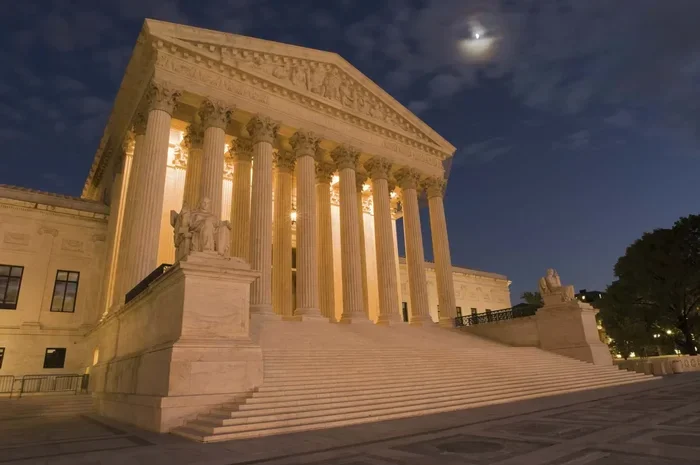
The Brown v Board of Education case took place in Topeka, Kansas, and was decided by the U.S. Supreme Court in 1954. The landmark ruling declared that racial segregation in public schools was unconstitutional, overturning the “separate but equal” doctrine. This case became one of the most important moments in the civil rights movement and changed American education forever.
Key Takeaways
- The case originated in Topeka, Kansas, where Oliver Brown and other parents challenged school segregation.
- The Supreme Court ruled unanimously that separate educational facilities are inherently unequal.
- The decision overturned Plessy v Ferguson, a decades-old precedent that allowed segregation.
- Thurgood Marshall and the NAACP led the legal battle that changed history.
- The ruling sparked the broader civil rights movement and paved the way for desegregation across America.
- The case was actually a combination of five lawsuits from different states, all consolidated into one.
- Brown v Board of Education remains a symbol of justice and the fight for equal rights in education.
📑 Table of Contents
- Where Did the Brown v Board of Education Take Place
- The Origins of the Case in Topeka, Kansas
- The Supreme Court Decision
- The Legal Background: Separate but Equal
- The Role of the NAACP and Thurgood Marshall
- The Aftermath and Impact
- Key Figures in the Brown v Board of Education Case
- Why This Case Still Matters Today
- Conclusion
Where Did the Brown v Board of Education Take Place
The Brown v Board of Education case took place in Topeka, Kansas. But the story goes far deeper than one city. This landmark legal battle changed the course of American history. It challenged the idea that children should be separated by race in public schools. The decision came from the U.S. Supreme Court in Washington, D.C., but the roots of the case grew in the classrooms of Kansas.
If you want to understand where did the Brown v Board of Education take place, you need to look at both the local origins and the national impact. The case started with a simple question: why should Black children be forced to attend separate schools? That question led to one of the most important rulings in American law. Let us walk through the full story together.
The Origins of the Case in Topeka, Kansas
Topeka, Kansas, was a typical American city in the 1950s. But like many cities across the country, it practiced racial segregation. Black children and white children attended different schools. The law allowed this separation, and many communities followed it without question. But in Topeka, a group of parents decided that was not right.
Oliver Brown was one of those parents. His daughter, Linda Brown, had to walk a long way to get to her segregated school. There was a white school much closer to their home. But because of the color of her skin, Linda could not attend it. Oliver Brown joined other parents who felt the same way. Together, they decided to take a stand.
Why Topeka Was Chosen
You might wonder why Topeka became the center of this fight. The answer is simple. The NAACP (National Association for the Advancement of Colored People) chose Topeka carefully. The city had a relatively small Black community, which made it a strategic choice. The NAACP wanted to show that segregation was wrong everywhere, not just in the Deep South.
The parents in Topeka filed a lawsuit in 1951. They argued that separate schools were not equal. Their case was heard in a federal district court. The court ruled against them, citing the “separate but equal” doctrine. But the parents did not give up. They appealed the decision to the U.S. Supreme Court.
The Supreme Court Decision
The case reached the U.S. Supreme Court in 1952. But it was not just the Brown family’s case. The Court combined five different lawsuits from across the country. These cases all dealt with school segregation. They came from Kansas, South Carolina, Virginia, Delaware, and Washington, D.C. Together, they formed the Brown v Board of Education case.
The Supreme Court heard arguments from both sides. Thurgood Marshall led the legal team for the plaintiffs. He was a brilliant lawyer and a champion for civil rights. He argued that segregation caused real harm to Black children. It made them feel inferior, he said. The Court agreed.
A Historic Ruling
On May 17, 1954, the Supreme Court issued its decision. It was unanimous. Every single Justice voted the same way. The Court declared that separate educational facilities are inherently unequal. This ruling overturned the “separate but equal” doctrine from the 1896 case Plessy v Ferguson.
The decision was a major victory for the civil rights movement. It sent a clear message: segregation in public schools was unconstitutional. The Court ordered states to desegregate their schools “with all deliberate speed.”
When you ask where did the Brown v Board of Education take place, the legal answer is the Supreme Court in Washington, D.C. But the emotional and social answer is Topeka, Kansas, and every community where segregation once stood.
The Legal Background: Separate but Equal
To fully understand the Brown case, you need to know about the legal history behind it. For decades, the “separate but equal” doctrine governed race relations in America. This idea came from the 1896 Supreme Court case Plessy v Ferguson. That ruling said that as long as facilities for Black people and white people were equal, separation was legal.
In reality, separate was never equal. Black schools received less funding. They had older textbooks and fewer resources. The buildings were often in poor condition. This inequality was the heart of the Brown case. The parents in Topeka proved that separation itself was harmful, no matter what the facilities looked like.
The idea of educational inequality was at the center of everything. The Court recognized that education is fundamental to opportunity in life. Denying equal access to education based on race was a violation of the 14th Amendment. This amendment guarantees equal protection under the law for all citizens.
The Role of the NAACP and Thurgood Marshall
No story about Brown v Board of Education is complete without talking about the NAACP. This organization had been fighting for civil rights for decades. They believed that the court system was the best path to change. And they were right.
Thurgood Marshall was the lead attorney for the plaintiffs. He was the head of the NAACP Legal Defense Fund. Marshall was a masterful strategist. He built his case carefully, gathering evidence and testimony from experts in psychology and education. He showed that segregation caused psychological damage to Black children. This evidence was powerful and persuasive.
Marshall later became the first Black Supreme Court Justice in 1967. His work on the Brown case helped pave the way for that historic appointment. He is a true hero of the civil rights movement.
How the Case Was Built
The legal team behind the Brown case did something clever. They gathered 13 parents from Topeka who were willing to testify. Each parent tried to enroll their child in a white school nearby. Each was refused. These stories of refusal became the foundation of the lawsuit.
The case was originally called Oliver Brown et al. v. the Board of Education of Topeka. The name “Brown” comes from Oliver Brown, who was chosen as the lead plaintiff. His name appeared first alphabetically among the parents. This was likely a coincidence, but it became one of the most famous names in American law.
The Aftermath and Impact
The ruling changed America, but not overnight. Many states resisted the Court’s decision. Some Southern states passed laws to avoid desegregation. The fight for racial equality in schools continued for years after the ruling. But the foundation had been laid.
The Brown decision gave momentum to the broader civil rights movement. It showed that the legal system could be used to challenge injustice. In the years that followed, other landmark laws were passed, including the Civil Rights Act of 1964 and the Voting Rights Act of 1965.
Desegregation Efforts Across the Country
Implementing the ruling was a long and difficult process. Some school districts desegregated quickly. Others fought the decision for years. The term “desegregation” became a common part of American vocabulary. Communities across the country had to confront their own practices of racial separation.
Today, the legacy of Brown v Board of Education is still felt in schools and communities. The ruling set a precedent that equal access to education is a fundamental right. It continues to inspire activists and educators who fight for fairness in schools.
When we look at where did the Brown v Board of Education take place, we see a story that spans from a single city in Kansas to the highest court in the land. It is a story of courage, determination, and the enduring belief that all children deserve equal opportunities.
The case also connects to broader themes in American life. The fight for educational equity is ongoing. Issues of racial segregation in schools still exist today, though in different forms. The Brown decision reminds us that progress is possible when people stand up for what is right.
Learning about this case can also help us understand the language we use to talk about education and justice. For example, many expressions and similes for education draw on the ideas of fairness and opportunity that Brown v Board of Education championed. Similarly, idioms for education often reflect the values of hard work and equal access that this case helped to advance. And when we describe the journey of civil rights, we often use similes about the past to draw comparisons and make the lessons of history feel relevant today.
Key Figures in the Brown v Board of Education Case
Several people played important roles in this landmark case. Let us take a closer look at who they were and what they did.
- Oliver Brown: The lead plaintiff and father of Linda Brown. His courage started it all.
- Linda Brown: The young girl who had to walk far to attend a segregated school. Her story touched the nation.
- Thurgood Marshall: The lead attorney who argued the case before the Supreme Court. He later became a Justice.
- Earl Warren: The Chief Justice who wrote the unanimous opinion for the Court.
- The 13 Topeka Parents: Each one agreed to testify about being denied enrollment in a white school.
These individuals came from different backgrounds, but they shared a common goal. They wanted a better future for their children. Their efforts led to one of the most important decisions in American history.
Why This Case Still Matters Today
The Brown v Board of Education decision was made over 70 years ago. But its relevance has not faded. Schools in many parts of the country still face issues of inequality and segregation. The ruling established a principle that education must be accessible to all, regardless of race.
When we study this case, we learn important lessons about justice, perseverance, and the power of the legal system. The story of Brown v Board of Education reminds us that change is possible. It takes courage, it takes community, and it takes people who are willing to fight for what is right.
If you are studying American history or civil rights, understanding this case is essential. It is not just about where a court case took place. It is about the values it defended and the future it helped to shape.
Conclusion
The Brown v Board of Education case took place in Topeka, Kansas, and was decided by the U.S. Supreme Court in Washington, D.C. It began with a simple belief: that every child deserves equal access to education. The parents of Topeka stood up and said that segregation was wrong. Their courage led to a ruling that changed America forever.
The case overturned the “separate but equal” doctrine and declared that separate schools are inherently unequal. It became a cornerstone of the civil rights movement. It inspired generations of activists and leaders. And it continues to remind us that the fight for racial equality in education is ongoing.
Where did the Brown v Board of Education take place? It took place in classrooms, courtrooms, and communities across America. It took place in the hearts and minds of people who believed in a more just and equal society. And its impact is still felt today, every time a child walks through the doors of a school that welcomes everyone.
Frequently Asked Questions
What city did the Brown v Board of Education case start in?
The case started in Topeka, Kansas. Oliver Brown and other parents filed the lawsuit there in 1951 after their children were denied enrollment in white schools nearby. The case eventually made its way to the U.S. Supreme Court.
Where was the Brown v Board of Education decision announced?
The decision was announced at the U.S. Supreme Court building in Washington, D.C. On May 17, 1954, the Court ruled unanimously that racial segregation in public schools was unconstitutional.
Why was the case called Brown v Board of Education?
The case was named after Oliver Brown, who was chosen as the lead plaintiff because his name came first alphabetically. “Board of Education” refers to the Topeka school board that was being sued over segregation policies.
How many states were involved in the Brown v Board of Education case?
The Supreme Court combined five lawsuits from different states and districts. These came from Kansas, South Carolina, Virginia, Delaware, and Washington, D.C. All of them challenged school segregation under the same legal argument.
What was the ruling in Brown v Board of Education?
The Court ruled that separate educational facilities are inherently unequal. This decision overturned the “separate but equal” doctrine from Plessy v Ferguson. It declared that racial segregation in public schools violated the 14th Amendment.
How did the Brown v Board of Education case impact education in America?
The ruling led to the gradual desegregation of public schools across the country. It became a catalyst for the broader civil rights movement. The decision established that equal access to education is a fundamental right for all children, regardless of race.


