
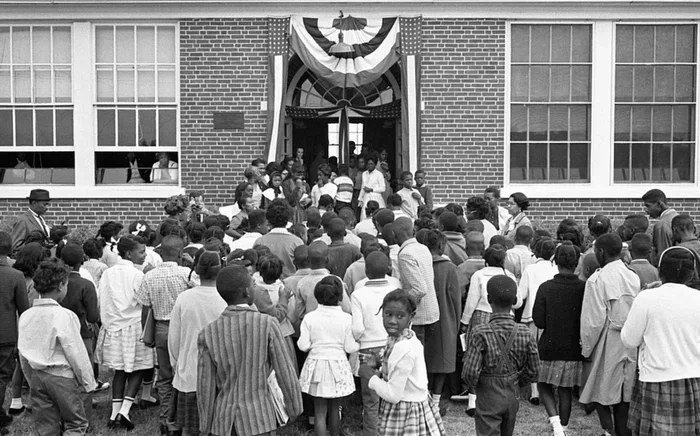
The Brown v Board of Education decision fundamentally transformed American society by ending legal racial segregation in public schools. This landmark 1954 Supreme Court ruling sparked the modern civil rights movement, challenged deeply rooted systems of discrimination, and paved the way for broader equality across the United States. The case’s social ripple effects extended far beyond classrooms, influencing housing, politics, and the fight for racial justice nationwide.
Key Takeaways
- Ended Legal Segregation: The ruling declared that “separate but equal” was inherently unequal, dismantling the legal foundation of racial segregation in American schools.
- Catalyzed the Civil Rights Movement: The decision energized activists and gave momentum to the broader struggle for racial equality across all aspects of American life.
- Reshaped American Education: Schools across the nation began the long process of desegregation, though resistance and delays meant full integration took decades.
- Influenced Other Areas of Society: The ruling’s logic extended beyond education to impact housing, employment, and public accommodations.
- Faced Significant Resistance: Many communities, especially in the South, pushed back against integration through closures, boycotts, and defiance.
- Inspired Future Legal Battles: The case set a powerful legal precedent that would be used to challenge discrimination in many other areas.
📑 Table of Contents
The Decision That Changed America Forever
Few court cases have shaped a nation quite like Brown v Board of Education. On May 17, 1954, the United States Supreme Court made a ruling that would shake the foundations of American society. The decision declared that racial segregation in public schools was unconstitutional. It overturned the infamous “separate but equal” doctrine established by Plessy v Ferguson in 1896.
But the ruling was about much more than schools. It was a bold statement about human dignity and equality. The social impact of the Brown v Board of Education decision rippled through every corner of American life. It changed how people thought about race, justice, and their rights as citizens.
The case started in Topeka, Kansas. A man named Oliver Brown wanted his daughter Linda to attend a nearby school instead of traveling miles to a segregated one. His simple wish sparked a legal battle that would reach the highest court in the land. What happened next altered the course of history.
Understanding the social impact of this decision helps us appreciate how far America has come. It also reminds us how much work still lies ahead. The ruling was not just a legal milestone. It was a social revolution in disguise.
The Legal Foundation and What the Ruling Said
The “Separate but Equal” Doctrine
For nearly sixty years, the “separate but equal” doctrine governed race relations in America. This idea said that separating races was fine as long as the facilities were equal. In reality, facilities for Black Americans were almost always inferior. Schools, restaurants, hospitals, and public spaces reflected deep inequality.
The Brown v Board of Education decision changed this completely. Chief Justice Earl Warren wrote the unanimous opinion. He stated that “separate educational facilities are inherently unequal.” This simple but powerful sentence dismantled the legal justification for segregation.
The Court relied on the Equal Protection Clause of the 14th Amendment. They argued that segregation violated the basic rights of all citizens. The ruling sent a clear message: the Constitution protects every person equally, regardless of race.
Why the Case Mattered Beyond Schools
While the case focused on education, its implications went much further. The ruling challenged the entire system of Jim Crow laws. These were state and local laws that enforced racial segregation across the South and parts of the North.
The decision gave hope to millions of Americans who had endured discrimination. It showed that the law could be a tool for justice. The ruling also encouraged other legal challenges to segregation. Civil rights lawyers used the Brown v Board of Education precedent to fight discrimination in housing, jobs, and public spaces.
The Immediate Social Reactions
Joy and Hope in Black Communities
The ruling was met with tremendous joy in Black communities across the country. For the first time, the highest court in the land affirmed what many had always known: segregation was wrong. Churches filled with grateful worshippers. Communities held celebrations and prayer meetings.
Many people saw the decision as a turning point. They believed true equality was finally within reach. The ruling validated years of struggle by civil rights leaders and organizations like the NAACP. It proved that persistent legal action could bring about real change.
Resistance and Backlash
Not everyone welcomed the decision. Many white Americans, especially in the South, reacted with anger and defiance. Some politicians vowed to resist the ruling. States passed laws to prevent integration. The phenomenon known as “massive resistance” swept through Southern states.
Some school districts simply closed their doors rather than integrate. Others created private schools for white students. The backlash showed just how deeply segregation was embedded in American society. The resistance also revealed that a legal ruling alone could not instantly change hearts and minds.
The Role of the Federal Government
President Eisenhower’s response to the ruling was complex. He personally disliked forced integration. However, he also believed in the rule of law. In 1957, he sent federal troops to Little Rock, Arkansas, to enforce integration at Central High School.
This was a dramatic moment in American history. Nine Black students, known as the Little Rock Nine, faced angry mobs to attend school. Their courage captured national attention. The federal government’s intervention showed that the Supreme Court’s ruling carried real weight.
The Long-Term Social Impact
Catalyzing the Civil Rights Movement
The Brown v Board of Education decision became a catalyst for the broader civil rights movement. It gave activists a powerful legal and moral foundation. The ruling proved that the courts could be an effective tool for social change.
In the years following the decision, the movement gained tremendous momentum. The Montgomery Bus Boycott, the March on Washington, and the Civil Rights Act of 1964 all drew inspiration from the Brown ruling. Leaders like Martin Luther King Jr. often referenced the decision in their speeches and writings.
The case also showed the power of strategic litigation. The NAACP Legal Defense Fund, led by Thurgood Marshall, had carefully built the case over years. Their approach became a model for future social justice efforts. The success of Brown v Board of Education demonstrated that legal action, combined with grassroots activism, could drive meaningful change.
Changing the Education System
The impact on American education was profound and complex. In theory, the ruling meant that all children should attend integrated schools. In practice, integration happened slowly and unevenly. Many school districts resisted for years or even decades.
By the 1970s, busing programs were implemented in some cities to achieve racial balance. These programs were controversial and often met with opposition. Parents on all sides had strong feelings about the issue. Despite the challenges, the percentage of Black students attending majority-white schools increased significantly from the 1960s through the 1980s.
However, progress stalled and in some cases reversed. By the 2000s, many schools had become resegregated. Factors like housing patterns, school district boundaries, and policy changes contributed to this trend. The promise of fully integrated education remains unfulfilled in many communities today.
Broader Social and Cultural Effects
The ruling’s influence extended well beyond education. It challenged the idea of white supremacy that had dominated American culture for centuries. The decision helped shift public opinion on race over time.
It also inspired other marginalized groups to fight for their rights. The women’s rights movement, disability rights advocates, and LGBTQ+ activists drew lessons from the Brown v Board of Education strategy. The ruling showed that the Constitution could be a powerful tool for expanding equality.
In popular culture, the decision became a symbol of justice and progress. Books, films, and documentaries have told the story of the case and its aftermath. The legacy of the ruling continues to shape conversations about race and equality in America today.
The Economic Dimension
Desegregation also had economic implications. Better educational opportunities for Black Americans opened doors to better jobs and higher incomes over time. The ruling helped challenge the economic inequality that was deeply tied to racial segregation.
However, the economic benefits of integration were not equally distributed. Many Black communities lost control of their own schools during desegregation. Black teachers and administrators were often fired or demoted. The economic impact of the ruling is still debated by scholars today.
Challenges and Unfinished Business
The Problem of Resegregation
Despite the progress made after Brown v Board of Education, many American schools have become resegregated. Housing patterns, school choice policies, and funding disparities all contribute to this trend. Today, millions of students attend schools that are overwhelmingly segregated by race and income.
This resegregation raises serious concerns about educational equity. Schools serving predominantly Black and Latino students often receive less funding and fewer resources. The achievement gap between racial groups persists, reflecting the enduring legacy of segregation.
Ongoing Debates About Integration
The question of how to achieve integrated schools remains contentious. Some advocate for busing programs, magnet schools, and controlled choice plans. Others argue for focusing on improving quality in all schools regardless of demographics. The debate reflects the complexity of the issue.
Experts suggest that meaningful integration requires addressing deeper systemic issues. Housing segregation, economic inequality, and unequal school funding all play a role. True progress means tackling these root causes, not just surface-level solutions.
The Relevance Today
The social impact of Brown v Board of Education is still being felt today. The ruling established the principle that separate is inherently unequal. This principle applies to many areas beyond education, from healthcare to criminal justice.
Recent movements for racial justice have drawn on the legacy of the Brown decision. Activists continue to fight for equal opportunities and treatment for all Americans. The ruling remains a touchstone in debates about race, rights, and the role of government in promoting equality.
Lessons We Can Learn
The story of Brown v Board of Education offers powerful lessons for today. First, legal victories matter. They can set the stage for broader social change. But laws alone are not enough. Changing deeply held beliefs and systems takes time, effort, and sustained commitment.
Second, progress is not linear. The gains from the Brown decision have been uneven and sometimes reversed. Social change requires constant vigilance and renewed effort. Each generation must work to uphold and expand the principles the ruling established.
Third, individual stories matter. Oliver Brown and other plaintiffs were ordinary people who took extraordinary stands. Their courage reminds us that social change often begins with personal conviction and action.
Finally, the ruling reminds us of the power of education. Schools shape minds, communities, and futures. The fight for equitable education is far from over. It remains one of the most important social justice issues of our time.
The legacy of Brown v Board of Education is both inspiring and sobering. It shows what is possible when we strive for justice. It also reveals how much work remains to be done. The decision changed America, but the promise of true equality has yet to be fully realized.
As we look to the future, the lessons of the Brown ruling remain vital. We must continue to push for integrated, equitable schools and communities. We must remember the courage of those who fought for this landmark decision. And we must recognize that the work of building a truly just society is ongoing.
Conclusion
The social impact of Brown v Board of Education cannot be overstated. This single Supreme Court decision transformed American society in ways both big and small. It ended legal segregation in schools, energized the civil rights movement, and challenged the deep structures of racial inequality.
The ruling’s influence extended into every aspect of American life. It changed education, politics, culture, and the law. It inspired countless individuals and movements to fight for justice and equality. The decision remains one of the most important moments in American history.
Yet the story of Brown v Board of Education is not just a story of the past. It is a story that continues to unfold. The challenges of segregation, inequality, and racial injustice persist in new forms. The ruling’s promise of equal opportunity for all remains a goal we are still working toward.
Understanding the social impact of this decision helps us appreciate how far we have come. It also clarifies how far we still need to go. The Brown ruling was not the end of the journey. It was a vital step on a long road toward true equality and justice for all Americans.
Frequently Asked Questions
What was the main social impact of Brown v Board of Education?
The main social impact was the end of legal racial segregation in public schools. The ruling declared that “separate but equal” was unconstitutional and helped spark the broader civil rights movement. It challenged deeply rooted systems of racial discrimination across American society.
How did Brown v Board of Education affect the civil rights movement?
The decision gave the civil rights movement a powerful legal foundation and moral authority. It proved that the courts could be effective tools for social change. The ruling energized activists and inspired further legal challenges to segregation in housing, employment, and public spaces.
Did Brown v Board of Education immediately end school segregation?
No, the ruling did not immediately end segregation. Many schools, especially in the South, resisted integration for years or decades. The process of desegregation was slow, uneven, and often met with significant opposition and backlash from local communities.
What role did Thurgood Marshall play in Brown v Board of Education?
Thurgood Marshall was the lead attorney for the plaintiffs in the case. He argued that segregation violated the Equal Protection Clause of the 14th Amendment. Marshall later became the first Black Supreme Court Justice, continuing the legacy of the legal fight he helped win.
How has the legacy of Brown v Board of Education been preserved?
The legacy has been preserved through education, memorials, and ongoing legal advocacy. The case is taught in schools across America and has inspired countless books, films, and documentaries. Civil rights organizations continue to reference the ruling in their work for educational equity.
What are the current challenges related to Brown v Board of Education?
Current challenges include school resegregation, funding disparities, and ongoing debates about integration strategies. Many schools today are more segregated than they were in the 1980s. Addressing these issues requires tackling root causes like housing segregation and economic inequality.
=== INTERNAL LINKS ===
For more on how language shapes our understanding of social change, check out our guides on idioms for education and metaphors for change in life. You might also find our similes for education collection helpful for understanding how we describe learning and growth.


