
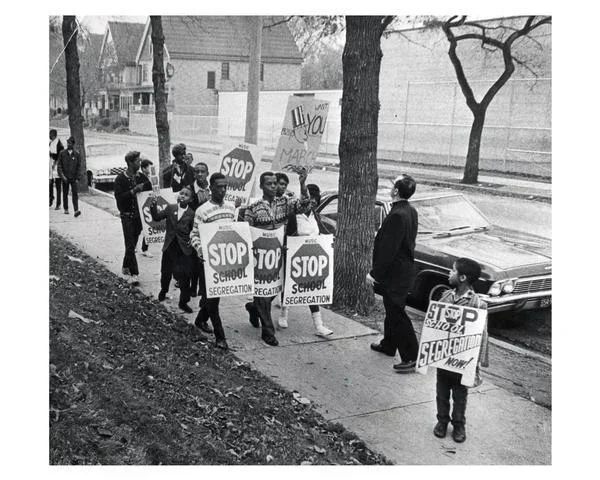
Brown vs Board of Education was a landmark 1954 Supreme Court case that declared racial segregation in public schools unconstitutional. This groundbreaking decision overturned the “separate but equal” doctrine and became one of the most important victories in the civil rights movement. The case proved that segregated schools harmed Black children and violated the Fourteenth Amendment.
Have you ever wondered what Brown vs Board of Education was really about? This Supreme Court case changed America forever. It challenged the idea that Black and white children should attend separate schools. The decision reshaped civil rights and education in the United States. Let us break it all down in simple terms.
The story begins long before 1954. For decades, schools across America were divided by race. Black children and white children went to different schools. The law allowed this under a rule called “separate but equal.” But was it really equal? That was the question at the heart of the case. Brown vs Board of Education proved it was not.
Key Takeaways
- Unanimous Ruling: The Supreme Court ruled 9-0 that segregated schools were inherently unequal.
- Overturned Plessy v Ferguson: The 1896 “separate but equal” doctrine was officially dismantled.
- Oliver Brown Was the Lead Plaintiff: A parent from Topeka, Kansas, became the face of the case.
- Thurgood Marshall Led the Legal Fight: He later became the first Black Supreme Court Justice.
- Catalyzed the Civil Rights Movement: The decision inspired further legal and social changes across America.
- Desegregation Took Years: Full integration of schools was a long and difficult process that continues today.
- Education Equality Became a National Priority: The ruling changed how Americans view public education and civil rights.
📑 Table of Contents
The Background: Separate but Unequal
To understand Brown vs Board of Education, you need to know about Plessy v Ferguson. That was a Supreme Court decision from 1896. It allowed racial segregation as long as the facilities were “separate but equal.” In theory, this sounded fair. In practice, it was anything but.
Black schools received far less funding. They had older books, broken desks, and poorly trained teachers. White schools had modern buildings and better resources. The gap was huge. Yet the law said this was acceptable because the facilities were technically “separate.”
Families in Topeka, Kansas, decided enough was enough. They wanted their children to attend the school closest to their homes. But because of their race, their kids were forced to ride buses to distant schools. This unfair treatment sparked a legal battle that would shake the nation.
The Parents Who Started It All
Oliver Brown was one of the brave parents who stepped forward. He wanted his daughter Linda to attend a white school near their home. Instead, she had to travel across town to a segregated Black school. Oliver joined a group of parents who filed a lawsuit against the Board of Education in Topeka.
The case was backed by the NAACP Legal Defense Fund. This organization fought for civil rights through the court system. They knew this case could be the one to end school segregation once and for all. Brown vs Board of Education became the name we remember today because Oliver Brown was listed first alphabetically among the plaintiffs.
The Supreme Court Case: What Happened
The case made its way to the United States Supreme Court. It was combined with several other similar cases from different states. Lawyers argued that segregated schools violated the Fourteenth Amendment. This amendment guarantees equal protection under the law for every American.
Thurgood Marshall was the lead attorney. He was a brilliant civil rights lawyer who later became the first Black Supreme Court Justice. Marshall presented powerful evidence showing how segregation hurt Black children. He used social science studies to prove that separate schools made Black children feel inferior.
On May 17, 1954, Chief Justice Earl Warren read the unanimous decision. The Court ruled that Brown vs Board of Education was a landmark victory. Segregated public schools were unconstitutional. The “separate but equal” doctrine had no place in American education.
Why the Ruling Mattered
The decision was a turning point for the civil rights movement. It sent a clear message: racial segregation was illegal. The ruling gave hope to millions of Americans who had fought for equality for generations. Schools across the country could no longer legally keep children apart by race.
But the ruling did not end discrimination overnight. Many states resisted. Some refused to integrate their schools. The fight for true equality was far from over. Still, the decision gave activists a powerful legal tool to challenge segregation in all areas of public life.
The Aftermath: Desegregation in Practice
Winning the case was only the first step. Putting the ruling into action proved much harder. Many Southern states ignored the decision completely. Some governors even shut down public schools rather than integrate them. The road to real desegregation was long and painful.
In 1955, the Supreme Court issued a follow-up ruling called Brown II. It ordered schools to desegregate “with all deliberate speed.” But “deliberate speed” meant different things to different people. Some districts moved quickly. Others dragged their feet for years or even decades.
Federal courts had to step in and enforce the ruling. The National Guard was sometimes needed to protect Black students entering previously all-white schools. Famous events like the Little Rock Nine in 1957 showed the world the courage it took to integrate schools. Nine brave Black students faced angry mobs to attend Central High School in Arkansas.
The Long Fight for Educational Equality
Even today, many schools remain deeply segregated. This segregation is often due to housing patterns and economic inequality rather than explicit laws. This is called de facto segregation. It is different from the de jure segregation that Brown vs Board of Education addressed. De jure segregation was enforced by law. De facto segregation happens because of social and economic factors.
Despite these ongoing challenges, the ruling remains one of the most important moments in American history. It established that education is a fundamental right. It affirmed that every child deserves equal opportunity regardless of race. The spirit of the decision continues to inspire those who fight for justice and equality.
Key Figures in the Case
Several people played crucial roles in Brown vs Board of Education. Understanding their contributions helps us appreciate the full story.
- Oliver Brown: The lead plaintiff and a father who wanted his daughter to have better educational opportunities.
- Thurgood Marshall: The brilliant lawyer who argued the case before the Supreme Court. He later became the first Black Supreme Court Justice.
- Chief Justice Earl Warren: The Court leader who delivered the unanimous ruling and united the justices.
- Linda Brown: Oliver’s daughter, whose experience attending a distant segregated school sparked the legal challenge.
- Charles Hamilton Houston: A legal strategist who laid the groundwork for the NAACP’s fight against segregation.
These individuals showed incredible courage. They risked their safety and their livelihoods to stand up for what was right. Their actions remind us that one person or one family can change the course of history.
How Brown vs Board of Education Changed Education
The impact of Brown vs Board of Education reached far beyond the courtroom. It transformed how Americans think about education and equality. Here are some of the most important changes the ruling helped bring about.
First, the decision paved the way for the civil rights movement of the 1960s. The legal victory gave activists confidence that the justice system could be used to fight injustice. Laws banning discrimination in public places, voting, and housing followed the school integration ruling.
Second, the case highlighted the importance of quality education for every child. It showed that access to good schools shapes a person’s future. This idea has influenced education policy for generations. Today, debates about school funding, equity, and access still echo the themes raised in the original case.
Third, the ruling inspired similar legal challenges around the world. Countries looking to end discriminatory practices looked to the American decision as a model. The case became a symbol of the power of the law to create positive social change.
Learning about Brown vs Board of Education also connects to broader topics. For instance, exploring idioms for education shows how language reflects our values around learning. Similarly, studying metaphors for education reveals how we think about teaching and growth. These linguistic connections help us understand the cultural importance of education in society.
Lessons We Can Learn Today
The story of Brown vs Board of Education teaches us several powerful lessons. It reminds us that unjust laws can be challenged and changed. It shows that persistence and courage can lead to real progress. And it proves that education is not just about reading and math, but about building a fair and just society.
Parents today can use this history to talk to their children about equality and justice. Teachers can bring the case into their classrooms to spark important conversations. Community leaders can draw inspiration from the bravery of Oliver Brown and the other plaintiffs.
The fight for educational equity is not just a historical event. It is an ongoing journey. Every child deserves a quality education, regardless of their background. The legacy of Brown vs Board of Education lives on in every classroom where diversity is valued and every student who is given a fair chance to succeed.
Common Misconceptions About the Case
There are several myths surrounding Brown vs Board of Education that are worth correcting. Understanding the facts helps us appreciate the true significance of the ruling.
- Myth: The ruling immediately ended school segregation. Fact: It took years of legal battles, protests, and federal enforcement to make desegregation a reality in many places.
- Myth: The case was only about Topeka, Kansas. Fact: The Supreme Court combined Brown with four other cases from different states, making it a national ruling.
- Myth: The decision was controversial among the justices. Fact: The ruling was unanimous, with all nine justices agreeing.
- Myth: The case only affected Black students. Fact: The ruling challenged all forms of racial segregation in public schools and inspired broader civil rights efforts.
These corrections help us see the full picture. The case was bigger than one city, one family, or one moment. It was a turning point for the entire nation.
The Legacy Continues
More than 70 years later, the principles established by Brown vs Board of Education still matter. Schools across America continue to work toward true integration and equality. New challenges have emerged, including funding disparities, resource gaps, and systemic barriers. But the foundation laid by this landmark case gives us the legal and moral framework to keep pushing forward.
The ruling also connects to broader conversations about civil rights and social justice. When we study Brown vs Board of Education, we are not just learning about a court case. We are learning about the ongoing struggle for equality in America. Every generation has a role to play in carrying this legacy forward.
Understanding this history empowers us to recognize injustice when we see it. It gives us the tools to advocate for change in our own communities. And it reminds us that the fight for equal educational opportunities is far from over.
The courage of the Brown family and the countless others who joined the case changed the course of American history. Their story is a powerful reminder that the law can be a force for good. It shows us that standing up for what is right can create a better future for everyone.
As we reflect on the meaning of Brown vs Board of Education, let us also remember that education is a journey. Just as similes for education capture the spirit of learning through comparison, the case captures the spirit of justice through action. The ruling proved that separate can never truly be equal, and that truth continues to guide our efforts toward a more equitable society.
The story does not end here. Every day, educators, parents, students, and advocates work to honor the legacy of this historic decision. By understanding where we have been, we can better navigate where we are going. Brown vs Board of Education is not just a chapter in a history book. It is a living reminder of what is possible when we dare to demand justice for all.
Frequently Asked Questions
What was Brown vs Board of Education about in simple terms?
The case was about ending racial segregation in public schools. Black families argued that forcing their children to attend separate schools was unfair and harmful. The Supreme Court agreed, ruling that segregated schools violated the Constitution.
Why was Brown vs Board of Education important?
The decision overturned the “separate but equal” doctrine established by Plessy v Ferguson in 1896. It declared that segregated schools were inherently unequal and unconstitutional. This ruling became a cornerstone of the civil rights movement.
Who was Oliver Brown in the case?
Oliver Brown was a parent from Topeka, Kansas, who became the lead plaintiff. He wanted his daughter Linda to attend the white school near their home instead of the distant segregated Black school. His name came first alphabetically, giving the case its name.
Did Brown vs Board of Education immediately end school segregation?
No, it did not. While the ruling was unanimous and powerful, many states resisted integration for years or even decades. Federal enforcement was often required. The desegregation process was slow and met with significant opposition in many parts of the country.
Who argued the Brown vs Board of Education case?
Thurgood Marshall, a renowned civil rights lawyer, argued the case before the Supreme Court. He represented the NAACP Legal Defense Fund. Marshall later became the first Black Supreme Court Justice in 1967.
How does Brown vs Board of Education affect schools today?
The ruling established the legal foundation for desegregation and educational equality. However, many schools today still face challenges related to segregation, funding gaps, and unequal resources. The principles from the case continue to guide ongoing efforts toward educational equity and civil rights.
=== CONCLUSION ===
Brown vs Board of Education was more than just a court case. It was a defining moment in American history that challenged injustice and demanded equality. The unanimous ruling declared that segregated schools were unconstitutional and that separate could never truly be equal.
The courage of Oliver Brown and the other plaintiffs changed the nation. Thurgood Marshall’s legal brilliance paved the way for decades of civil rights progress. The decision inspired millions of Americans to believe in the power of justice and the promise of equal opportunity.
Today, the legacy of this landmark case lives on. It reminds us that education is a fundamental right, not a privilege. It challenges us to build schools where every child is valued and given a fair chance to succeed. The story of Brown vs Board of Education is a story of hope, determination, and the enduring belief that all people deserve dignity and equality.
Let us carry this history forward. Let us honor the sacrifices made by those who fought for justice. And let us continue working toward the world that Brown vs Board of Education envisioned, a world where every classroom is a place of equal opportunity and every child can dream without limits.


