
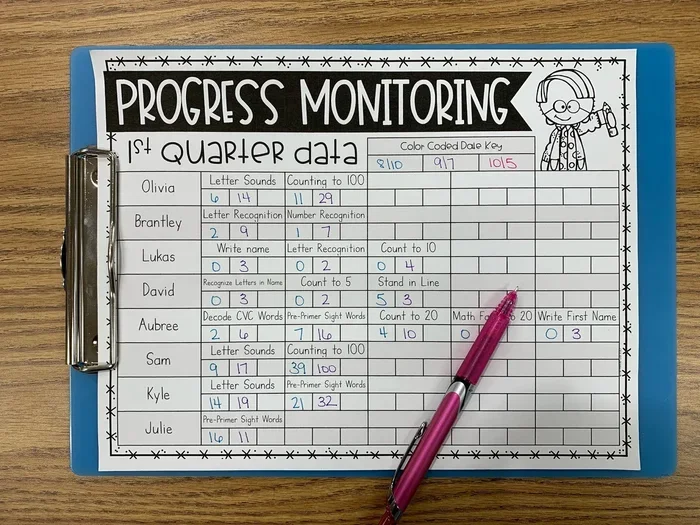
Progress monitoring in special education is a structured process that helps teachers track student growth and measure whether IEP goals are being met. It uses ongoing data collection and formative assessment to guide instructional decisions and support special needs students. This approach ensures that every child receives the personalized attention they need to succeed academically and socially.
Every teacher wants to see their students grow. But when you are working with special needs students, knowing whether they are truly making progress can feel complicated. That is where progress monitoring in special education comes in. It is a practical, research-backed process that gives teachers the tools they need to track how each student is doing over time.
Think of it like a GPS for learning. Instead of guessing whether a lesson is working, progress monitoring provides real-time data. This data shows exactly where a student stands, what they need next, and how their IEP goals are progressing. It takes the guesswork out of teaching and puts clear evidence front and center.
In this article, we will break down everything you need to know about progress monitoring in special education programs. You will learn what it is, why it matters, the different methods you can use, and how to put it into practice. Whether you are a special education teacher, a parent, or an administrator, this guide will give you useful, actionable insights you can apply right away.
Key Takeaways
- Progress monitoring is essential: It gives teachers real-time insight into how special needs students are performing against their IEP goals.
- Multiple methods exist: From curriculum-based measurements to portfolio assessments, there are several proven ways to track student growth.
- Data drives decisions: Regular data collection helps educators adjust instruction, close skill gaps, and improve educational outcomes.
- It benefits everyone: Teachers, parents, and students all gain from a clear picture of academic progress and learning milestones.
- Challenges are manageable: With the right tools and training, common obstacles like time constraints and inconsistent data can be overcome.
- Early intervention matters: Catching learning gaps early through monitoring leads to better long-term student achievement.
📑 Table of Contents
What Is Progress Monitoring in Special Education?
Progress monitoring in special education is the ongoing process of checking how well students are meeting their learning goals. It involves regular student assessment and data collection to measure academic growth, skill development, and overall achievement. Unlike a single end-of-year test, progress monitoring happens throughout the school year.
The main purpose is simple: to make sure that every student with an individualized education program is moving forward. Teachers use the results to adjust their intervention strategies and tailor instruction to each child’s unique needs. This continuous loop of teaching, assessing, and adjusting is what makes progress monitoring so powerful.
When educators use ongoing assessment tools, they can spot problems early. A student who is struggling with reading comprehension, for example, can receive targeted support before the gap grows wider. This is the heart of special education services and what makes them so effective when done correctly.
How Progress Monitoring Differs from Traditional Assessment
Traditional tests give a snapshot of what a student knows at one point in time. Progress monitoring is different. It is like a moving picture. It tracks growth over weeks and months, not just a single moment. This ongoing view helps teachers understand trends, celebrate small wins, and catch issues before they become big problems.
Another key difference is frequency. Standardized tests happen once or twice a year. Progress monitoring can happen weekly, biweekly, or monthly. This high-frequency approach means teachers always have fresh, relevant information. They can make instructional adjustments quickly, which leads to better educational outcomes for every student.
Why Progress Monitoring Matters for Students
Students with learning disabilities often need more structure and attention than their peers. Progress monitoring in special education ensures that no child slips through the cracks. It gives teachers a clear picture of where each student stands and what they need next.
When teachers track academic progress regularly, they can celebrate small victories with students. Maybe a child finally mastered a sight word list or improved their math fluency by ten problems per minute. These wins matter. They build confidence and motivation, which are just as important as academic skills.
Tracking IEP Goals with Precision
Every individualized education program has specific, measurable goals. Progress monitoring is the tool that shows whether those goals are being reached. Without it, IEP meetings can feel like guesswork. With it, teachers bring hard data to the table.
For example, if an IEP goal says a student will improve reading fluency by 15 words per minute over one grading period, progress monitoring tracks that exact number. Teachers can see if the student is on pace, ahead, or behind. This precision helps everyone involved, from teachers to parents to school psychologists.
Supporting Individual Learning Needs
No two students are the same. One child might need extra help with written expression while another struggles with basic math facts. Progress monitoring respects these differences. It looks at each student individually and provides a customized view of their growth.
This personal approach aligns with the whole philosophy of special education. It recognizes that every child learns differently and deserves a path that fits them. When teachers use formative assessment data to shape daily lessons, they create a classroom where all students can thrive.
Interestingly, the way we describe student growth matters too. Just as educators use specific language to talk about learning, everyday expressions shape how we think about progress. For instance, phrases used to describe someone who is growing or changing can be found in resources like idioms for someone special, which capture the idea of individual worth and development.
Types of Progress Monitoring Methods
Not all progress monitoring looks the same. Different methods work better for different students and subjects. Here are some of the most widely used approaches in special education programs.
Curriculum-Based Measurements
Curriculum-based measurements, or CBMs, are short, timed tests that measure specific skills. A teacher might have a student read a passage aloud for one minute and count the number of words read correctly. CBMs are quick, easy to administer, and give instant data on student achievement.
These assessments are especially useful for tracking benchmark assessments over time. Teachers can plot scores on a graph and see the trend line. If the line is going up, the student is growing. If it is flat or dropping, it is time to change the intervention strategies.
Portfolio Assessments
A portfolio is a collection of a student’s work over time. It might include writing samples, math worksheets, art projects, and reading logs. Portfolio assessments give a rich, detailed picture of growth that numbers alone cannot capture.
Teachers can compare a portfolio from September to one from May and see real change. This method is especially helpful for students who show growth in ways that traditional tests do not measure, such as creativity, effort, or social skills. It also gives parents tangible evidence of their child’s journey.
rubric-Based Observations
Rubrics let teachers score student work against clear criteria. Instead of a simple letter grade, a rubric breaks performance into specific areas. A reading rubric might score accuracy, fluency, and comprehension separately.
This level of detail is invaluable in special education. It helps teachers identify exactly which skills a student has mastered and which ones still need work. Over time, rubric scores create a detailed map of growth that supports instructional decisions at every IEP meeting.
How to Implement Progress Monitoring Effectively
Knowing the methods is one thing. Putting them into practice is another. Here is a practical guide to making progress monitoring work in your classroom or program.
Setting Measurable Goals
The foundation of any good monitoring system is a clear, measurable goal. Vague goals like “improve reading” do not work. Instead, use specific targets such as “increase reading fluency from 40 to 60 words per minute by the end of the semester.”
Measurable goals give you something concrete to track. They also make it easy to communicate progress to parents and administrators. When everyone understands the target, it is much easier to stay aligned and focused on the same outcomes.
Collecting and Analyzing Data
Consistent data collection is the backbone of progress monitoring. Set a regular schedule for assessments, whether that is weekly or biweekly. Use simple tools like spreadsheets or specialized software to record scores and visualize trends.
Once you have data, look for patterns. Is the student improving steadily? Are there plateaus or dips? These patterns tell a story. They help you decide whether to continue the current approach, try something new, or intensify support. The key is to act on the data, not just collect it.
Communicating with Parents and Teams
Progress monitoring is not just for teachers. Parents and IEP team members need to see the results too. Share graphs, charts, and simple summaries at every meeting. When parents can see their child’s growth in black and white, it builds trust and encourages collaboration.
Clear communication also helps set expectations. Parents understand what their child is working on and what success looks like. This shared understanding creates a strong support system around the student, which always leads to better results.
Benefits of Progress Monitoring
The advantages of progress monitoring in special education go far beyond just collecting numbers. Here are some of the biggest benefits that teachers and schools experience.
- Early identification of problems: Teachers can catch skill gaps before they become major obstacles. This is especially important for students with learning disabilities who may struggle to keep up without intervention.
- More personalized instruction: Data shows exactly what each student needs. Teachers can group students by skill level, target specific weaknesses, and differentiate instruction more effectively.
- Increased student motivation: When students see their own growth, it is incredibly powerful. Progress charts and goal trackers give them ownership of their learning journey.
- Better IEP outcomes: Hard data makes IEP meetings more productive. Teams can make informed decisions about goals, services, and placements based on evidence, not guesswork.
- Accountability for all: Progress monitoring creates transparency. Teachers, schools, and districts can demonstrate that they are meeting the needs of every student with special education services.
Just as we use figurative language to describe growth and change in everyday life, educators use data to describe the journey of learning. Expressions that capture transformation, such as those found in resources about metaphors for change in life, remind us that growth is a process, not a single event. Progress monitoring honors that process by documenting it step by step.
Common Challenges and How to Overcome Them
No system is perfect, and progress monitoring is no exception. Many teachers face real obstacles when trying to implement it consistently. The good news is that these challenges can be managed with the right strategies.
Time constraints are the number one complaint. Teachers already have so much on their plate. Adding assessments can feel overwhelming. The solution is to start small. Pick one or two key skills to monitor and use quick, efficient tools like CBMs that take only minutes. As you build a routine, you can expand to other areas.
Inconsistent data collection is another common problem. If assessments are sporadic, the data is not useful. Set a predictable schedule and treat it as non-negotiable as any other part of the school day. Use digital tools that automate reminders and scoring to reduce the manual workload.
Finally, some teachers feel untrained in how to interpret data or adjust instruction based on results. Professional development makes a huge difference. Schools should invest in training that gives teachers confidence in using assessment tools and making instructional adjustments based on what the data reveals. Even a few hours of targeted training can transform how a teacher approaches progress monitoring.
Final Thoughts
Progress monitoring in special education is one of the most impactful tools a teacher can use. It turns vague hopes about student growth into clear, measurable evidence. It gives teachers the information they need to make smart instructional decisions every single day. And most importantly, it gives students the support they deserve.
When you commit to monitoring progress consistently, you create a classroom where every child’s growth matters. You close skill gaps before they widen. You celebrate progress, no matter how small. And you build a culture of accountability and care that benefits everyone in the learning community.
Start with one method, set one measurable goal, and track one student this week. You will be amazed at what you learn. From there, the process builds on itself. Before long, progress monitoring will feel like a natural part of your teaching routine, not an added burden. The students in your care are worth every minute of it.
Frequently Asked Questions
What is the main purpose of progress monitoring in special education?
The main purpose is to track student growth over time and determine whether IEP goals are being met. It helps teachers make informed instructional decisions and provide targeted support to special needs students.
How often should progress monitoring be conducted?
Frequency depends on the student’s needs and the goals being tracked. Most teachers monitor weekly or biweekly for students who need intensive support. Students who are making steady progress may be monitored monthly.
What tools are commonly used for progress monitoring?
Common tools include curriculum-based measurements, portfolio assessments, rubric-based observations, and standardized benchmark assessments. Each tool offers a different view of student growth and skill development.
Can progress monitoring help students without learning disabilities?
Yes, absolutely. While it is a cornerstone of special education services, any student can benefit from ongoing formative assessment and data-driven instruction. It helps identify skill gaps early for all learners.
How does progress monitoring connect to IEP meetings?
Progress monitoring provides the data that drives IEP discussions. Teachers bring real evidence of growth or struggle to the table, which makes goal-setting, service decisions, and placements more accurate and fair.
What should I do if a student is not making expected progress?
If data shows a student is not growing, it is time to adjust the intervention strategies. This might mean changing the teaching approach, increasing the frequency of support, or revisiting the goals to make sure they are appropriate for the student’s current level.


