
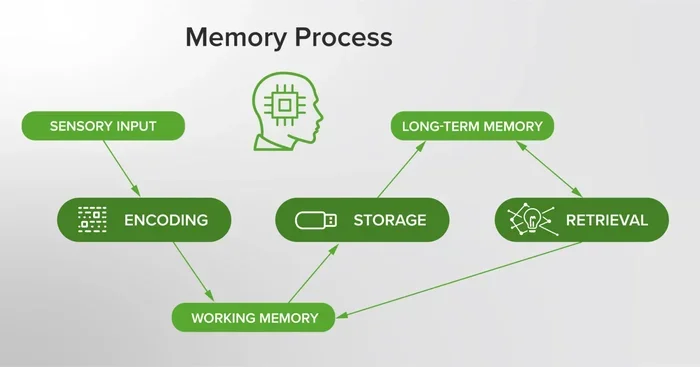
Encoding in education is the process your brain uses to turn information into a format it can store and recall later. It is the foundation of how students learn, remember, and apply knowledge. When encoding works well, lessons stick. When it doesn’t, students struggle to retain what they study. Understanding this process helps both teachers and learners unlock better results.
Encoding in education is one of those topics that sounds technical but is actually super simple once you break it down. At its core, encoding is how your brain takes in new information and changes it into a form it can keep. Think of it as the brain’s filing system. Every time you learn something new, your brain encodes that experience so you can pull it up later.
Why does this matter so much? Because without proper encoding, learning simply doesn’t happen. Students might sit in class, read a textbook, or watch a lecture, but if the information never gets encoded correctly, it vanishes within hours. Encoding in education is the bridge between exposure and true understanding. It is the reason some people remember everything they read while others forget it by the next day.
Teachers, parents, and students themselves all benefit from understanding how encoding works. When you know the science behind memory formation, you can study smarter, teach better, and retain more. This article walks you through everything you need to know about encoding in education, from the basic definition to practical strategies you can use right away.
Key Takeaways
- Encoding is the first step in learning: It transforms raw information into memories your brain can use.
- There are three main types: Visual, acoustic, and semantic encoding each play a unique role.
- Strategies matter a lot: Using active recall, elaboration, and multisensory input strengthens encoding significantly.
- Teaching methods can be adapted: Educators who understand encoding can design lessons that stick.
- Common mistakes block encoding: Passive reading, multitasking, and lack of sleep all hurt the process.
- Encoding links directly to student success: Strong encoding skills lead to better test performance and deeper understanding.
📑 Table of Contents
What Is Encoding in Education?
Encoding is the mental process of converting information into a format your brain can store. In education, this happens every single day. When a student reads a paragraph, listens to a teacher, or watches a video, the brain encodes that input into a memory trace. This trace can then be retrieved later when needed.
Encoding is not the same as simply hearing or seeing something. It is an active process. Your brain has to do work to transform raw data into something meaningful. This is why two students can sit in the same classroom, hear the same lecture, and walk away with very different levels of understanding. One student’s brain may have encoded the material deeply, while the other’s barely registered it.
The encoding definition in educational psychology refers to how new data gets transformed into neural codes. These codes are patterns of brain activity that represent the information. The stronger and more detailed the pattern, the easier it is to recall later. This is the whole goal of encoding in education — to create strong, lasting memory traces that support learning.
Why Encoding Is the First Step of Memory
Memory works in three stages: encoding, storage, and retrieval. Encoding is the first and arguably most important step. If information never gets encoded properly, it cannot be stored or retrieved later. It is like trying to save a file on a broken computer — the data never makes it to the hard drive.
Storage keeps the encoded information in your brain over time. Retrieval is the process of pulling that information back out when you need it. But none of that matters if encoding fails at the first step. This is why educators focus so heavily on how students encode new material during lessons and study sessions.
How Encoding Works in the Learning Process
The learning process depends heavily on how well the brain encodes new information. When you encounter something new, your brain decides whether it is worth saving. It does this based on attention, relevance, and emotional connection. Information that feels important or interesting gets encoded more deeply.
During encoding, the brain links new information to things you already know. This is called elaborative encoding. For example, if you are learning about the water cycle, your brain might connect it to memories of rain, rivers, or even a science experiment you did in class. The more connections you build, the stronger the memory trace becomes.
Cognitive load also plays a big role. If a lesson throws too much information at students at once, the brain struggles to encode it all. This is why good teachers break lessons into smaller chunks. They give the brain time to process and encode each piece before moving on. Managing cognitive load is one of the most practical ways to improve encoding in education.
The Role of Attention in Encoding
Attention is the gatekeeper of encoding. If your mind is wandering, the information never gets properly encoded. This is why distractions are the enemy of learning. Students who multitask while studying — checking their phones, watching TV, or chatting with friends — are giving their brains a hard time forming strong memory traces.
Research in educational psychology shows that focused attention during learning leads to much better memory retention. This is why active learning strategies work so well. When students engage directly with material, they pay more attention, and their brains encode the information more effectively.
Types of Encoding in Education
Not all encoding works the same way. Psychologists have identified three main types that play different roles in how students learn and remember information. Understanding these types can help both teachers and learners choose the right strategies.
Visual Encoding
Visual encoding happens when your brain processes images, diagrams, charts, and written words. This is one of the most common forms of encoding in a classroom. When a student reads a textbook or looks at a map, visual encoding is at work.
Visual learners benefit greatly from color-coded notes, mind maps, and infographics. Teachers can boost visual encoding by using slides with images, drawing diagrams on the board, or showing short educational videos. The key is to make the visual input clear and organized so the brain can process it easily.
Acoustic Encoding
Acoustic encoding involves processing information through sound. This is why reading aloud, repeating facts, and discussing ideas with classmates all help with memory. When you hear information, your brain encodes it through sound patterns, which can be easier to recall later.
Many students use acoustic encoding without realizing it. They might repeat a formula out loud or hum a song that helps them remember a historical date. Teachers can support this type of encoding by encouraging class discussions, verbal repetition, and even educational songs or chants.
Semantic Encoding
Semantic encoding is the deepest form of encoding. It involves processing the meaning of information and connecting it to existing knowledge. This type of encoding leads to the strongest and most lasting memories.
When a student doesn’t just memorize a fact but truly understands what it means, semantic encoding is happening. For example, memorizing that “photosynthesis produces oxygen” is surface-level learning. But understanding why photosynthesis matters for life on Earth involves semantic encoding. This is the goal of meaningful learning in education.
Encoding Strategies for Better Learning
Now that you understand the types, let’s talk about how to improve encoding in education. There are several proven strategies that help students encode information more effectively. These techniques work for learners of all ages and can be used in any subject.
Use Active Recall
Active recall means testing yourself instead of just re-reading notes. When you try to retrieve information from memory, you force your brain to strengthen the encoded traces. This is one of the most powerful encoding techniques available.
Flashcards, practice questions, and self-quizzes are all great tools for active recall. Instead of passively highlighting a textbook, students should close the book and try to recall what they just read. This simple shift makes a huge difference in how well information gets encoded.
Connect New Information to What You Already Know
One of the best ways to boost encoding is to link new material to existing knowledge. This is the principle behind elaborative encoding. When you build connections, your brain has more pathways to retrieve the information later.
For example, when learning about similes for education, you might connect them to similes you already know from everyday life. This kind of linking makes the new information feel familiar and easier to encode. Similarly, exploring metaphors for education or idioms for education can deepen understanding by connecting language concepts to real-world experiences. These creative connections make learning stick.
Engage Multiple Senses
Using more than one sense during learning strengthens encoding. This is called multisensory input. When you see, hear, and physically interact with material, your brain creates multiple memory traces for the same information.
Some practical ways to use multisensory learning include drawing diagrams while listening to a lecture, building models of scientific concepts, or writing notes by hand instead of typing them. Each sense adds another layer to the encoded memory, making it more durable and easier to retrieve.
Teach Someone Else
The protégé effect is a well-known phenomenon in educational psychology. When you explain something to another person, you have to organize your thoughts and truly understand the material. This deep processing leads to stronger encoding.
Students can try teaching a parent, a friend, or even an imaginary audience. The act of explaining forces the brain to retrieve and reorganize encoded information, which reinforces the memory. It is one of the simplest and most effective encoding strategies you can use.
Use Spaced Repetition
Spaced repetition means reviewing material at increasing intervals over time. Instead of cramming everything the night before a test, you review the material a little bit each day. This approach works because it gives the brain multiple chances to re-encode the information, strengthening the memory traces each time.
Apps and tools can help students implement spaced repetition easily. The key is consistency. Regular, short review sessions are far more effective than long, infrequent ones when it comes to knowledge retention and long-term memory.
Common Encoding Challenges in Education
Even with the best strategies, encoding doesn’t always go smoothly. Several common challenges can interfere with how well students encode new information. Recognizing these obstacles is the first step toward overcoming them.
Encoding Failure
Encoding failure happens when the brain never properly processes information in the first place. This is the most common reason students forget things shortly after learning them. The information simply never made it into long-term memory.
Encoding failure often results from lack of attention, information overload, or emotional stress. When students are anxious, tired, or distracted, their brains are less likely to encode material effectively. Addressing these underlying issues is just as important as teaching study techniques.
Interference and Forgetting
Interference occurs when previously learned or newly learned information conflicts with other memories. This can make it hard to retrieve the right information at the right time. Proactive interference happens when old memories block new ones, while retroactive interference is when new learning disrupts old memories.
Teachers can reduce interference by organizing lessons in a logical sequence and helping students build clear mental frameworks. When information is well-organized, the brain finds it easier to encode and later retrieve without confusion.
The Impact of Sleep and Health
Sleep plays a critical role in memory consolidation, which is closely tied to encoding. During sleep, the brain replays and strengthens the day’s encoded memories. Students who don’t get enough sleep are essentially sabotaging their own memory improvement efforts.
Nutrition, exercise, and stress levels also affect encoding. A well-rested, healthy brain encodes information far more efficiently than an exhausted or stressed one. This is why schools that prioritize student well-being often see better academic outcomes.
The Role of Encoding in Teaching Methods
Understanding encoding in education should directly influence how teachers design their lessons. When educators know how the brain processes and stores information, they can create learning experiences that work with the brain instead of against it.
Effective teaching methods encourage deep encoding rather than surface-level memorization. This means focusing on understanding, connections, and application rather than rote repetition alone. Teachers who incorporate active learning, collaborative activities, and real-world examples give students more opportunities to encode material meaningfully.
For instance, using creative language tools like similes for education can make abstract concepts more relatable and easier to encode. Similarly, exploring metaphors for education helps students visualize complex ideas, which strengthens semantic encoding. Even teaching idioms for education can build vocabulary and deepen language comprehension, all while supporting the encoding process.
Technology also offers new ways to boost encoding. Interactive simulations, educational games, and multimedia presentations all engage different senses and attention systems, leading to stronger memory traces. The best teaching methods are those that align with how the brain naturally encodes and retains information.
Conclusion
Encoding in education is the foundation of all learning. It is the process that turns fleeting moments of exposure into lasting knowledge. When encoding works well, students remember more, understand deeper, and apply what they learn with confidence. When it doesn’t, even the best lessons fall flat.
The good news is that encoding is not fixed. Both teachers and students can take active steps to improve it. From using active recall and spaced repetition to engaging multiple senses and building meaningful connections, every strategy helps the brain do its job better. Understanding the science of encoding empowers everyone in the learning process to make smarter choices about how they study and teach.
If you take one thing away from this article, let it be this: encoding is not passive — it is an active, trainable skill. The more you understand how it works, the more control you have over your own learning journey. Start applying these strategies today, and you will see the difference in how much you retain and how confidently you can use what you know.
Frequently Asked Questions
What is the difference between encoding and memory in education?
Encoding is the process of converting information into a brain-readable format, while memory is the broader system that stores and retrieves that encoded information. Encoding is the first step in the memory process without which nothing gets stored.
How can students improve their encoding skills?
Students can improve encoding by using active recall, connecting new material to existing knowledge, engaging multiple senses, and getting enough sleep. These strategies strengthen the neural pathways that support memory retention and knowledge retention.
Why do some students struggle with encoding?
Struggles with encoding often stem from lack of attention, information overload, stress, or poor study habits. When the brain is distracted or overwhelmed, it cannot process new material deeply enough to form strong memory traces.
What role does attention play in encoding?
Attention acts as the gateway to encoding. Without focused attention, the brain simply does not register information in a way that allows it to be stored. This is why minimizing distractions during study time is so important for student learning.
Can encoding strategies help with test preparation?
Absolutely. Strategies like spaced repetition, active recall, and elaborative encoding all improve how well information is stored and later retrieved. Students who use these techniques typically perform better on tests because their memory traces are stronger and more accessible.
How do teaching methods affect encoding in the classroom?
Teaching methods that promote engagement, interaction, and deep processing lead to better encoding. Methods like group discussions, hands-on activities, and real-world applications encourage students to process information at a deeper level, which strengthens memory improvement and long-term learning.


