
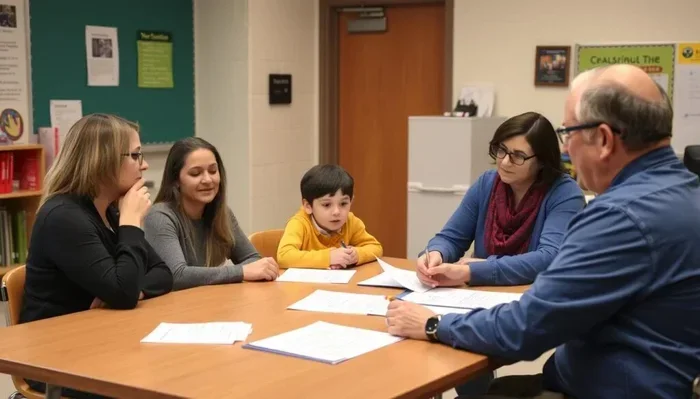
An IEP in special education is a legal document that maps out how a school will support a child with a disability. It ensures every student gets a free appropriate public education tailored to their unique needs. Understanding the IEP process empowers parents to advocate effectively. This guide covers everything from evaluation to annual review in plain, simple language.
Understanding what is an IEP in special education can feel like decoding a foreign language. The acronyms fly fast, the forms pile up, and the jargon makes your head spin. But here is the truth. An IEP in special education is simply a plan. It is a written promise that your child will get the support they need to learn and grow. Every parent deserves clarity on this process. This guide breaks it all down. No fluff. No confusing terms. Just honest, practical information you can use today.
So why does this matter so much? Because an IEP in special education can change your child’s entire school experience. It opens doors. It removes barriers. It gives your child a fair shot at success. Whether your child has a learning disability, a behavioral challenge, or a physical need, the IEP process is designed to help. Let us walk through it together, step by step.
Key Takeaways
- An IEP is a legal right: It guarantees your child access to a free appropriate public education under IDEA.
- The process starts with evaluation: Schools assess your child to determine eligibility and disability classification.
- IEP meetings involve a full team: Parents, teachers, specialists, and administrators all play a role.
- Accommodations and modifications make a difference: These adjustments help your child learn alongside peers.
- Progress monitoring keeps everyone accountable: Regular reviews ensure IEP goals are being met.
- Parent rights are protected by law: You have the power to disagree, request changes, and seek mediation.
- Transition planning prepares for the future: Starting at age 16, the IEP focuses on life after graduation.
📑 Table of Contents
Understanding the Basics of an IEP
What Does IEP Stand For?
IEP stands for Individualized Education Program. That is a fancy way of saying it is a plan built just for your child. No two IEPs look the same. Each one is shaped by your child’s unique strengths, challenges, and needs. The IEP document is a legal contract between your family and the school. It spells out exactly what services your child will receive and how progress will be measured.
The idea behind special needs education is simple. Every child learns differently. Some kids need more time. Some need different tools. An IEP in special education makes sure those needs are not ignored. It is the foundation of special education services in the United States. Without it, many children would fall through the cracks.
Who Qualifies for an IEP?
Not every child with a learning struggle qualifies for an IEP in special education. There is a specific process. First, the school must evaluate your child. This evaluation looks at how your child learns, thinks, and behaves. Then, a disability classification is assigned. The child must fall under one of the categories covered by the Individuals with Disabilities Education Act, also known as IDEA.
Here are common categories that may lead to an IEP in special education:
- Specific learning disability (like dyslexia or dyscalculia)
- Speech or language impairment
- Autism spectrum disorder
- Emotional disturbance
- Intellectual disability
- Other health impairments (like ADHD or chronic illness)
- Visual or hearing impairment
The evaluation process is thorough. Schools cannot just guess. They must use proper testing and qualified professionals. If you ever feel the evaluation was rushed or incomplete, you have every right to push back. Parent rights are a big part of the IEP process, and we will talk more about that soon.
The IEP Process Step by Step
How the Evaluation Works
The journey of an IEP in special education begins with an evaluation. This is where it all starts. A parent, teacher, or doctor can request one. Once the request is made, the school has a set timeline to respond. They will gather information from many sources. This might include classroom observations, test scores, and input from specialists.
The goal is simple. Figure out exactly where your child is struggling and why. The evaluation process should be comprehensive and fair. It should not be a one-time test. Instead, it looks at the whole picture. Think of it like the way similes for education help explain complex ideas by comparing them to something familiar. The evaluation compares your child’s performance to their peers and to their own potential.
After the evaluation, the school will hold a meeting to share the results. This is called the eligibility meeting. If your child qualifies, the team moves on to building the actual plan. If they do not qualify, you still have options. You can request an independent evaluation at the school’s expense in some cases.
What Happens at an IEP Meeting
The IEP meeting is the heart of the whole process. This is where the team comes together to design your child’s plan. It can feel intimidating. There are a lot of people in the room. But remember, you are a vital member of that team. Your voice matters just as much as anyone else’s.
Here is who typically attends an IEP meeting:
- Your child’s general education teacher
- A special education teacher
- A school psychologist or evaluator
- A school administrator
- Related service providers (like a speech therapist)
- You, the parent
- Your child, when appropriate
During the meeting, the team reviews the evaluation results. They discuss your child’s current performance levels. Then they set IEP goals and decide on the services and supports needed. The meeting should feel collaborative. It should not feel like a courtroom. A good IEP team works together. Everyone brings something valuable to the table.
Think about the people who matter most to your child. The process is a lot like the expressions you find in idioms for someone special. The people in that room are special to your child’s journey. They are there because they care.
Key Components of an IEP Document
IEP Goals and Objectives
The goals section is the most important part of any IEP in special education. These are the targets your child will work toward. Good goals are specific, measurable, and realistic. They are not vague wishes. They are clear steps forward.
Here is what makes a strong IEP goal:
- It is written in plain, clear language
- It includes a measurable way to track progress
- It has a specific timeline
- It connects to your child’s unique needs
- It is challenging but achievable
For example, a weak goal might say “improve reading skills.” A strong goal would say “the student will read grade-level text with 90% accuracy, as measured by monthly assessments.” See the difference? The strong goal tells you exactly what success looks like. It gives everyone something concrete to work toward.
Accommodations and Modifications
Accommodations and modifications are two words you will hear often. They are not the same thing, and understanding the difference matters. An accommodation changes how your child learns the material. A modification changes what your child is expected to learn.
Here are some common examples:
- Accommodations: Extra time on tests, a quiet room for exams, audio books, preferential seating, breaks during long assignments
- Modifications: Shorter reading assignments, simplified math problems, reduced homework load, alternative grading scales
Both accommodations and modifications are tools. They help your child access learning in a way that works for them. The right adjustments can make a huge difference. They level the playing field and give your child a real chance to show what they know.
The Role of Parents in the IEP Process
You are not just a spectator in the IEP process. You are a decision-maker. Federal law gives parents a strong seat at the table. This is your child. Your knowledge of them is unmatched. No one knows their strengths, their struggles, or their dreams the way you do.
Here are some ways you can take an active role:
- Come prepared to every meeting. Bring notes, questions, and examples of your child’s work at home.
- Ask questions without hesitation. If something does not make sense, speak up. You have every right to understand every part of the plan.
- Keep records of everything. Save emails, meeting notes, and progress reports. Organization is your best friend.
- Communicate regularly with teachers. Do not wait for the next formal meeting. Check in often.
- Know your rights. Familiarize yourself with IDEA and your state’s special education rules.
Remember, advocating for your child is not pushy. It is powerful. The IEP process works best when parents and schools trust each other. Building that trust takes time. But it is worth every effort.
Why the IEP Matters for Your Child’s Future
Progress Monitoring and Annual Review
An IEP in special education is not a set-it-and-forget-it document. It is a living plan. The school must track your child’s progress regularly. This is called progress monitoring. Teachers report on whether your child is moving toward their IEP goals. If they are not, the team adjusts the plan.
Every year, the team holds an annual review. This is a check-in. You will discuss what is working and what is not. The goals may be updated. New services might be added. The plan evolves as your child grows and changes. Just like the metaphors for change in life remind us, growth often requires us to adjust our path. The annual review ensures the IEP document stays relevant and effective.
Transition Planning for Life After School
One of the most overlooked parts of an IEP in special education is transition planning. By law, this must start when your child turns 16. Some states start even earlier. Transition planning looks at what comes after high school. It covers jobs, college, independent living, and community involvement.
This is a big deal. Many young adults with disabilities struggle after graduation because the transition was not planned well. A strong IEP in special education includes concrete steps for the future. It connects your child with vocational training, career counseling, and real-world skills. The goal is simple but powerful. Prepare your child for a meaningful, independent life.
The least restrictive environment principle also plays a role here. Your child should be included in general education settings and community activities whenever possible. Inclusion is not just about academics. It is about belonging. It is about giving your child the chance to grow alongside their peers.
Common Challenges and How to Overcome Them
The IEP process is not always smooth. Disagreements happen. Schools may push back. Parents may feel unheard. These challenges are real, but they are manageable. Here are common issues and practical ways to handle them.
Problem: The school wants to delay the evaluation. Solution: Put your request in writing. Keep a copy. Schools have legal timelines they must follow. If they miss the deadline, you can file a complaint with your state’s education department.
Problem: You disagree with the IEP plan. Solution: You do not have to sign it. You can request another meeting. You can also ask for mediation or a due process hearing. Your parent rights include the right to disagree respectfully and formally.
Problem: Your child is not making progress on their goals. Solution: Bring data to the next meeting. Show examples of where your child is struggling. Request a change in services or approach. The team is required to adjust the plan when it is not working.
Problem: You feel outnumbered at the meeting. Solution: Bring a support person. This could be a family member, an advocate, or an attorney who specializes in special education law. Having backup can make you feel more confident and heard.
These challenges do not mean the system is broken. They mean you need to be prepared. Knowledge is your greatest tool. The more you understand about the IEP process, the more empowered you become.
Quick Tips for a Successful IEP Experience
- Start preparing for meetings at least a week in advance
- Write down your top three priorities before each meeting
- Bring a notebook to take notes during discussions
- Ask for a draft of the IEP before the meeting so you can review it
- Keep a folder with all evaluations, notes, and correspondence
- Build positive relationships with your child’s teachers throughout the year
- Celebrate small wins along the way
These simple habits can transform your experience. They keep you organized. They keep you focused. And they remind everyone at the table that you are a committed partner in your child’s education.
Conclusion
What is an IEP in special education? It is a legal document, a roadmap, and a promise all in one. It promises your child access to a free appropriate public education designed around their unique needs. It promises support, services, and a team that works on your child’s behalf. And it promises that no child with a disability will be left behind.
The IEP process can feel complex. There are meetings, forms, evaluations, and legal terms to navigate. But none of that complexity changes the core truth. An IEP in special education exists because every child deserves a fair chance to learn and thrive. When you understand the process, you become your child’s strongest advocate. You turn confusion into confidence. You turn paperwork into progress.
Take it one step at a time. Ask questions. Stay involved. Trust your instincts. You know your child better than anyone. And that knowledge is the most powerful tool in the entire IEP process. Use it. Your child’s future depends on it.
Frequently Asked Questions
What is the difference between an IEP and a 504 plan?
An IEP in special education is a detailed, legally binding plan that provides specialized instruction and related services. A 504 plan, on the other hand, provides accommodations but does not include specialized teaching. Both are designed to help students with disabilities, but an IEP offers more comprehensive support and is protected under IDEA, while a 504 plan falls under Section 504 of the Rehabilitation Act.
How often is an IEP reviewed?
By law, the IEP team must hold an annual review at least once every 12 months. This review checks progress on goals and updates the plan as needed. You can also request an emergency meeting or an interim review if concerns arise before the annual deadline. Regular communication with teachers between reviews helps keep everyone on track.
Can I bring someone to the IEP meeting?
Yes, absolutely. You have the right to bring anyone you choose to an IEP meeting. This could be a family member, a friend, an advocate, or even an attorney. Having support can help you feel more confident and ensure you fully understand everything discussed. Just let the school know in advance so they can plan accordingly.
What happens if I disagree with the school’s evaluation?
You have the right to request an independent educational evaluation, often called an IEE, at the school’s expense. You can also file a formal complaint with your state’s education agency. Another option is mediation, which brings both sides together with a neutral third party to find a resolution. Knowing your parent rights gives you the confidence to advocate effectively.
At what age does transition planning start in an IEP?
Federal law requires transition planning to begin by age 16, though many states start the process earlier, sometimes at age 14. This planning focuses on post-secondary goals like employment, college, and independent living. The IEP goals during these years start reflecting real-world skills and experiences that prepare your child for life after graduation.
Is an IEP only for academic struggles?
No, an IEP in special education covers much more than academics. It can address behavioral needs, social skills, physical therapy, speech therapy, and emotional support. If a disability affects any area of a child’s educational performance, the IEP process can provide support. The plan is truly individualized, meaning it reflects the whole child, not just their grades.


