
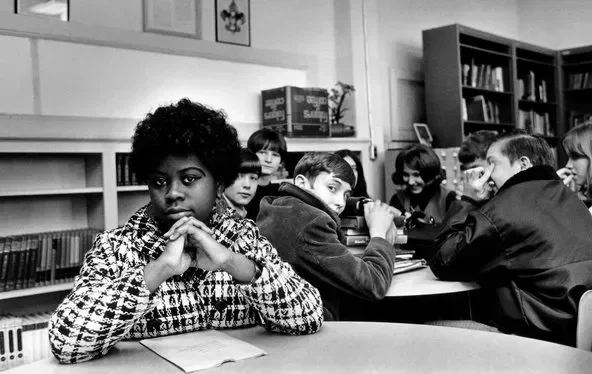
The Brown vs Board of Education case happened because racial segregation in public schools was unfair and unconstitutional. The Supreme Court ruled in 1954 that separate educational facilities are inherently unequal, overturning the earlier Plessy v Ferguson decision. This landmark case became a turning point in the civil rights movement and reshaped American education forever.
Key Takeaways
- Segregation Was the Core Issue: Black and white children were forced to attend separate schools, which were far from equal in quality and resources.
- Plessy v Ferguson Set the Stage: The 1896 “separate but equal” ruling legally justified segregation for nearly six decades before Brown challenged it.
- The NAACP Led the Legal Fight: Thurgood Marshall and the NAACP Legal Defense Fund strategically built the case over many years.
- The Supreme Court Ruled Unanimously: All nine justices agreed that segregation in public schools violated the Fourteenth Amendment.
- The Decision Sparked Massive Change: Brown vs Board of Education became a catalyst for the broader civil rights movement and desegregation efforts.
- Resistance Followed the Ruling: Many states and communities pushed back, leading to a long and difficult fight for true school integration.
- The Case Changed American Education: It established the legal foundation for equal access to public education regardless of race.
📑 Table of Contents
- Why Did the Brown vs Board of Education Happen in 1954
- The Roots of Segregation in American Schools
- The Legal Strategy Behind Brown vs Board of Education
- The Supreme Court Decision in 1954
- The Aftermath and Impact of the Decision
- Key Figures in the Brown vs Board of Education Case
- Why the Brown vs Board of Education Case Still Matters Today
- Common Misconceptions About Brown vs Board of Education
- Expert Insights on the Lasting Significance
- Conclusion
Why Did the Brown vs Board of Education Happen in 1954
The Brown vs Board of Education case is one of the most important moments in American history. It changed how we think about race, education, and fairness. But why did it happen? What led a group of brave families to challenge a system that seemed impossible to change?
In this article, we will walk through the real reasons behind the case. We will look at the history, the people, and the circumstances that made this landmark Supreme Court decision possible. If you have ever wondered what sparked the end of legal school segregation, you are in the right place.
Let us start at the beginning. For decades, Black children in America were not allowed to attend the same schools as white children. This was not just unfair. It was backed by law. The Brown vs Board of Education case challenged that law head-on.
The Roots of Segregation in American Schools
To understand why the Brown vs Board of Education case happened, you need to understand the world it was fighting against. After the Civil War, many Southern states passed laws that kept Black and white people separate. These laws were called Jim Crow laws. They touched every part of daily life, including schools.
What Was “Separate But Equal”?
In 1896, the Supreme Court made a ruling called Plessy v Ferguson. This decision said that segregation was legal as long as the facilities for both races were equal. In theory, that sounded fair. In practice, it was a lie. Black schools were almost always worse than white schools. They had fewer books, older buildings, and less money. The idea of “equal” was a facade that hid deep racial discrimination.
For nearly sixty years, this ruling stood. It gave states the green light to keep schools divided by race. Generations of Black children grew up in underfunded, overcrowded classrooms. The damage was real and lasting.
How Segregation Affected Education
The gap between Black and white schools was enormous. White schools got new textbooks. Black schools got hand-me-downs. White schools had trained teachers. Black schools often had educators who were overworked and underpaid. This education inequality was not an accident. It was designed that way on purpose.
Children internalized these differences early. They learned that their skin color determined the quality of their future. This kind of racial discrimination left scars that lasted a lifetime. Parents began to realize that something had to change. But change does not come easily when the law is on the wrong side.
The Legal Strategy Behind Brown vs Board of Education
Fighting segregation in court was not a new idea. For years, civil rights lawyers had been building cases to challenge the “separate but equal” doctrine. The NAACP, which stands for the National Association for the Advancement of Colored People, was at the center of this effort.
Thurgood Marshall and the NAACP Legal Defense Fund
A brilliant lawyer named Thurgood Marshall led the legal charge. He was the head of the NAACP Legal Defense Fund. Marshall knew that the way to end segregation was through the court system. He believed that if he could convince the Supreme Court that segregation was unconstitutional, he could change the law of the land.
Marshall and his team did not just file one case. They built a series of lawsuits across different states. Each case highlighted the same truth: separate schools were never equal. They gathered evidence, found witnesses, and built a powerful legal argument. This careful, patient strategy was essential to the success of the Brown vs Board of Education case.
Why Brown? The Kansas Case That Started It All
The case got its name from Oliver Brown, a parent from Topeka, Kansas. Brown tried to enroll his daughter, Linda, in a white school near their home. He was denied because of her race. This sparked a legal battle that would eventually reach the Supreme Court.
The Brown family’s story was not unique. Thousands of families faced the same rejection every day. But the Brown case was chosen to lead the charge because it represented a clear and powerful example of injustice. The NAACP carefully selected cases that would be easiest to argue in court.
The case was combined with similar lawsuits from other states, including South Carolina, Virginia, and Delaware. Together, these cases formed a massive legal challenge to school segregation across the country.
The Supreme Court Decision in 1954
On May 17, 1954, the Supreme Court issued its ruling in Brown vs Board of Education. Chief Justice Earl Warren delivered the unanimous opinion. The Court declared that separate educational facilities are inherently unequal. Segregation in public schools violated the Equal Protection Clause of the Fourteenth Amendment.
This was a historic moment. The Court had overturned its own earlier ruling from Plessy v Ferguson. It admitted that the “separate but equal” doctrine had no place in public education. The decision sent a clear message: racial discrimination in schools was unconstitutional.
Why Was the Ruling Unanimous?
It is worth noting that all nine justices agreed. This was not a close call. The legal arguments presented by Marshall and his team were so strong that even the most cautious justices could not justify continuing segregation. The unanimous decision also sent a powerful signal to the nation. This was not a divided opinion. It was a clear and firm rejection of school segregation.
What the Ruling Actually Said
The Court focused on the role of public education in American life. Education, the Court wrote, was the foundation of good citizenship. To deny children access to quality education based on race was to deny them their constitutional rights. The ruling recognized that segregation caused real psychological harm to Black children, making them feel inferior.
The Court ordered that desegregation should happen “with all deliberate speed.” This phrase was intentional. It pushed schools to change but also gave them some time to adjust. Unfortunately, “deliberate speed” was interpreted very differently by different communities.
The Aftermath and Impact of the Decision
The Brown vs Board of Education ruling did not end segregation overnight. It was the beginning of a long and difficult journey. The decision sparked both hope and resistance across the country.
The Civil Rights Movement Gains Momentum
The ruling gave energy to the civil rights movement. It showed that the legal system could be used to fight injustice. Activists took heart from the Supreme Court’s decision and pushed for broader changes in society. The Brown vs Board of Education case became a symbol of what was possible when people stood up for their rights.
In the years that followed, other landmark civil rights laws were passed. The movement for racial equality gained strength. The Brown vs Board of Education case proved that persistent legal action could lead to real change.
Resistance and the Long Road to Integration
Not everyone welcomed the ruling. Many states and communities actively resisted school integration. Some Southern states passed laws to delay or block desegregation. Governors shut down public schools rather than integrate them. Mobs protested outside schools. The fight for equal education was far from over.
It took many more years, court battles, and federal intervention to make the ruling a reality in practice. The gap between the law on paper and the law in action was wide. True desegregation of schools remains an ongoing challenge in many parts of the country.
The Legacy of Brown vs Board of Education
Today, the Brown vs Board of Education case is remembered as one of the greatest legal precedents in American history. It changed the meaning of equality under the law. It opened doors for millions of Black children who were previously denied access to quality education.
The case also inspired other groups to fight for their rights. It showed that the Constitution could be a tool for justice. The principles established in 1954 continue to guide discussions about race, education, and fairness in America.
When we talk about idioms for education, we often use phrases that reflect the values this case fought for. Expressions about learning, growth, and equality are deeply tied to the idea that every child deserves a fair chance. You can explore more about these educational idioms to see how language reflects our values. Similarly, the way we talk about history and justice often uses similes about the past that capture the lessons learned from cases like Brown.
Language shapes how we understand the world. The metaphors and expressions we use in education help us communicate the importance of fairness and opportunity for all students. Exploring metaphors for education reveals how deeply connected our words are to the principles of equality that Brown vs Board of Education helped establish.
Key Figures in the Brown vs Board of Education Case
No landmark case happens by accident. It takes people who are willing to fight for what is right. The Brown vs Board of Education case was shaped by several key individuals.
- Thurgood Marshall: The lead attorney who argued the case before the Supreme Court. He later became the first Black Supreme Court Justice.
- Oliver Brown: The parent whose name became the title of the case. He represented countless families who were denied access to quality schools.
- Earl Warren: The Chief Justice who wrote the unanimous opinion and guided the Court to its decision.
- The Parents of Topeka: A group of courageous families who agreed to be part of the lawsuit, risking their livelihoods and safety.
- NAACP Leaders: The organization that provided the legal resources and strategic direction needed to challenge segregation.
Each of these individuals played a vital role. Their courage and determination made the Brown vs Board of Education decision possible. Without their willingness to stand up, the ruling might never have happened.
Why the Brown vs Board of Education Case Still Matters Today
The Brown vs Board of Education decision was made over seventy years ago. But its impact is still felt today. Schools in many communities remain divided by race and income. The fight for equal education continues.
The case reminds us that the law can be a powerful tool for change. But it also shows us that legal victories are only the first step. Real change requires ongoing effort, vigilance, and commitment to justice.
When we study the Brown vs Board of Education case, we learn important lessons about courage, persistence, and the power of the legal system. These lessons are relevant for anyone who cares about fairness and equality in education today.
The case also highlights the importance of understanding constitutional rights and how they protect us all. The Fourteenth Amendment guarantees equal protection under the law. The Brown vs Board of Education case proved that this guarantee must be applied to every citizen, regardless of race.
As we continue to work toward truly equal schools, the principles established in 1954 remain our guiding light. The Brown vs Board of Education case showed us what is possible when we demand better. It showed us that justice is not just an ideal. It is something we must actively pursue and protect.
Common Misconceptions About Brown vs Board of Education
There are several myths about the Brown vs Board of Education case that are worth addressing. Understanding the facts helps us appreciate the true significance of the ruling.
Misconception 1: The ruling ended segregation immediately. This is false. The ruling was a legal victory, but it took years, decades, and in some cases, much longer for schools to actually integrate. Resistance was widespread and fierce.
Misconception 2: The case was only about schools. While the case focused on education, its principles applied to all areas of segregation. The ruling set a legal precedent that was used to challenge discrimination in housing, transportation, and public facilities.
Misconception 3: The decision was universally celebrated. In reality, the ruling was deeply controversial. Many Americans, particularly in the South, opposed it. The backlash was significant and led to years of conflict and struggle.
Understanding these misconceptions helps us see the full picture of what the Brown vs Board of Education case achieved and what challenges remained after the ruling.
Expert Insights on the Lasting Significance
Legal scholars and historians often point to the Brown vs Board of Education case as a watershed moment in American history. It represented a fundamental shift in how the nation understood equality and the role of public education.
Experts note that the decision was not just a legal victory. It was a moral one. The Court recognized that segregation was not just legally wrong. It was psychologically harmful. It damaged the self-worth of Black children and undermined the ideals of democracy.
The Brown vs Board of Education case also demonstrated the power of strategic litigation. The NAACP did not just fight one battle. They built a comprehensive legal strategy that attacked segregation from multiple angles. This approach has become a model for civil rights advocacy ever since.
Today, educators and legal professionals continue to study the case. It remains a cornerstone of legal education and a powerful reminder of the ongoing struggle for racial justice in America.
When we reflect on the language of justice and equality, we see how expressions about learning and growth are shaped by historical events. The Brown vs Board of Education case is one of those defining moments that changed how we talk about education and fairness. The similes for education we use today often carry echoes of the struggles and triumphs that cases like Brown represent.
Conclusion
The Brown vs Board of Education case happened because the system of segregated schools was fundamentally unjust. It was built on a lie. For nearly sixty years, the “separate but equal” doctrine had allowed states to deny Black children access to quality education. The families who brought the case knew this was wrong. They were willing to fight for what was right.
The Supreme Court agreed. In 1954, the Court ruled that segregation in public schools was unconstitutional. This landmark decision changed the course of American history. It became a catalyst for the civil rights movement and established a powerful legal precedent for equality.
The story of Brown vs Board of Education is a story of courage. It is a story of persistence. It is a story about the belief that every child deserves a fair chance. That belief still matters today. As we continue to work toward truly equal education for all, we honor the legacy of the families and lawyers who made this historic case possible.
The Brown vs Board of Education case reminds us that change is possible. It takes time, effort, and courage. But the fight for justice is always worth it. The ruling of 1954 proved that the law can be a force for good. It can protect the rights of the many against the prejudices of the few. And that is a lesson that still resonates today.
Frequently Asked Questions
What was the main reason for the Brown vs Board of Education case?
The main reason was that Black children were being forced to attend separate and unequal schools. The case challenged the legality of racial segregation in public education and argued that separate schools could never truly be equal.
Who was Oliver Brown in the Brown vs Board of Education case?
Oliver Brown was a parent from Topeka, Kansas, who tried to enroll his daughter in a white school. He was denied because of her race. His case became the lead example of the broader legal challenge to school segregation across the country.
How did the Brown vs Board of Education decision affect the civil rights movement?
The ruling gave the civil rights movement a powerful legal victory. It proved that the courts could be used to fight racial discrimination. The decision energized activists and paved the way for further civil rights legislation in the following decades.
Did the Brown vs Board of Education ruling end segregation immediately?
No, the ruling did not end segregation immediately. While the decision was a landmark victory, many states resisted integration for years. It took additional court battles, federal enforcement, and decades of effort to make meaningful progress toward school desegregation.
What was the role of Thurgood Marshall in the Brown vs Board of Education case?
Thurgood Marshall was the lead attorney who argued the case before the Supreme Court. He was the head of the NAACP Legal Defense Fund and built the legal strategy that led to the unanimous ruling against school segregation. He later became the first Black Supreme Court Justice.
Why is the Brown vs Board of Education case considered a landmark decision?
The case is considered landmark because it overturned the “separate but equal” doctrine established by Plessy v Ferguson. It declared that segregation in public schools was unconstitutional and violated the Equal Protection Clause of the Fourteenth Amendment. The unanimous ruling set a powerful legal precedent that influenced civil rights law for decades to come.


