
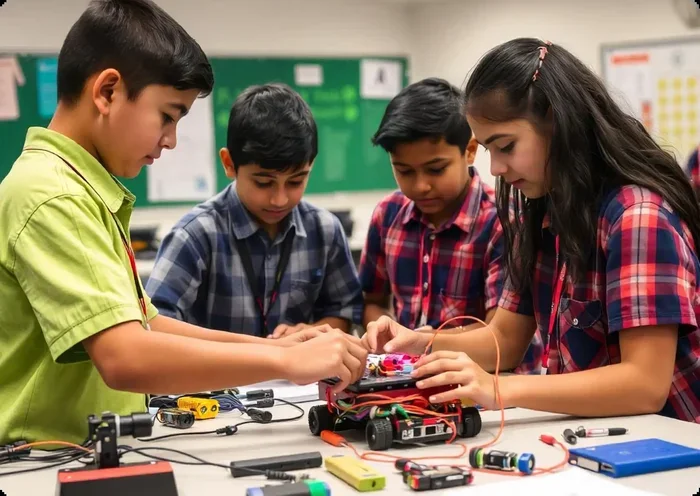
STEM stands for Science, Technology, Engineering, and Mathematics in education. It represents a hands-on approach to learning that connects these four subjects into one unified framework. STEM education prepares students for real-world problem solving, critical thinking, and high-demand careers. Schools across the globe are investing heavily in STEM programs because they build skills that go far beyond the classroom.
STEM education has become one of the biggest buzzwords in schools around the world. You hear it in news headlines, teacher meetings, and even in casual conversations about the future of learning. But what does STEM stands for in education really mean? And why is everyone so excited about it?
At its core, STEM is an approach to learning that combines four key disciplines. Instead of teaching science, math, and technology as separate subjects, STEM blends them together. Students work on projects that require them to think critically, solve problems, and collaborate with others. This method mirrors how people actually use knowledge in real life.
The push for STEM education has grown massively over the past two decades. Governments, businesses, and educators all agree that students need these skills to thrive in a changing world. Whether your child is in elementary school or heading to college, understanding STEM matters.
Key Takeaways
- STEM stands for Science, Technology, Engineering, and Mathematics: These four subjects form the backbone of modern education and career readiness.
- STEM education drives real-world skills: Students learn problem solving, creativity, collaboration, and analytical thinking through hands-on projects.
- STEM careers are in high demand: The job market is shifting rapidly, and STEM skills open doors to some of the fastest-growing professions.
- Early exposure matters: Introducing STEM concepts at a young age builds confidence and curiosity that last a lifetime.
- Common myths hold students back: Misconceptions like “STEM is only for geniuses” prevent many learners from exploring these fields.
- Schools are evolving: Educators are integrating STEM through project-based learning, robotics, coding, and cross-subject activities.
📑 Table of Contents
What Does STEM Stand for in Education?
The acronym STEM stands for four academic fields that form the foundation of modern innovation. Each letter represents a subject area, but together they create something much bigger than the sum of their parts.
S — Science
Science is about understanding the natural world. It involves observation, experimentation, and asking big questions. In a STEM classroom, science lessons go beyond memorizing facts. Students conduct experiments, make predictions, and analyze results. They learn to think like researchers and explorers.
For example, a simple lesson on plant growth might involve designing a test to see how different liquids affect seedlings. This kind of hands-on approach makes science come alive. It also teaches students that STEM learning is not just about textbooks.
T — Technology
Technology refers to tools and systems that solve problems. Computers, smartphones, and software are all products of technological thinking. In education, technology means using digital tools to enhance learning. Students might code a simple program, design a website, or build a robot.
Many schools now offer coding classes as part of their STEM curriculum. These classes teach students how to create technology, not just consume it. That shift from passive user to active builder is a huge part of modern education.
E — Engineering
Engineering is the process of designing and building solutions. Engineers use math and science to create things that work better. In schools, engineering activities might include building bridges out of popsicle sticks or designing a water filtration system.
Engineering teaches students that failure is part of the process. When a bridge collapses during a test, that is not a mistake. It is a learning opportunity. This mindset builds resilience and STEM skills that students carry into adulthood.
M — Mathematics
Mathematics is the language of STEM. It provides the tools needed to measure, calculate, and analyze. In a STEM framework, math is not a standalone subject. It becomes a practical tool used in science experiments, engineering designs, and technology projects.
When students see how math applies to real situations, their interest often grows. A lesson on geometry becomes more exciting when it connects to building a model house. This integration is what makes STEM teaching so effective.
Why STEM Education Matters
The importance of STEM in education cannot be overstated. We live in a world driven by innovation, data, and technology. Every industry, from healthcare to agriculture, relies on STEM knowledge. Preparing students for this reality is not optional. It is essential.
Career Opportunities
Jobs in STEM fields are growing faster than almost any other sector. According to various reports, STEM-related careers are expected to expand by double digits over the next decade. Fields like cybersecurity, renewable energy, biotechnology, and artificial intelligence need skilled workers.
Students who develop a strong foundation in STEM subjects early on have a major advantage. They are better prepared for college programs and job markets that value technical expertise. Even careers outside of traditional STEM fields benefit from analytical and problem-solving skills.
Critical Thinking and Problem Solving
One of the greatest gifts of STEM learning is the development of critical thinking. Students learn to break complex problems into smaller parts. They test ideas, evaluate evidence, and draw conclusions based on data.
These skills apply to every area of life. Whether someone is budgeting a household, managing a business, or making health decisions, the ability to think critically is invaluable. STEM education builds this capacity from an early age.
Creativity and Innovation
Many people think STEM is purely analytical and rigid. That is a myth. In reality, STEM integration requires tremendous creativity. Students must imagine new solutions, design prototypes, and think outside the box.
Some of the world’s greatest innovations came from people who combined technical knowledge with creative vision. The best STEM programs in schools encourage students to experiment, take risks, and think boldly.
The Core Subjects of STEM
Understanding the four pillars of STEM education helps parents and teachers support students more effectively. Each subject plays a unique role, but they work best when combined.
| Subject | Focus Area | Real-World Application |
|---|---|---|
| Science | Understanding natural phenomena | Environmental research, medicine, space exploration |
| Technology | Building tools and systems | Software development, AI, communication networks |
| Engineering | Designing and constructing solutions | Infrastructure, robotics, sustainable design |
| Mathematics | Quantitative reasoning and analysis | Finance, data science, engineering calculations |
Notice how each subject connects to the others. Science provides the knowledge. Technology offers the tools. Engineering applies the solutions. Mathematics supplies the framework. Together, they create a powerful STEM framework that drives progress in every field.
Educators who use effective STEM instruction help students see these connections every day. A single project might involve writing code (technology), calculating measurements (math), testing a hypothesis (science), and building a prototype (engineering). This holistic approach is what sets STEM learning apart from traditional education.
Benefits of STEM Learning for Students
When students engage with STEM education early and consistently, they gain advantages that extend far beyond the classroom. Let us look at some of the most impactful benefits.
1. Builds Confidence
Students who tackle challenging STEM projects learn that they can overcome difficult tasks. Each success, no matter how small, boosts their self-belief. Over time, this confidence grows and spills into other areas of their academic and personal lives.
2. Encourages Collaboration
Most STEM activities are team-based. Students learn to communicate ideas, share responsibilities, and work toward a common goal. These collaboration skills are exactly what employers look for in STEM careers.
3. Develops Adaptability
The world changes fast. New technologies emerge every year. Students who understand STEM concepts are better equipped to adapt. They learn how to learn, which is perhaps the most valuable skill of all.
4. Fosters Curiosity
STEM education encourages students to ask questions and seek answers. This natural curiosity becomes a lifelong habit. Students who stay curious continue to grow and learn long after they leave school.
Teachers often describe their STEM classrooms as places full of energy and excitement. Students are not just sitting and listening. They are building, testing, debating, and creating. That kind of engagement is hard to achieve with traditional teaching methods alone.
How Schools Are Implementing STEM Programs
Schools across the country are finding creative ways to bring STEM education to life. The approach varies by grade level, resources, and student needs. But the core principles remain the same: hands-on learning, real-world connections, and active engagement.
Project-Based Learning
Project-based learning is one of the most popular methods in STEM teaching. Students work on extended projects that address real problems. For example, a class might design a sustainable garden for their school or create an app that helps neighbors find local services.
These projects give students ownership of their learning. They also show how STEM subjects connect to everyday life. When students see the purpose behind their work, motivation naturally increases.
Robotics and Coding Clubs
Many schools now offer robotics clubs and coding workshops as part of their STEM programs. Students build robots, write code, and compete in challenges. These activities make STEM awareness fun and accessible.
Even young learners can participate. Simple coding platforms like Scratch allow elementary students to create animations and games. This early exposure plants seeds for future STEM growth and exploration.
Cross-Curricular Integration
Some schools are weaving STEM integration into every subject. A history lesson might involve analyzing data trends. An art class might explore the geometry of architecture. This approach shows students that STEM knowledge is relevant everywhere.
When educators draw connections across subjects, students develop a richer understanding. They stop seeing science, math, and technology as isolated topics. Instead, they see them as interconnected tools for understanding the world.
Common Myths About STEM Education
Despite its growing popularity, several myths about STEM in education still hold students back. Let us clear up some of the most common misunderstandings.
Myth 1: STEM Is Only for Gifted Students
This is perhaps the most damaging myth. STEM education is for every student, regardless of their natural aptitude. With the right instruction and support, anyone can succeed in STEM fields. The goal is to build skills, not test innate talent.
Myth 2: STEM Means Sitting in a Lab
Modern STEM learning is anything but boring. Students are moving, building, experimenting, and collaborating. The days of passive lectures are fading. Today’s STEM classrooms are dynamic and interactive.
Myth 3: You Must Choose STEM Over Other Subjects
Some students worry that pursuing STEM subjects means abandoning the arts or humanities. In reality, the best STEM education embraces all areas of learning. Creativity, communication, and ethical thinking are all essential in STEM fields.
Many successful engineers and scientists credit their love of music, literature, or philosophy for shaping their innovative thinking. The connections between disciplines are what make STEM learning truly powerful.
Quick Tips for Parents and Teachers
Want to support STEM education at home or in the classroom? Here are some simple and effective strategies.
- Encourage questions: When a child asks “why” or “how,” explore the answer together. Curiosity is the foundation of STEM development.
- Use everyday examples: Cooking involves chemistry. Building with blocks involves engineering. Point out the STEM concepts hidden in daily routines.
- Visit museums and science centers: These places make STEM exploration exciting and tangible for learners of all ages.
- Embrace failure: When a project does not work, celebrate the learning. Resilience is a core STEM skill that applies to every area of life.
- Provide diverse resources: Books, kits, apps, and online courses all support STEM engagement. Let students explore what interests them most.
Remember, you do not need to be an expert to support a young learner’s STEM journey. Your encouragement and curiosity matter more than your technical knowledge. The best thing you can do is show that learning is exciting and worth pursuing.
Conclusion
STEM stands for in education represents much more than an acronym. It is a philosophy of learning that prepares students for the challenges and opportunities of the modern world. By combining science, technology, engineering, and mathematics into a cohesive approach, STEM education builds skills that last a lifetime.
From career readiness to critical thinking, from creativity to collaboration, the benefits of STEM learning are clear and far-reaching. Every student deserves access to quality STEM programs and STEM instruction. When we invest in STEM awareness, we invest in a brighter future for everyone.
Whether you are a parent, teacher, or student, there has never been a better time to embrace STEM education. Start small, stay curious, and keep exploring. The world of STEM subjects is waiting for you.
Just as educators use creative language to inspire learners, you can find powerful ways to describe the learning journey. Check out our collection of similes for education, metaphors for education, and idioms for education to add color and expression to your teaching and writing.
Frequently Asked Questions
What does STEM stand for?
STEM stands for Science, Technology, Engineering, and Mathematics. These four subjects are combined in education to create a hands-on, integrated approach to learning that prepares students for real-world challenges and modern careers.
Why is STEM important in schools?
STEM education equips students with critical thinking, problem-solving, and collaboration skills. These abilities are essential for success in a rapidly changing job market. Schools that prioritize STEM learning help students become adaptable, innovative thinkers.
Can students who are not good at math still succeed in STEM?
Absolutely. STEM education is not just for math geniuses. Many STEM fields value creativity, persistence, and communication just as much as technical skill. With the right support and encouragement, every student can find their place in STEM subjects.
What age should children start learning about STEM?
Children can begin exploring STEM concepts as early as preschool. Simple activities like building blocks, sorting objects, and asking questions about nature all introduce foundational STEM skills. The earlier students engage, the more confident they become.
How can parents support STEM education at home?
Parents can support STEM learning by encouraging curiosity, doing simple experiments together, and using everyday activities to highlight STEM concepts. Cooking, gardening, and even video games all offer opportunities for STEM exploration and discussion.
What careers can students pursue with a STEM education?
Students with a strong STEM background can pursue careers in fields like engineering, computer science, healthcare, environmental science, and data analysis. STEM careers are among the fastest-growing and highest-paying job sectors available today.
=== CONCLUSION ===
STEM stands for in education is a topic that touches every aspect of modern learning and career preparation. By understanding the four pillars of Science, Technology, Engineering, and Mathematics, students gain a powerful toolkit for navigating an increasingly complex world. The benefits of STEM education extend far beyond the classroom, shaping confident, curious, and capable individuals.
If you are a parent, teacher, or student, now is the perfect time to dive deeper into STEM learning. Start with small steps, stay curious, and remember that every question you ask is a step toward STEM growth. The future belongs to those who dare to explore, create, and innovate.


