
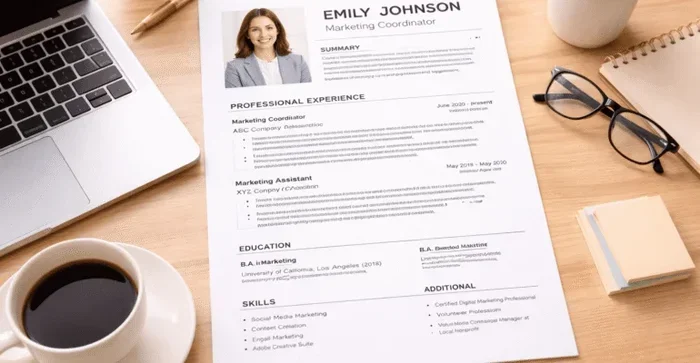
Writing the education section on your resume is simpler than you think. This guide covers everything from what to include to how to format it perfectly. You will learn how to showcase your degree, GPA, honors, and relevant coursework in a way that grabs attention. Whether you are a recent graduate or a seasoned professional, these tips will help you nail your resume education details every time.
Your education section on resume is more important than most people think. Many job seekers spend hours perfecting their work experience but rush through the education part. That is a big mistake. Hiring managers often scan the education section early in their review. A well-written resume education block can open doors, even if you are new to the workforce.
So what exactly should you put in this section? And how do you make it look good? In this guide, we will walk you through everything step by step. You will learn what to include, how to format it, and what mistakes to avoid. By the end, you will know exactly how to write an education section that gets noticed.
Key Takeaways
- Always include your degree, institution, and graduation date: These are the non-negotiable essentials of any education section on resume.
- Highlight GPA and honors when they are strong: A 3.5+ GPA or dean’s list recognition can set you apart from other candidates.
- Add relevant coursework and projects for fresh graduates: This fills space and shows hiring managers you have practical knowledge.
- Place your education section thoughtfully: Put it above work experience if you are a new grad, or below if you have years of experience.
- Avoid common mistakes like listing your high school diploma after earning a college degree: Keep your education details current and relevant.
- Tailor your education section to each job application: Match your field of study and achievements to the job description for maximum impact.
📑 Table of Contents
- Why Your Education Section on Resume Matters
- What to Include in Your Education Section on Resume
- How to Format the Education Section on Resume
- Education Section Examples by Experience Level
- Common Mistakes That Hurt Your Education Section
- Tips to Make Your Education Section Stand Out
- Key Takeaways
- Conclusion
Why Your Education Section on Resume Matters
Your educational background tells a story. It shows employers what you studied, where you learned it, and how hard you worked. For many hiring managers, the education section on resume is a quick filter. They use it to decide if you meet the basic requirements for the job.
What Hiring Managers Actually Look At
When recruiters scan your resume, they look for a few key pieces of information. They want to see your degree level, the name of your school, and your graduation date. Some also check your GPA if you are a recent graduate. Here is what they typically scan for:
- Degree earned: Bachelor’s, Master’s, Associate’s, or diploma
- Institution name: The university or college you attended
- Graduation date: Month and year you completed your studies
- GPA: Only if it is 3.0 or higher
- Honors: Dean’s list, cum laude, or other recognitions
These education details help recruiters quickly assess your qualifications. If your resume education block is missing key information, they may move on to the next candidate.
When Your Education Deserves Top Billing
Not everyone needs to lead with their education. If you have five or more years of work experience, your skills and job history matter more. But if you are a recent graduate, a career changer, or someone with limited work experience, your education section on resume should sit near the top. Place it right after your summary or objective statement.
This is especially true for entry-level job applications. Employers expect new graduates to have strong academic backgrounds. Your educational achievements can carry a lot of weight when you do not have much professional experience yet.
What to Include in Your Education Section on Resume
Knowing what to put in your education section can make or break this part of your resume. You do not want to overcrowd it, but you also do not want to leave out important details. Here is a clear breakdown of what belongs in your resume education block.
Degree Name and Institution
Start with the basics. Always list your degree type and the full name of your institution. For example:
- Bachelor of Science in Computer Science — Stanford University
- Associate of Arts in Marketing — Community College of Denver
- High School Diploma — Lincoln High School
Make sure you spell everything correctly. The university name and degree title should match your official records exactly. This is one of the most important education details on your resume.
Graduation Date
Include your graduation month and year. If you have not yet graduated, you can write “Expected May 2025.” Some people worry about listing an older graduation date, but honesty is always the best policy. Recruiters respect transparency in your educational background.
GPA, Honors, and Awards
If your GPA is 3.0 or above, include it. If you graduated with honors like cum laude or made the dean’s list, definitely add that. These are strong academic achievements that show dedication. However, if your GPA is below 3.0, it is usually best to leave it out. Your resume education section should highlight your strengths.
You can also include any scholarships you received or special awards tied to your academic performance. These small additions can make a big difference in how hiring managers view your education details.
Relevant Coursework and Projects
This is especially helpful for recent graduates or people changing careers. If you took courses that directly relate to the job you are applying for, list them. Keep it to three or four courses max. You do not want to overwhelm the reader with your entire transcript.
For example, if you are applying for a data analyst role, you might list courses like:
- Statistical Analysis and Data Modeling
- Database Management Systems
- Python Programming for Data Science
You can also include academic projects if they are relevant. A capstone project or research paper shows that you can apply your knowledge in real-world settings. This adds depth to your resume education section.
How to Format the Education Section on Resume
Formatting matters just as much as content. A messy education block can hurt your chances, even if your credentials are strong. Follow these simple formatting rules to keep your resume education section clean and professional.
Reverse Chronological Order
Always list your most recent degree first. This is called reverse chronological order, and it is the standard format for resume education sections. Start with your highest degree and work backward. Hiring managers expect this layout, so stick with it.
Here is the correct order:
- Most recent degree or certification
- Previous degree
- High school diploma (only if you have no college education)
Where to Place It on Your Resume
The placement of your education section depends on your experience level. For new graduates, place it above your work experience. For professionals with several years of experience, place it below your work history. This keeps the most relevant information front and center for each situation.
Use a consistent font and size for your education details. Match the rest of your resume formatting. Your education section should blend seamlessly with the rest of the document. A clean resume template can help you achieve this look effortlessly.
Education Section Examples by Experience Level
Seeing real examples helps a lot. Let us walk through a few different scenarios. Each example shows how to tailor your education section based on your situation.
Recent College Graduate
If you just finished your degree and have little work experience, lean into your academic achievements. Here is a sample:
Education
Bachelor of Business Administration, University of Michigan — Ann Arbor
Graduated: May 2024
GPA: 3.7/4.0 | Dean’s List (6 semesters)
Relevant Coursework: Financial Accounting, Organizational Behavior, Business Analytics
This example works because it includes the degree, institution, graduation date, GPA, honors, and relevant coursework. It gives the hiring manager a complete picture of your educational achievements.
Career Changer with Limited Formal Education
If you are switching careers and your degree is not directly related, focus on transferable skills and certifications. Here is how you might handle it:
Education
Associate of Science in General Studies, City College — Graduated: December 2019
Then, in a separate certifications section, you would list any relevant training programs or online courses you completed. This approach keeps your education section honest while redirecting attention to your new skills.
Professional Certifications and Training
For many professionals, certifications carry more weight than a formal degree. If this applies to you, create a dedicated certifications section or blend your certifications into the education block. Include the certification name, issuing organization, and date earned. This shows employers you continue to invest in professional development.
Common Mistakes That Hurt Your Education Section
Avoiding errors is just as important as knowing what to include. Many people make preventable mistakes that weaken their resume education section. Here are the most common ones.
Listing Everything from Kindergarten Onward
Please do not list your elementary school or middle school on your resume. Once you have earned a college degree or higher, your high school diploma becomes irrelevant. Keep your education details focused on the most recent and highest level of learning. No one needs to know about your third-grade spelling bee win.
Forgetting to Highlight Key Achievements
Simply listing your degree and school is not enough. You need to add context. Did you graduate with honors? Did you lead a student organization? Did you complete a thesis or capstone project? These are education details that set you apart. Use bullet points to make them easy to scan.
Using Vague or Generic Language
Avoid phrases like “studied many subjects” or “learned a lot.” Be specific. Name your exact degree, your field of study, and the skills you gained. Strong, clear language makes your education section on resume far more powerful. If you want to make your descriptions more vivid and impactful, you can explore resources on similes for education or metaphors for education to learn how to craft compelling descriptions that stand out.
Tips to Make Your Education Section Stand Out
You have the basics down. Now let us talk about how to take your education section from good to great. These tips will help you add polish and professionalism.
Use Strong, Descriptive Language
Your choice of words matters. Instead of writing “Studied business at university,” try “Earned a Bachelor of Science in Business Administration with a focus on strategic management.” The second version is much stronger. It uses active voice and specific details. To add even more flair to your descriptions, consider learning how to use idioms for education that make your resume writing more engaging and memorable.
Tailor Your Education Details to Each Job
Every job application is different. Read the job description carefully and adjust your education section accordingly. If the employer values a specific field of study, make sure yours is prominent. If they care about relevant coursework, highlight those classes. This small effort can significantly improve your chances of landing an interview.
Keep It Clean and Consistent
Use the same font, size, and spacing throughout your education block. Align it with the rest of your resume. Consistency signals professionalism and attention to detail. A well-formatted resume education section tells employers you care about the little things.
Add a Skills Section to Complement Your Education
Your education details work best when paired with a strong skills section. List both hard skills (like software proficiency or technical abilities) and soft skills (like communication or leadership). This combination gives hiring managers a complete view of your education and abilities. Together, your education section and skills section paint a compelling picture of what you bring to the table.
Key Takeaways
- Always include your degree, institution, and graduation date: These are the essential education details every resume needs.
- Highlight GPA and honors when they are strong: Academic achievements like dean’s list or cum laude can boost your resume education block.
- Add relevant coursework and projects for fresh graduates: This fills space and shows hiring managers you have practical, applicable knowledge.
- Place your education section thoughtfully: Lead with education if you are a new grad; place it below work experience if you have years in the field.
- Avoid common mistakes like listing outdated diplomas: Keep your education details current, relevant, and focused on your highest achievements.
- Tailor your education section to each job application: Match your field of study and accomplishments to the job description for the best results.
- Use strong, descriptive language: Specific, active phrasing makes your education section on resume far more compelling than vague statements.
Conclusion
Writing the education section on your resume does not have to be stressful. You now know exactly what to include, how to format it, and what mistakes to avoid. Your educational background is a powerful tool in your job search. Whether you are a recent graduate or a seasoned professional, a well-crafted education section can make a real difference.
Remember to keep it clean, specific, and tailored to each job you apply for. Highlight your strongest academic achievements. Avoid the common pitfalls that weaken this section. With the right approach, your resume education block will work hard for you. It will open doors and help you land the interview you deserve. Start applying these tips today, and watch how your resume transforms.
Your education section on resume is your chance to show employers the foundation of your knowledge and skills. Make it count. Put in the effort, and you will see the results in your next job application.
Frequently Asked Questions
What is the proper format for the education section on resume?
List your most recent degree first, followed by the institution name, graduation date, and any honors or GPA. Use reverse chronological order and keep the formatting consistent with the rest of your resume. This is the standard and most widely accepted resume education format.
Should I include my GPA on my resume education section?
Only include your GPA if it is 3.0 or higher. A strong GPA can be a great asset, especially for recent graduates with limited work experience. If your GPA is below 3.0, it is better to leave it out and focus on other education details like honors or relevant projects.
Do I need to include my high school diploma if I have a college degree?
No. Once you have earned a college degree or higher, your high school diploma is no longer necessary on your resume education section. Employers care most about your highest level of education. Listing older credentials can actually make your profile look less impressive.
How do I list certifications in my education section?
You can either create a separate certifications section or include them in your education block. List the certification name, issuing organization, and date earned. Professional certifications show employers you continue to invest in your education and professional development outside of formal degree programs.
Can I include relevant coursework if I am not a recent graduate?
Yes, but only if the coursework is directly relevant to the job you are applying for. For experienced professionals, keep it brief and targeted. List two or three courses that align with the job description. This adds value without cluttering your resume education section.
Should I put my education section above or below my work experience?
It depends on your experience level. If you are a recent graduate or have less than two years of work experience, place your education section above work experience. If you have several years of professional experience, place it below. This ensures the most relevant information appears first on your resume.


