
What education do you need to be a barber includes completing a licensed barber school program, gaining hands-on training, and passing your state licensing exam. Most barber training programs take between 9 months and 2 years to finish, depending on your state’s hour requirements and whether you study full-time or part-time. This guide covers everything from enrollment to certification so you can start your barber career with confidence.
Many people dream of working with clippers and razors every day. The barber profession offers creative freedom, strong earning potential, and the chance to build lasting relationships with clients. But before you can start cutting hair, you need to understand the barber education requirements.
The good news is that barber school is more accessible than ever. Programs exist in almost every state, and many schools offer flexible schedules for working students. Whether you are fresh out of high school or looking to switch careers, the path to becoming a barber starts with the right barber training program.
People in the education world use idioms for education all the time to describe learning experiences, and the same holds true for barbering. You will hear phrases like “cutting to the chase” or “learning the ropes” thrown around in every barber school hallway. These expressions capture the spirit of the journey you are about to begin.
Key Takeaways
- Barber school is required in most states: You must complete a licensed barber training program before you can legally practice as a professional barber.
- Programs typically last 9 months to 2 years: The duration depends on your state’s hour requirements and whether you study full-time or part-time.
- You must pass a state licensing exam: Both a written test and a practical exam are required to earn your barber license.
- Apprenticeships are a valid alternative: Some states let you complete a barber apprenticeship instead of attending a formal barber college.
- Continuing education keeps your skills current: Many states require ongoing training to maintain your license and stay up to date with trends.
- Costs vary by program: Barber school tuition ranges from $5,000 to $15,000, but financial aid and scholarships are often available.
📑 Table of Contents
Understanding Barber Education Requirements
The first step in your journey is understanding what your state actually requires. Every state sets its own rules for who can practice as a barber. These rules protect the public and ensure that every professional barber meets a minimum standard of skill and knowledge.
What Does Barber School Involve?
Barber school covers a wide range of topics that go far beyond just cutting hair. You will study hair cutting techniques, skin care, nail care, and how to operate barber tools safely. Most programs also include lessons on sanitation, client communication, and business basics.
Here is a look at what a typical barbering course curriculum includes:
- Hair cutting, coloring, and styling methods
- Shaving and facial grooming techniques
- Sanitation and hygiene protocols
- Client consultation and communication skills
- Barber shop management and basic accounting
- State laws and regulations for barbers
Many barber colleges also offer workshops on the latest trends in men’s grooming. This gives you an edge when you enter the job market. The classroom work is important, but the real magic happens during hands-on practice sessions.
State-by-State Differences in Education Rules
Each state has its own state requirements for barber education. Some states require as few as 1,000 training hours, while others demand up to 2,000 hours or more. It is essential to check your state’s specific rules before you enroll in any program.
Many people use similes for education to explain why these differences exist. They say state rules are “like a patchwork quilt” because every region sets its own standards. This is why researching your local requirements is the very first thing you should do.
Here are some common variations you might find:
- Some states require a specific number of classroom hours
- Others focus on hands-on apprenticeship hours
- A few states accept a combination of both
- Some states have separate licenses for barbers and cosmetologists
Understanding these differences early saves you time and money. Always contact your state’s licensing board to get the most accurate and current information.
Types of Barber Training Programs Available
Not all barber education requirements are met in the same way. There are several paths you can take, and each has its own advantages. Let us explore the most common options available today.
Barber College vs. Cosmetology School
A common question is whether you should attend a dedicated barber college or a broader cosmetology school. Barber colleges focus specifically on men’s grooming and barbering skills. Cosmetology schools cover a wider range, including hair styling for all genders, nails, and skin care.
Many educators use metaphors for education to explain this choice. They say picking a program is “like choosing between a specialized tool and a Swiss Army knife.” A barber college gives you deep expertise in one area, while a cosmetology school offers broader salon education.
Here is a quick comparison to help you decide:
- Barber College: Focused on barbering, shorter programs, ideal for those who want to specialize in men’s grooming
- Cosmetology School: Broader curriculum, covers multiple beauty services, takes longer to complete
If your goal is to become a professional barber who runs a men’s grooming shop, a dedicated barber college is usually the best choice.
Apprenticeship Programs as an Alternative
Some states allow you to complete a barber apprenticeship instead of attending a formal school. Apprenticeships let you learn on the job under the supervision of a licensed barber. You earn money while you learn, which is a huge advantage.
Apprenticeships typically take longer than formal school programs. You might spend three to four years working and studying part-time. However, many people find this hands-on approach gives them real-world confidence that classroom learning alone cannot match.
Here are some things to consider about vocational training through apprenticeships:
- You earn a salary from day one
- You build a professional network early
- The learning pace is more flexible
- You get direct experience with real clients
Not all states offer apprenticeship options, so check your local regulations. If your state does allow it, an apprenticeship can be a smart and affordable path to a barber career.
Core Skills You Will Learn in Barber School
Once you enroll in a barber training program, you will start building a strong foundation of practical skills. These skills are what separate a licensed professional from someone who just picks up a pair of clippers at home.
Hair Cutting and Styling Techniques
Hair cutting is at the heart of barbering. You will learn how to use scissors, clippers, and razors with precision. Instructors teach you everything from basic fades to intricate designs. You will also study how different hair textures respond to various cutting methods.
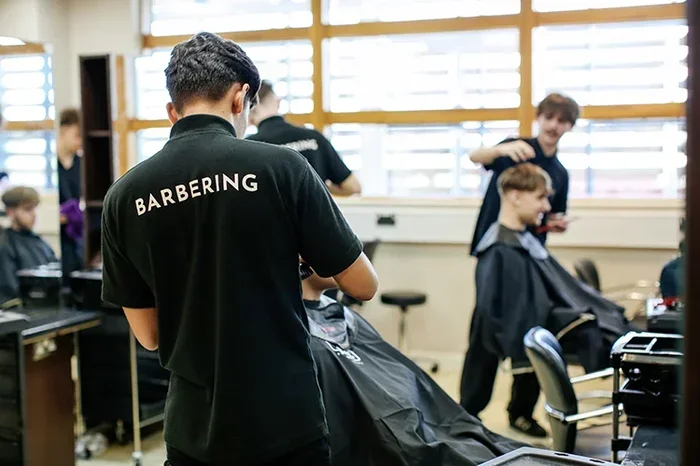
During your barbering courses, you will practice on mannequins first. Then you will work on real clients under the watchful eye of your instructor. This gradual approach builds your confidence and ensures you are ready for the salon floor.
Shaving and Grooming Fundamentals
Shaving is a signature skill for barbers. You will learn how to use straight razors safely and effectively. This includes proper blade handling, skin preparation, and aftershave application. A great barber knows how to deliver a clean, comfortable shave every single time.
Beyond shaving, you will also study facial grooming and skincare basics. Many modern barbers offer services like beard trimming, mustache shaping, and even scalp treatments. These grooming services are in high demand and can set you apart from other stylists.
Here are the key barber skills you will develop during your training:
- Precision hair cutting with clippers and scissors
- Safe and effective razor shaving
- Beard trimming and shaping
- Scalp treatments and massages
- Hair coloring and tinting
- Client consultation and style recommendation
The Licensing and Certification Process
Completing a barber school program is only half the battle. You must also earn your barber license before you can legally work as a professional barber. The licensing process ensures that every barber meets the minimum standards set by your state.
Passing the Barber Exam
Most states require you to pass a barber exam that includes both a written test and a practical demonstration. The written portion covers topics like sanitation rules, state laws, and safety procedures. The practical portion tests your actual cutting, shaving, and styling abilities.
Preparing for the exam can feel stressful, but most barber certification programs include exam prep as part of their curriculum. Your instructors will walk you through practice tests and give you feedback on your practical skills. Studying consistently and attending every class gives you the best chance of passing on your first try.
Continuing Education for Barbers
Getting your license is not the end of the learning journey. Many states require continuing education for barbers to keep your license active. This might involve attending workshops, taking advanced courses, or earning credits on new techniques and trends.
Continuing education helps you stay competitive in a fast-changing industry. New hairstyling education trends emerge every season, and clients always want the latest styles. The best professional barber professionals never stop learning and growing.
How Long Does Barber Education Take?
The time it takes to complete your barber education requirements depends on several factors. Full-time students usually finish faster than part-time learners. Your state’s required training hours also play a big role.
Full-Time vs. Part-Time Programs
A full-time barber training program typically takes about 9 months to 12 months to complete. You attend classes several days a week and can start working sooner. Part-time programs stretch the same hours over a longer period, often 18 months to 2 years.
Here is a general breakdown of program lengths:
- Full-time programs: 9 to 12 months (approximately 1,500 training hours)
- Part-time programs: 18 months to 2 years (same hours spread out)
- Apprenticeship programs: 3 to 4 years (varies by state)
Choose the pace that fits your life. If you want to enter the workforce quickly, a full-time program is the way to go. If you need to work while you study, a part-time schedule gives you the flexibility you need.
Is Barber School Worth the Investment?
Like any education, barber school requires a financial investment. Tuition costs vary widely depending on the school, location, and program length. But the return on that investment can be very rewarding for the right person.
Cost of Barber Education
Most barber programs cost between $5,000 and $15,000 in total tuition. Some premium barber colleges charge more, while community-based programs may cost less. Additional expenses include tools, uniforms, and exam fees.
The good news is that many schools offer financial aid, scholarships, and payment plans. Some employers also reimburse tuition for apprentices. Do not let the upfront cost scare you away from pursuing your barber career.
Career Opportunities After Graduation
Once you earn your barber license, the doors open up. You can work in a traditional barbershop, a high-end salon, a resort, or even start your own business. Many barbers eventually build loyal client bases that support a very comfortable lifestyle.
The demand for skilled barbers remains strong across the country. Men’s grooming is a growing industry, and well-trained professionals are always in need. With the right barber skills and a strong work ethic, you can build a fulfilling and profitable career.
Conclusion
Understanding what education do you need to be a barber is the foundation of a successful career in this timeless profession. From enrolling in a licensed barber school to passing your state exam and earning your barber license, every step brings you closer to your goal. The journey requires dedication, practice, and a genuine love for the craft.
Whether you choose a full-time barber training program or a hands-on barber apprenticeship, the key is to stay committed and keep learning. The barber education requirements might seem like a lot at first, but they exist to protect you and your future clients. Invest in your skills, respect the process, and you will find that the effort pays off in ways you never expected.
Start by researching your state’s specific requirements, choosing the right program, and taking that first brave step toward a rewarding barber career. The world of grooming is waiting for you.
Frequently Asked Questions
What education do you need to be a barber in most states?
Most states require you to complete a licensed barber training program that includes between 1,000 and 2,000 hours of classroom and hands-on instruction. After finishing the program, you must pass a state licensing exam to legally practice as a professional barber.
Can I become a barber without going to school?
In some states, you can complete a barber apprenticeship instead of attending a formal barber college. Apprenticeships let you learn on the job under a licensed barber, but they typically take longer to finish than traditional school programs.
How much does barber school cost on average?
Barber school tuition typically ranges from $5,000 to $15,000 depending on the school and program length. Many schools offer financial aid, scholarships, and payment plans to help make the cost more manageable for students.
What is the difference between barber school and cosmetology school?
Barber school focuses specifically on men’s grooming, hair cutting, shaving, and beard care. Cosmetology school covers a broader range of beauty services including hair styling for all genders, nails, and skincare. Choose barber school if you want to specialize in men’s grooming.
How long does it take to get a barber license?
Full-time barber training programs usually take 9 to 12 months to complete, followed by time to study for and pass the state licensing exam. Part-time programs and apprenticeships can take anywhere from 18 months to 4 years depending on your schedule and state requirements.
Do I need to take continuing education after getting my barber license?
Many states require continuing education for barbers to keep your license active. These courses help you stay current with new techniques, trends, and safety standards. Even if your state does not require it, ongoing learning helps you stay competitive in the industry.


