
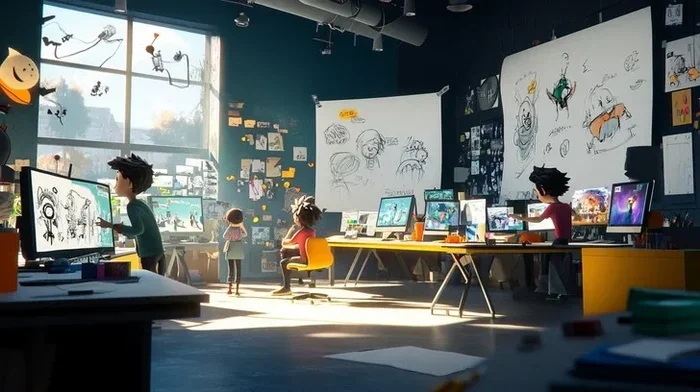
To become an animator, you typically need a bachelor’s degree in animation, digital arts, or a related field. However, many successful animators also thrive with associate degrees, diplomas, or self-taught paths backed by a strong portfolio. The right education depends on your goals, budget, and the specific animation niche you want to pursue.
So you want to be an animator. That is awesome. Animation is a exciting field that blends art, technology, and storytelling into one career. But here is the big question: what education do you need to be an animator? The answer might surprise you. There is no single path that fits everyone.
Some animators have fancy four-year degrees from top art schools. Others are self-taught and learned everything from YouTube tutorials. The truth is, the education you need depends on your goals, your budget, and the type of animation you want to do. In this guide, we will walk through every option so you can make the best choice for your future.
Think of your education journey like building a house. You need a solid foundation first, and then you add rooms as you grow. Whether that foundation is a formal degree or hands-on practice, it all counts. Let us break down every path you can take.
Key Takeaways
- A bachelor’s degree is the most common path and opens doors to major studios and higher-paying roles.
- Associate degrees and diplomas offer faster entry into the field with less time and cost investment.
- Self-taught routes work well if you build a stellar portfolio and master industry-standard software.
- Specialized skills like 2D animation, 3D modeling, and motion graphics are highly valued by employers.
- A strong portfolio matters more than your degree alone in most hiring decisions.
- Online courses and bootcamps provide flexible learning options for aspiring animators at any stage.
📑 Table of Contents
- Understanding the Animation Industry
- Do You Need a Degree to Be an Animator?
- Degree Options for Aspiring Animators
- Self-Taught Animation: Can You Do It?
- Essential Skills Every Animator Needs
- Top Animation Schools and Programs
- Online Courses and Alternative Learning Paths
- Building a Strong Portfolio
- Career Paths in Animation
- Common Mistakes to Avoid
- Final Thoughts
Understanding the Animation Industry
Before diving into education, it helps to understand what animators actually do. Animators create moving images using digital tools. They work in film, television, video games, advertising, and even medical visualization. The industry is growing fast, and demand for skilled animators keeps rising.
What Does an Animator Do Day to Day?
An animator’s daily tasks can vary a lot. Some days you are sketching character designs. Other days you are fine-tuning movement frame by frame. Here are common responsibilities:
- Creating storyboards and rough sketches
- Building digital models and rigging characters
- Animating movement using software like Maya or Blender
- Adding textures, lighting, and visual effects
- Collaborating with directors, writers, and other artists
The work requires both artistic talent and technical skill. That is why education matters so much in this field.
Do You Need a Degree to Be an Animator?
This is the question everyone asks. The short answer is no, you do not absolutely need a degree. But a degree can give you a serious advantage. Let us look at why.
Many studios prefer candidates with formal education. A degree shows you have discipline, foundational knowledge, and professional training. It also gives you access to internships and networking opportunities. However, the industry is evolving. More studios now care about your portfolio and skills over your diploma.
Think of it this way: a degree is like a roadmap. It gives you structure and direction. But the journey itself is what really matters. Some of the best animators in the world are self-taught and learned through real-world practice.
Degree Options for Aspiring Animators
If you decide to pursue formal education, you have several options. Each one has its own benefits and trade-offs.
Bachelor’s Degree in Animation
A bachelor’s degree is the most popular choice for aspiring animators. It typically takes four years to complete. Programs cover a wide range of topics including character design, storyboarding, 3D modeling, and motion graphics. Schools like CalArts, Ringling College, and Sheridan College are well known for their animation programs.
A bachelor’s degree in animation opens doors to larger studios and higher-paying positions. Employers often look for this level of education when hiring for full-time roles. You also get to build connections with professors and classmates who may become future collaborators.
Associate Degree in Animation
An associate degree takes about two years. It gives you a solid introduction to animation fundamentals. You will learn basic drawing, digital art, and introductory software skills. This option is great if you want to enter the workforce quickly or if a four-year program is not feasible right now.
Many animators start with an associate degree and then transfer to a bachelor’s program later. This is a smart strategy that saves time and money.
Diploma and Certificate Programs
Diploma programs are shorter and more focused. They usually last six months to one year. You will dive deep into specific skills like character animation or visual effects. These programs are ideal for people who already have some art background and want to specialize quickly.
Certificates are also valuable for professionals switching careers. They show employers you have targeted training without committing to a full degree program.
Self-Taught Animation: Can You Do It?
Absolutely. Many successful animators never set foot in a classroom. The internet has changed everything. You can learn animation from home using free or low-cost resources.
How to Get Started as a Self-Taught Animator
Here is a simple roadmap if you want to go the self-taught route:
- Learn the basics of drawing and design
- Choose an animation specialty (2D, 3D, motion graphics)
- Download free or affordable software like Blender or OpenToonz
- Follow online tutorials from platforms like YouTube or Udemy
- Practice daily and build a portfolio of your work
- Share your work on social media and animation communities
- Apply for freelance jobs or entry-level positions
The biggest challenge with the self-taught path is staying disciplined. Without a structured program, you need to push yourself. But the reward is freedom. You learn at your own pace and build skills that are directly relevant to the job market.
What Education Do You Need to Be an Animator Without a Degree?
If you skip formal education, your portfolio becomes your resume. Studios want to see that you can create compelling motion and bring characters to life. Spend time refining your craft. Enter animation contests. Collaborate with other creatives. Every project you complete adds value to your portfolio.
Remember, the animation industry is built on talent and creativity. Education is a tool, not a requirement. The best animators are the ones who never stop learning, whether through formal classes or personal exploration.
Essential Skills Every Animator Needs
Education gives you knowledge, but skills get you hired. Here are the key abilities every animator should develop.
Technical Skills
- Proficiency in animation software: Maya, Blender, Cinema 4D, and Adobe Animate are industry standards
- Understanding of motion and timing: This is the heart of great animation
- Knowledge of rigging and rendering: These technical skills separate good animators from great ones
- Familiarity with visual effects: VFX knowledge is a huge bonus in today’s market
Artistic Skills
- Drawing and sketching: Even digital animators benefit from traditional art skills
- Storytelling and narrative: Animation is about telling stories through movement
- Character design: Creating memorable characters is a core part of the job
- Color theory and composition: These principles make your work visually appealing
Soft Skills
- Communication: You will work in teams and need to share ideas clearly
- Time management: Animation projects have tight deadlines
- Adaptability: The industry changes fast. New tools and techniques emerge constantly
- Patience: Perfecting a single scene can take hours or even days
These skills are not just taught in classrooms. You can develop them through practice, online courses, and real-world projects. Education provides a structured way to build them, but passion and persistence matter just as much.
Top Animation Schools and Programs
If you are considering formal education, here are some of the best programs available. Keep in mind that attending a top school is not the only way to succeed, but it can give you a head start.
| School | Location | Degree Offered | Notable Feature |
|---|---|---|---|
| CalArts | California, USA | BFA in Character Animation | Prestigious and highly selective |
| Ringling College | Florida, USA | BFA in Computer Animation | Strong industry connections |
| Sheridan College | Ontario, Canada | Bachelor of Animation | Known as the Harvard of Animation |
| Gnomon School | California, USA | Certificate and Degree Programs | Focus on VFX and 3D |
| National Film and Television School | UK | MA in Animation | Renowned international program |
Each of these programs offers something unique. Research them thoroughly and visit their websites to learn more about curriculum, faculty, and graduate outcomes.
Online Courses and Alternative Learning Paths
Not everyone can attend a traditional art school. The good news is there are many online options available today. These courses are flexible, affordable, and taught by industry professionals.
Popular Online Platforms for Animation Learning
- Coursera: Offers university-backed animation courses
- Udemy: Has hundreds of affordable animation classes
- Schoolism: Taught by working professionals from major studios
- Animation Mentor: A dedicated online animation school with mentor-led classes
- Domestika: Creative courses at budget-friendly prices
Online learning is a fantastic way to build skills at your own pace. Many working animators continue taking courses throughout their careers to stay current with new tools and techniques.
Think of online education as a toolbox. Each course adds a new tool to your kit. Over time, you assemble everything you need to create professional-quality work. The key is consistency and practice.
Building a Strong Portfolio
No matter what path you choose, your portfolio is the most important asset in your animation career. It is your calling card. It shows potential employers what you can do.
Tips for a Standout Portfolio
- Include only your best work. Quality beats quantity every time
- Show a variety of skills: character animation, motion graphics, and visual effects
- Keep your portfolio updated with fresh projects
- Create a personal website to showcase your work professionally
- Add breakdowns that show your process from concept to final animation
Your portfolio tells your story as an animator. It demonstrates your creativity, technical ability, and attention to detail. Invest time in making it exceptional.
Education gives you the knowledge to create great work. But your portfolio proves you can actually do it. That is why so many hiring managers focus on portfolios over diplomas.
Career Paths in Animation
Animation is a broad field with many career options. Your education can shape which path you take, but it does not limit you. Here are some common roles:
- Character Animator: Brings characters to life through movement and expression
- Motion Graphics Designer: Creates animated text, logos, and visual elements for media
- 3D Modeler: Builds digital characters and environments from scratch
- Visual Effects Artist: Adds realistic effects to live-action and animated films
- Storyboard Artist: Plans scenes and sequences before animation begins
- Animation Director: Oversees the creative vision of animation projects
Each role has different educational requirements. Character animation often benefits from a bachelor’s degree, while motion graphics roles may accept candidates with certificates or self-taught skills. Research the specific path you are interested in and tailor your education accordingly.
The animation world is full of opportunities. With the right education and a passion for the craft, you can build a career that is both creative and rewarding.
Common Mistakes to Avoid
As you plan your animation education, watch out for these common pitfalls:
- Choosing a program just for the prestige: The best school for you is the one that fits your goals and budget
- Neglecting your portfolio: A degree means nothing without strong work to show
- Skipping fundamentals: Drawing, design, and storytelling are the roots of great animation
- Not learning industry software: Employers expect you to know tools like Maya or Blender
- Waiting for perfect conditions: Start learning now, even if you only have an hour a day
Avoiding these mistakes will save you time, money, and frustration. Stay focused on building real skills and creating work you are proud of.
Final Thoughts
So, what education do you need to be an animator? The answer is simpler than you might think. You need a combination of knowledge, practice, and dedication. Whether that comes from a formal degree, online courses, or self-study, the path is yours to choose.
Education in animation is not one-size-fits-all. A bachelor’s degree gives you structure and credibility. An associate degree offers a quicker start. Self-taught learning provides freedom and flexibility. The best choice is the one that aligns with your dreams and your situation.
Remember that every animator starts somewhere. Your education journey is unique, and that is a beautiful thing. Keep learning, keep creating, and never stop pushing your boundaries. The world of animation is waiting for your voice and your vision.
As they say, every expert was once a beginner. Your journey starts now. And with the right education, you will be well on your way to building the career you have always imagined.
Frequently Asked Questions
What degree is best for becoming an animator?
A Bachelor of Fine Arts in Animation or Computer Animation is the most common and widely accepted degree. However, degrees in digital arts, multimedia arts, or graphic design can also lead to animation careers. The best degree is one that includes hands-on software training and portfolio development.
Can I become an animator without a college degree?
Yes, many successful animators are self-taught or learned through online courses and bootcamps. Your portfolio and skills matter more than a diploma in most cases. Focus on building strong work samples and gaining practical experience through freelance or personal projects.
How long does animation education take?
A bachelor’s degree takes four years, an associate degree takes two years, and certificate programs can be completed in six months to one year. Self-taught paths vary widely depending on how much time you dedicate to learning each day.
What animation software should I learn?
Start with Blender, which is free and widely used in the industry. Then learn Maya or Cinema 4D for 3D animation, and Adobe Animate for 2D and motion graphics. Familiarity with multiple tools makes you more versatile and employable.
Is animation a good career choice?
Yes, animation offers creative fulfillment and strong career growth. The demand for animators is increasing in film, gaming, advertising, and education. Salaries vary by experience and specialization, but skilled animators are well compensated in most markets.
Do I need to be good at drawing to be an animator?
Drawing skills are helpful but not always required, especially for 3D animation. Many animators focus on movement and timing rather than illustration. However, a basic understanding of design and visual storytelling benefits every type of animator.


