
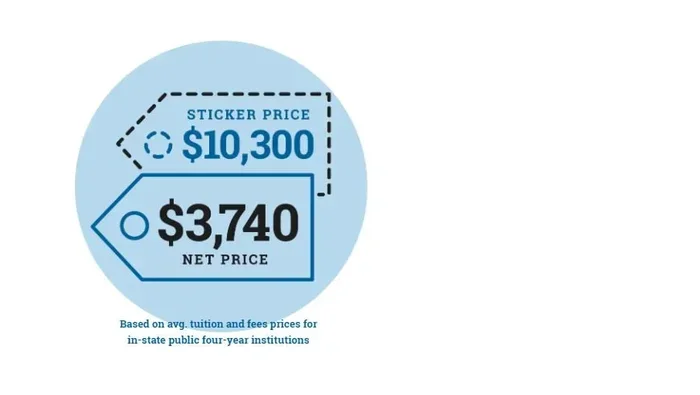
The sticker price for higher education is the full published cost a college lists before any discounts or aid. Most families never pay this amount because financial aid, scholarships, and grants reduce the real bill. Understanding this number helps you compare schools and budget smarter. Let us walk you through everything you need to know about the sticker price and how to lower your actual cost.
Key Takeaways
- Sticker price is the full published cost: It is the price tag colleges display before any discounts.
- Net price is what you actually pay: Financial aid, scholarships, and grants bring the cost way down.
- Private colleges often have higher sticker prices but offer more aid: The final bill can be lower than at public schools.
- Use the Net Price Calculator on every college website: It gives you a personalized estimate of your real cost.
- Always compare net prices, not sticker prices: This saves families thousands of dollars in the long run.
📑 Table of Contents
What Is a Sticker Price for Higher Education?
The sticker price for higher education is the full, undiscounted cost a college or university lists on its website and marketing materials. Think of it like the price tag on a shirt in a store. That tag says $50, but you rarely pay $50. Why? Because stores run sales, and colleges run financial aid programs.
The sticker price includes tuition, fees, room and board, books, and other expenses. It is the number schools use as their starting point. From there, they subtract grants, scholarships, and work-study offers to arrive at what you actually pay. This final amount is called the net price.
Many families feel confused when they see the sticker price. A private university might list a cost of $80,000 per year. That number looks terrifying. But the same school could end up costing $35,000 after aid. Understanding this difference is the first step toward smart college planning.
The concept of a sticker price is not unique to education. You see it in cars, electronics, and retail. In education, it serves the same purpose. It sets a high anchor number so the discounts feel more generous. This pricing strategy is common across many industries.
Why Does the Sticker Price Matter?
The sticker price matters because it shapes how families view college costs. When families see a high number, they often assume college is unaffordable. This can stop them from applying to schools they deserve to attend. In reality, the published price is rarely what most students pay.
Also, the sticker price affects how schools compare to each other. A public university might show a sticker price of $30,000. A private college might show $75,000. On paper, the private school costs much more. But after aid, the private school might actually be cheaper. This is why comparing net price is so important.
Sticker Price vs. Net Price: What Is the Difference?
The sticker price and the net price are two very different numbers. The sticker price is what the college charges before any discounts. The net price is what you actually pay after subtracting all forms of financial aid.
Here is a simple way to think about it. The sticker price is the retail price. The net price is your final sale price. Every college calculates its net price differently, but the goal is the same. They want to show you what you will really owe.
Let us look at a quick example. Imagine a college with a sticker price of $60,000. They offer you a $25,000 scholarship and $10,000 in grants. Your net price drops to $25,000. That is a huge difference from the original number.
How to Calculate Your Net Price
Every accredited college offers a Net Price Calculator on its website. This tool asks questions about your family income, savings, and household size. It then estimates how much aid you might receive. The result is your personalized net price.
Here are the steps to use the calculator:
- Go to the college website.
- Search for “Net Price Calculator.”
- Enter your family financial details honestly.
- Review the estimated net price it gives you.
- Compare results across multiple schools.
Using the calculator for several schools helps you see which ones offer the best value. Do not rely on the sticker price alone. Always run the numbers through the net price tool first.
Why Do Colleges Set Such High Sticker Prices?
Colleges set high sticker prices for several reasons. Understanding these reasons helps you see the bigger picture. The sticker price for higher education is not random. It follows a deliberate strategy.
First, colleges need to cover their operating costs. Faculty salaries, campus maintenance, technology upgrades, and student services all cost money. The sticker price helps schools bring in enough revenue to keep running. Without it, they would not have the funds needed to provide quality education.
Second, a high sticker price creates room for financial aid. Schools with higher published prices can offer larger discounts. This makes the aid packages look more attractive. It also allows colleges to charge different families different amounts based on their financial situation.
Third, prestige plays a role. Some colleges believe a high sticker price signals quality. Families sometimes equate cost with value. While this is not always true, it does influence how schools set their prices.
The Role of Financial Aid in Lowering the Cost
Financial aid is the biggest factor in reducing what you actually pay. Aid comes in many forms. Grants do not need to be repaid. Scholarships reward academic achievement or special talents. Work-study programs let students earn money through campus jobs.
Loans are also part of the aid picture. Unlike grants, loans must be repaid with interest. They are not free money. So when you compare schools, look at the grant and scholarship portion of the aid package. That is the money that truly lowers your cost.
Families should also explore merit-based aid. Many colleges offer scholarships based on grades, test scores, or extracurricular achievements. These awards can significantly reduce the final bill. Always check if the schools you are interested in offer merit scholarships.
How to Find the Real Cost of Attending College
Finding the real cost of college takes a bit of digging. The sticker price for higher education is easy to find. It is printed on every brochure and website. But the real cost requires a few extra steps.
Start by visiting each college’s financial aid page. Look for the Net Price Calculator. Use it for every school you are considering. Then look at the Common Data Set. This document breaks down the average aid given to students at each income level.
You can also talk to the financial aid office directly. Call or email them and ask about average aid packages. Ask what percentage of students receive need-based grants. The more data you gather, the better your decision will be.
Another great resource is the College Board website. It tracks tuition cost trends across thousands of schools. You can compare average prices by school type, region, and size. This gives you a broader view of what different colleges charge.
Quick Tips for Lowering Your College Costs
Reducing your college expenses starts early. Here are some practical tips to keep costs down:
- Apply to schools that match your academic profile. Students near the top of the applicant pool often receive the best aid.
- Fill out the FAFSA every year. Even if you think you will not qualify, many families are surprised by the aid they receive.
- Look for local scholarships. Community organizations, businesses, and foundations offer small scholarships that add up quickly.
- Consider attending a community college first. Completing general education credits at a lower cost can save thousands of dollars.
- Live off campus if possible. Room and board costs add up fast. Sharing an apartment can cut this expense significantly.
- Work part-time during school. A campus job can help cover personal expenses and reduce the need for loans.
Common Mistakes Families Make with Sticker Prices
Families often make avoidable mistakes when looking at college costs. Recognizing these mistakes can save you time, stress, and money.
The biggest mistake is assuming the sticker price is what you will pay. As we covered, this is rarely true. Most families receive some form of aid that lowers the cost. Do not rule out a school just because its published price looks high.
Another mistake is ignoring the cost of attendance beyond tuition. Room and board, books, transportation, and personal expenses all add up. The sticker price usually includes these items, but families sometimes forget to budget for them. Make sure you account for every expense before making a decision.
Some families also compare sticker prices across schools without looking at net price. This leads to poor comparisons. A school with a $70,000 sticker price might end up costing less than a school with a $30,000 sticker price after aid. Always compare the final numbers, not the starting points.
Expert Insights on College Pricing
Financial aid professionals often say that the sticker price is a starting point, not a final answer. They recommend that families treat it like a menu price at a restaurant. The menu shows the full cost, but most people use coupons, specials, and discounts. College works the same way.
Experts also stress the importance of early planning. Families who start researching costs in middle school or early high school have a much easier time. They can set savings goals, explore scholarship opportunities, and build a realistic budget. Waiting until senior year often leads to rushed decisions and missed opportunities.
The language around college pricing can feel overwhelming. Terms like cost of attendance, expected family contribution, and financial need all play a role. Understanding these terms helps you navigate the process with confidence. Do not be afraid to ask questions. The financial aid office is there to help you.
Final Thoughts on the Sticker Price for Higher Education
The sticker price for higher education is just the beginning of the story. It sets the stage but does not tell the whole picture. The real cost of college depends on the aid you receive, the scholarships you earn, and the choices you make along the way.
Do not let a high sticker price scare you away from a school you love. Use the tools available to you. Run the numbers through the Net Price Calculator. Compare net prices side by side. Talk to financial aid counselors. Take control of the process, and you will find a path that works for your family.
College is one of the most important investments you can make. It opens doors, builds skills, and creates opportunities. Understanding how pricing works gives you the power to make the best decision for your future. Start early, stay informed, and remember that the sticker price is never the final word.
For those interested in education-related language and expressions, you might enjoy exploring idioms for education, which covers common phrases used in academic settings. Similarly, if you enjoy learning about similes for education, you will find many creative ways to describe learning experiences. Finally, idioms for teachers offers a fun look at the expressions educators use every day.
Frequently Asked Questions
What is the sticker price for higher education?
The sticker price is the full published cost a college charges before any financial aid, scholarships, or discounts are applied. It includes tuition, fees, room and board, books, and other expenses. Most families do not pay this amount in full because of available aid programs.
How is the sticker price different from the net price?
The sticker price is the original cost listed by the college. The net price is what you actually pay after subtracting grants, scholarships, and other forms of aid. Always compare net prices across schools to get an accurate picture of your real cost.
Do all colleges have a high sticker price?
No. Public universities tend to have lower sticker prices than private colleges. However, private schools often offer more financial aid, which can bring their net price below that of public institutions. Always check the net price before making assumptions.
Can I negotiate my financial aid package?
Yes, in many cases you can. If you receive a better offer from a competing school, you can contact the financial aid office and ask them to match or improve their package. This is called a financial aid appeal, and it works more often than many families realize.
What is the best way to estimate my actual college cost?
The best way is to use the Net Price Calculator on each college website. This tool gives you a personalized estimate based on your family finances. Combine this with the Common Data Set and direct communication with the financial aid office for the most accurate picture.
Should I avoid a school just because its sticker price is high?
Absolutely not. Many schools with high sticker prices offer generous aid packages that make them affordable. The sticker price is just the starting point. Always calculate the net price before ruling out any school from your list.
=== CONCLUSION ===
The sticker price for higher education can feel intimidating at first glance. But now you know the truth behind the number. It is not what you pay. It is where the conversation starts. The real cost comes down to your net price, which is shaped by financial aid, scholarships, and personal choices.
Use the tools available to you. Compare net prices across schools. Apply for every scholarship you qualify for. Fill out the FAFSA without hesitation. These steps put you in control of your college expenses. With the right information and a solid plan, you can make college affordable and rewarding.


