
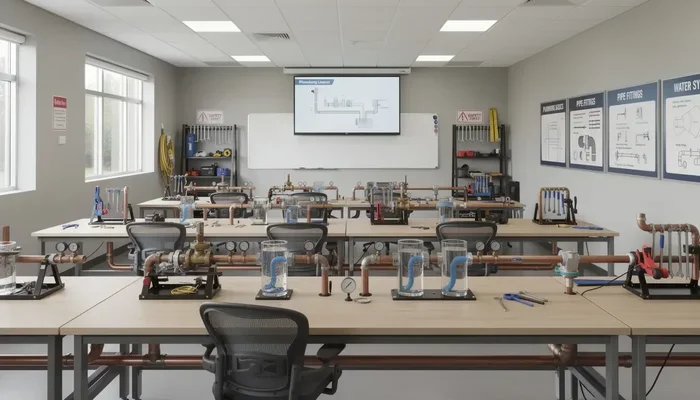
Becoming a licensed plumber requires formal training, hands-on experience, and a state license. You can choose from trade school programs, apprenticeships, or a combination of both to build the skills needed for a successful plumbing career. This guide covers every step of the plumbing education journey.
Have you ever thought about a career in plumbing? It is one of the most stable and rewarding trades you can pursue. But before you grab a wrench and start fixing pipes, you need to know the right steps. What education do you need to be a licensed plumber? The answer is simpler than you might think.
Plumbing is a skilled trade that combines technical knowledge with hands-on problem solving. You do not need a four-year college degree to get started. Instead, you need the right training, certifications, and a strong work ethic. This guide breaks down every step of the plumbing education journey. You will learn about trade schools, apprenticeships, licensing, and more.
Whether you are a high school graduate or someone looking to switch careers, this article has you covered. We will walk you through the options so you can make a confident decision. Let us dive in.
Key Takeaways
- Formal Education Matters: You need a trade school certificate, community college degree, or apprenticeship to start your plumbing career.
- Apprenticeships Are Gold: They combine paid work with classroom learning and are the most common path to licensure.
- Licensing Varies by State: Each state has its own requirements. Always check your local regulations before starting.
- Trade Schools Offer Fast Entry: You can complete a trade school program in 6 to 12 months and start gaining experience.
- Master Plumber Takes Time: After your journeyman license, you need additional years of experience to reach the master level.
- Invest in Your Future: Plumbing school is a smart investment with strong job security and earning potential.
📑 Table of Contents
Plumbing Education Requirements
The foundation of any plumbing career starts with education. Most states require plumbers to complete a formal training program before they can work independently. But “formal education” does not always mean a traditional college degree.
Here are the main educational paths you can take to become a plumber:
- Trade School Programs: These are short-term programs that teach plumbing basics. They usually last 6 to 12 months.
- Community College Courses: Some community colleges offer plumbing technology degrees. These take about 1 to 2 years.
- Apprenticeships: An apprenticeship lets you learn on the job while earning money. Most apprenticeships last 4 to 5 years.
- Online Plumbing Courses: These offer flexible learning. They are great for theory but lack hands-on practice.
Each path has its own benefits. Trade schools give you quick entry into the field. Apprenticeships provide real-world experience. The best choice depends on your goals and timeline.
When you think about plumbing education requirements, remember that most states require a mix of classroom hours and hands-on training. This combination ensures you understand both the theory and the practice of the plumbing trade.
Trade Schools: A Fast Track to Plumbing
Trade schools are one of the fastest ways to start a plumbing career. They focus on practical skills and real-world applications. Unlike a traditional college, trade schools get you job-ready in months, not years.
What You Will Learn in Plumbing Trade School
Plumbing trade schools cover a wide range of topics. You will study pipe systems, water supply, drainage, and gas fitting. Most programs also include safety training and blueprint reading.
Here is a quick look at common plumbing trade school courses:
- Pipe fitting and soldering
- Water supply and drainage systems
- Gas line installation and safety
- Blueprint and schematic reading
- Local plumbing codes and regulations
- Tool identification and proper use
- Basic electrical systems for plumbers
Many trade schools also help with job placement. They often have partnerships with local plumbing companies. This means you can start your apprenticeship or job search right after graduation.
How to Choose the Right Trade School
Not all trade schools are the same. You want a school that is accredited and respected in the industry. Look for schools that offer hands-on training and modern equipment.
Ask these questions before enrolling:
- Is the school accredited by a recognized body?
- Does the program include hands-on practice?
- What is the job placement rate for graduates?
- Are the instructors experienced plumbers?
- Does the school help with licensing exam prep?
Choosing the right school sets the tone for your entire career. Take your time and do your research. A good trade school gives you a strong foundation in plumbing skills and technical education.
Plumbing Apprenticeships: Earn While You Learn
An apprenticeship is one of the most popular ways to become a licensed plumber. It combines classroom learning with real on-the-job training. You work under experienced plumbers and get paid while you learn.
How Plumbing Apprenticeships Work
Most plumbing apprenticeships last between 4 and 5 years. During this time, you split your hours between classroom instruction and fieldwork. You typically spend about 2,000 hours per year on the job.
In the classroom, you learn the theory behind plumbing. You study math, blueprint reading, and local codes. On the job, you practice installing pipes, fixing fixtures, and troubleshooting problems.
Think of it this way. Learning plumbing is like learning a language of its own, full of its own similes for education and technical expressions. The more you practice, the more fluent you become in the plumbing trade.
How to Find a Plumbing Apprenticeship
You can find apprenticeships through unions, trade organizations, or directly with plumbing companies. The United Association (UA) is one of the largest plumbing unions in the U.S. They offer structured apprenticeship programs across the country.
Other options include:
- State workforce development programs
- Local plumbing contractor associations
- Direct applications to plumbing companies
- Vocational training centers with apprenticeship partnerships
Make sure the apprenticeship is registered with your state. Registered programs meet industry standards and count toward your licensing hours. A well-structured plumbing apprenticeship program gives you the best of both worlds: real experience and formal education.
Licensing: What You Need to Pass
Every state has its own licensing rules for plumbers. There is no single national license. However, most states follow a similar structure with different experience and exam requirements.
Common Plumbing License Levels
Most states use a tiered licensing system. Here is a typical breakdown:
- Apprentice Plumber: The starting level. You work under a licensed master plumber.
- Journeyman Plumber: You can work independently after completing your apprenticeship.
- Master Plumber: The highest level. You can supervise others and pull permits.
What to Expect on the Licensing Exam
The licensing exam tests your knowledge of plumbing codes, safety rules, and practical applications. Each state uses its own exam, so the content varies. Some states use national standardized tests, while others write their own.
Most exams include multiple-choice questions. They cover topics like:
- Water supply systems
- Drain, waste, and vent systems
- Gas piping and safety
- Local building codes
- Plumbing math and calculations
Studying for the exam can feel overwhelming. But with the right prep materials and practice tests, you can pass with confidence. Many trade schools and apprenticeship programs include exam prep as part of their curriculum.
How Long Does It Take to Become a Plumber?
The timeline to become a licensed plumber depends on the path you choose. Here is a general breakdown:
| Path | Duration | What You Get |
|---|---|---|
| Trade School Only | 6 to 12 months | Basic plumbing skills and certificate |
| Trade School + Apprenticeship | 4 to 5 years total | Full training and journeyman license |
| Apprenticeship Only | 4 to 5 years | Hands-on experience and journeyman license |
| Community College Program | 1 to 2 years | Plumbing degree and foundational knowledge |
Most people choose the apprenticeship route because it offers the best balance of learning and earning. You also gain the experience that employers value most. A plumbing apprenticeship program gives you both the classroom knowledge and the field experience that licensing boards look for.
Keep in mind that becoming a master plumber takes additional years of experience after you earn your journeyman license. The journey does not end with your first license. Many master plumbers continue learning throughout their careers to stay updated on new codes and technologies.
Common Mistakes to Avoid
Starting a plumbing career is exciting. But there are a few common mistakes that can slow you down. Here is what to watch out for:
- Skipping Formal Training: Some people try to learn plumbing on their own. This approach rarely works. Employers and licensing boards want proof of structured education.
- Choosing the Wrong School: Not all trade schools are equal. Do your research and pick an accredited program with hands-on training.
- Ignoring Local Codes: Plumbing codes vary by location. You must learn the codes for your specific area to pass the licensing exam.
- Underestimating the Math: Plumbing involves calculations for pipe sizing, water pressure, and slope. Do not skip the math portion of your training.
- Rushing the Process: Becoming a skilled plumber takes time. Trying to rush through training can lead to gaps in your knowledge.
Avoiding these mistakes will save you time, money, and frustration. Take the right path and build your skills step by step.
Is Plumbing School Worth It?
The short answer is yes. Plumbing is a stable and well-paying career. The Bureau of Labor Statistics projects steady growth in the plumbing industry for years to come. Skilled tradespeople are in high demand across the country.
Here are some reasons plumbing school is worth it:
- Job Security: People always need plumbers. Pipes break, fixtures wear out, and new buildings need installation.
- Good Income: The median salary for plumbers is competitive with many other trades. Experienced master plumbers earn even more.
- No Student Debt: Trade school costs a fraction of a four-year college degree. Many apprenticeship programs also pay you while you learn.
- Hands-On Work: If you like working with your hands, plumbing is deeply satisfying. Every day brings new challenges and problem-solving opportunities.
- Entrepreneurial Opportunities: Licensed plumbers can start their own businesses. Many successful plumbing companies started with a single licensed plumber.
Education in the skilled trades is often overlooked. But just like idioms for education show us, there are many ways to succeed. Plumbing offers a clear path to a stable and rewarding career in the skilled trades.
Think of your plumbing training as building a strong foundation. Every course, every apprenticeship hour, and every exam you pass adds another layer. Over time, you become a skilled professional that others can rely on. The plumbing industry needs dedicated people who are willing to learn and grow.
Key Takeaways
- Formal Education Matters: You need a trade school certificate, community college degree, or apprenticeship to start your plumbing career.
- Apprenticeships Are Gold: They combine paid work with classroom learning and are the most common path to licensure.
- Licensing Varies by State: Each state has its own requirements. Always check your local regulations before starting.
- Trade Schools Offer Fast Entry: You can complete a trade school program in 6 to 12 months and start gaining experience.
- Master Plumber Takes Time: After your journeyman license, you need additional years of experience to reach the master level.
- Invest in Your Future: Plumbing school is a smart investment with strong job security and earning potential.
Frequently Asked Questions
Do I need a college degree to become a plumber?
No. Most plumbers do not have a college degree. You can enter the field through trade school, an apprenticeship, or a combination of both. These paths are faster and more affordable than a traditional four-year degree and are widely accepted by employers.
How much does plumbing school cost?
Trade school programs typically cost between $1,000 and $5,000. Community college programs may cost more, ranging from $3,000 to $10,000. Apprenticeships are often free since you earn a salary while training. Many programs also offer financial aid and scholarships.
Can I become a plumber online?
Online courses can teach you plumbing theory and codes. However, you still need hands-on training to develop practical skills. Many online programs partner with local trade shops to provide the hands-on experience you need to succeed in the plumbing trade.
What is the difference between a journeyman and a master plumber?
A journeyman plumber can work independently but cannot supervise others or pull permits. A master plumber has additional experience and can manage projects, train apprentices, and pull building permits. Master plumber status requires passing a more advanced exam and meeting higher experience requirements.
How long does the plumbing licensing exam take?
Most plumbing licensing exams take about 2 to 4 hours. The exact time depends on your state and the number of questions. The exam is usually multiple-choice and covers plumbing codes, safety procedures, and practical applications relevant to your local area.
Is plumbing a good career choice for the future?
Yes. Plumbing is a recession-resistant trade. Buildings always need plumbing, and older systems require maintenance and updates. The demand for skilled plumbers is expected to grow steadily over the next decade, making it a smart long-term career choice.
=== CONCLUSION ===
So, what education do you need to be a licensed plumber? The answer is clear. You need a mix of formal training, hands-on experience, and a state license. Whether you choose trade school, an apprenticeship, or both, the path is within reach.
Plumbing is more than just fixing leaky faucets. It is a career that offers stability, good pay, and the chance to work with your hands every day. The plumbing industry needs skilled professionals, and the demand is not slowing down.
Think about the metaphors we use when talking about education — learning to build, laying foundations, and connecting pieces together. Those metaphors for education are at the heart of plumbing training too. You are building a career, one pipe and one connection at a time.
Start by exploring trade schools and apprenticeship programs in your area. Talk to working plumbers. Ask questions and take the first step. Your future in the plumbing trade is waiting. The right education today opens the door to a fulfilling career tomorrow.


