
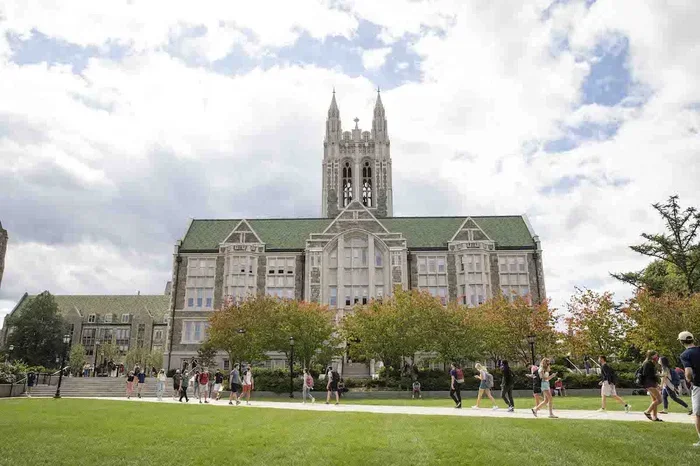
A Jesuit education is a learning approach rooted in the Jesuit tradition that combines academic excellence with spiritual growth and service. It focuses on forming the whole person — mind, body, and spirit — through the teachings of St. Ignatius of Loyola. Students in Jesuit schools and universities develop critical thinking, compassion, and a deep sense of social responsibility. This type of education has shaped leaders, thinkers, and changemakers for over 500 years. Understanding what makes Jesuit education unique helps you see why it remains a powerful choice for lifelong learners.
Have you ever wondered what sets a Jesuit education apart from other types of learning? It is more than just attending a school with a religious name. A Jesuit education is a complete approach to growing the mind, heart, and soul. It has been around for over five centuries and still matters deeply today.
People who go through this kind of learning often say it changed their lives. They leave not just with degrees but with a sense of purpose. They understand the world better and feel called to make it a better place. In this article, we will explore what a Jesuit education really means, how it works, and why it might be the right fit for you or someone you know.
Key Takeaways
- Holistic Development: Jesuit education nurtures the mind, body, and spirit, not just academic scores.
- Ignatian Pedagogy: The teaching method is built on reflection, experience, and action.
- Social Justice Focus: Students are encouraged to serve others and work for a fairer world.
- Global Presence: Jesuit schools and universities exist in over 100 countries worldwide.
- Critical Thinking: Jesuit education trains students to question, analyze, and think independently.
- Faith and Reason: It welcomes both spiritual beliefs and intellectual curiosity side by side.
- Lifelong Values: The lessons learned in Jesuit institutions shape character for a lifetime.
📑 Table of Contents
- The History and Roots of Jesuit Education
- What Makes Jesuit Education Unique?
- How Jesuit Pedagogy Works in Practice
- The Benefits of a Jesuit Education
- Jesuit Education and Liberal Arts
- Common Misconceptions About Jesuit Education
- Famous People Who Benefited from Jesuit Education
- How to Choose the Right Jesuit School
- Quick Tips for Getting the Most from a Jesuit Education
- Common Mistakes People Make When Thinking About Jesuit Education
- Expert Insights on Jesuit Education
- Conclusion
The History and Roots of Jesuit Education
The story of Jesuit education begins with a man named Ignatius of Loyola. He was a Spanish soldier who had a deep spiritual experience after being injured in battle. During his recovery, he read about the life of Christ and the lives of the saints. This changed the direction of his life forever.
Who Were the Jesuits?
Ignatius of Loyola founded the Society of Jesus in 1540. The members are commonly known as Jesuits. They are a religious order within the Catholic Church. From the very beginning, they placed a strong focus on education.
The Jesuits believed that education could transform society. They started schools across Europe in the 1500s. These schools taught academic excellence alongside moral and spiritual values. The goal was not just to fill minds with facts. It was to form people who would use their knowledge for good.
How Jesuit Schools Grew Around the World
Over the next few centuries, Jesuit schools spread far and wide. By the 1700s, there were Jesuit institutions on every continent. They adapted to local cultures while keeping their core mission intact. Today, there are Jesuit schools and universities in more than 100 countries.
This global reach shows how powerful the Jesuit approach to holistic education really is. The values stay the same even as the methods evolve with each new generation.
What Makes Jesuit Education Unique?
So what actually makes a Jesuit education different from other forms of learning? There are several key features that set it apart. Let us look at them closely.
The Cura Personalis Approach
One of the most important ideas in Jesuit education is cura personalis. This is a Latin phrase that means “care for the whole person.” It means teachers do not just focus on grades. They care about your emotional health, your spiritual growth, and your social development too.
Imagine a classroom where your teacher knows your name, your hopes, and your struggles. That is the heart of cura personalis. It creates a learning environment where every student feels seen and valued.
Faith and Reason Working Together
Jesuit education does not separate faith from learning. Instead, it brings them together. Students are encouraged to explore deep questions about meaning, purpose, and ethics. They learn to think critically about the world while also reflecting on their beliefs.
This combination of faith and reason helps students become well-rounded thinkers. They can analyze data, solve problems, and also consider the moral dimensions of their choices.
Social Justice as a Core Value
A strong thread runs through Jesuit education: a commitment to social justice. Students are taught to care about the poor and the marginalized. They learn that education is not just for personal gain but for the service of others.
Many Jesuit schools include service learning in their programs. Students volunteer in their communities. They work on projects that address real-world problems like poverty, inequality, and environmental harm.
How Jesuit Pedagogy Works in Practice
Jesuit education is not just about what is taught but also about how it is taught. The teaching method comes from something called Ignatian pedagogy. This approach has five key steps.
Context
Before any lesson begins, teachers help students understand the context. This means connecting new material to what students already know and experience. It makes learning more relevant and meaningful.
Experience
Next comes hands-on experience. Jesuit schools believe that real learning happens through doing. Students might conduct experiments, participate in debates, or engage in community projects.
Reflection
After the experience, students are guided to reflect. What did they learn? How did it make them feel? What surprised them? Reflection is a powerful tool in Jesuit philosophy because it helps students internalize what they have learned.
Action
Reflection leads to action. Students are encouraged to take what they have learned and apply it in real life. This could mean volunteering, advocating for a cause, or simply treating others with more kindness.
Evaluation
Finally, students evaluate their progress. They look at how their actions aligned with their values. This step builds self-awareness and helps students grow into more thoughtful and intentional people.
The Benefits of a Jesuit Education
Why do so many families choose Jesuit schools for their children? There are many benefits that go beyond the classroom.
Strong Academic Foundation
Jesuit schools are known for their rigorous academics. Students are challenged to think deeply and work hard. The academic excellence found in Jesuit institutions prepares students for success in college and beyond.
Graduates of Jesuit schools often go on to top universities and competitive careers. The skills they develop — critical thinking, writing, and problem-solving — serve them for life.
Character Development
One of the greatest gifts of a Jesuit education is character development. Students learn values like honesty, compassion, and responsibility. These qualities shape who they become as adults.
Many alumni say that the lessons they learned in Jesuit schools stayed with them long after graduation. They carry those values into their careers, families, and communities.
Global Perspective
Because Jesuit schools exist around the world, they offer a global perspective. Students learn about different cultures, religions, and ways of life. This broadens their horizons and helps them become open-minded global citizens.
Some Jesuit schools even offer exchange programs. Students can study abroad and experience life in another country. This kind of exposure builds empathy and understanding.
Jesuit Education and Liberal Arts
Jesuit education has deep roots in the liberal arts tradition. The liberal arts include subjects like literature, philosophy, history, mathematics, and science. Together, they provide a broad and balanced education.
In a Jesuit liberal arts setting, students are not pushed into one narrow field too early. They explore many subjects and discover their passions. This approach creates flexible thinkers who can adapt to a changing world.
The goal is not just to train students for a specific job. It is to form people who can think clearly, communicate well, and contribute meaningfully to society.
Common Misconceptions About Jesuit Education
There are some myths about Jesuit education that are worth addressing. Let us clear them up.
It Is Only for Catholics
This is not true. While Jesuit schools are rooted in Catholic tradition, they welcome students of all faiths and backgrounds. The focus is on values like respect, compassion, and integrity. These values are universal.
It Is Too Religious
Jesuit schools do include religious studies and spiritual practices. But the education itself is not overly religious in a narrow way. Students of all beliefs are respected. The emphasis is on moral development and ethical thinking, not on pushing any one religion.
It Is Only for the Elite
While some Jesuit schools are expensive, many offer generous financial aid. The Jesuit tradition values accessibility and justice. There are Jesuit schools that serve students from all economic backgrounds.
Famous People Who Benefited from Jesuit Education
Jesuit education has shaped many notable figures throughout history. Here are just a few examples.
- Martin Luther King Jr.: Attended a Jesuit school in his early years. The values of justice and equality he learned there influenced his life’s work.
- Bill Murray: Graduated from a Jesuit high school. He has often spoken about how the education shaped his sense of humor and his values.
- Robert F. Kennedy: Attended a Jesuit college. He went on to become a powerful voice for civil rights and social justice.
- Many World Leaders: Jesuit universities have produced presidents, prime ministers, and leaders in science, arts, and business around the globe.
These examples show the wide reach of Jesuit tradition in shaping people who make a difference.
How to Choose the Right Jesuit School
If you are considering a Jesuit education for yourself or your child, here are some tips.
- Visit the campus. Get a feel for the environment. Talk to teachers and students.
- Check the academic programs. Make sure the school offers the subjects and activities that interest you.
- Ask about values. Learn how the school lives out its Jesuit mission every day.
- Look at financial aid options. Jesuit schools often have resources to help families manage costs.
- Read alumni stories. Find out what graduates say about their experience and how it shaped their lives.
Choosing the right school is a big decision. Take your time. Ask questions. Trust your instincts.
Quick Tips for Getting the Most from a Jesuit Education
- Participate in service projects. They are a core part of the experience.
- Ask deep questions in class. Reflection is encouraged and valued.
- Build relationships with teachers. They are mentors as much as instructors.
- Explore subjects outside your comfort zone. A broad education opens doors.
- Take time to reflect on your experiences. Growth comes from thoughtful consideration.
Common Mistakes People Make When Thinking About Jesuit Education
- Assuming it is only for religious people. Jesuit schools welcome everyone regardless of belief.
- Overlooking the academic rigor. These schools are academically challenging and highly respected.
- Ignoring the community aspect. The sense of community in Jesuit schools is one of their greatest strengths.
- Not exploring financial aid. Many families miss out on available support because they assume it is too expensive.
Expert Insights on Jesuit Education
Education experts often highlight the strengths of Jesuit learning. According to research, students in Jesuit schools tend to score higher on measures of civic engagement and ethical reasoning. They are more likely to volunteer, vote, and participate in community life.
Dr. Peter-Hans Kolvenbach, a former Superior General of the Jesuits, once said that Jesuit education aims to form “men and women for others.” This phrase captures the heart of the Jesuit mission. It is about creating people who use their education to lift up those around them.
When you compare Jesuit education to other approaches, the emphasis on character and service stands out. It is not just about what you know but about who you become and how you use your knowledge.
Conclusion
A Jesuit education is a powerful and transformative experience. It combines academic rigor with spiritual depth and a commitment to serving others. From its roots in the 1500s to its global presence today, Jesuit learning has shaped countless lives for the better.
Whether you are a student, a parent, or simply someone curious about different paths of learning, understanding what Jesuit education offers is valuable. It teaches you to think deeply, care broadly, and act with purpose. The values you gain from this kind of education stay with you for a lifetime.
If you are looking for an education that challenges your mind and lifts your spirit, a Jesuit education is absolutely worth exploring. Visit a local Jesuit school, talk to the community, and see if this tradition of learning and service resonates with you.
Also, check out our guides on Idioms For Education, Similes For Education, and Metaphors For Education for more language resources that enrich your learning journey.
Frequently Asked Questions
What is the main goal of a Jesuit education?
The main goal is to form the whole person — intellectually, spiritually, and morally. Jesuit education aims to create people who think critically, act with compassion, and serve others with dedication. It is about developing leaders who make a positive difference in the world.
Do you have to be Catholic to attend a Jesuit school?
No, you do not have to be Catholic. Jesuit schools welcome students from all religious backgrounds and beliefs. The focus is on shared values like respect, justice, and integrity. Everyone is encouraged to grow in their own faith or worldview while learning alongside others.
How is Jesuit pedagogy different from traditional teaching?
Traditional teaching often focuses on lectures and memorization. Jesuit pedagogy, or Ignatian pedagogy, emphasizes experience, reflection, and action. Students learn by doing, thinking deeply about what they experience, and then applying their insights in real life. This creates a much more engaging and transformative learning process.
Are Jesuit schools expensive?
Some Jesuit schools have higher tuition, but many offer significant financial aid. The Jesuit tradition values accessibility and social justice. Families should always ask about scholarships and aid programs. Many students attend Jesuit schools thanks to generous support.
What famous people attended Jesuit schools?
Many notable figures have benefited from Jesuit education. Martin Luther King Jr., Bill Murray, and Robert F. Kennedy are among the well-known alumni. Jesuit schools have also produced numerous world leaders, scientists, artists, and human rights advocates across the globe.
Can adults benefit from Jesuit education too?
Absolutely. While Jesuit education is often associated with K-12 schools and universities, the principles of Ignatian pedagogy can benefit anyone at any age. Adults can apply the practices of reflection, experience, and action in their personal and professional lives. The values of Jesuit learning are timeless and universally applicable.
=== CONCLUSION ===
A Jesuit education is a remarkable journey that shapes the mind, heart, and spirit. It has stood the test of time for over 500 years because it works. Students who go through this kind of learning emerge as thoughtful, compassionate, and capable individuals ready to make a difference.
Whether you are choosing a school for your child or considering your own educational path, Jesuit education offers something truly special. It is not just about getting good grades. It is about becoming a person of depth, integrity, and purpose.
Take the next step. Explore what Jesuit schools in your area have to offer. You might just find that this centuries-old tradition of learning is exactly what you have been looking for.


