
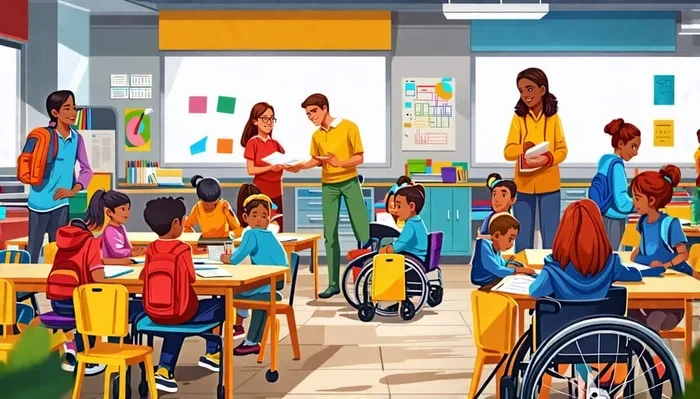
General education is the foundation of a well-rounded education that exposes students to a wide range of subjects beyond their major. It builds critical thinking, communication skills, and problem-solving abilities that apply to every career path. Whether you are in college or exploring lifelong learning, understanding general education helps you make smarter academic choices.
Key Takeaways
- Broad Foundation: General education gives students a well-rounded academic base across multiple disciplines.
- Career Flexibility: Core courses build transferable skills valued by employers in any industry.
- Critical Thinking: General ed classes train you to analyze, evaluate, and solve problems effectively.
- Communication Power: Writing, speaking, and language arts courses help you express ideas clearly in every setting.
- Lifelong Value: The knowledge gained from general education stays with you far beyond graduation.
- Smart Elective Choices: Understanding the system lets you pick courses that align with your goals and interests.
📑 Table of Contents
- What Is General Education and Why Does It Matter?
- What Does a General Education Curriculum Look Like?
- Why General Education Classes Are More Valuable Than You Think
- Common Misconceptions About General Education
- How to Make the Most of Your General Education Experience
- General Education vs. Specialized Education
- The Role of General Education in Lifelong Learning
- Key Takeaways
- Frequently Asked Questions
- Final Thoughts
What Is General Education and Why Does It Matter?
So, what is general education exactly? Simply put, it is the set of courses and learning experiences that every student completes before diving deep into their chosen major. These classes cover subjects like math, science, English, history, and the arts. They are designed to give you a broad knowledge base that goes way beyond your specific field of study.
Think of general education as the building blocks of your academic journey. Just like a house needs a strong foundation, your college education needs a wide base of knowledge to support your career and personal growth. These courses teach you how to think, not just what to think.
Many students wonder why they need to take classes in subjects that seem unrelated to their goals. But here is the truth. general education requirements are carefully designed to create well-rounded thinkers. They help you develop skills that apply to every area of life and work.
The History Behind General Education
The idea of broad-based learning goes back centuries. Ancient Greek philosophers believed that a well-rounded person should study many subjects. This idea shaped modern education systems around the world. Today, liberal arts education and general education share the same core belief. Every student benefits from exposure to diverse fields of knowledge.
In the United States, colleges started formalizing general education requirements in the early 20th century. The goal was to ensure that graduates were not just specialists but informed citizens. This vision has only grown stronger over time.
What Does a General Education Curriculum Look Like?
A typical general education curriculum includes courses across several key areas. Let us break down what you can expect.
Core Subject Areas
Most colleges divide general education classes into categories. Here are the common ones you will encounter:
- English and Composition: Writing essays, analyzing texts, and improving grammar.
- Mathematics: From algebra to statistics, building logical thinking.
- Natural Sciences: Biology, chemistry, physics, or earth science courses.
- Social Sciences: Psychology, sociology, history, or political science.
- Humanities: Literature, philosophy, art history, or foreign languages.
- Arts and Humanities: Music, theater, visual arts, or creative writing.
How Credits Work
Most degree programs require students to earn a set number of general education credits before graduation. These credits usually make up about one-third to one-half of your total degree requirements. For example, a 120-credit bachelor’s program might include 40 to 60 credits in general education courses.
The remaining credits go toward your major and electives. This balance ensures you gain depth in your field while maintaining a broad education that keeps your options open.
Why General Education Classes Are More Valuable Than You Think
It is easy to look at general education requirements and think they are just box-checking exercises. But these courses offer benefits that go far beyond filling a schedule. Here is why they truly matter.
Building Critical Thinking Skills
General education classes train your brain to question, analyze, and evaluate information. When you study history, you learn to spot patterns and biases. When you tackle a science course, you practice logical reasoning. These critical thinking skills follow you into every job and decision you make.
Employers consistently rank critical thinking as one of the top skills they look for in candidates. A well-rounded education gives you a serious edge in the job market.
Improving Communication Abilities
Strong communication is at the heart of general education. English composition courses teach you how to write clearly and persuasively. Speech classes build your confidence in public speaking. Even courses in humanities and social sciences sharpen your ability to express complex ideas.
Here is something many students do not realize. Learning about figurative language and expressions plays a big role in communication training. Understanding idioms for education helps you grasp cultural nuances in English. Similarly, studying similes for education builds your ability to make comparisons and convey ideas creatively. And exploring metaphors for education deepens your understanding of symbolic thinking, which is essential in both writing and problem-solving.
These language skills are not just for English class. They help you in every course, every presentation, and every professional email you will ever write.
Creating Interdisciplinary Connections
One of the most powerful aspects of general education is how it connects different fields. A psychology student might take a statistics course and discover new ways to analyze data. An engineering major might study philosophy and learn to think about ethics in technology. These interdisciplinary learning moments spark creativity and innovation.
In today’s world, problems rarely fit neatly into one discipline. A broad education prepares you to tackle complex challenges from multiple angles.
Common Misconceptions About General Education
There are several myths about general education courses that stop students from appreciating their value. Let us clear a few of them up.
“They Are a Waste of Time”
Some students see general education classes as obstacles. They want to jump straight into their major. But these courses actually make you a better professional in your field. A nurse who understands sociology provides better patient care. A marketer who knows psychology creates more effective campaigns.
“They Do Not Count Toward My Degree”
This is simply not true. General education credits are a required part of every accredited degree program. Without them, you cannot graduate. They are just as important as your major courses.
“Only Certain Majors Need Them”
Every major benefits from general education. Whether you are studying business, nursing, computer science, or fine arts, the foundational courses give you tools that enhance your expertise. No field exists in a vacuum.
How to Make the Most of Your General Education Experience
Now that you understand the value of general education, here is how you can get the most out of it.
Choose Courses That Align With Your Interests
Most programs give you some freedom in selecting elective courses. Use this wisely. If you love science fiction, take a literature course that explores the genre. If you are curious about how societies work, sign up for a sociology class. When you are genuinely interested, you learn more and enjoy the process.
Connect General Ed to Your Major
Look for ways to link your general education classes to your career goals. A business student taking a statistics course can apply those skills directly in finance classes. An education major studying psychology gains insights that help future students. Make connections wherever you can.
Engage Actively in Class
Do not just show up and sit quietly. Ask questions. Join discussions. Share your perspective. Active participation turns a general education class from a chore into a valuable learning experience.
Think About Long-Term Benefits
When you feel frustrated by a required course, remind yourself of the bigger picture. General education builds the foundation for a flexible, adaptable career. The skills you gain today will serve you for decades.
General Education vs. Specialized Education
It helps to compare general education with specialized or major-focused education. Here is a quick look at how they differ.
| Aspect | General Education | Specialized Education |
|---|---|---|
| Focus | Broad knowledge across subjects | Deep expertise in one field |
| Skills Developed | Critical thinking, communication, problem-solving | Technical, job-specific abilities |
| Career Flexibility | High, prepares for multiple paths | Moderate, focused on one industry |
| Course Types | Math, science, humanities, arts | Advanced major-specific courses |
| Long-Term Value | Strong, supports lifelong learning | Strong, but within a narrow scope |
The best approach combines both. A broad education gives you flexibility, while specialized training gives you expertise. Together, they create a powerful combination that employers and graduate schools love.
The Role of General Education in Lifelong Learning
General education does not end when you graduate. The habits and mindsets you develop during those courses stay with you forever. A person with a well-rounded education is better equipped to learn new things, adapt to change, and navigate an increasingly complex world.
In today’s fast-changing economy, lifelong learning is not optional. It is essential. The curiosity and adaptability that general education fosters give you a real advantage. Whether you are switching careers, starting a business, or simply exploring new interests, your foundational knowledge will always serve you well.
Many successful professionals credit their general education background for their ability to think creatively and communicate effectively. These are skills that no single specialized course can teach alone.
Key Takeaways
- Broad Foundation: General education gives students a well-rounded academic base across multiple disciplines.
- Career Flexibility: Core courses build transferable skills valued by employers in any industry.
- Critical Thinking: General ed classes train you to analyze, evaluate, and solve problems effectively.
- Communication Power: Writing, speaking, and language arts courses help you express ideas clearly in every setting.
- Lifelong Value: The knowledge gained from general education stays with you far beyond graduation.
- Smart Elective Choices: Understanding the system lets you pick courses that align with your goals and interests.
Frequently Asked Questions
How many general education credits do I need to graduate?
This varies by school and program, but most bachelor’s degrees require between 40 and 60 general education credits. Check your university’s catalog or speak with your academic advisor to find the exact number for your degree.
Can I test out of general education courses?
Yes, many colleges offer placement tests or credit-by-examination options like AP or CLEP. If you already have strong knowledge in a subject, you may be able to skip certain general education requirements and free up space for electives or major courses.
Are online general education classes accepted by employers?
Absolutely. As long as the courses come from an accredited institution, employers value them the same way they value in-person classes. The skills you gain from general education matter more than the format in which you took them.
What is the difference between general education and elective courses?
General education courses are required by your institution and cover core subjects like math, English, and science. Elective courses are optional and let you explore topics based on your personal interests. Both are important, but they serve different purposes in your degree plan.
Does general education only apply to college students?
Not at all. The concept of broad-based learning applies at every level. High school students follow a general education framework, and even adult learners benefit from exploring new subjects. Lifelong learning through general education principles keeps your mind sharp at any age.
Will general education help me if I already know my career path?
Yes, it really will. Even if you have a clear career goal, general education classes give you communication skills, analytical abilities, and a wider perspective that make you a stronger professional. Many employers specifically seek candidates with a well-rounded academic background.
Final Thoughts
General education is much more than a set of required courses. It is the cornerstone of a meaningful, flexible, and fulfilling education. These classes teach you how to think critically, communicate clearly, and connect ideas across different fields. They prepare you not just for a job, but for a lifetime of growth and learning.
So the next time you register for a general education class, do not sigh with dread. Instead, see it as an opportunity. Every course is a chance to expand your mind, discover new passions, and build skills that will serve you for the rest of your life. Embrace the journey of broad education, and you will find that the benefits reach far beyond the classroom.


