
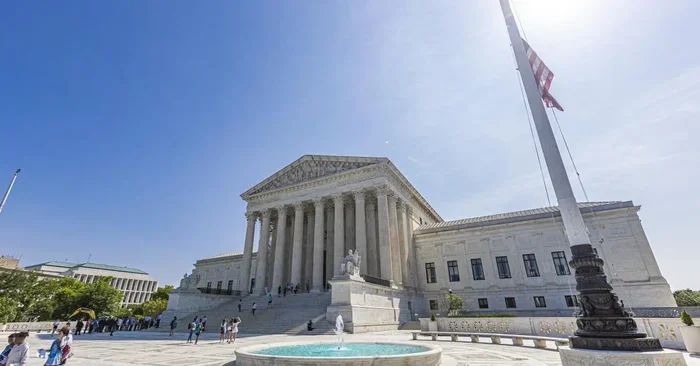
Brown v Board of Education was a landmark Supreme Court case that ended racial segregation in schools. The people involved — from the brave families of Topeka, Kansas to the brilliant attorneys of the NAACP Legal Defense Fund — changed American history forever. Understanding who was involved in brown v board of education helps us appreciate the courage and legal strategy behind one of the most important decisions in U.S. history.
Key Takeaways
- Oliver Brown: The lead plaintiff whose name became synonymous with the fight against school segregation.
- Thurgood Marshall: The visionary attorney who argued the case before the Supreme Court and later became the first Black Supreme Court Justice.
- Earl Warren: The Chief Justice who delivered the unanimous opinion and guided the Court toward a historic ruling.
- Linda Brown: The young girl at the center of the case, whose daily walk to school sparked a legal revolution.
- The NAACP Legal Defense Fund: The legal team that crafted the strategy challenging the “separate but equal” doctrine.
- The Briggs Family and Others: Additional plaintiffs from South Carolina whose cases were bundled with the Topeka case.
📑 Table of Contents
- Who Was Involved in Brown V Board of Education?
- The Legal Team Behind the Case
- The Supreme Court and the Chief Justice
- The South Carolina Connection: The Briggs Family
- The Role of Social Science Research
- The Impact and Legacy of the People Involved
- Quick Tips for Understanding the Case
- Common Mistakes People Make When Learning About This Case
- Expert Insights on the People Behind the Case
- Conclusion
Who Was Involved in Brown V Board of Education?
When we talk about who was involved in brown v board of education, we are talking about a group of extraordinary people. They included parents, lawyers, judges, and young children. Together, they challenged a system of racial segregation that had divided America’s schools for decades.
This case is one of the most important moments in the civil rights movement. It reshaped how Americans think about education equality and the promise of the 14th Amendment. The story behind the people involved is just as powerful as the ruling itself.
The case began in Topeka, Kansas in the early 1950s. At the time, de jure segregation meant Black children and white children attended separate schools. The law said these schools were “separate but equal.” But in reality, they were far from equal. The Brown v Board of Education case changed all of that.
The Families Who Started It All
The case was built by real families with real courage. These parents were tired of watching their children walk miles to inferior schools. They decided to take a stand.
Oliver Brown was a welder and assistant pastor in Topeka. His daughter, Linda Brown, had to walk through a dangerous railroad switchyard just to catch a bus to her segregated school. There was a perfectly good white school much closer to their home. But because of the color of her skin, Linda could not attend it.
Oliver agreed to become the lead plaintiff in the case. His name, along with others, became the face of the legal challenge. The case was originally named after him because he was listed first alphabetically among the plaintiffs.
Thirteen parents from Topeka joined the lawsuit in 1951. They represented 20 children. Each family had a similar story. Their children were denied access to better schools simply because of race. These parents risked their jobs, their safety, and their reputations. They believed that every child deserved a fair chance.
The Legal Team Behind the Case
Fighting a case of this magnitude required more than brave plaintiffs. It took a skilled and dedicated legal team. The NAACP Legal Defense Fund was at the center of this effort.
Thurgood Marshall: The Architect of Victory
Thurgood Marshall was the lead attorney for the plaintiffs. He was a brilliant legal mind and a towering figure in the civil rights movement. Marshall had already won several major cases challenging racial segregation in higher education. His most famous victory before Brown was Murray v. Pearson in 1935, which desegregated the University of Maryland Law School.
For Brown, Marshall developed a careful legal strategy. He did not just argue that segregated schools were unequal. He argued that segregation itself was inherently harmful. He presented social science research showing that segregation damaged Black children’s sense of self-worth.
Marshall worked closely with a team of talented attorneys. Together, they prepared for one of the most important oral arguments in Supreme Court history.
Robert Carter and Jack Greenberg
Robert Carter was another key attorney on the team. He brought sharp courtroom skills and deep knowledge of constitutional law. Carter helped craft the arguments that would dismantle the “separate but equal” doctrine.
Jack Greenberg was a young attorney with the NAACP Legal Defense Fund at the time. He later became the director-counsel of the organization. Greenberg played an important role in organizing the legal approach and supporting Marshall throughout the case.
Spottswood Robinson was also part of the legal team. He was a law professor and attorney who helped develop the legal theories that challenged school segregation. His work laid important groundwork for the arguments presented before the Court.
The team also drew on the work of earlier civil rights lawyers. Their efforts to challenge school segregation in other states helped build the foundation for the Brown case. The legal team studied cases from South Carolina, Virginia, and Delaware to strengthen their arguments.
The Supreme Court and the Chief Justice
The case reached the United States Supreme Court in 1952. But the road to a decision was not straightforward. The Court had to decide whether the Constitution allowed racial segregation in public schools.
Earl Warren: The Chief Justice Who United the Court
Earl Warren became Chief Justice of the Supreme Court in 1953. He was a former governor of California with no prior judicial experience. But Warren proved to be a masterful leader. He was instrumental in bringing the Court to a unanimous decision.
Before Warren took office, the Court had been divided on the issue of segregation. Chief Justice Fred Vinson had presided over the first round of arguments in 1952. Vinson was sympathetic to segregation and had hinted he might uphold it. His unexpected death in September 1953 changed everything.
President Eisenhower appointed Warren as the new Chief Justice. Warren understood the importance of the case. He worked tirelessly to build consensus among the justices. By the time the Court heard rearguments in December 1953, Warren had already begun aligning his colleagues.
On May 17, 1954, the Court issued its unanimous ruling. Chief Justice Warren delivered the opinion. He wrote the now-famous words: “Separate educational facilities are inherently unequal.” This single sentence struck down decades of de jure segregation in American schools.
The Unanimous Decision
The ruling was unanimous. All nine justices agreed. This was a remarkable achievement. It sent a powerful message that the nation was united in its commitment to education equality.
The Court’s decision overturned the Plessy v Ferguson ruling of 1896. Plessy had established the “separate but equal” doctrine. Brown proved that this doctrine was unconstitutional when applied to public education. The 14th Amendment’s equal protection clause was at the heart of the ruling.
The decision was not just a legal victory. It was a moral one. It declared that segregation harmed children and violated the fundamental promise of American democracy.
The South Carolina Connection: The Briggs Family
While the Topeka case is the most famous, Brown v Board of Education actually combined five separate cases from four states and the District of Columbia. One of the most important was Briggs v. Elliott from Clarendon County, South Carolina.
Harry and Eliza Briggs
Harry Briggs was a gas station attendant, and Eliza Briggs was a domestic worker. They were among the first to sign a petition demanding better schools for Black children in their community. Their courage cost Harry his job. But they did not back down.
The Briggs case was brought by Rev Joseph DeLaine, a brave minister and educator. DeLaine organized the Black community in Clarendon County to demand equal facilities. He faced violent retaliation and was eventually driven from his home.
The Briggs case, along with cases from Delaware, Virginia, and the District of Columbia, was consolidated with the Topeka case. Together, they formed the Brown v Board of Education docket. This consolidation was a strategic masterstroke by the NAACP Legal Defense Fund.
Why Five Cases Were Combined
Combining the cases had several advantages. It showed that school segregation was not just a Kansas problem. It was a nationwide issue. The Court could see that Black children across America suffered from the same system of inequality.
The legal team carefully selected cases that represented different regions and circumstances. This approach made the argument stronger and more compelling. It also made the ruling harder to ignore.
The Role of Social Science Research
One of the most innovative aspects of the Brown case was the use of social science evidence. The legal team presented the famous “doll studies” conducted by psychologists Kenneth and Mamie Clark.
In these studies, Black children were shown dolls of different races. The children consistently preferred the white dolls and associated positive qualities with them. This research proved that segregation caused psychological harm to Black children.
Thurgood Marshall and his team used this evidence to argue that segregated schools were inherently unequal. The Supreme Court cited the doll studies in its opinion. This was a groundbreaking use of social science in a legal case.
The research helped the Court understand that the effects of segregation went beyond physical facilities. It affected children’s minds, hearts, and futures. This insight was central to the Court’s reasoning.
The Impact and Legacy of the People Involved
The people involved in Brown v Board of Education did not just win a court case. They launched a movement. Their courage inspired generations of activists and leaders.
Thurgood Marshall’s Later Career
Marshall’s work on Brown set the stage for his most historic achievement. In 1967, he became the first African American Supreme Court Justice. He served on the Court for 24 years. He continued to fight for civil rights and education equality from the bench.
Marshall often said that Brown was the most important case of his career. He believed it was the foundation upon which all modern civil rights law was built. His legacy lives on in every courtroom and every school in America.
Linda Brown’s Lifelong Legacy
Linda Brown grew up to become a symbol of the fight for equal education. She continued to advocate for civil rights throughout her life. She spoke to students and community groups about the importance of standing up for what is right.
Linda passed away in 2018, but her story continues to inspire. Her simple act of walking to school every day became a catalyst for change. She showed the world that one child’s courage can transform a nation.
The Ongoing Fight for Education Equality
While Brown v Board of Education was a monumental victory, the fight for education equality is not over. Schools across America still face challenges related to segregation and inequality. The principles established by the Brown decision continue to guide this ongoing struggle.
The case reminds us that change is possible when ordinary people come together with extraordinary courage. The plaintiffs, attorneys, and judges who made Brown possible proved that the law can be a powerful tool for justice.
Today, we honor the legacy of everyone involved in this landmark case. Their work reminds us that the pursuit of equality requires constant vigilance and unwavering commitment. The story of who was involved in brown v board of education is a story of hope, courage, and the enduring belief that all children deserve a fair chance.
Quick Tips for Understanding the Case
- Remember the key players: Oliver Brown, Linda Brown, Thurgood Marshall, Earl Warren, and the Briggs family were all central figures.
- Understand the legal strategy: The NAACP Legal Defense Fund used social science evidence to prove that segregation was harmful.
- Know the historical context: The case overturned the “separate but equal” doctrine established by Plessy v Ferguson.
- Recognize the courage involved: Every person involved risked something significant to fight for justice.
- Connect it to today: The principles from Brown continue to shape debates about education equality and civil rights.
Common Mistakes People Make When Learning About This Case
- Thinking it was only about one family: Brown combined five cases from multiple states and involved dozens of families.
- Forgetting the role of social science: The doll studies were crucial to the Court’s reasoning and are often overlooked.
- Assuming the decision was immediate: The ruling came with the instruction to desegregate “with all deliberate speed,” which led to years of resistance and delay.
- Ignoring the South Carolina connection: The Briggs case and Reverend DeLaine’s work were essential to the final outcome.
- Overlooking Earl Warren’s leadership: Without Warren’s skill in building consensus, the ruling might not have been unanimous.
Expert Insights on the People Behind the Case
Historians and legal scholars emphasize that Brown v Board of Education was not the work of one person. It was a collective effort that spanned years, states, and communities. The legal team at the NAACP Legal Defense Fund spent months preparing for the case. The plaintiffs in Topeka, Clarendon County, and other locations showed remarkable bravery.
Experts also point out that the ruling was just the beginning. The real work of desegregation took decades. The people involved in Brown understood this from the start. They were committed to a long-term fight for civil rights and education equality.
As we reflect on who was involved in brown v board of education, we should remember that each person played a vital role. No single individual could have achieved what they accomplished together. It was teamwork, courage, and conviction that changed the course of American history.
Conclusion
The story of who was involved in brown v board of education is one of the most inspiring chapters in American history. From the brave parents of Topeka to the brilliant attorneys of the NAACP Legal Defense Fund, these individuals dared to challenge an unjust system. Their work led to a unanimous Supreme Court ruling that declared school segregation unconstitutional.
Oliver Brown and his fellow plaintiffs gave their names to the case. Thurgood Marshall and his legal team built the arguments that won the day. Earl Warren united the Court and delivered a ruling that echoed around the world. And Linda Brown, a young girl who simply wanted a better education, became the face of the movement.
The legacy of these individuals continues to shape our world today. Their courage reminds us that the fight for education equality and civil rights is ongoing. We honor their memory by continuing to push for a more just and equal society. The story of Brown v Board of Education is not just history. It is a living reminder that ordinary people can achieve extraordinary things when they stand together for what is right.
Frequently Asked Questions
Who was the main plaintiff in Brown v Board of Education?
Oliver Brown was the lead plaintiff in the case. He was a welder and assistant pastor from Topeka, Kansas. His name became the title of the landmark case because he was listed first alphabetically among the plaintiffs.
What role did Thurgood Marshall play in Brown v Board of Education?
Thurgood Marshall was the lead attorney for the plaintiffs. He argued the case before the Supreme Court and successfully convinced the Court that school segregation was unconstitutional. He later became the first African American Supreme Court Justice in 1967.
How did Earl Warren contribute to the Brown v Board decision?
Earl Warren was the Chief Justice who delivered the unanimous opinion. He worked hard to build consensus among the justices and ensured the ruling was clear and united. His leadership was critical in getting all nine justices to agree on the decision.
Why is Linda Brown important to the Brown v Board of Education case?
Linda Brown was the young girl at the center of the case. Her daily walk through a dangerous railroad switchyard to reach her segregated school illustrated the injustice of the system. Her story helped humanize the legal arguments and made the case relatable to people across the country.
What other cases were combined with Brown v Board of Education?
Brown v Board of Education combined five separate cases from four states and the District of Columbia. These included Briggs v. Elliott from South Carolina, Davis v. County School Board of Prince Edward County from Virginia, Gebhart v. Belton from Delaware, and Bolling v. Sharpe from Washington, D.C.
What was the NAACP Legal Defense Fund’s role in the case?
The NAACP Legal Defense Fund was the legal team that brought the case to the Supreme Court. They developed the legal strategy, gathered evidence, and presented the arguments. Their work was essential in challenging the “separate but equal” doctrine and winning the case.


