
Becoming a skilled carpenter doesn’t always require a college degree. Most education required to be a carpenter involves apprenticeship programs, trade school courses, and hands-on learning on job sites. Whether you choose a formal vocational education or learn through on-the-job training, the path to becoming a professional carpenter is more accessible than many people think. With the right carpentry training and dedication, you can build a rewarding construction career in just a few years.
Thinking about a career in carpentry? You might be wondering what education is required to be a carpenter and whether you need to spend years in a classroom. The good news is that the education required to be a skilled carpenter is far more flexible than most people assume. You do not need a four-year college degree to start building things for a living. Many professional carpenters learned their craft through hands-on experience, structured training programs, and mentorship from experienced tradespeople.
The construction career path offers real opportunities for people who enjoy working with their hands and solving practical problems. Whether you want to frame houses, install cabinetry, or do detailed finish work, there is a training route that fits your goals and budget. This guide breaks down every option so you can make a confident choice about your future.
Just like learning any skilled trade, becoming a carpenter takes patience and practice. Think of it this way: you are building your career one step at a time, just like you would build a house from the foundation up. Let us walk through the different paths you can take.
Key Takeaways
- No four-year degree needed: Most education required to be a carpenter comes through apprenticeships and trade programs.
- Apprenticeships are the gold standard: They combine paid work with classroom learning over 3-4 years.
- Trade schools offer fast-track options: Certificate and diploma programs can be completed in months to two years.
- Certification boosts your career: Earning a carpenter certification opens doors to higher pay and specialized roles.
- Hands-on skills matter most: Employers value practical woodworking skills and real-world experience over academic credentials.
- Continuous learning is key: Even after starting work, skilled trades professionals keep upgrading their knowledge and techniques.
📑 Table of Contents
- What Education Is Required to Be a Carpenter: The Big Picture
- Trade School and Vocational Programs
- Apprenticeship Programs: The Heart of Carpentry Training
- Certification and Licensing for Carpenters
- On-the-Job Training and Informal Learning Paths
- Comparing Education Paths for Carpentry
- Skills That Go Beyond the Classroom
- Starting Your Journey: First Steps to Take Today
- Conclusion
What Education Is Required to Be a Carpenter: The Big Picture
The short answer is that there is no single fixed path. The education required to be a carpenter varies depending on where you live, what kind of work you want to do, and how quickly you want to start earning. Some carpenters learn everything on the job, while others combine classroom study with real-world practice.
Here is the truth about carpentry education: employers care more about what you can do than what degrees you hold. A person who can measure accurately, cut cleanly, and read blueprints will always be in demand. That said, having some formal carpentry training gives you a serious advantage when finding jobs and earning higher wages.
Think of education required to be a skilled carpenter as a toolbox. The more tools you have, the better equipped you are for different jobs and challenges. Let us look at each tool in that toolbox.
High School Diploma or GED
Almost every carpentry path starts here. A high school diploma or GED is the most basic requirement for most training programs and apprenticeships. If you are still in school, focus on math, drafting, and shop classes. These subjects give you a head start on the woodworking skills and technical education you will use every day on the job.
You do not need perfect grades to move forward. What matters is that you understand basic measurements, fractions, and geometry. These are the building blocks of carpentry work.
Trade School and Vocational Programs
Trade school is one of the most popular ways to get the education required to be a carpenter. These programs focus on practical skills and get you job-ready faster than a traditional college degree. Most carpentry courses at trade schools take between a few months and two years to complete.
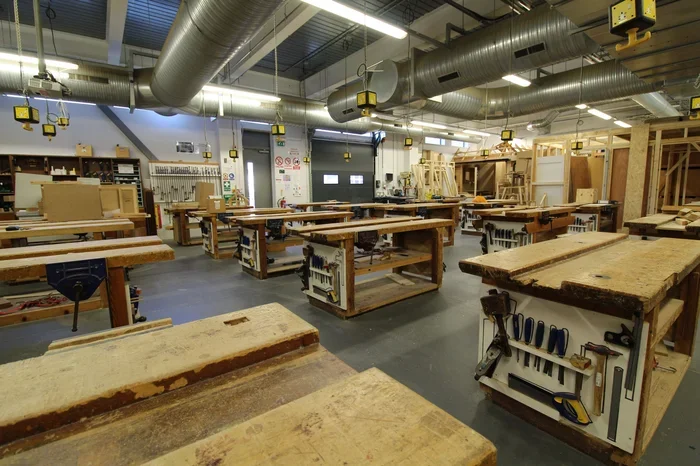
During a vocational education program, you learn about building materials, tool use, safety procedures, and basic construction methods. You also get hands-on practice working on real projects in workshop settings. This kind of hands-on learning is incredibly valuable because it teaches you how to think like a carpenter, not just read about it.
What You Will Learn in Trade School
A good carpentry training program covers a wide range of topics. Here is what you can expect:
- Blueprint reading: Understanding how to interpret construction drawings and plans.
- Building codes: Learning the local and national rules that govern construction work.
- Tool mastery: Getting comfortable with both hand tools and power tools used in the trade.
- Framing and structural work: Building the skeleton of buildings including walls, floors, and roofs.
- Finish carpentry: Installing trim, doors, windows, and cabinetry for a polished look.
- Safety and first aid: Understanding how to work safely on construction sites.
How Long Does Trade School Take?
Most carpentry degree and certificate programs take 6 months to 2 years. A certificate program can get you started in the field quickly, while an associate degree gives you more in-depth knowledge. Some trade schools also offer weekend and evening classes for people who need to work while they study.
The beauty of trade school education is that it respects your time and your goals. You can start working sooner and keep learning as your career grows. Many programs also help students find apprenticeship program opportunities after graduation.
Apprenticeship Programs: The Heart of Carpentry Training
If there is one thing that stands out as the best way to get the education required to be a skilled carpenter, it is the apprenticeship. An apprenticeship program lets you earn money while you learn. You work alongside experienced carpenters on real job sites and attend related classroom instruction at the same time.
This combination of on-the-job training and formal study is what makes apprenticeships so effective. You are not just watching someone else work. You are doing the work yourself, making mistakes, and learning from them in real time.
How Apprenticeships Work
Most apprenticeship programs for carpentry last between 3 and 4 years. During this time, you split your hours between working on a job site and attending classes. A typical schedule might look like this:
- Years 1-2: You start as a basic apprentice, learning fundamental skills like measuring, cutting, and layout. Your classroom hours focus on technical education basics.
- Years 3-4: You take on more complex tasks, including framing, finishing, and specialized work. Your carpentry courses cover advanced topics like building codes and project management.
By the end of an apprenticeship, you have accumulated hundreds of hours of practical experience. You also earn a journeyman carpenter credential, which is recognized across the industry.
Who Offers Apprenticeships?
Several organizations run apprenticeship programs for carpentry. Union halls like the United Brotherhood of Carpenters are major providers. Non-union contractor associations also offer similar programs. You can find opportunities through local workforce development boards, community colleges, and online job boards. The key is to apply early and be willing to start at the bottom. Every master carpenter once started as a beginner.
Certification and Licensing for Carpenters
After you complete your training, you might wonder about carpenter certification and licensing. These credentials show employers and clients that you meet professional standards. They also help you command higher pay and take on more complex projects.
The education required to be a carpenter does not stop once you finish your apprenticeship. The construction industry evolves with new materials, techniques, and regulations. Staying current through continued learning keeps your skills sharp and your career moving forward.
Types of Carpentry Certifications
Here are some of the most recognized certifications in the field:
- Journeyman Carpenter Certification: Earned after completing an apprenticeship. This is the standard credential for working independently.
- Master Carpenter Certification: Requires additional experience and testing. Master carpenters can supervise projects and handle the most complex work.
- Specialized Certifications: These cover areas like cabinetry, trim work, roof framing, and green building practices.
- OSHA Safety Certifications: These are not carpentry-specific but are highly valued by employers on construction sites.
Why Certification Matters
Think of certification as a stamp of quality. When a client or contractor sees that you hold a carpenter certification, they know you have proven your skills. It also signals that you take your profession seriously and are committed to continuous improvement. In a competitive construction career market, that makes a real difference.
On-the-Job Training and Informal Learning Paths
Not everyone follows a structured path to become a carpenter. Some people start as helpers or laborers on construction sites and learn by watching and doing. This on-the-job training approach works well for motivated individuals who are eager to learn and not afraid of hard work.
If you take this route, you will pick up skills gradually. You might start by carrying materials, holding tools, and cleaning up job sites. Over time, you will learn to do basic cuts and measurements. With patience and persistence, you can work your way up to more advanced tasks. Many skilled trades professionals have followed this exact path to success.
The informal route has its challenges, though. Without formal carpentry courses, it can be harder to learn the theoretical side of the work. You might also miss out on carpenter certification opportunities that require documented training hours. That is why combining informal learning with some structured education gives you the best of both worlds.
Comparing Education Paths for Carpentry
Choosing the right path depends on your situation, goals, and timeline. Here is a quick comparison of the main options:
| Path | Duration | Cost | Best For |
|---|---|---|---|
| Apprenticeship | 3-4 years | Earn while you learn | People who want hands-on experience and a recognized credential |
| Trade School | 6 months – 2 years | Low to moderate | People who want fast entry into the field |
| On-the-Job Training | Variable | Minimal | Self-starters who prefer learning by doing |
| Community College Degree | 2 years | Moderate | People who want a broader education and management career |
Each path has real value. The best choice is the one that fits your life right now. You can always combine paths too. For example, you might start with a short trade school program and then enter an apprenticeship program to deepen your skills.
Remember, the education required to be a skilled carpenter is not a race. It is a journey. What matters most is that you keep moving forward and building your knowledge and abilities along the way.
Skills That Go Beyond the Classroom
While formal carpentry training gives you the technical foundation, certain soft skills separate good carpenters from great ones. Employers in the construction industry look for people who can communicate clearly, solve problems on the fly, and work well in a team.
Math skills are essential. You will use measurements, fractions, and geometry every single day. Attention to detail matters just as much. A small measurement error can cause big problems down the line. Physical fitness also plays a role since carpentry involves a lot of standing, lifting, and bending.
Finally, time management and customer service skills help you stand out. Clients appreciate a carpenter who shows up on time, communicates clearly, and delivers quality work. These people skills are just as important as your ability to swing a hammer.
Starting Your Journey: First Steps to Take Today
Now that you know what education is required to be a carpenter, here is how you can start right away:
- Talk to local carpenters: Ask them about their training paths and what advice they would give someone starting out.
- Research trade schools near you: Look for programs that offer hands-on workshops and job placement support.
- Apply for an apprenticeship: Check with union halls, contractor associations, and workforce development agencies.
- Practice basic skills at home: Start with small woodworking projects to build confidence and learn how tools work.
- Stay curious and keep learning: The best professional carpenter never stops improving their craft.
The education required to be a carpenter is within your reach. You do not need a fancy degree or a huge budget. You need dedication, curiosity, and a willingness to put in the work. Every great skilled carpenter started exactly where you are now.
Just as learning similes for education helps students express ideas more vividly, learning the right carpentry training techniques helps you express your craft with precision and confidence. And just as metaphors for education deepen understanding, the hands-on metaphors of building and creating give carpenters a unique way to shape the world around them. Education in any form is powerful, and the education required to be a skilled carpenter is no exception.
So pick a path, take that first step, and start building your future. The tools are waiting, the jobs are out there, and the construction career of your dreams is closer than you think.
Conclusion
The education required to be a skilled carpenter is more accessible and flexible than most people realize. Whether you choose a formal apprenticeship program, a trade school certificate, or on-the-job training, you can build a successful construction career without spending four years in a lecture hall. What truly matters is your willingness to learn, practice, and grow.
Start with the basics, invest in carpentry courses and hands-on learning, and keep pushing yourself to master new woodworking skills. The skilled trades need passionate people, and there is a place for you in this rewarding industry. Your journey to becoming a professional carpenter begins with a single step. Take it today.
Frequently Asked Questions
Do I need a college degree to become a carpenter?
No, a college degree is not required for most carpentry positions. The education required to be a carpenter typically comes through apprenticeships, trade school programs, or on-the-job training. Employers value practical skills and experience over academic credentials in the construction industry.
How long does carpentry training take?
Training timelines vary. A trade school program can take 6 months to 2 years, while a full apprenticeship program typically lasts 3 to 4 years. The education required to be a skilled carpenter depends on which path you choose and how quickly you progress.
Can I become a carpenter without any formal education?
Yes, it is possible to enter carpentry through informal on-the-job training as a helper or laborer. However, having some structured carpentry training or a carpenter certification will significantly improve your job prospects and earning potential in the long run.
What is the difference between a journeyman and a master carpenter?
A journeyman carpenter has completed an apprenticeship and can work independently on most projects. A master carpenter has additional experience and certifications, allowing them to supervise projects, handle complex work, and train apprentices. Both credentials require significant hands-on learning and dedication to the skilled trades.
Are online carpentry courses worth it?
Online carpentry courses can be a great supplement to hands-on training. They are especially useful for learning theory, building codes, and safety procedures. However, carpentry is fundamentally a hands-on trade, so in-person practice and vocational education with workshop components are essential for developing real skills.
What certifications should a carpenter pursue?
The most valuable certifications include a journeyman carpenter credential, master carpenter certification, and OSHA safety credentials. Specialized certifications in areas like cabinetry or green building can also boost your construction career. These credentials demonstrate the professional carpenter standard of excellence that employers and clients respect.


