
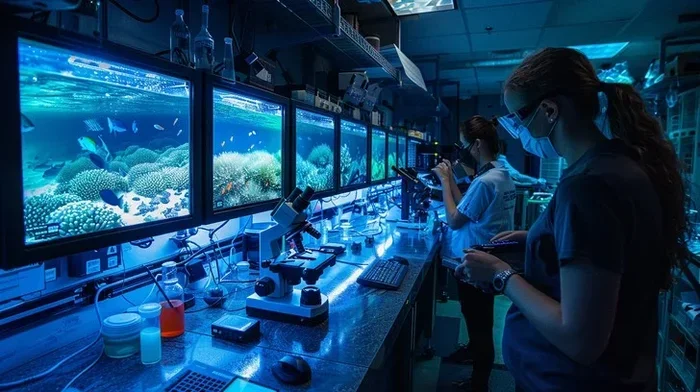
To become a marine biologist, you typically need a strong foundation in science, starting with a bachelor’s degree in marine biology or a related field, followed by advanced studies at the master’s or doctoral level. The path involves coursework in oceanography, marine ecology, and conservation biology, along with hands-on fieldwork and research experience. Choosing the right education roadmap shapes your career in marine science and opens doors to exciting opportunities in ocean conservation and research.
Have you ever watched a documentary about coral reefs and thought, “I want to do that for a living”? Becoming a marine biologist is a dream for many people who love the ocean. But the journey starts with the right education. Knowing what education is needed to become a marine biologist helps you plan every step of the way.
The path is not a single road. It branches into different degree levels, specializations, and hands-on experiences. Some people dive straight into fieldwork. Others spend years in labs and classrooms. Either way, the right learning journey builds the skills you need to study ocean life and protect marine ecosystems.
This guide breaks down everything you need to know. From undergraduate programs to advanced degrees, we cover it all. You will learn what courses to take, what skills to build, and how to turn your love for the sea into a real career. Let us get started.
Key Takeaways
- Bachelor’s Degree: A foundational step that covers core marine science topics and lab skills.
- Master’s and Doctoral Degrees: Advanced credentials that unlock specialized research and leadership roles.
- Fieldwork and Internships: Real-world experience is just as important as classroom learning.
- Key Skills Matter: Beyond degrees, skills like data analysis, diving certification, and scientific writing set you apart.
- Career Paths Are Diverse: From conservation to aquaculture, education opens many doors in marine science.
📑 Table of Contents
- What Does a Marine Biologist Do?
- What Education Is Needed to Become a Marine Biologist?
- Top Degree Programs and Universities
- Essential Skills Beyond the Classroom
- Hands-On Experience: Internships and Fieldwork
- Career Paths After Education
- Common Mistakes to Avoid
- Expert Insights on Marine Biology Education
- Conclusion
What Does a Marine Biologist Do?
Before diving into the education details, it helps to understand the job itself. A marine biologist studies organisms that live in the ocean and other saltwater environments. This includes everything from tiny plankton to massive whales. The work combines science, research, and conservation.
Marine biologists often focus on specific areas. Some study marine ecosystems and how species interact. Others look at how human activity affects ocean life. The job can involve lab work, field research, data analysis, and even teaching.
Day-to-Day Responsibilities
- Collecting water and tissue samples from marine environments
- Tracking and monitoring marine wildlife populations
- Running experiments in laboratories or aquariums
- Analyzing data using statistical software
- Writing research papers and reports
- Collaborating with conservation teams and government agencies
The role requires curiosity, patience, and a willingness to work in sometimes challenging conditions. But for those who love the ocean, it is incredibly rewarding.
What Education Is Needed to Become a Marine Biologist?
The most common question aspiring marine biologists ask is: “What education is needed to become a marine biologist?” The answer depends on your career goals. Entry-level positions may only require a bachelor’s degree. But advanced research and teaching roles usually need a master’s or doctorate.
The journey of learning marine science can feel like a long voyage. Some say the path of scientific education is a simile for education — like a ship that needs steady winds to sail forward. Others describe the deep knowledge gained through advanced degrees as a metaphor for education — an ocean of understanding that grows deeper the further you dive. And the process of learning key scientific phrases and concepts? That is simply part of the rich idioms for education that every student picks up along the way.
Bachelor’s Degree: The Foundation
A bachelor’s degree is the starting point for most marine biology careers. This four-year program gives you a solid grounding in biology, chemistry, and physics. Most students choose a major in marine biology, marine science, or a closely related field like zoology or environmental science.
During your undergraduate years, you will take courses such as:
- Marine ecology and oceanography
- Marine genetics and microbiology
- Conservation biology
- Statistics and research methods
- Aquatic organism physiology
Many programs also include lab work and field trips. These experiences let you apply what you learn in the classroom to real ocean environments. A bachelor’s degree opens doors to entry-level roles like research assistant, lab technician, or aquarium educator.
Master’s Degree: Specialization and Depth
A master’s degree typically takes two to three years after completing a bachelor’s. This level of study lets you focus on a specific area of interest. You might specialize in coral reef conservation, marine toxicology, or fisheries management.
At this stage, you will likely conduct original research. Many programs require a thesis or a capstone project. A master’s degree qualifies you for more advanced positions and often leads to higher salaries in the field of marine research.
Doctoral Degree: Leading the Field
A Ph.D. is the highest level of education in marine biology. It usually takes four to six years beyond a master’s degree. Doctoral programs focus heavily on independent research. You will contribute new knowledge to the scientific community through published papers and presentations.
A Ph.D. is essential if you want to lead research teams, teach at universities, or work in senior policy roles. It is a big commitment, but it opens the widest range of career opportunities in marine science.
Top Degree Programs and Universities
Not all marine biology programs are the same. Some schools offer dedicated marine biology degrees. Others focus on broader biology or environmental science with marine concentrations. Here are some well-known options to consider.
| Degree Level | Example Programs | Focus Areas |
|---|---|---|
| Bachelor’s | University of Miami, UC Santa Barbara | General marine biology, ecology, field methods |
| Master’s | Scripps Institution of Oceanography, Duke University | Marine conservation, fisheries, toxicology |
| Ph.D. | MIT-WHOI Joint Program, University of Hawaii | Deep-sea research, climate impacts, marine genetics |
When choosing a program, look for schools near the coast. Proximity to the ocean means easier access to fieldwork and research opportunities. Also check whether the program has partnerships with marine research stations or aquariums.
Essential Skills Beyond the Classroom
Education in the classroom is vital. But becoming a successful marine biologist requires skills that go beyond textbooks. Employers and research teams look for candidates who can think critically, work in teams, and handle real-world challenges.
Technical Skills
- Data analysis: Marine biologists work with large datasets. Learning tools like R, Python, or MATLAB is a huge advantage.
- Diving certification: Many research projects require SCUBA diving. Getting certified through organizations like PADI or NAUI is often essential.
- Scientific writing: You will publish papers and write grant proposals. Clear writing makes your research accessible.
- GIS and mapping: Geographic information systems help track species distribution and habitat changes over time.
Soft Skills That Make a Difference
- Patience: Research in marine environments can involve long hours and unpredictable conditions.
- Adaptability: Fieldwork does not always go as planned. Weather, equipment issues, and wildlife behavior all play a role.
- Communication: Being able to explain complex science to the public, policymakers, or fellow researchers is key.
Quick Tips for Building Skills Early
- Volunteer at a local aquarium or marine rescue center
- Join a university marine science club or society
- Apply for summer research internships at coastal labs
- Learn to swim and consider getting your open-water diving certification while still in school
- Follow marine science journals to stay current on discoveries
Hands-On Experience: Internships and Fieldwork
One of the most important parts of your education is gaining real-world experience. Internships and fieldwork give you a taste of what the job is really like. They also build your resume and professional network.
Many universities offer co-op programs or summer field courses. These let you work alongside experienced marine scientists. You might collect samples from a research vessel, monitor coastal wetlands, or assist with tagging marine animals.
Internships with organizations like NOAA, the Smithsonian Marine Station, or local conservation groups are highly competitive but extremely valuable. Even unpaid positions can lead to job offers and strong professional connections later on.
Why Fieldwork Matters
Reading about marine ecosystems in a textbook is one thing. Seeing them up close is another. Fieldwork teaches you how to work in dynamic, unpredictable environments. It also helps you develop a deeper appreciation for the complexity of ocean life.
During fieldwork, you learn to handle equipment, navigate boats, and stay safe in marine conditions. These practical skills are something no classroom can fully replicate.
Career Paths After Education
Once you complete your education, the world of marine science opens up. There are many directions you can take your career, depending on your interests and level of study.
Common Career Options
- Research Scientist: Conduct studies in universities, government labs, or private research institutes
- Conservation Biologist: Work with NGOs or government agencies to protect endangered marine species
- Aquarium or Zoo Professional: Manage exhibits, care for animals, and educate the public
- Fisheries Manager: Oversee sustainable fishing practices and monitor fish populations
- Environmental Consultant: Assess the impact of development projects on coastal and marine environments
- University Professor: Teach the next generation of marine scientists and lead research teams
Your education level often shapes which paths are available to you. A bachelor’s degree qualifies you for many exciting roles. A master’s or Ph.D. expands your options into research leadership and academia.
Common Mistakes to Avoid
Planning your education path can be tricky. Many aspiring marine biologists make avoidable mistakes along the way. Here are a few to watch out for.
- Skipping chemistry and math: Marine biology is not just about animals. It requires a strong grasp of chemistry, physics, and statistics. Ignoring these subjects can hold you back.
- Waiting too long to gain experience: Do not wait until graduation to start building your resume. Seek internships, volunteer opportunities, and research positions as early as possible.
- Choosing a program solely on reputation: A famous university is not always the best fit. Look for programs that offer coastal access, hands-on learning, and research opportunities that match your interests.
- Neglecting networking: The marine science community is relatively small. Building relationships with professors, researchers, and professionals can open doors you did not know existed.
- Ignoring interdisciplinary options: Marine biology overlaps with ecology, geology, chemistry, and even engineering. Embracing interdisciplinary study makes you a more versatile and valuable scientist.
Expert Insights on Marine Biology Education
We spoke with several working marine biologists about their education journeys. Their advice offers a realistic look at what to expect.
Dr. Sarah Chen, a marine ecologist at a coastal research institute, shared this: “The education you pursue shapes the questions you can ask. Start broad, then narrow your focus as you discover what excites you most about the ocean.”
James Rivera, a fisheries manager with over 15 years of experience, added: “Do not underestimate the value of hands-on experience. Some of the most important lessons I learned came from fieldwork, not from lectures.”
Both experts agree on one thing: the path to becoming a marine biologist is a marathon, not a sprint. Each step of your education builds on the last, creating a foundation for a meaningful career.
Conclusion
Understanding what education is needed to become a marine biologist is the first step toward an exciting career in ocean science. From a bachelor’s degree that builds your foundation to advanced studies that open specialized doors, every level of education plays a critical role. Combine your studies with hands-on experience, technical skills, and a genuine passion for the ocean, and you will be well on your way.
The journey takes time, effort, and dedication. But for those who love the sea, every lesson learned brings you closer to understanding and protecting the incredible world beneath the waves. Start planning your education today, and dive into the rewarding field of marine biology.
Frequently Asked Questions
What degree do you need to become a marine biologist?
Most marine biologists start with a bachelor’s degree in marine biology, marine science, or a related field like biology or environmental science. For advanced research or teaching roles, a master’s degree or Ph.D. is typically required. The right degree depends on your career goals and the type of work you want to do.
How long does it take to become a marine biologist?
A bachelor’s degree takes about four years. Adding a master’s degree can take two to three more years. A Ph.D. may add another four to six years on top of that. In total, becoming a fully qualified marine biologist can take anywhere from four to twelve years of education beyond high school.
Can I become a marine biologist with a biology degree?
Yes, a biology degree can be a solid starting point. Many marine biologists hold degrees in general biology, zoology, or ecology before specializing in marine science through graduate studies or certifications.补充 coursework in oceanography and marine ecology strengthens your profile.
Is scuba diving certification required for marine biology?
It is not always required, but it is highly recommended. Many marine biology research projects involve underwater fieldwork. Having a scuba certification from a recognized organization like PADI or NAUI makes you more competitive for jobs and internships that involve diving.
What skills are most important for a marine biologist?
Strong skills in data analysis, scientific writing, and critical thinking are essential. Technical abilities like GIS mapping and statistical software are increasingly important. Soft skills like patience, adaptability, and communication also play a big role in career success.
How much does a marine biologist earn?
Salaries vary based on education level, experience, and job type. Entry-level positions with a bachelor’s degree may start around $40,000 to $50,000 per year. With advanced degrees and experience, marine biologists can earn $70,000 or more annually, especially in research or leadership roles.


