
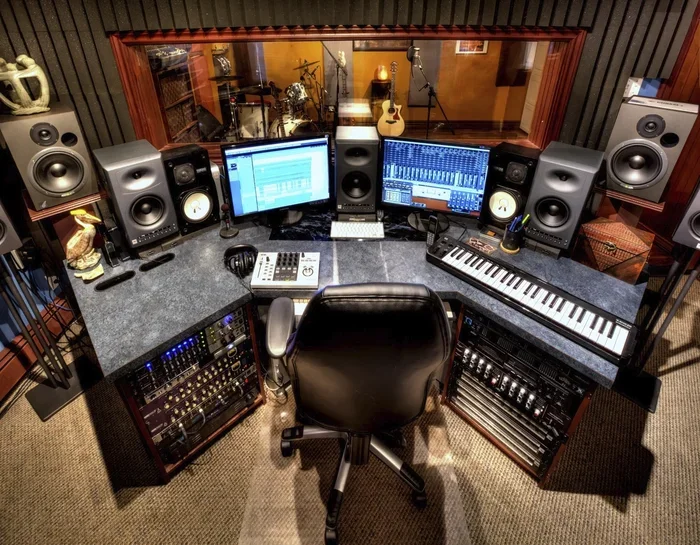
Becoming a music producer doesn’t require a single fixed path. You can pursue a formal music production degree, attend specialized audio engineering schools, or teach yourself through hands-on practice and online resources. The right education for music producers depends on your goals, budget, and learning style. This guide breaks down every option so you can make a confident choice.
Have you ever dreamed of creating the beats that move crowds or producing tracks that top the charts? If so, you’ve probably wondered about the education needed to become a music producer. The good news is there’s no single road to get there. You have options, and some might surprise you.
The world of music production is exciting and wide open. Whether you want to work in a big recording studio, produce for independent artists, or create beats from your bedroom, the right music producer education can set you up for success. Let’s explore every path so you can find the one that fits your life and goals.
Many people assume you need a four-year college degree to make it in music production. That’s simply not true. Some of the biggest names in the industry are self-taught. But education of some kind almost always helps. It gives you a foundation, exposes you to industry tools, and connects you with people who share your passion. So let’s dive into what your options really are.
Key Takeaways
- No single path exists: You can go to college, attend a trade school, or learn on your own.
- Formal degrees add credibility: A bachelor’s in music production or audio engineering opens doors to studios and labels.
- Online courses are affordable: Platforms like Coursera, Udemy, and MasterClass offer flexible music production training.
- Skills matter more than diplomas: Employers and artists care about your portfolio and hands-on ability.
- Mentorship accelerates growth: Working with an experienced producer teaches real-world insights no classroom can.
- Start now, learn forever: The music industry evolves fast, so continuous learning is essential.
📑 Table of Contents
- Understanding the Role of a Music Producer
- Formal Education Options for Music Producers
- Online Courses and Self-Learning Paths
- Essential Skills Every Music Producer Needs
- How to Choose the Right Education Path
- Common Mistakes to Avoid in Music Producer Education
- Expert Insights: What Industry Professionals Say About Education
- Conclusion
Understanding the Role of a Music Producer
Before we talk about education, let’s quickly cover what a music producer actually does. A music producer oversees the creation of a song or album. They work with artists, engineers, and songwriters to shape the sound. A producer might choose instruments, guide vocal performances, mix tracks, and even handle the business side of releasing music.
The role blends creativity with technical skill. You need to understand music theory, audio equipment, and digital tools. You also need a good ear and strong communication skills. This mix of art and science is exactly why education matters so much in this field.
What Does a Music Producer Do Day to Day?
A typical day for a producer might include scouting for talent, arranging songs, managing studio sessions, or fine-tuning mixes. Some producers focus on beat-making and electronic production. Others work closely with live bands in a studio setting. No two days look the same, and that’s part of what makes this career so appealing.
Think of a producer as the captain of a ship. Everyone else is rowing, and you’re steering. You need to know the waters, understand your crew, and keep everyone moving toward the same destination. That’s a lot of responsibility, and it’s why solid training pays off.
Formal Education Options for Music Producers
Formal education means attending a school or university that offers structured programs in music production or a related field. This is the most traditional route, and it comes with clear advantages.
Bachelor’s Degrees in Music Production
A bachelor’s degree in music production is the gold standard for many aspiring producers. These programs typically take four years to complete and cover a wide range of topics. You’ll study audio engineering, music theory, sound design, mixing, mastering, and music business.
Top schools like Berklee College of Music, Full Sail University, and NYU’s Clive Davis Institute offer strong programs. These schools have professional-grade studios, experienced instructors, and industry connections. Graduating from a recognized program can give you a serious edge when applying for jobs or pitching to artists.
Here’s what a typical music production degree curriculum looks like:
- Recording techniques and studio operations
- Digital audio workstations (DAWs) like Pro Tools, Logic Pro, and Ableton
- Music theory and composition
- Mixing and mastering fundamentals
- Music business and copyright law
- Live sound and event production
Associate Degrees and Diploma Programs
If a four-year degree feels like too much commitment, consider an associate degree or a diploma program. Many community colleges and technical schools offer audio engineering programs that take one to two years. These programs focus heavily on hands-on studio work and technical skills.
Diploma programs are even shorter and more focused. They’re great if you already have some music experience and just need to sharpen your technical skills. The trade-off is that you might miss out on the broader education a bachelor’s program provides, like music history and business knowledge.
Recording Arts Schools and Trade Programs
Dedicated recording arts schools are another strong option. These schools focus entirely on audio production and sound engineering. They often have smaller class sizes, which means more one-on-one time with instructors. Programs like those at SAE Institute or Icon Collective are designed specifically for people who want to enter the industry quickly.
These schools are ideal if you already know music production is your passion. They cut out the general education courses you’d find in a traditional college and focus purely on the skills you need to succeed.
Online Courses and Self-Learning Paths
Not everyone can or wants to attend a traditional school. The good news is the internet has opened up incredible learning opportunities. You can learn music production from home, at your own pace, and for a fraction of the cost.
Best Online Platforms for Music Production Training
Several platforms offer high-quality courses for aspiring producers. Here are some of the most popular options:
- Coursera and edX: Partner with universities to offer structured courses in music technology and production.
- Udemy: Affordable courses on everything from beat-making to advanced mixing techniques.
- MasterClass: Learn directly from industry legends like Timbaland and Deadmau5.
- Skillshare: Short, focused classes on specific skills like synthesizer programming or vocal production.
- YouTube: Free tutorials covering every topic imaginable, from DAW basics to advanced sound design.
Online learning is flexible and accessible. You can fit lessons around your job or family schedule. The downside is that you won’t have the same level of feedback or networking opportunities as you would in a formal program. But if you’re disciplined and motivated, online courses can take you surprisingly far.
Teaching Yourself Music Production
Many successful producers are self-taught. They learned by doing, experimenting, and making mistakes. If you take this route, you’ll need to be your own teacher. That means setting goals, staying organized, and consistently practicing.
Start by picking a DAW and learning its ins and outs. Then, study music theory basics like scales, chords, and rhythm. Listen to music critically and try to reverse-engineer how your favorite tracks were made. The internet is full of free resources, from forums to blogs to entire communities of producers sharing tips and feedback.
Remember, being self-taught doesn’t mean learning alone. Many producers find mentors through online communities or local music scenes. A good mentor can give you honest feedback, share industry insights, and help you avoid common pitfalls.
Essential Skills Every Music Producer Needs
Education gives you knowledge, but skills are what get you hired. Whether you attend school or learn on your own, you’ll need to develop a specific set of abilities to thrive as a producer.
Technical Skills
You need to be comfortable with audio equipment and software. This includes knowing how to set up a recording session, use a mixing console, and navigate a DAW. Understanding sound engineering principles is also critical. You should know how to EQ, compress, and balance tracks effectively.
Here are the technical skills every producer should have:
- Proficiency in at least one DAW (Ableton, Logic Pro, Pro Tools, FL Studio, etc.)
- Understanding of microphone placement and signal flow
- Knowledge of mixing and mastering techniques
- Familiarity with virtual instruments and sample libraries
- Basic understanding of acoustics and studio setup
Creative and Musical Skills
Technical skills get you started, but creativity is what makes a great producer. You need a strong sense of melody, rhythm, and harmony. You should be able to hear a song in your head and bring it to life in a studio.
Studying music theory helps here. You don’t need to be a classical composer, but understanding how songs are structured gives you a huge advantage. It helps you communicate with musicians, arrange tracks effectively, and push creative boundaries.
Reading about similes for music or exploring metaphors for music might seem unrelated, but creative language exercises can sharpen your ability to describe and conceptualize sound. These exercises train your brain to think more abstractly and connect ideas in new ways.
Business and Communication Skills
Music production is also a business. You need to know how to market yourself, negotiate contracts, and build relationships with artists and industry professionals. Communication skills are essential because you’ll work closely with musicians, engineers, and label representatives every day.
Many music production programs include a music business component for this reason. Even if you’re self-taught, take time to learn about the industry side of things. Understanding royalties, copyright, and licensing can protect your work and help you earn fair compensation.
How to Choose the Right Education Path
With so many options available, choosing the right path can feel overwhelming. Here are some factors to consider when making your decision.
Consider Your Goals
What do you want to achieve as a producer? If you want to work at a major recording studio, a formal degree might be necessary. If you want to produce beats for hip-hop artists from your apartment, online courses and self-study might be enough. Your goals should drive your education choices.
Think About Your Budget
Formal education can be expensive. A bachelor’s degree from a private university can cost tens of thousands of dollars per year. Community college and online courses are much more affordable. Don’t let cost stop you from learning, but be smart about where you invest your money.
Evaluate Your Learning Style
Do you thrive in structured classroom environments? Or do you prefer to learn at your own pace? Some people need the accountability of a formal program. Others do better with the flexibility of online learning. Be honest with yourself about how you learn best.
Look for Mentorship Opportunities
No matter which path you choose, seek out mentorship. Learning from someone who has real-world experience is invaluable. A mentor can introduce you to industry contacts, give you honest feedback on your work, and help you navigate challenges. Look for mentorship through local music schools, online forums, or industry events.
Common Mistakes to Avoid in Music Producer Education
Learning from others’ mistakes can save you time and money. Here are some common pitfalls to watch out for.
- Skipping the fundamentals: It’s tempting to jump straight into advanced production techniques. But without a solid grasp of music theory and basic audio principles, you’ll hit a ceiling fast.
- Investing in expensive gear too early: You don’t need a $10,000 studio setup to start learning. Focus on education first, equipment second.
- Comparing yourself to others: Every producer’s journey is different. Some get formal degrees, some are self-taught, and some took unconventional paths. Your journey is unique.
- Neglecting to build a portfolio: Education means nothing without proof of your skills. Start building a portfolio of your work early, even if it’s just beats for practice.
- Isolating yourself: The music industry is built on relationships. Network with other producers, attend events, and collaborate whenever you can.
Also, don’t underestimate the power of learning from language and expression. Exploring idioms for education or studying creative writing can actually improve how you communicate with artists and collaborators. Good producers are not just technicians, they’re storytellers.
Expert Insights: What Industry Professionals Say About Education
We asked several working music producers about their thoughts on education. Here’s what they had to say.
Marcus, a producer with 12 years of experience: “I went to a recording arts school, and it changed my life. I learned more in one year there than I did in ten years of trying to figure it out alone. But I also had to keep learning after I graduated. The industry never stops evolving.”
Jasmine, a self-taught producer now working with major labels: “I never went to school for music production. I learned everything from YouTube and trial and error. But I wish I had at least taken some online courses early on. It would have saved me years of making the same mistakes.”
David, a music production instructor: “The best producers I’ve taught are the ones who never stop learning. Whether they have a degree or not, they stay curious and keep pushing themselves. Education is a lifelong journey in this industry.”
These stories show that there’s no one-size-fits-all answer. The best education is the one that keeps you growing and helps you do your best work.
Conclusion
So, what education do you need to become a music producer? The honest answer is: it depends on you. There’s no single requirement, and the industry values skills and results over diplomas. That said, some form of music producer education almost always helps. Whether it’s a formal degree, an online course, or years of self-directed learning, investing in your craft is never a waste of time.
Start where you are, use what you have, and keep learning. The path to becoming a music producer is as creative and unique as the music you’ll make. Pick the education route that fits your life, commit to it, and never stop growing. Your future as a producer starts with the very next step you take.
Explore resources on similes for education and metaphors for education to sharpen your creative thinking and communication skills. These might seem like small additions, but they can make a big difference in how you connect with artists and collaborators in the studio.
Frequently Asked Questions
Do I need a degree to become a music producer?
No, a degree is not required. Many successful producers are self-taught or learned through online courses and mentorship. However, a degree can provide structured training, industry connections, and credibility that help you stand out in a competitive market.
What is the best degree for a music producer?
A bachelor’s degree in music production, audio engineering, or music technology is the most relevant. These programs cover recording, mixing, mastering, and music business. If a four-year degree isn’t feasible, an associate degree or diploma from a recording arts school is a great alternative.
Can I learn music production for free?
Yes, you can learn a lot for free through YouTube tutorials, open-source DAWs, and online forums. However, structured courses, even affordable ones, often provide better guidance and faster progress. Free resources work best when combined with consistent practice and feedback from experienced producers.
How long does it take to become a music producer?
The timeline varies widely. A formal degree takes four years, but you can start producing music within months of self-study. Most producers spend several years developing their skills and building a portfolio before landing professional work. Consistency and practice matter more than the timeline.
Is music production a good career?
Yes, music production can be a rewarding career for those passionate about music. The industry offers diverse opportunities, from studio work to freelance production and sync licensing. However, it can be competitive and requires continuous learning, networking, and persistence to build a stable income.
What skills matter most for a music producer?
Technical skills like DAW proficiency, mixing, and mastering are essential. But creativity, communication, and business sense matter just as much. The best producers combine technical expertise with artistic vision and the ability to bring out the best in the artists they work with.
=== INTERNAL LINKS ===
Explore our collection of similes for music to expand your creative vocabulary and describe sound in fresh ways.
Dive deeper into the art of expression with our metaphors for music guide, perfect for producers who want to think more creatively about their craft.
Looking to strengthen your foundation? Check out our idioms for education page for useful phrases that can boost your communication in any learning environment.
Want to explore more creative language tools? Visit our metaphors for education collection to find inspiration for describing your musical journey.


