
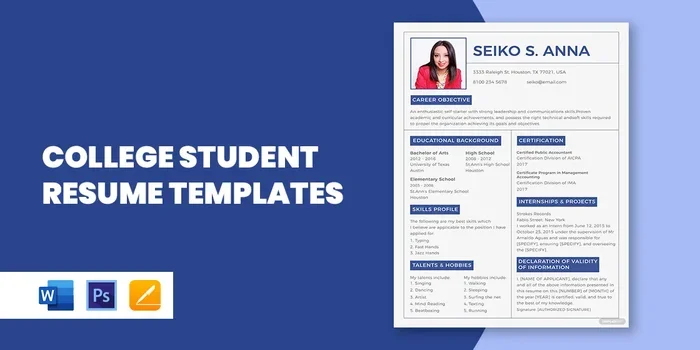
Your education section of resume is a powerful tool that shows hiring managers your academic background and qualifications. You should include your degree, school name, graduation date, GPA, and relevant coursework to make it work harder for you. This guide covers everything from formatting to common mistakes so you can build a professional resume that lands interviews.
Your resume is often the first impression you make on a hiring manager. And one section that can either make or break that impression is your education section of resume. Many people underestimate how much this part matters. Whether you are a fresh graduate or a seasoned professional, knowing what to put on education section of resume can give you a real edge.
Think of your resume as a story. Each section tells a part of your journey. The education section is where you prove you have the knowledge and credentials to back up your claims. It is not just about listing your degree. It is about presenting your academic background in a way that connects directly to the job you want.
In this guide, we will walk through everything you need to know. From what details to include to how to format it properly, you will find clear, actionable steps. Let us dive in and make your resume education section work as hard as you do.
Key Takeaways
- Always include: degree title, school name, graduation date, and GPA if it is 3.0 or above.
- Add relevant coursework and academic honors to boost your credibility.
- Format matters: use reverse chronological order and keep it clean and scannable.
- Avoid common mistakes like listing every class you ever took or including outdated information.
- Tailor your education section to match the job description and industry expectations.
- Recent graduates** should expand this section, while seasoned professionals can keep it brief.
- Certifications and licenses can also live in the education section if they are closely related.
📑 Table of Contents
Why Your Education Section Matters
Many job seekers focus all their energy on work experience and forget about the education section of resume. That is a big mistake. Your academic background tells employers a lot about you. It shows your dedication, your ability to learn, and your commitment to a field.
Here is why this section deserves more attention than you think:
- It validates your qualifications. Employers want to see that you have the right training for the role.
- It sets you apart from other candidates. A well-crafted education section can highlight honors, awards, and relevant projects.
- It fills gaps in experience. If you are switching careers or are a new graduate, your education can carry more weight.
- It shows attention to detail. A clean, organized education section signals that you are thorough and professional.
Does Every Job Require a Strong Education Section?
Not every role places the same emphasis on education. For technical jobs like software engineering, skills and portfolios often matter more than degrees. But for fields like healthcare, teaching, law, and engineering, your academic background is non-negotiable. You need to know your industry and tailor accordingly.
When in doubt, study the job posting. If the employer lists specific degree requirements, your education section becomes a key part of your job application. Make sure it answers their questions before they even ask.
What to Include in the Education Section of Resume
This is the core of the whole topic. What to put on education section of resume depends on your situation, but there are universal elements that belong in every entry. Let us break them down one by one.
Your Degree Title
Always list your highest completed degree first. If you have a Bachelor of Science in Business Administration, write it out clearly. Do not abbreviate unless the abbreviation is widely recognized. Hiring managers should not have to guess what your degree means.
Here are common degree titles you might include:
- Bachelor of Arts (BA)
- Bachelor of Science (BS)
- Master of Business Administration (MBA)
- Associate of Applied Science (AAS)
- Doctor of Philosophy (PhD)
Keep it simple and accurate. If you are still studying, write “Expected Graduation: May 2025” instead of claiming the degree prematurely.
The School Name and Location
Include the full name of your institution. Avoid nicknames or abbreviations unless the school is universally known by them. For example, “Harvard University” is clear, but you can abbreviate “Massachusetts Institute of Technology” to “MIT” since everyone recognizes it.
You do not need to list the full address. The city and state are enough. This keeps your resume education section clean and uncluttered.
Graduation Date or Expected Date
Your graduation date tells employers how current your knowledge is. If you graduated recently, this works in your favor. If it has been a long time, do not worry — focus on the other details you can highlight.
- Graduated: May 2023
- Expected: December 2025
- In Progress: Expected Completion: June 2026
Never lie about your graduation date. Background checks can catch this, and honesty is always the best policy on a professional resume.
GPA and Academic Honors
Your GPA can be a strong selling point — but only if it is good. The general rule is to include your GPA if it is 3.0 or above on a 4.0 scale. If it is lower, leave it out and let other strengths shine.
Academic honors are another powerful addition. These include:
- Dean’s List
- Magna Cum Laude
- Summa Cum Laude
- Scholarship recipients
- Honor society memberships
These details show that you excelled beyond just passing your classes. They signal ambition and excellence to any reader of your education section of resume.
Relevant Coursework and Projects
This is especially helpful for recent graduates or career changers. If you took courses that directly relate to the job you are applying for, list them. This fills in gaps and shows employers you have the right knowledge base.
For example, if you are applying for a marketing role and took a course in Digital Marketing Strategy, that belongs here. Just keep it to three or four of the most relevant classes. You do not need to list everything you studied.
Similarly, academic projects can demonstrate hands-on skills. A capstone project, a research paper, or a group presentation can all show that you can apply what you learned in real settings.
Certifications and Licenses
Some certifications fit naturally in the education section. Think of things like a Teaching License, a Cisco Certification, or a Certified Public Accountant designation. These are academic or professional achievements that validate your expertise.
If you have multiple certifications, consider whether they deserve their own section. For most resumes, keeping them in the education section works fine. Just make sure they are clearly labeled and easy to find.
How to Format the Education Section Properly
Formatting is just as important as content. A messy education section can undermine an otherwise strong professional resume. You want it to be clean, scannable, and easy to read.
Reverse Chronological Order
Always list your most recent degree first. This is the standard format and what recruiters expect. If you have a Master’s degree and a Bachelor’s, the Master’s goes on top.
Here is the correct order:
- Most recent degree
- Previous degree
- Any additional certifications or training
Use Consistent Styling
Pick one format and stick with it throughout. If you bold the degree title, bold all degree titles. If you use italics for the school name, use italics for every school name. Consistency shows professionalism and care.
Here is a quick comparison of good versus bad formatting:
| Good Formatting | Poor Formatting |
|---|---|
| Bachelor of Science in Marketing, University of Michigan, Ann Arbor, MI. Graduated: May 2022. GPA: 3.7. | Marketing degree, U of M, Michigan, 2022, got a 3.7 |
The first example is clear, professional, and easy to scan. The second is too casual and hard to read. Always aim for the polished version.
Placement on the Resume
Where should the education section go? For most people, it belongs below the work experience section. But if you are a recent graduate with limited work history, move it higher. In that case, your education becomes your strongest selling point.
Experienced professionals can place it near the bottom. Your work history carries more weight at that stage, so let it take center stage.
Common Mistakes to Avoid
Even careful job seekers make errors in their resume education section. Here are the most common mistakes and how to avoid them.
Listing Every Course You Ever Took
This is a rookie mistake. Nobody wants to read a list of 20 classes from your freshman year. Only include courses that are directly relevant to the job. Keep it short and focused.
Including Your High School Diploma
If you have a college degree, leave your high school diploma off the resume. It is assumed you completed high school. Including it can actually make you look less qualified. There are a few exceptions, such as when you are a high school graduate applying for an entry-level role with no further education.
Omitting the Graduation Date
Some people skip the graduation date to hide their age or how long ago they graduated. This backfires. Employers expect to see this information. Omitting it raises red flags and can make your resume look suspicious.
Using Clichés and Empty Phrases
Phrases like “passionate learner” or “dedicated student” without evidence mean very little. Instead of making vague claims, show your value with concrete details. Mention your GPA, your honors, or specific projects. Think of your resume language like using similes for education — vivid comparisons that bring your achievements to life. Similarly, you can use metaphors for education to make your resume more memorable and impactful when describing your academic journey.
Forgetting to Update It
Your education section should evolve as you do. New certifications, additional degrees, or updated honors should always be reflected. An outdated resume with stale information signals that you are not paying attention to details — and that is not the impression you want.
Education Section Examples for Different Career Stages
Every career stage needs a slightly different approach. Here are practical examples to guide you.
For Recent Graduates
As a new graduate, your education section carries more weight than your work experience. Expand it. Include your GPA, relevant coursework, academic projects, and honors. This is your chance to show what you bring to the table even without years of professional experience.
Here is what a strong entry looks like:
- Bachelor of Science in Computer Science
- State University, Columbus, OH
- Graduated: May 2023 | GPA: 3.8
- Relevant Coursework: Data Structures, Algorithms, Software Engineering
- Honors: Dean’s List (6 semesters), Dean’s Award for Academic Excellence
For Mid-Career Professionals
With several years of experience, your education section should be concise. List your degree, school, and graduation date. You can still include honors if they are impressive, but keep it brief. Your work experience is the star now.
Example:
- Master of Business Administration
- Northwestern University, Evanston, IL
- Graduated: June 2018
For Career Changers
If you are switching industries, your education section becomes a bridge. Highlight any coursework, certifications, or training that connects your past education to your new career path. This helps employers see your potential even if your degree is not in the exact field.
Use powerful, clear language to describe your academic journey. Just as idioms for education can add flair and precision to how you talk about learning, the right words in your resume can transform how employers perceive your academic background.
Expert Tips to Make Your Education Section Stand Out
Want to go beyond the basics? Here are some expert-backed tips that will make your education section of resume truly shine.
Tailor It to the Job Description
Read the job posting carefully. If they mention specific skills or knowledge areas, see if any of your coursework or academic projects align. Mirror their language in your resume. This is called keyword optimization, and it helps your resume get past applicant tracking systems.
Add a “Key Skills” Sub-Section
You can add a small sub-section under your education entry that lists relevant skills gained during your studies. This could include technical skills, research abilities, or soft skills like teamwork and presentation.
Include Study Abroad or Exchange Programs
If you studied abroad, mention it. It shows adaptability, cultural awareness, and a willingness to step outside your comfort zone. These are qualities many employers value highly.
Keep It Updated
Every time you earn a new degree, complete a certification, or receive an honor, update your resume immediately. Do not wait until you need it. Staying current means you are always ready to apply for opportunities.
Use Action-Oriented Language
Even in the education section, you can use strong action verbs. Instead of “Studied marketing at University of X,” try “Completed advanced coursework in digital marketing and consumer behavior at University of X.” The second version is more dynamic and engaging.
Key Takeaways
- Include the essentials: degree title, school name, graduation date, GPA (if 3.0+), and relevant honors.
- Add relevant coursework and projects, especially if you are a recent graduate or career changer.
- Format consistently and use reverse chronological order for a clean, professional look.
- Avoid common mistakes like listing every class, omitting graduation dates, or including high school diplomas.
- Tailor your education section to match the job description and industry expectations.
- Recent graduates** should expand this section, while experienced professionals should keep it concise.
- Certifications and licenses can strengthen your education section when they are relevant to the role.
Frequently Asked Questions
Should I include my GPA on my resume?
Only include your GPA if it is 3.0 or higher on a 4.0 scale. A strong GPA adds credibility, especially for recent graduates. If your GPA is below 3.0, focus on other strengths like honors, coursework, or projects instead.
How do I list multiple degrees on my resume?
List each degree as a separate entry in reverse chronological order. Start with your highest or most recent degree and work backward. Include the degree title, school name, graduation date, and any relevant honors for each entry.
Can I include online courses in my education section?
Yes, especially if the online course is relevant to the job. Platforms like Coursera, LinkedIn Learning, and Google offer recognized certifications. List them with the course name, platform, and completion date to show continuous learning.
Where should the education section go on my resume?
For most professionals, place it below the work experience section. However, if you are a recent graduate or a career changer with limited experience, move it higher so it gets more attention. The placement should match your strongest qualifications.
Should I include my high school education on my resume?
Generally, no. If you have completed any form of higher education, leave your high school diploma off. Employers assume you have a high school degree. The only exception is if you are a high school graduate applying for entry-level roles with no further education.
What if I am still in school and have not graduated yet?
List your degree with “Expected Graduation: Month Year” instead of a completion date. Include your current GPA if it is strong, along with relevant coursework and any honors you have already earned. This shows employers you are actively building your qualifications.
=== CONCLUSION ===
Your education section of resume is more than a formality. It is a strategic part of your professional resume that can open doors and create opportunities. When you know what to put on education section of resume, you can turn this section into a powerful asset that supports your entire application.
Remember to include the essentials — your degree, school name, graduation date, GPA, and relevant honors. Format it cleanly, tailor it to each job, and avoid the common pitfalls that weaken your resume. Whether you are a recent graduate or a seasoned professional, your education deserves a place of honor on your resume.
Take the time to review and refine this section today. A polished education section can be the difference between landing an interview and getting passed over. Make it count, and let your academic achievements speak for themselves.


