
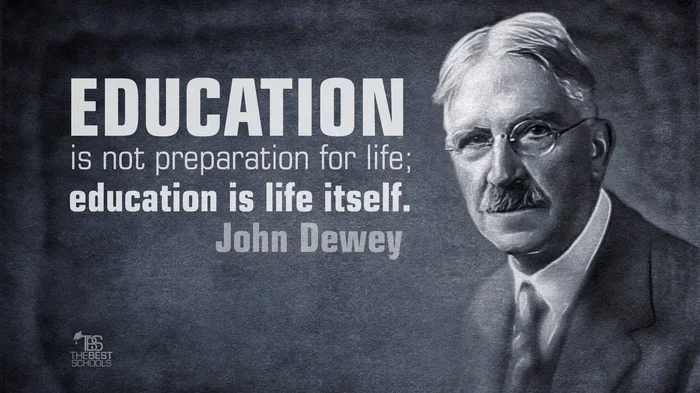
John Dewey transformed education by championing learning by doing, child-centered learning, and progressive education. He believed schools should prepare students for democratic life, not just memorize facts. His educational philosophy reshaped how teachers teach and how students learn worldwide.
John Dewey is one of the most important names in American education. If you have ever walked into a classroom where students work together, solve real problems, or learn by doing things with their hands, you have seen Dewey’s ideas in action. So what did John Dewey do for education? The short answer is: he changed it forever.
Before Dewey, most schools focused on memorizing facts and repeating information back to teachers. Students sat in rows, listened quietly, and took tests. Dewey thought this approach was broken. He believed education should be active, meaningful, and connected to real life. His progressive education movement turned classrooms upside down in the best possible way.
In this article, we will explore exactly what John Dewey did for education, why his ideas matter, and how they still influence the way we teach and learn today. Whether you are a teacher, a parent, or just curious about educational philosophy, this guide has something valuable for you.
Key Takeaways
- Dewey pioneered progressive education: He shifted focus from rote memorization to hands-on, experiential learning that engages students actively.
- He redefined the teacher’s role: Teachers became guides and facilitators, not just lecturers standing at the front of the room.
- Democratic classrooms emerged from his ideas: Dewey believed education should mirror democratic society, giving students voice and choice.
- His principles still shape modern schools: Project-based learning, collaborative classrooms, and student-centered approaches all trace back to Dewey.
- Learning by doing is his signature concept: This hands-on approach remains one of the most powerful teaching methods today.
- Dewey connected education to real life: He argued that school should prepare students for real-world problem solving, not just tests.
📑 Table of Contents
Who Was John Dewey?
John Dewey lived from 1859 to 1952. He was an American philosopher, psychologist, and education reformer. He spent most of his career studying how people learn and how schools could be better. Dewey taught at major universities like the University of Chicago and Columbia University.
But Dewey was not just a thinker who stayed in an office. He visited schools. He watched teachers. He talked to students. He wanted to understand what actually worked in real classrooms. This hands-on approach to studying education was itself revolutionary.
Dewey is often called the “father of progressive education.” That title is not just for show. He wrote many books and articles that shaped how millions of people think about learning. Some of his most famous works include Democracy and Education and Experience and Education. These books are still read in education classes today.
Why Dewey’s Background Matters
Dewey grew up in Vermont and later taught in Pennsylvania before moving into academia. He saw firsthand how rigid, traditional schooling could bore and frustrate students. He also studied the work of other thinkers, like Charles Darwin and William James, which helped shape his views on how humans grow and learn.
Dewey believed that education should be a lived experience, not just preparation for future life. He famously said that “education is not preparation for life; education is life itself.” This idea became the foundation of everything he did.
What Did John Dewey Do for Education?
When people ask what did John Dewey do for education, the answer is big. He did not just make small tweaks to the school system. He helped build a whole new way of thinking about why schools exist and how they should work.
He Founded the Laboratory School
In 1896, Dewey started the University of Chicago Laboratory School. This was a real school where he could test his ideas. He wanted to see if his theories about learning actually worked with real children. The results were impressive. Students at the lab school learned through activities, projects, and real-world problem solving.
At the lab school, children cooked to learn math and science. They built things to understand engineering. They debated to practice critical thinking and communication. Dewey proved that when students are actively involved, learning sticks much better than when they just sit and listen.
He Championed Experiential Learning
One of Dewey’s biggest contributions was the idea of experiential learning. This means learning through direct experience rather than just reading or listening. Dewey believed that students learn best when they can touch, do, and experiment with the world around them.
Before Dewey, most classrooms were lecture-based. The teacher talked, and students copied notes. Dewey flipped this model completely. He argued that hands-on activities, group work, and real-life projects were far more effective. Today, project-based learning and hands-on learning are standard tools in many schools, and they owe a lot to Dewey’s vision.
He Promoted Child-Centered Education
Dewey believed that children should be at the center of the learning process. This was a radical idea at the time. Most schools treated children as empty vessels to be filled with information. Dewey saw children as active learners with their own interests, questions, and ideas.
He argued that the best education starts with the child’s natural curiosity. Teachers should guide students, not just lecture at them. This student-centered approach is now a cornerstone of modern teaching. When a teacher asks students what they want to explore or lets them choose a project topic, that is Dewey’s influence at work.
Dewey’s Core Educational Philosophy
Dewey’s ideas were not random. They came from a deep educational philosophy that connected learning to democracy, experience, and growth. Let us break down the key ideas that made Dewey’s approach so powerful.
Learning by Doing
The phrase “learning by doing” is perhaps Dewey’s most famous contribution to education. He believed that knowledge comes from action. When students do something, they build understanding. When they just read about something, understanding stays shallow.
For example, imagine two students learning about plants. One reads a textbook chapter about photosynthesis. The other plants a seed, waters it, watches it grow, and records observations. Which student understands plants better? Dewey would say the second one, because they had a direct hands-on learning experience.
Education for Democracy
Dewey was a strong believer in democracy. He thought schools should be small democracies where students learn to participate, collaborate, and respect different viewpoints. In a Dewey-inspired classroom, students might vote on class rules, work in groups, or discuss issues openly.
This idea is closely tied to democratic classroom practices that many teachers use today. Dewey believed that if schools wanted to prepare students for citizenship, they needed to practice democracy inside the school walls. A classroom where every voice matters teaches more than any textbook ever could.
The Connection Between School and Real Life
Dewey hated the idea that school was separate from real life. He believed that lessons should connect to students’ everyday experiences. If a math lesson has no real-world connection, students will struggle to care about it.
Today, many teachers use real-life scenarios in their lessons. They bring in community problems, current events, or practical situations for students to solve. This approach comes directly from Dewey’s belief that education should reflect life, not just prepare for a test.
Growth Over Memorization
Dewey cared more about how students grew as thinkers than about what they could memorize. He wanted students to develop the ability to solve new problems, think creatively, and adapt to change. These are the same skills that employers and colleges value today.
In a Dewey classroom, a good grade is not just about getting the right answer. It is about showing how you arrived at your thinking, what you tried, and what you learned from mistakes. This focus on growth mindset and process over product was ahead of its time.
How Dewey Changed Classroom Practices
Dewey’s ideas did not just stay in theory. They changed how classrooms actually work. Let us look at some of the specific ways his influence shows up in modern education.
Group Work and Collaboration
Before Dewey, students mostly worked alone. Dewey believed that learning is a social activity. When students work together, they share ideas, challenge each other, and build deeper understanding.
Today, group projects, pair work, and collaborative activities are everywhere in schools. Teachers use teamwork as a teaching tool because Dewey showed that learning grows through interaction. This is why many classrooms now have desks arranged in clusters instead of rows.
Active Learning Over Passive Listening
Dewey’s push for active learning changed the role of the teacher forever. Instead of being the “sage on the stage,” teachers became facilitators. They guide students, ask questions, and create environments where discovery happens naturally.
If you visit a modern classroom, you will likely see students moving around, discussing, building, and experimenting. The teacher circulates, supports, and asks probing questions. This shift from lecture to facilitation is one of Dewey’s most lasting contributions.
Curriculum That Connects Subjects
Dewey believed that subjects should not be taught in isolation. Math connects to science, which connects to social studies, which connects to art. He pushed for integrated curriculum design that shows students how knowledge is interconnected.
Many modern schools now use cross-curricular projects where students apply skills from multiple subjects to solve a single problem. This integrated approach helps students see the bigger picture and understand how knowledge works in the real world.
Respecting Individual Differences
Dewey understood that every child learns differently. He argued that good education should meet students where they are. This idea paved the way for differentiated instruction and personalized learning, which are now standard practices in many schools.
When a teacher offers different ways for students to show what they know, that is Dewey’s influence. Some students might write an essay. Others might build a model or give a presentation. Dewey believed in honoring diverse paths to learning.
The Lasting Impact of Dewey’s Ideas
More than a century after Dewey began his work, his ideas continue to shape education around the world. Let us look at why his legacy endures.
Influence on Modern Teaching Methods
Many popular teaching methods today have roots in Dewey’s philosophy. Montessori education, Reggio Emilia approaches, and many modern elementary programs all reflect Dewey’s emphasis on child-led learning, hands-on exploration, and respect for the learner’s experience.
Even in traditional schools, you will find traces of Dewey’s thinking. When a teacher uses a class discussion instead of a lecture, when students work on a science experiment instead of just reading about it, Dewey’s spirit is alive.
Shaping Education Policy
Dewey’s ideas have influenced education policy at the national and state level. Standards for critical thinking, problem solving, and collaboration all reflect Dewey’s vision of what education should produce. Many modern education reform movements draw directly from his work.
Organizations and universities that study education continue to build on Dewey’s foundation. His ideas serve as a benchmark for what good education looks like. When policymakers debate how to improve schools, Dewey’s principles often come up in the conversation.
A Global Influence
Dewey’s influence is not limited to the United States. Educators in Japan, China, India, and across Europe have adapted his ideas to fit their own cultural contexts. His vision of education as a democratic, experiential, and human-centered process resonates with teachers everywhere.
In fact, Dewey spent time traveling and sharing his ideas internationally. His visit to China in the 1920s had a profound impact on Chinese education reform. His global reach shows how universal his principles truly are.
Applying Dewey’s Principles Today
You do not need to be a teacher to benefit from Dewey’s ideas. Parents, policymakers, and anyone interested in learning can apply his principles in everyday life.
For Teachers
Teachers can bring Dewey’s ideas into their classrooms by designing lessons that involve active participation. Instead of just reading about history, students can role-play historical events. Instead of just memorizing vocabulary, they can use new words in real conversations. The key is to make learning hands-on and relevant.
Teachers should also create space for student voice. Let students ask questions, choose topics, and share their thinking. When students feel ownership of their learning, engagement soars.
For Parents
Parents can apply Dewey’s principles at home by encouraging curiosity and exploration. Let children ask questions and find answers through experiments, research, and discussion. Avoid overemphasizing test scores and grades. Instead, focus on whether your child understands concepts and can apply them.
Reading together, cooking together, and exploring nature together are all Dewey-inspired activities. They connect learning to real life and build critical thinking skills naturally.
Quick Tips for Bringing Dewey Into Your World
- Encourage questions more than answers.
- Let children solve real problems, even small ones.
- Connect lessons to everyday experiences.
- Use group activities to build collaboration skills.
- Focus on the learning process, not just the final result.
- Give students choices in how they learn and demonstrate knowledge.
Common Mistakes People Make About Dewey
Even though Dewey’s ideas are powerful, people sometimes misunderstand them. Here are a few common mistakes to avoid.
Mistake 1: Thinking Dewey was against structure. Dewey was not saying that classrooms should be chaotic. He believed in thoughtful structure that supports active learning. The teacher still guides the process, but the approach is more flexible and student-friendly.
Mistake 2: Believing Dewey’s ideas are outdated. Some people think Dewey’s philosophy belongs to the past. In reality, his ideas are more relevant than ever. Modern education trends like project-based learning, social-emotional learning, and design thinking all align with Dewey’s vision.
Mistake 3: Confusing Dewey with just “fun activities.” Dewey’s approach was not about making school easy or just entertaining. It was about making learning meaningful and deep. The activities he promoted were designed to build real understanding, not just keep students busy.
Expert Insights on Dewey’s Legacy
Education experts continue to study and celebrate Dewey’s contributions. Many consider him the most influential American thinker on education. His ideas about experiential learning and democratic education have stood the test of time.
Modern researchers have found that Dewey was right about many things. Studies show that students learn better when they are actively engaged, when they work collaboratively, and when lessons connect to real life. These findings confirm what Dewey observed over a hundred years ago.
If you want to dive deeper into the language and expressions surrounding education, check out our collection of idioms for education and similes for education. These resources can help you understand how we talk about learning and teaching in everyday English.
For more on the people behind education, explore our idioms for teachers and idioms for teaching to see how language reflects the teaching profession.
Conclusion
So what did John Dewey do for education? He gave us a vision of schooling that is active, democratic, and connected to real life. He showed us that students learn best by doing, by questioning, and by working together. His ideas about progressive education, experiential learning, and child-centered classrooms have transformed schools around the world.
Dewey’s legacy lives on every time a teacher lets students lead a discussion, every time a classroom runs on collaboration, and every time a lesson connects to something students care about. His vision reminds us that education is not just about filling minds with facts. It is about growing thinkers, citizens, and human beings.
If you want to understand modern education, start with John Dewey. His ideas are the roots of so much of what makes schools meaningful today. And the best part is, his principles are simple enough for anyone to apply, whether you are in a classroom, at home, or just curious about how people learn.
Frequently Asked Questions
What was John Dewey’s main contribution to education?
John Dewey’s main contribution was championing progressive education and the idea of learning by doing. He shifted education away from rote memorization toward hands-on, experiential, and student-centered learning. His work laid the foundation for modern teaching methods that prioritize critical thinking, collaboration, and real-world application.
Why is John Dewey called the father of progressive education?
Dewey earned this title because he was one of the first to argue that schools should focus on the whole child, not just academic content. He believed education should be democratic, active, and connected to students’ lives. His Laboratory School and his many books helped spread these ideas across the country and around the world.
How did Dewey change the role of teachers?
Before Dewey, teachers were seen as authorities who delivered information. Dewey redefined the teacher as a guide and facilitator. Teachers create learning environments, ask thoughtful questions, and support students as they explore and discover. This shift from lecturer to facilitator is one of Dewey’s most enduring legacies in modern classrooms.
Does Dewey’s philosophy still work in today’s schools?
Absolutely. Dewey’s principles are the backbone of many modern educational approaches, including project-based learning, collaborative classrooms, and differentiated instruction. Research continues to confirm that active, student-centered learning produces better outcomes than traditional lecture-based methods. His ideas are as relevant today as they were over a century ago.
What is the connection between Dewey and democratic education?
Dewey believed that schools should function as mini-democracies. Students should have a voice in their learning, practice respect for diverse opinions, and collaborate with peers. This approach prepares students for active citizenship in a democratic society. Many modern classroom practices, like group decision-making and open discussions, reflect this democratic vision.
Can parents apply Dewey’s ideas at home?
Yes, parents can apply Dewey’s ideas by encouraging curiosity, connecting learning to real-life activities, and letting children explore through hands-on experiences. Cooking, gardening, building projects, and family discussions are all ways to bring Dewey’s principles into daily life. The goal is to make learning meaningful and active, not just something that happens at a desk.


