
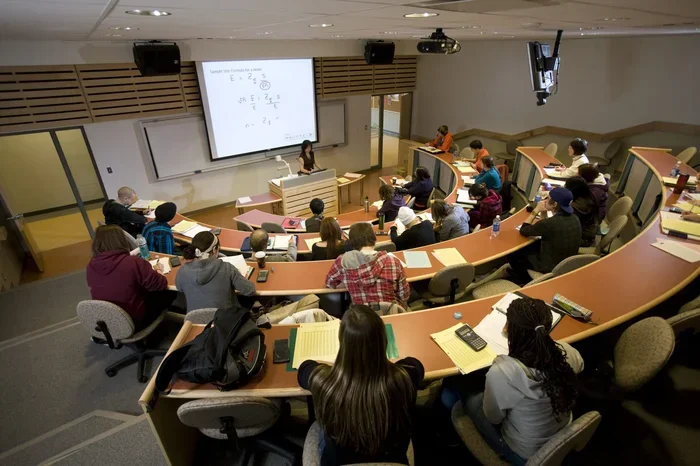
General education courses are the foundation of every college degree, covering subjects like math, science, writing, and social sciences. These classes build critical thinking, communication, and problem-solving skills that apply to every career. Understanding your general education requirements early helps you plan your schedule, save time, and make the most of your college experience.
Key Takeaways
- Broad Skill Building: General education courses develop well-rounded abilities in writing, math, science, and critical thinking.
- Career Flexibility: A strong foundation from gen ed classes prepares you for many industries and roles.
- Degree Planning: Knowing your general education requirements helps you graduate on time and avoid unnecessary courses.
- Personal Growth: These classes expose you to new ideas, cultures, and ways of thinking beyond your major.
- Transferable Knowledge: Skills from gen ed courses apply directly to real-world problems and workplace challenges.
- Smart Scheduling: Starting gen ed requirements early frees up space for advanced major courses later.
📑 Table of Contents
- What Are the General Education Courses?
- Why General Education Courses Matter
- Common Types of General Education Courses
- How to Plan Your General Education Courses
- General Education vs. Major Courses
- Common Mistakes Students Make with General Education Courses
- The Long-Term Benefits of General Education
- Final Thoughts
What Are the General Education Courses?
If you are starting college or thinking about going back to school, you have probably heard the term general education courses. But what exactly do they mean? Simply put, these are the classes every student must take regardless of their major. They cover a wide range of subjects designed to give you a well-rounded education.
Think of general education classes as the building blocks of your degree. Before you dive deep into your chosen field, you need a solid base of knowledge. That base includes things like English composition, college math, natural sciences, history, and social sciences. Without this foundation, your education would be one-dimensional.
Most colleges and universities require students to complete a set number of general education credits before they can graduate. The exact number varies by school, but it usually falls between 40 and 60 credit hours. That is roughly one-third of your entire degree! So yes, these courses take up a significant chunk of your college journey.
But here is the good news. General education requirements are not just hoops to jump through. They are designed to make you a better thinker, writer, and problem solver. Every gen ed course you take adds a new tool to your skill set. And those tools stay with you long after graduation.
Many students underestimate the power of these classes at first. They see them as easy electives or box-checking exercises. But as you progress through your degree, you will start to see how deeply these subjects connect to your major and your future career. That is the real beauty of a general education framework.
Why General Education Courses Matter
You might wonder why schools invest so much time in these courses. The answer is simple. Employers and graduate schools want more than just technical knowledge. They want people who can think clearly, communicate effectively, and adapt to new challenges. That is exactly what general education classes teach.
Here are some of the top reasons these courses carry so much weight in your college experience.
Building a Well-Rounded Skill Set
When you focus only on your major, you develop deep expertise in one area. That is valuable. But general education courses push you to explore other fields. You might take a psychology class even if you are an engineering major. Or you might study literature even if you plan to work in finance.
This cross-disciplinary exposure makes you more versatile. You learn to see problems from multiple angles. You become a more creative thinker. And that is exactly what sets apart great professionals from average ones.
Improving Communication Skills
Almost every general education syllabus includes at least one writing or communication course. English composition, public speaking, and technical writing are common staples. These classes teach you how to express your ideas clearly and persuasively.
No matter what career you pursue, strong communication skills are essential. Whether you are writing a report, giving a presentation, or sending an email, your ability to convey information matters. General education courses give you the practice you need to sharpen these abilities.
Developing Critical Thinking
Critical thinking is one of the most sought-after skills in the job market. General education classes in subjects like philosophy, history, and social sciences push you to analyze information, question assumptions, and form well-reasoned arguments.
You will learn to spot logical fallacies, evaluate evidence, and think independently. These skills are not just useful in academics. They are essential for making sound decisions in everyday life and in the workplace.
Common Types of General Education Courses
Every college has its own general education curriculum, but most share a similar structure. Here are the common categories you can expect to encounter.
English and Composition
Writing courses are a cornerstone of any general education degree program. These classes teach you how to write clearly, structure arguments, and cite sources properly. You will likely take at least two semesters of English composition, which cover everything from basic grammar to research writing.
These skills transfer to virtually every major and career. Whether you are writing lab reports, marketing copy, or legal briefs, clear writing is non-negotiable.
Mathematics and Quantitative Reasoning
Math classes are another core component of general education requirements. The specific course you take depends on your major. Some students take statistics, while others study calculus or finite math. The goal is to build your ability to analyze data and think logically.
Even if math is not your strongest subject, these courses teach you practical skills. From managing personal finances to interpreting charts and graphs, quantitative reasoning is everywhere in modern life.
Natural Sciences
Science courses introduce you to the natural world and the scientific method. Common options include biology, chemistry, physics, and earth science. Many schools offer both lecture-based and lab-based versions of these classes.
Understanding basic scientific principles helps you make informed decisions about health, technology, and the environment. It also strengthens your analytical thinking, which benefits every area of your education.
Social Sciences and Humanities
Courses in psychology, sociology, history, political science, and anthropology help you understand human behavior and societies. These subjects encourage you to think about culture, ethics, and the world around you in new ways.
Studying the humanities also builds empathy and cultural awareness. In a globalized economy, these qualities are incredibly valuable. They help you connect with diverse teams and understand different perspectives.
Arts and Humanities
Many colleges require students to take at least one course in the arts. This might include music, visual arts, theater, or philosophy. These classes nurture creativity and aesthetic appreciation.
They also give you a mental break from more technical subjects. Engaging with art and philosophy can spark new ideas and even inspire your approach to your major coursework.
How to Plan Your General Education Courses
Smart planning makes all the difference when it comes to general education courses. Here are some practical tips to help you stay on track.
Start Early
The best strategy is to tackle your gen ed requirements during your first two years. These courses are often available every semester, so taking them early frees up your schedule for advanced major courses later. If you wait, you might find yourself stuck in a loop of required classes during your final year.
Talk to your academic advisor during your first semester. They can map out a plan that spreads your gen ed classes across multiple terms. This approach keeps your workload balanced and prevents last-minute stress.
Check for Overlapping Requirements
Some courses can count toward more than one requirement. For example, a class in environmental science might fulfill both your natural science credit and your diversity or global studies credit. Always check your general education distribution requirements carefully to avoid taking unnecessary classes.
Your university’s degree audit tool is a great resource for this. It tracks which requirements you have met and which ones still need to be completed. Use it regularly to stay on top of your progress.
Choose Courses That Interest You
You have some flexibility within your general education elective courses. Take advantage of that! If you have always been curious about astronomy or creative writing, use a gen ed slot to explore those interests. Learning is more enjoyable when you are genuinely engaged.
Plus, electives can introduce you to unexpected passions. You might discover a love for philosophy that changes the way you see the world. Or a history class might inspire a minor or even a career pivot.
Balance Difficulty Levels
Not all general education classes are equally challenging. Some students try to pack their schedule with the hardest courses first. That can lead to burnout. Instead, mix demanding classes with easier ones to maintain a healthy balance.
A good rule of thumb is to pair a tough gen ed course with a lighter one. This gives your brain time to recover while still keeping your GPA strong.
General Education vs. Major Courses
It helps to understand the difference between general education courses and your major courses. They serve different purposes but work together to create a complete education.
| Aspect | General Education Courses | Major Courses |
|---|---|---|
| Focus | Broad, interdisciplinary knowledge | Deep, specialized knowledge |
| Purpose | Build foundational skills | Develop career-specific expertise |
| Typical Credits | 40-60 credit hours | Varies by major (30-60+ credits) |
| Subject Range | Math, science, English, humanities, arts | Focused on one field of study |
| Skill Type | Transferable, soft skills | Technical, applied skills |
| Elective Flexibility | Some room for choice | Usually fixed by program |
Both types of courses are essential. Your major makes you an expert in your field. Your general education courses make you a well-rounded thinker who can communicate, adapt, and solve complex problems. Together, they prepare you for a successful career and a fulfilling life.
Common Mistakes Students Make with General Education Courses
Avoiding common pitfalls can save you time, money, and stress. Here are mistakes to watch out for.
- Ignoring requirements until senior year. This often leads to scheduling conflicts and delayed graduation.
- Treating gen ed classes as easy A’s. Many of these courses have rigorous standards and demanding workloads.
- Not checking transfer credits. If you transfer schools, some of your previous gen ed courses may not count.
- Overloading on gen ed in one semester. Spreading them out keeps your schedule manageable.
- Skipping advisor meetings. Your advisor can help you find the smartest path through your requirements.
The Long-Term Benefits of General Education
The value of general education courses extends far beyond graduation. These classes shape the way you think, learn, and interact with the world. They give you a foundation that supports lifelong learning and personal growth.
In the workplace, employers consistently rank communication, critical thinking, and adaptability as top priorities. General education classes directly develop all three of these qualities. A graduate with a strong gen ed background can transition between roles, industries, and even careers more easily than someone with only narrow technical training.
On a personal level, these courses broaden your horizons. They introduce you to ideas and perspectives you might never encounter otherwise. That exposure makes you a more informed citizen, a more empathetic person, and a more interesting conversationalist.
Many successful professionals credit their general education courses as some of the most impactful classes they took in college. A business leader might point to a philosophy class that taught them ethical reasoning. An engineer might thank a writing course that helped them explain complex ideas clearly. The connections are real and lasting.
As you plan your college journey, remember that general education requirements are not obstacles. They are opportunities. Every class is a chance to grow, learn something new, and build skills that will serve you for the rest of your life. Embrace them with curiosity and intention, and you will find that your general education degree foundation becomes one of the greatest assets of your academic career.
Whether you are exploring similes for education to make your writing more vivid, diving into metaphors for education to deepen your understanding of learning, or studying idioms for education to master academic language, your gen ed courses give you the tools to succeed in every area of your studies. They are the threads that weave together a complete and meaningful education.
Final Thoughts
General education courses are the backbone of any solid college degree. They give you the broad knowledge, essential skills, and fresh perspectives that define a truly educated person. From English composition to social sciences, each class plays a role in shaping who you are as a thinker and a professional.
So the next time you look at your course catalog, do not just see a list of requirements. See a roadmap to becoming a more capable, confident, and well-rounded individual. The effort you put into these courses today will pay dividends for years to come. Make the most of every general education class, and you will graduate not just with a degree, but with a genuine love of learning.
Frequently Asked Questions
What are general education courses in college?
General education courses are classes that every college student must take, regardless of their major. They cover subjects like English, math, science, history, and the arts. These courses build foundational skills in communication, critical thinking, and problem solving.
How many general education credits do I need to graduate?
The number varies by school, but most colleges require between 40 and 60 credit hours of general education courses. Check your university’s degree requirements or speak with your academic advisor for exact numbers.
Can I skip general education courses if I have transfer credits?
Sometimes. Many schools accept transfer credits for gen ed requirements, but it depends on the course content and your institution’s policies. Always verify with your registrar before assuming a course will count.
Are general education courses easy?
Not necessarily. While some general education classes are more relaxed, others can be quite challenging. Courses like college-level math or writing-intensive seminars require real effort and dedication.
How do general education courses help my career?
General education courses develop transferable skills like communication, analytical thinking, and adaptability. Employers value these skills highly, and they apply to nearly every industry and job role.
When should I start taking general education courses?
The best time is during your first and second years of college. Starting early keeps your schedule balanced and leaves room for advanced major courses in your later years.


