
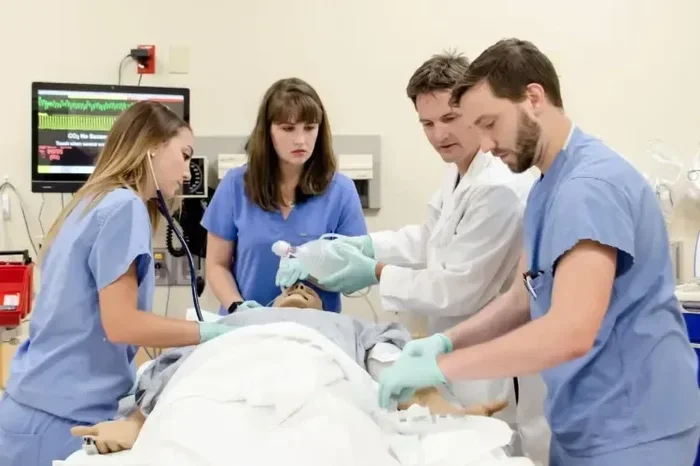
Becoming an anesthesiologist requires a massive commitment to education spanning over 12 years of schooling and training. From a four-year undergraduate degree to a four-year medical school program and a four-year residency, every step builds the skills needed to keep patients safe during surgery. This guide breaks down each stage so you know exactly what it takes to become an anesthesiologist.
Have you ever wondered what it really takes to become an anesthesiologist? The answer might surprise you. It is not just about going to school for a long time. It is a carefully structured journey that builds knowledge step by step. Every stage of the process matters, from the first college class to the day a doctor steps into an operating room alone.
Many people think doctors just go to medical school and start working. But anesthesiologists follow a much longer and more demanding path. They need years of specialized training to master the art and science of keeping patients safe during surgery. In this article, we will walk through every stage of the anesthesiologist education requirements. By the end, you will have a clear picture of what this career really demands.
Key Takeaways
- 12+ years of education: Anesthesiologists must complete undergraduate school, medical school, and a multi-year residency before practicing independently.
- Undergraduate degree is the first step: A strong foundation in biology, chemistry, and physics sets the stage for medical school admission.
- Medical school and licensing exams are rigorous: The USMLE and COMLEX-USA tests are critical milestones on the path to becoming a licensed anesthesiologist.
- Residency training is hands-on: Four years of clinical training in anesthesia give doctors real-world experience in operating rooms and ICUs.
- Fellowships offer specialization: Many anesthesiologists pursue additional training in areas like pediatric anesthesia or pain medicine.
- Continuing education never stops: Board certification and ongoing learning keep anesthesiologists current with medical advances.
📑 Table of Contents
- What Does an Anesthesiologist Do?
- The Education Roadmap: Step by Step
- Undergraduate Preparation: Laying the Foundation
- Medical School and Licensing Exams
- Residency and Fellowship Training
- Continuing Education and Career Growth
- Comparison: Education Timeline at a Glance
- Common Mistakes to Avoid
- Quick Tips for Success
- Expert Insights
- Conclusion
What Does an Anesthesiologist Do?
Before diving into the education details, it helps to understand the role itself. Anesthesiologists are medical doctors who specialize in anesthesia. They manage pain and monitor vital functions during surgical procedures. Their work keeps patients comfortable and safe when they are most vulnerable.
Here is what an anesthesiologist typically does on a daily basis:
- Evaluating patients before surgery to assess their medical history and risks.
- Administering anesthesia through injections, gases, or IV medications.
- Monitoring vital signs like heart rate, blood pressure, and oxygen levels during procedures.
- Managing pain during and after surgery to support recovery.
- Responding to emergencies such as allergic reactions or breathing complications.
The job requires a deep understanding of pharmacology, physiology, and patient care. That is why the education path is so thorough. Every year of training adds a new layer of competence. Think of it like learning a language. You start with basics, then build fluency over time. Just as similes for education help us compare learning to growth, the anesthesiology journey is one of steady, layered development.
The Education Roadmap: Step by Step
The path to becoming an anesthesiologist follows a clear sequence. Each phase has its own requirements and milestones. Let us break it down so nothing feels confusing or overwhelming.
Step 1: Undergraduate Degree (4 Years)
Every anesthesiologist starts with a bachelor’s degree. This usually takes four years of full-time study. There is no specific major required, but most aspiring anesthesiologists choose pre-med, biology, or chemistry. These programs cover the foundational science courses that medical schools expect.
During undergrad, students must complete prerequisite classes. These typically include:
- General Biology with lab work
- Organic Chemistry
- General Chemistry
- Physics
- English or Communications
- Mathematics and Statistics
Maintaining a high GPA is essential. Medical schools look for strong academic performance. Students should also gain clinical experience through volunteering, shadowing doctors, or working as a medical scribe. These activities strengthen applications and build real-world understanding.
Step 2: Medical School (4 Years)
After earning a bachelor’s degree, the next step is medical school. This is a four-year program that leads to either a Doctor of Medicine (MD) or Doctor of Osteopathic Medicine (DO) degree. Medical school is intense. The first two years focus on classroom learning. The last two years involve hands-on clinical rotations.
During the first two years, students study subjects like:
- Anatomy and Physiology
- Pharmacology
- Pathology
- Medical Ethics
- Microbiology and Immunology
The second half of medical school shifts to clinical settings. Students rotate through different specialties, including surgery, internal medicine, and pediatrics. These rotations give future anesthesiologists their first real exposure to the operating room environment.
Medical school is where analogies and metaphors become powerful learning tools. Comparing the human body to a complex machine, for example, helps students grasp how different systems interact. Much like metaphors for education make abstract ideas easier to grasp, these mental models help medical students retain complex information.
Step 3: USMLE or COMLEX-USA Licensing Exams
Medical students must pass licensing exams to move forward. The United States Medical Licensing Examination (USMLE) is the standard for MD students. Osteopathic students take the Comprehensive Osteopathic Medical Licensing Examination (COMLEX-USA). These exams test knowledge across all medical disciplines.
The USMLE has three steps:
- Step 1: Taken after the second year of medical school. It covers basic science concepts.
- Step 2 CK (Clinical Knowledge): Taken during the fourth year. It tests clinical reasoning.
- Step 3: Taken after the first year of residency. It assesses independent practice readiness.
High scores on these exams improve residency placement chances. Anesthesiology is a competitive specialty, so strong exam performance matters.
Undergraduate Preparation: Laying the Foundation
The undergraduate years are more than just checking boxes. They set the foundation for everything that follows. Students who approach this phase with intentionality have a much smoother path into medical school.
Here are some practical tips for undergrad students dreaming of anesthesiology:
- Focus on science prerequisites early. Do not wait until senior year to take required courses.
- Build relationships with professors. Strong letters of recommendation can make a real difference.
- Join pre-med clubs and organizations. These groups offer networking and guidance.
- Seek shadowing opportunities. Observing anesthesiologists at work gives valuable insight into the profession.
- Maintain a healthy balance. Burnout is real. Rest and hobbies support long-term success.
Think of undergraduate education as building a house. You need a solid foundation before you can add walls and a roof. Similarly, strong science coursework and clinical exposure create the base for a successful anesthesiology career path. The journey is long, but every year of preparation counts.
Medical School and Licensing Exams
Medical school is where the real transformation happens. Students go from learning about the body in textbooks to applying knowledge in real patient care. The shift is dramatic and exciting.
Anesthesiology-focused coursework in medical school includes:
- Anatomy of the respiratory and cardiovascular systems. Anesthesiologists must understand how the body responds to anesthesia.
- Pharmacology of anesthetic agents. Different drugs work in different ways. Knowing which to use and when is critical.
- Pain management principles. This includes both acute and chronic pain approaches.
- Patient monitoring techniques. Learning to read vital signs and respond to changes in real time.
Licensing exams serve as gatekeepers. They ensure that every doctor practicing in the United States meets a minimum standard of knowledge. For anesthesiology hopefuls, performing well on these exams opens doors to top residency programs. The anesthesiologist qualifications start forming here, long before residency even begins.
It is worth noting that the journey shares some similarities with learning idioms. Just as idioms for education pack rich meaning into simple phrases, medical education condenses vast knowledge into practical skills. Both require repetition, context, and real-world application to truly master.
Residency and Fellowship Training
Residency is where medical graduates become practicing anesthesiologists. This is the hands-on training phase that turns theory into real skill. It is demanding, rewarding, and absolutely essential.
Anesthesiology Residency (4 Years)
A typical anesthesiology residency lasts four years. The first year often serves as an internship. During this time, residents rotate through different departments like internal medicine, surgery, and emergency medicine. The remaining three years focus heavily on anesthesia training.
What does residency life look like?
- Long hours in the operating room. Residents work closely with attending anesthesiologists to manage patient care.
- On-call responsibilities. Anesthesiologists must be available for emergency surgeries at all hours.
- Progressive responsibility. As residents advance, they take on more complex cases independently.
- Regular evaluations and feedback. Supervisors assess performance and guide professional growth.
Residency is where the anesthesia training programs really come alive. Residents learn to handle difficult airways, manage high-risk pregnancies, and care for pediatric patients. Each case builds confidence and competence.
Fellowship Opportunities (1-2 Years)
After residency, some anesthesiologists choose to pursue a fellowship. This is optional but valuable for those who want to specialize. Fellowship programs typically last one to two years and focus on a specific area of anesthesia.
Popular subspecialties include:
- Pediatric Anesthesia: Caring for infants and children during surgery.
- Cardiac Anesthesia: Managing anesthesia for heart surgeries.
- Neuroanesthesia: Specialized care for brain and nervous system procedures.
- Pain Medicine: Treating chronic pain conditions beyond the operating room.
- Critical Care Medicine: Managing patients in intensive care units.
Fellows gain deep expertise in their chosen area. This additional training can open doors to higher-paying positions and leadership roles in hospitals and academic centers.
Continuing Education and Career Growth
The education does not end after residency or fellowship. Anesthesiologists must engage in continuing medical education (CME) throughout their careers. Medicine evolves rapidly. New drugs, techniques, and technologies emerge every year.
Here is what ongoing education looks like in practice:
- Attending conferences and workshops. These events share the latest research and best practices.
- Earning board certification. The American Board of Anesthesiology offers certification that must be maintained.
- Reading medical journals. Staying current with published research keeps skills sharp.
- Participating in simulation training. Hands-on practice with new equipment and scenarios builds readiness.
Board-certified anesthesiologists demonstrate a commitment to excellence. Patients and employers value this credential. It signals that a doctor stays current and prioritizes patient safety. The anesthesiologist career path does not end with a diploma. It is a lifelong journey of learning and growth.
The anesthesiologist job outlook remains strong. The demand for qualified anesthesia providers continues to grow as surgical procedures increase and the population ages. This makes the long education journey well worth the investment.
Comparison: Education Timeline at a Glance
| Stage | Duration | Focus |
|---|---|---|
| Undergraduate Degree | 4 years | Pre-med prerequisites, science foundation |
| Medical School | 4 years | MD or DO degree, clinical rotations |
| USMLE/COMLEX Exams | Throughout medical school | Licensing exam preparation and testing |
| Residency | 4 years | Hands-on anesthesia training |
| Fellowship (optional) | 1-2 years | Subspecialty focus |
| Board Certification | Ongoing | Maintenance and continuing education |
In total, most anesthesiologists spend 12 to 14 years in formal education and training after high school. That is a long time. But every year serves a purpose. Each stage builds on the last, creating a highly skilled and confident medical professional.
Common Mistakes to Avoid
Aspiring anesthesiologists often make a few preventable mistakes along the way. Being aware of these pitfalls can save time and frustration.
- Neglecting clinical experience during undergrad. Medical schools want to see that you understand what healthcare work looks like.
- Underestimating the importance of board scores. Strong exam results significantly impact residency placement.
- Skipping networking opportunities. Relationships with mentors and peers can lead to valuable career connections.
- Ignoring work-life balance. Burnout is a real risk in medicine. Self-care is not optional.
- Rushing the process. Each stage exists for a reason. Skipping or shortening any phase weakens your foundation.
Quick Tips for Success
- Start early. Begin preparing for medical school as soon as you enter college.
- Stay organized. Use calendars and planners to track exam dates and application deadlines.
- Seek mentors. Connect with practicing anesthesiologists who can share real-world advice.
- Stay curious. Medicine is a field that rewards lifelong learners.
- Take care of your mental health. The journey is long. Resilience matters as much as knowledge.
Expert Insights
Experienced anesthesiologists often emphasize one key message: the education is challenging, but it is also deeply fulfilling. Dr. Sarah Chen, a board-certified anesthesiologist with 15 years of experience, shares her perspective:
“The path to becoming an anesthesiologist is demanding. But every year of training prepares you to make a real difference in people’s lives. When you walk a patient through surgery and they wake up safely, you know every hour of study was worth it.”
Another common theme among seasoned professionals is the importance of soft skills. Communication, empathy, and teamwork matter just as much as technical knowledge. Anesthesiologists work closely with surgeons, nurses, and patients. The best ones excel at building trust and staying calm under pressure.
Conclusion
The answer to how much education does an anesthesiologist need is clear: it takes over a decade of dedicated study and training. From a four-year undergraduate degree to four years of medical school and a four-year residency, every step is essential. Optional fellowships add even more specialization for those who want it.
The journey is long. It is challenging. But it is also one of the most rewarding career paths in medicine. Anesthesiologists play a vital role in patient care. They ensure safety and comfort during some of the most critical moments in healthcare. If you are considering this path, know that the hard work pays off. Strong job demand, competitive pay, and the satisfaction of saving lives make every year of education worthwhile.
Start planning today. Focus on your science courses. Gain clinical experience. Build relationships with mentors. The road to becoming an anesthesiologist is demanding, but it is built one step at a time. And each step brings you closer to a career that truly makes a difference.
Frequently Asked Questions
How many years of education does an anesthesiologist need in total?
Most anesthesiologists spend 12 to 14 years in formal education after high school. This includes 4 years of undergraduate study, 4 years of medical school, and 4 years of residency. Optional fellowships can add 1 to 2 more years of training.
Is anesthesiology a good career choice?
Yes, anesthesiology offers strong job demand, competitive pay, and meaningful work. Anesthesiologists play a critical role in patient safety during surgery. The career provides both financial rewards and the satisfaction of making a real difference in people’s lives.
What undergraduate degree is best for aspiring anesthesiologists?
There is no single required major. Most successful applicants choose pre-med, biology, chemistry, or related science fields. The key is completing all medical school prerequisite courses with strong grades and gaining relevant clinical experience.
Do anesthesiologists need to pass licensing exams?
Yes. All anesthesiologists must pass the USMLE or COMLEX-USA licensing exams. These tests ensure that doctors meet national standards of medical knowledge and clinical competence before they can practice independently.
Can anesthesiologist specialize after residency?
Absolutely. Many anesthesiologists pursue fellowships in areas like pediatric anesthesia, cardiac anesthesia, pain medicine, or critical care. These 1 to 2-year programs provide advanced training in a specific subspecialty of anesthesia.
How much does an anesthesiologist earn after completing all education?
Anesthesiologists are among the highest-paid medical specialists. Salaries vary based on location, experience, and subspecialty. The extensive education and training justify the compensation, given the critical nature of the role in patient care.


