
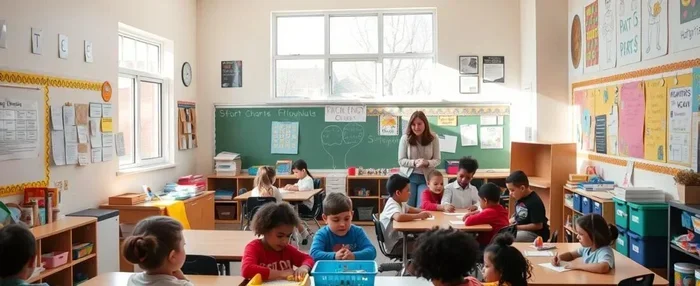
Oklahoma ranks below the national average in several key education metrics, including NAEP scores and high school graduation rates. The state faces real challenges like teacher shortages and funding gaps, but there are also bright spots worth celebrating. Understanding where Oklahoma stands helps families, policymakers, and communities make informed decisions about the future of learning.
Have you ever wondered how Oklahoma ranks in education compared to the rest of the country? It is a question that matters to parents, teachers, students, and anyone who cares about the future of learning. The answer is not simple, and it is certainly not just about one test score or one report card. Education is a complex puzzle with many pieces, and each piece tells a different story.
When we look at the big picture, Oklahoma faces some real challenges. But it also has strengths that often get overlooked. In this article, we will break down the rankings, explore the reasons behind them, and talk about what they mean for real people in real classrooms. Whether you are a concerned parent or just curious, this guide will give you the full story.
We will cover everything from test scores to funding, from teacher shortages to bright spots worth celebrating. By the end, you will have a clear picture of where Oklahoma stands and why it all matters. Let us dive in.
Key Takeaways
- Oklahoma ranks in the bottom half nationally for overall education performance based on multiple national reports.
- NAEP scores show room for improvement in both math and reading across grade levels.
- Teacher shortages remain a persistent issue affecting rural and urban districts alike.
- Education funding has been a hot topic with ongoing debates about adequacy and equity.
- Some districts and programs shine bright despite the state’s overall lower rankings.
- Understanding these rankings matters because they directly impact students and families.
📑 Table of Contents
- Oklahoma Education Rankings: The Big Picture
- Why Does Oklahoma Rank This Way in Education?
- Bright Spots: Where Oklahoma Is Making Progress
- How Oklahoma Compares to Neighboring States
- What These Rankings Mean for Families and Students
- Common Mistakes People Make When Interpreting Education Rankings
- Conclusion: The Path Forward for Oklahoma Education
Oklahoma Education Rankings: The Big Picture
So, where does Oklahoma actually land when we talk about education rankings? The short answer is that the state typically falls in the middle to lower half of national rankings. Several respected organizations publish these reports every year, and the results are consistent.
National Assessment of Educational Progress (NAEP) Scores
The NAEP, often called the Nation’s Report Card, is one of the most trusted measures of student performance. Oklahoma students generally score below the national average in both math and reading. Fourth graders and eighth graders both show gaps that deserve attention. These scores give us a snapshot, but they do not tell the whole story.
For example, some subgroups of students in Oklahoma perform much better than the state average. This tells us that the issue is not about ability. It is about access, resources, and opportunity. When we dig deeper, we see patterns that point to systemic challenges rather than a lack of talent or effort.
High School Graduation Rates
Graduation rates in Oklahoma have improved over the past decade. The state’s four-year graduation rate now hovers around 80-85 percent, which is close to the national average. However, there are still gaps between different student groups. Students from low-income families, English learners, and students with disabilities often graduate at lower rates.
These numbers matter because a high school diploma opens doors. It is the first step toward college, careers, and financial stability. When graduation rates lag, it affects entire communities, not just individual students.
Why Does Oklahoma Rank This Way in Education?
Understanding the ranking is only half the battle. The more important question is why. What factors contribute to Oklahoma’s position in the national education landscape? There is no single cause. Instead, it is a mix of historical, economic, and policy-related factors that have shaped the system over decades.
Education Funding Challenges
Funding is one of the biggest drivers of education outcomes. Oklahoma has historically spent less per pupil than the national average. This means fewer resources for schools, larger class sizes, and less support for programs like art, music, and extracurricular activities. When schools do not have enough money, students feel it.
The funding debate in Oklahoma often centers on adequacy versus equity. Adequacy asks whether schools have enough money to do the job. Equity asks whether that money is distributed fairly across districts. Both questions matter, and both remain works in progress.
Teacher Shortages and Retention
Oklahoma has struggled with teacher shortages for years. Low pay compared to neighboring states and the cost of living have driven many educators to leave the profession or move out of state. Rural districts feel this impact the most because they have a harder time attracting and keeping qualified teachers.
When classrooms are understaffed, teachers take on more work with fewer supports. Burnout becomes a real problem. And when experienced teachers leave, students lose mentors, role models, and stability. Addressing teacher retention is one of the most important steps Oklahoma can take to improve its education ranking.
Rural vs. Urban Education Gaps
Oklahoma is a state with a large rural population. Many rural schools face unique challenges, including limited access to technology, fewer advanced courses, and longer travel distances for students. Urban districts like Oklahoma City and Tulsa have their own set of challenges, including higher poverty rates and more diverse student populations.
These geographic differences create a patchwork of educational experiences. A student in a well-funded suburban district may have very different opportunities than a student in a small rural school. Bridging this gap is essential for improving the state’s overall education ranking.
Bright Spots: Where Oklahoma Is Making Progress
It is easy to focus on the negatives, but Oklahoma has reasons to be hopeful too. Several districts and programs are doing excellent work, and the state has made strides in recent years.
Early Literacy Initiatives
Oklahoma has invested in early literacy programs aimed at getting young readers on track by third grade. Third grade reading scores are a strong predictor of future academic success, and the state has recognized this. Programs that provide extra support for struggling readers are showing promising results in many communities.
These initiatives align with what research tells us about education reform Oklahoma style. Early intervention is far more effective than trying to catch students up later. When kids read well by third grade, they are set up for success in every subject that follows.
Career and Technical Education (CTE)
Career and technical education programs in Oklahoma have grown in popularity. These programs give high school students hands-on experience in fields like healthcare, engineering, and skilled trades. Students graduate with real-world skills and industry certifications that make them competitive in the job market.
CTE programs also help keep students engaged in school. When learning feels relevant and practical, attendance improves and dropout rates drop. This is one area where Oklahoma is moving in the right direction.
Community and Local Support
Many Oklahoma communities rally around their schools in powerful ways. Local businesses, nonprofits, and volunteers provide tutoring, mentorship, and resources that fill gaps left by limited funding. This grassroots support is a strength that should not be underestimated.
When communities invest in their schools, students benefit in ways that test scores cannot fully capture. Mentorship programs, after-school activities, and family engagement all contribute to a positive school culture. These intangible factors matter just as much as any number on a report.
How Oklahoma Compares to Neighboring States
Context is everything when we talk about rankings. Oklahoma does not exist in a vacuum. Looking at how it compares to nearby states gives us a clearer perspective.
States like Texas, Kansas, and Arkansas often appear in the same conversations about regional education performance. Oklahoma tends to lag behind Texas in per-pupil spending and test scores. Kansas, on the other hand, often ranks higher in overall education quality. Arkansas shares some of the same rural challenges but has made different policy choices around funding and teacher pay.
These comparisons are not about ranking states against each other in a competition. They are about learning from what works. When a neighboring state finds success with a particular approach, Oklahoma can study that model and adapt it to fit local needs.
What Can Oklahoma Learn From Other States?
Several states have implemented strategies that could benefit Oklahoma. For instance, some states have raised teacher pay significantly and seen improvements in retention and student outcomes. Others have invested in early childhood education and seen long-term gains in achievement.
The key is to look at evidence-based approaches and tailor them to Oklahoma’s unique context. What works in one state may need adjustment to work in another. But the direction matters more than the specific details.
What These Rankings Mean for Families and Students
Numbers and rankings can feel abstract. But they have real consequences for real people. Here is how Oklahoma’s education position affects the families and students who live there every day.
For parents, rankings influence decisions about where to live, which schools to choose, and how to advocate for change. For students, rankings can shape their confidence and their aspirations. When a state ranks low, it can send a message that the system is not working. But rankings do not define individual students or individual schools.
The most important thing families can do is stay informed and stay involved. Attend school board meetings. Ask questions about funding and resources. Support teachers and programs that make a difference. Change starts at the local level, and informed families are the engine of that change.
Tips for Parents Navigating the Education System
- Know your school’s data. Oklahoma publishes school report cards that include test scores, graduation rates, and other key metrics.
- Talk to your child’s teachers. They see the classroom every day and can offer insights that no ranking can capture.
- Get involved in school activities. Volunteering and attending events shows your child that education matters.
- Advocate for resources. When you see a need, speak up. Your voice matters in the conversation about education funding and policy.
Common Mistakes People Make When Interpreting Education Rankings
Rankings are useful tools, but they can also mislead if we are not careful. Here are some common pitfalls to avoid.
First, people often mistake correlation for causation. Just because a state ranks low does not mean every school in that state is failing. There is enormous variation within states. A low ranking might mask some truly excellent schools and districts.
Second, people sometimes focus too much on a single metric. Test scores matter, but they do not capture everything. School climate, student well-being, teacher satisfaction, and community engagement all play roles in education quality. A holistic view gives a much clearer picture.
Third, it is easy to treat rankings as permanent. Education is dynamic. Rankings change from year to year as policies shift, funding changes, and new strategies take hold. Oklahoma’s education story is still being written.
Quick Tips for Reading Education Reports
- Look at multiple years of data, not just one snapshot.
- Compare subgroups, not just overall averages.
- Read the methodology to understand how rankings are calculated.
- Consider the context, including poverty rates and demographics.
- Remember that rankings are tools, not verdicts.
Conclusion: The Path Forward for Oklahoma Education
So, where does this leave us? How Oklahoma ranks in education is a question with nuance and depth. The state faces real challenges, from funding gaps to teacher shortages to rural-urban divides. But it also has resilience, community spirit, and pockets of excellence that deserve recognition.
The path forward requires honest conversations, smart policy, and sustained investment. It requires families to stay engaged and communities to show up. It also requires celebrating progress, no matter how small. Every improvement in a school, every teacher who stays in the profession, every student who graduates ready for the next step is a win worth acknowledging.
Education rankings are not destiny. They are a starting point for action. Oklahoma has the opportunity to learn from its challenges and build a stronger, more equitable education system for every student. The question is not just where Oklahoma ranks today. It is where the state is going tomorrow.
And that journey starts with understanding. Now that you have the full picture, you are better equipped to be part of the conversation. Whether you are a parent, a teacher, a student, or a concerned citizen, your voice matters. Together, Oklahoma can write a brighter chapter in its education story.
As we often say, language shapes how we see the world. The way we talk about education, using idioms for education and similes for education, can inspire or discourage. Choosing words that uplift and motivate is itself a form of education reform. Similarly, understanding the metaphors for change in life helps us frame Oklahoma’s education journey as a transformation rather than a fixed outcome.
Frequently Asked Questions
What is the current education ranking for Oklahoma?
Oklahoma typically ranks in the bottom half of national education rankings, depending on the source and the specific metrics used. Reports from organizations like the Nation’s Report Card and various education policy groups consistently place the state below the national average in several key areas.
How does Oklahoma’s education funding compare to other states?
Oklahoma spends less per pupil than the national average. This funding gap affects everything from teacher salaries to classroom resources. The state has faced ongoing debates about how to allocate education dollars more effectively and equitably across districts.
Are there any Oklahoma schools that rank well nationally?
Yes, absolutely. While the state’s overall ranking is lower, individual schools and districts in Oklahoma perform at high levels. Some suburban districts and specific programs earn national recognition for excellence in academics, athletics, and student outcomes.
What is being done to improve education in Oklahoma?
Oklahoma has launched several initiatives focused on early literacy, career and technical education, and teacher recruitment. Policy discussions around education reform Oklahoma-style continue at the state legislature, with proposals aimed at increasing funding and supporting teachers.
How do teacher shortages affect Oklahoma students?
Teacher shortages lead to larger class sizes, fewer specialized courses, and increased burnout among existing staff. Students in rural and underserved areas are most affected. The state has implemented programs to boost teacher pay and provide incentives for working in high-need areas.
Can parents make a difference in Oklahoma’s education rankings?
Absolutely. Parental involvement is one of the strongest predictors of student success. By staying informed, attending school events, advocating for resources, and supporting teachers, parents play a direct role in improving education outcomes at the local level.
=== INTERNAL LINKS ===


