
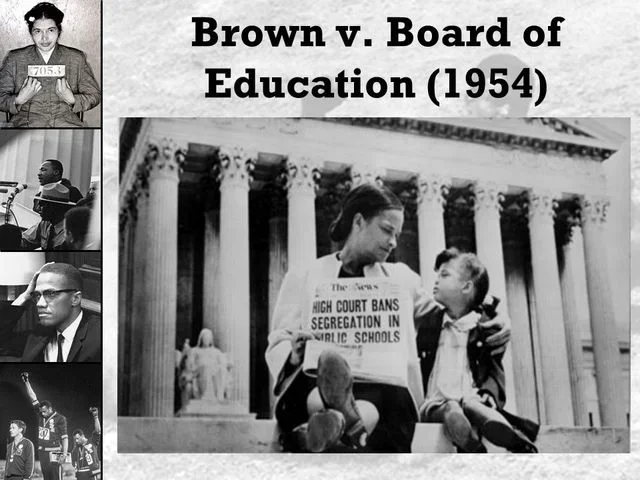
The brown v board of education case was a landmark Supreme Court decision that ended racial segregation in public schools across America. This historic ruling overturned the “separate but equal” doctrine and became a major turning point in the civil rights movement. Understanding this case helps us appreciate how far we have come and how much work still lies ahead.
The brown v board of education case stands as one of the most important legal decisions in American history. It changed the way public schools operated, reshaped civil rights law, and gave hope to millions of people fighting for equality. If you have ever wondered how this case came to be and why it still matters, you are in the right place.
This article breaks down everything you need to know. From the origins of school segregation to the Supreme Court ruling and its far-reaching effects, we cover it all. Whether you are a student, a teacher, or simply someone curious about history, this guide will give you a clear and thorough understanding of the brown v board of education case.
Key Takeaways
- Landmark Ruling: The Supreme Court unanimously decided that segregated schools violated the Constitution.
- Overturned Plessy v Ferguson: The 1896 “separate but equal” doctrine was officially ended by this decision.
- Central Figures: Thurgood Marshall and Linda Brown played pivotal roles in bringing the case to the highest court.
- Civil Rights Impact: The ruling fueled the broader civil rights movement and inspired countless activists.
- Lasting Legacy: Brown v Board continues to shape education policy, racial equality efforts, and legal precedent today.
📑 Table of Contents
What Was the Brown v Board of Education Case?
The brown v board of education case was a legal challenge to racial segregation in public schools. It began in Topeka, Kansas, in 1951. A group of parents, led by Oliver Brown, sued the local school board because their children were forced to attend all-Black schools. They argued that segregated schools were inherently unequal and violated the Fourteenth Amendment of the Constitution.
The case made its way through the court system and eventually reached the United States Supreme Court. On May 17, 1954, Chief Justice Earl Warren delivered a unanimous decision. The Court ruled that separate educational facilities are inherently unequal. This single ruling dismantled the legal foundation of racial segregation in public schools across the nation.
Why the Case Was Named Brown v Board
The name comes from Oliver Brown, who was the lead plaintiff. “Board” refers to the Board of Education of Topeka. The case was actually a consolidation of five different cases from across the country. All of them challenged school segregation under the same legal argument. The Supreme Court heard them together because they raised the same fundamental question: was segregation in public schools constitutional?
The legal team was led by Thurgood Marshall, who later became the first Black Supreme Court Justice. Marshall and his team from the NAACP Legal Defense Fund built a powerful case. They presented evidence showing that segregation caused real psychological harm to Black children. This evidence would prove crucial in swaying the Court’s decision.
The Background of School Segregation
To truly understand the brown v board of education case, you need to understand the world it was fighting against. For decades, Jim Crow laws enforced racial segregation across the American South. These laws dictated where Black people could go to school, where they could sit on a bus, and even where they could drink water.
In 1896, the Supreme Court ruled in Plessy v Ferguson that segregation was legal as long as the facilities were “separate but equal.” This doctrine gave states the green light to build separate schools, hospitals, and public spaces for Black and white citizens. In reality, the facilities for Black Americans were almost always inferior. Schools for Black children received far less funding, fewer resources, and outdated materials.
How Segregation Affected Education
The education system in the early 20th century was deeply divided. Black students often attended schools in poor condition with crumbling buildings and insufficient supplies. White schools, on the other hand, had modern facilities, well-trained teachers, and adequate funding. This gap in resources meant that Black children were being denied the same quality of education as their white peers.
The NAACP saw this inequality and decided to take legal action. They strategically chose Topeka, Kansas, because the school board there allowed Black children to attend nearby schools rather than requiring them to travel long distances. Yet the Browns still had to send their daughter, Linda Brown, to an all-Black school when a white school was just blocks away. This unfair reality sparked the legal challenge that would change history.
The Supreme Court Decision
The brown v board of education case reached the Supreme Court in 1952. The justices heard arguments from both sides. The NAACP argued that segregation violated the Equal Protection Clause of the Fourteenth Amendment. The school board argued that segregation was constitutional under the Plessy v Ferguson precedent.
Initially, the justices were split. Some wanted to rule based on the constitutional question alone. Others wanted to consider the psychological effects of segregation on children. After additional arguments in December 1953, the Court reached a unanimous decision. Chief Justice Warren wrote the opinion, stating that segregation in public schools had a detrimental effect on Black children.
The Unanimous Ruling
The ruling was unanimous, meaning all nine justices agreed. This was significant because it showed a united front against segregation. The Court declared that the doctrine of “separate but equal” had no place in public education. The decision ordered schools to desegregate with “all deliberate speed.”
The ruling was not just a legal victory. It was a moral statement. The Court recognized that segregation itself was harmful, regardless of the physical quality of the buildings or resources. This reasoning was groundbreaking and set a new standard for racial equality in America.
Key Figures in the Case
No legal case is shaped by just one person. The brown v board of education case was the result of many individuals coming together to fight for justice. Let us look at the key people who made this landmark decision possible.
Oliver Brown
Oliver Brown was a welder and assistant pastor in Topeka, Kansas. He became the lead plaintiff because his name appeared first alphabetically. The NAACP chose this strategy to ensure the case would be named after him. Brown’s willingness to stand up against the school board inspired other parents to join the fight.
Thurgood Marshall
Thurgood Marshall was the lead attorney for the plaintiffs. He was a brilliant lawyer who had already won several major civil rights cases. Marshall argued that segregation violated the Constitution and that it caused lasting harm to Black children. His arguments were so compelling that they helped persuade all nine justices to rule in favor of desegregation. Marshall later became the first African American Supreme Court Justice in 1967.
Linda Brown
Linda Brown was the young girl at the center of the case. She lived close to a white elementary school but was required to attend a Black school farther away. Her story became a symbol of the injustice of segregation. Today, Linda Brown is remembered as a courageous child whose family helped change the course of American history.
The Impact and Legacy of the Ruling
The brown v board of education case had a profound impact on American society. It did not end segregation overnight, but it set a legal precedent that paved the way for the broader civil rights movement. The decision gave activists and legal scholars a powerful tool to challenge other forms of discrimination.
Desegregation of Public Schools
After the ruling, schools across the country began the process of desegregation. Some states embraced the change quickly, while others resisted for years. The civil rights movement of the 1950s and 1960s drew much of its momentum from the Brown decision. Leaders like Martin Luther King Jr. cited the ruling as a key victory in the fight for equal protection under the law.
Despite the ruling, many schools remained segregated for decades. Resistance came from local governments, school boards, and even entire communities. It took additional legislation, court orders, and sustained activism to make real progress toward integrated schools. The journey from the 1954 ruling to meaningful change was long and often painful.
The Case in Everyday Language
Over the decades, the brown v board of education case has entered the fabric of American culture. The case has become part of the idioms for education that teachers and students use every day. Phrases like “separate but unequal” are now common references in classrooms and textbooks. The case is also a frequent subject in similes for education, where educators compare the ruling to a light breaking through darkness. Similarly, metaphors for education often describe the decision as a foundation stone for modern civil rights.
These figurative expressions show how deeply the case has influenced the way we talk about learning and equality. When someone says that a policy creates “separate but equal” conditions, they are drawing directly from the language of this ruling. The brown v board of education case gave us vocabulary that continues to shape conversations about fairness and justice.
Why the Brown v Board Case Still Matters Today
More than seventy years after the ruling, the brown v board of education case remains relevant. Schools in many parts of the country are still struggling with segregation, though it looks different now. Economic disparities, housing patterns, and resource allocation all play a role in creating unequal educational opportunities.
The principles established by the ruling continue to guide legal battles over school funding, affirmative action, and equal access to quality education. When communities fight for fair school budgets or challenge discriminatory policies, they are building on the foundation laid by Brown v Board.
The case also reminds us that legal victories are only the beginning. Real change requires ongoing effort from individuals, communities, and institutions. The brown v board of education case showed us that the law can be a powerful force for justice, but it is up to all of us to ensure that justice is truly served.
Lessons for Future Generations
There are several important lessons we can draw from this case. First, the power of collective action should never be underestimated. The parents of Topeka came together and fought for what was right. Second, the legal system can be a tool for positive change when people are willing to use it. Third, the fight for racial equality is ongoing, and each generation must carry the torch forward.
Teachers today use the case to help students understand the importance of standing up against injustice. The story of Linda Brown and her family is a powerful reminder that ordinary people can make extraordinary differences. When students learn about the brown v board of education case, they gain a deeper appreciation for the rights they enjoy today.
The ruling also highlights the importance of education itself. Access to quality education is a fundamental right, and the Brown decision affirmed that belief. As we look to the future, we must continue to protect and expand that right for every child, regardless of their race or background.
Common Misconceptions About the Case
There are several myths surrounding the brown v board of education case that are worth addressing. One common misconception is that the ruling immediately ended school segregation. In reality, desegregation took years and faced enormous resistance. Another myth is that the case was only about schools in the South. In fact, the case originated in Kansas, and the ruling applied to public schools nationwide.
Some people also believe that the decision was controversial among the justices. The truth is that the ruling was unanimous. All nine justices agreed that segregation in public schools was unconstitutional. This unanimity gave the decision extra weight and made it harder for states to ignore.
Understanding these facts helps us appreciate the true significance of the ruling. The brown v board of education case was not just a legal technicality. It was a moral declaration that separate is not equal, and that every child deserves access to quality education.
Conclusion
The brown v board of education case remains one of the most important moments in American legal and social history. It challenged the deeply entrenched system of racial segregation and gave the nation a new vision of equality. From the courageous parents in Topeka to the brilliant legal strategy of Thurgood Marshall, this case reminds us that justice is possible when people come together to fight for it.
The ruling did not solve every problem, and the work of achieving true racial equality continues today. But the brown v board of education case gave us a powerful foundation. It showed us that the Constitution protects the rights of all people, and that no law can justify inequality in education or any other area of life.
As we reflect on this landmark decision, let us remember that the fight for justice never truly ends. Each of us has a role to play in building a more fair and equal society. The legacy of Brown v Board lives on in every classroom where every child is given the chance to learn and grow.
Frequently Asked Questions
What was the outcome of the brown v board of education case?
The Supreme Court ruled unanimously that racial segregation in public schools was unconstitutional. The Court overturned the “separate but equal” doctrine from Plessy v Ferguson and declared that separate educational facilities are inherently unequal.
Why was the brown v board of education case so important?
The case was important because it ended legal segregation in public schools and became a cornerstone of the civil rights movement. It established that the Fourteenth Amendment guarantees equal protection for all citizens, regardless of race.
Who was Linda Brown in the brown v board of education case?
Linda Brown was a young African American girl from Topeka, Kansas, whose family sued the school board because she had to attend an all-Black school when a white school was closer to her home. Her story became a symbol of the injustice of segregation.
How did Thurgood Marshall contribute to the brown v board of education case?
Thurgood Marshall was the lead attorney for the plaintiffs. He argued that segregation violated the Constitution and caused psychological harm to Black children. His arguments helped persuade the Supreme Court to rule in favor of desegregation. He later became the first Black Supreme Court Justice.
Did the brown v board of education case end segregation immediately?
No, the ruling did not end segregation overnight. While the decision was legally binding, many states resisted desegregation for years. It took additional legislation, court orders, and sustained activism to make real progress toward integrated schools.
What is the lasting legacy of the brown v board of education case?
The case continues to influence education policy, civil rights law, and conversations about racial equality. It set a legal precedent that has been used to challenge discrimination in many areas beyond education, and it remains a powerful symbol of the fight for justice and equal opportunity.


