
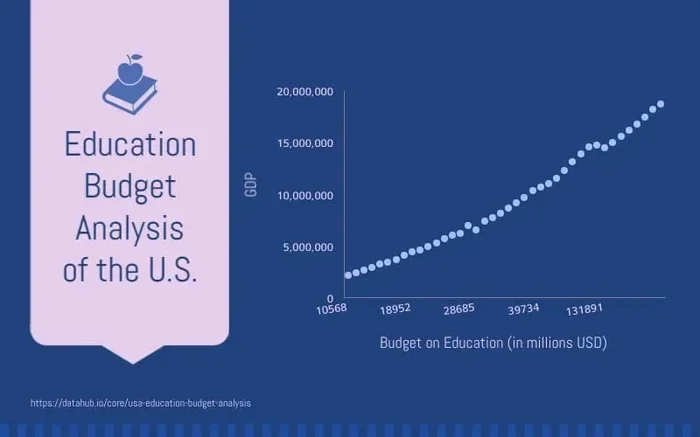
The United States spends over 900 billion dollars annually on education across all levels. This massive investment covers everything from elementary schools to universities. Understanding where the money comes from and how it gets used helps parents, teachers, and policymakers make informed decisions. Let us break down the numbers in a simple and clear way.
Key Takeaways
- Total Annual Spending: The US spends over 900 billion dollars on education each year across all levels.
- K-12 Dominates: The majority of education dollars go to kindergarten through 12th grade public schools.
- Funding Sources Vary: Federal, state, and local governments all contribute, but local property taxes play a huge role.
- Per Pupil Spending Differs Widely: Some states spend thousands more per student than others.
- Higher Education Costs Are Rising: College and university spending continues to grow year over year.
- Global Comparison Matters: The US is among the top spenders on education worldwide, but outcomes vary.
📑 Table of Contents
The Big Picture of US Education Spending
Every year, the United States pours enormous amounts of money into education. From tiny elementary schools to massive research universities, the education budget touches nearly every community in the country. But exactly how much money are we talking about? And where does all that funding actually go?
The short answer is that the US spends well over 900 billion dollars on education annually. This number covers federal, state, and local spending combined. It includes money for public schools, private institutions, and everything in between. The education expenditure is one of the largest line items in the national budget.
Understanding this spending is not just about numbers on a spreadsheet. It is about what kind of future we are building for our children. When we invest in public school funding, we invest in communities, jobs, and innovation. That is why tracking where the money goes matters so much.
Who Pays for Education?
The funding for education comes from three main levels of government. Each level plays a different role in how the money flows. Let us look at how this works in practice.
- Federal Government: The federal government provides roughly 8 to 10 percent of total K-12 funding. This money often targets specific programs like Title I, which helps schools serving low-income communities. Federal spending on education also includes grants for special education and career and technical programs.
- State Governments: States contribute the largest share of education spending, typically around 45 to 50 percent. Each state sets its own funding formulas, which means spending varies a lot from one state to another.
- Local Governments: Local funding, mostly from property taxes, accounts for about 45 percent of K-12 spending. This is why schools in wealthier neighborhoods often have more resources than those in poorer areas.
This three-part system creates a complex web of education funding sources. It also leads to significant gaps in how much money different school districts receive. The national education statistics show that these disparities have been a challenge for decades.
How Much Goes to K-12 Education
The bulk of the US education spending goes to kindergarten through 12th grade. K-12 education represents the vast majority of the total budget. Within this system, school funding covers teacher salaries, classroom supplies, building maintenance, and transportation.
According to the most recent data, the average education spending per student in the US is around 14,000 to 15,000 dollars per year. But this number changes depending on which state you live in. Some states spend much more, while others spend considerably less.
Per Pupil Spending Across States
Not all states spend the same amount on each student. The gap can be staggering. Here is a quick look at how spending breaks down in different regions:
- High-Spending States: States like New York, Massachusetts, and Connecticut often spend over 22,000 dollars per pupil. These states tend to have higher costs of living and stronger local tax bases.
- Mid-Range States: Many states fall in the 10,000 to 15,000 dollar range per student. These states make up the middle of the pack in terms of investment.
- Lower-Spending States: States like Utah and Idaho spend below 10,000 dollars per pupil. This often reflects lower costs of living and different policy priorities.
The differences in school district budgets have real-world consequences. Students in well-funded schools often have access to better facilities, more extracurricular activities, and smaller class sizes. This is why the conversation around educational investment is so important.
Higher Education Spending
Beyond K-12, the US also spends heavily on higher education. Colleges and universities absorb a significant portion of the total education budget. This includes both public institutions and private universities.
Federal student aid programs like Pell Grants and federal loans add another layer to the spending picture. The government also funds research at universities through agencies like the National Science Foundation and the National Institutes of Health. These investments drive innovation and keep the US competitive in the global economy.
On the institutional side, tuition and fees generate enormous revenue. But higher education costs have been rising steadily for years. Many families struggle to afford college, which has sparked ongoing debates about the value of a degree and the burden of student debt.
The Role of Government in College Funding
State governments fund public universities, but their support has declined over the past two decades. In many states, per-student funding for public colleges has actually dropped. This has shifted more of the cost onto students and their families. Meanwhile, government spending on schools at the K-12 level has remained relatively stable in real terms.
The federal government also plays a role through grant programs and loan subsidies. These programs aim to make college accessible to students from all income levels. But the complexity of the system can be overwhelming for families trying to navigate it.
Where Does the Money Go?
Once the money is allocated, how is it actually spent? The answer might surprise you. A large share of the education budget goes to personnel costs. Teacher salaries and benefits make up the biggest chunk of spending in most school districts.
Here is a general breakdown of where education dollars end up:
- Instruction (about 60%): This includes teacher salaries, classroom materials, and curriculum development. It is the core of what schools do every day.
- Support Services (about 15%): Counselors, librarians, nurses, and specialists fall into this category. These professionals support student well-being and academic success.
- Operations and Maintenance (about 10%): Building upkeep, utilities, and transportation costs go here. Keeping schools safe and functional requires a steady investment.
- Administration (about 8%): District offices, school boards, and support staff handle the business side of running schools.
- Other Expenses (about 7%): This includes food services, athletics, and extracurricular programs.
Understanding this breakdown helps us see that most education spending goes directly to supporting teaching and learning. When people talk about waste in schools, they are often referring to the smaller slices of the pie.
A Note on Education Idioms and Expressions
The language we use to talk about education spending is full of colorful expressions. We say things like “the ball is in your court” when it is someone else’s turn to act. We talk about “building blocks” when we describe the foundation of learning. These idioms for education reflect how deeply embedded learning is in our culture. If you want to explore more fun ways to talk about education, check out our guide on Idioms For Education. And if you are curious about how similes and metaphors bring education language to life, our pieces on Similes For Education and Metaphors For Education are great resources too.
Comparing US Education Spending to Other Countries
How does the US stack up against the rest of the world? The answer is both impressive and complicated. On one hand, the US is among the top spenders on education in absolute terms. On the other hand, spending per student does not always translate into better outcomes.
Countries like Luxembourg and Switzerland spend more per student than the US. But nations like Finland and South Korea often outperform the US on international tests, despite spending less. This suggests that how money is spent matters just as much as how much is spent.
The education financial data tells an interesting story. The US spends a larger share of its GDP on education than many developed nations. But the returns on that investment vary widely depending on the region, the school, and the student population.
Experts often point to the importance of equitable funding. When money flows to the schools and students who need it most, the entire system benefits. This is a lesson that countries with strong outcomes have embraced fully.
What the Future Holds for Education Funding
The landscape of education budget planning is always changing. Several trends are shaping the future of how the US funds schools and universities.
- Growing Awareness of Equity: More policymakers are focusing on closing funding gaps between wealthy and disadvantaged school districts. The goal is to ensure every child has access to quality education regardless of zip code.
- Technology Investments: Schools are spending more on digital tools, online learning platforms, and cybersecurity. The pandemic accelerated this shift and it does not look like it is slowing down.
- Rising Costs: Inflation and rising costs of living are putting pressure on school budgets. Districts are forced to make tough choices about where to cut and where to invest.
- Mental Health and Support Services: There is growing recognition that student mental health needs significant funding. Schools are increasingly hiring counselors and social workers to meet these needs.
The conversation around education spending will continue to evolve. Voters, parents, and educators all have a stake in how these decisions are made. Staying informed is the best way to advocate for the changes that matter most.
Quick Tips for Understanding Education Spending
- Always look at spending per pupil rather than just total dollar amounts. This gives you a clearer picture of how much each student actually receives.
- Check whether the data includes capital expenses like new buildings or just operating costs. These are very different categories.
- Remember that federal funding is a small share of the total. Most decisions about school spending happen at the state and local level.
- Follow the source of the data. Government reports like those from the National Center for Education Statistics are the most reliable.
Common Mistakes People Make About Education Spending
- Assuming more money always equals better results: Money matters, but how it is spent matters even more. Effective schools invest wisely in teachers and programs that work.
- Ignoring the local funding gap: Many people do not realize that property taxes drive a huge portion of school funding. This creates inequality that is hard to fix.
- Confusing tuition with spending: College tuition revenue is not the same as government spending on higher education. They are two very different things.
Expert Insights
Dr. Linda Darling-Hammond, a leading education researcher, has pointed out that the US spends a lot on education but does not always spend it wisely. She argues that investing in well-prepared teachers and equitable funding models would yield better results. Other experts echo this view, emphasizing that the quality of spending matters as much as the quantity.
Budget analysts also note that school funding formulas are often outdated. Many were designed decades ago and do not account for the modern challenges schools face today. Updating these formulas could help direct money where it is needed most.
The bottom line is that US education spending is a massive and complex system. It reflects our values, our priorities, and our challenges. By understanding the numbers, we can all become better advocates for the future of education.
Conclusion
The United States spends over 900 billion dollars on education every year. This enormous investment touches every level of the system, from kindergarten classrooms to research labs at major universities. The education budget is shaped by federal, state, and local decisions that together determine how much money reaches students and teachers.
Where that money goes, and how equitably it is distributed, remains a central challenge. Per pupil spending varies widely across states. Higher education costs continue to rise. And the gap between well-funded and underfunded schools persists. But awareness of these issues is growing, and that is a powerful first step toward meaningful change.
Understanding how much money the US spends on education is not just for policymakers or economists. It matters for every parent, every teacher, and every student. When we know the facts, we can push for a system that works better for everyone. The numbers tell a story, and it is a story worth paying attention to.
Frequently Asked Questions
How much does the US spend on education per year?
The US spends over 900 billion dollars on education annually across all levels. This includes K-12 public schools, higher education institutions, and federal programs. The exact number varies slightly depending on the source and the year of the data.
What percentage of the federal budget goes to education?
Federal spending on education accounts for roughly 8 to 10 percent of total K-12 funding. At the national level, education is a relatively small share of the overall federal budget. Most education funding comes from state and local sources instead.
How much does the US spend per student on average?
The average education spending per student in the US is around 14,000 to 15,000 dollars per year. However, this number varies significantly by state, school district, and education level. Some states spend well above 20,000 dollars per pupil while others spend much less.
Why is there such a big difference in school funding between states?
The differences come down to how each state funds its schools. Local property taxes play a major role, which means wealthier areas generate more revenue. State funding formulas also vary widely. These factors create significant gaps in per-pupil spending across the country.
Has US education spending increased over time?
Yes, total education spending has grown over the decades. However, when adjusted for inflation and student enrollment, the growth has been modest. The real challenge is ensuring that money reaches the students and programs that need it most.
Where does most of the education budget go?
The largest share of education dollars goes to teacher salaries and classroom instruction. Support services, building maintenance, and administration make up the rest. In most districts, personnel costs account for about 80 to 85 percent of the total budget.


