
To be a nurse what education is required depends on the path you choose. You need at least a diploma or an associate degree, but many nurses pursue a bachelor’s degree for better career opportunities. This guide covers every step, from degree options to licensure and long-term career growth.
Key Takeaways
- Multiple education paths exist: You can start with a diploma, associate degree, or bachelor’s degree in nursing.
- Licensure is mandatory: Passing the NCLEX-RN exam is required in all states to practice as a registered nurse.
- Bachelor’s degrees open more doors: Many employers prefer BSN-prepared nurses for leadership and specialized roles.
- Clinical training is essential: Hands-on patient care experience is a core part of every nursing program.
- Continuing education matters: Staying current with certifications and advanced degrees helps you grow in your career.
- Choose an accredited program: Accreditation ensures your degree meets professional standards and is recognized by employers.
📑 Table of Contents
What Education Is Required to Be a Nurse
So you want to know to be a nurse what education is required? The answer is not as simple as one size fits all. Nursing offers several education paths, and each one opens different doors. Whether you are just starting out or looking to change careers, understanding your options is the first step.
The nursing education requirements vary based on the role you want, the state you live in, and how fast you want to get started. Some paths take just over a year. Others take four years or more. But no matter which route you pick, you will gain the skills needed to care for patients and make a real difference.
Think of it this way. Choosing a nursing path is like picking the right simile for education — each one describes a different journey but leads to growth. The key is finding the path that fits your goals, your timeline, and your lifestyle.
In this article, we will walk through every education option. We will cover degree types, licensure steps, skills you will learn, and how to pick the right program. By the end, you will have a clear picture of what it takes to start and grow in this rewarding field.
Different Nursing Degree Pathways
Not all nurses follow the same route. There are three main nursing degree pathways that lead to becoming a registered nurse. Each has its own benefits, time commitment, and career outlook. Let us break them down.
Diploma in Nursing
A nursing diploma program is the oldest route into the profession. These programs are usually offered by hospitals and take about two to three years to complete. You will take classroom courses and get hands-on clinical training right at the hospital.
Diploma programs are less common today than they used to be. But they still exist and can be a great option if you want to enter the workforce quickly. Many diploma graduates go on to earn their associate or bachelor’s degree later through bridge programs.
The downside? Diploma programs may have fewer general education courses. Some employers prefer nurses with broader academic backgrounds. Still, a diploma gets your foot in the door and lets you start earning right away.
Associate Degree in Nursing
An Associate Degree in Nursing (ADN) is the most popular fast-track route. It typically takes two years to complete at a community college. You will study core nursing subjects like anatomy, pharmacology, and patient care basics.
After graduation, you can sit for the NCLEX-RN exam and become a licensed registered nurse. Many nurses start with an ADN and work while they pursue a higher degree. This is called a bridge program and it lets you grow your credentials without starting over.
The nursing career requirements for an ADN are straightforward. You need a high school diploma or GED to apply. Good grades in science and math help too. Once admitted, you will spend time both in classrooms and in clinical settings.
Bachelor of Science in Nursing
A Bachelor of Science in Nursing (BSN) is a four-year degree offered by colleges and universities. It covers all the same clinical topics as an ADN but adds general education courses in leadership, research, and community health.
Many employers now prefer or even require a BSN. Studies show that hospitals with more BSN-prepared nurses have better patient outcomes. If you want to move into management, specialize in a field, or pursue a graduate degree later, a BSN gives you a strong foundation.
Think of a BSN as the metaphor for education that builds a complete picture. It gives you depth, breadth, and flexibility that shorter programs may not offer. The investment of time pays off in more career options down the road.
Nursing Licensure and Certification
Education alone is not enough. To practice as a nurse, you must earn a license. Every state in the U.S. requires registered nurses to be licensed. The process is standardized but has some state-specific details you should know.
The NCLEX-RN Exam
The NCLEX-RN (National Council Licensure Examination for Registered Nurses) is the big exam you must pass. It tests your knowledge in four main areas:
- Safe and Effective Care Environment: This covers management of care and safety protocols.
- Health Promotion and Maintenance: You will answer questions about preventing illness and promoting wellness.
- Psychosocial Integrity: This focuses on mental health and emotional support for patients.
- Physiological Integrity: This includes basic care, pharmacological therapies, and emergency responses.
The exam uses computer-adaptive testing, which means the difficulty changes based on your answers. You need to answer enough questions correctly to prove you are competent. Most students study for four to twelve weeks before taking the exam.
Passing the NCLEX is the single most important step after graduation. Without it, you cannot practice, no matter how much clinical training you have completed. So treat your exam prep seriously and give yourself plenty of time to review.
State Licensure Requirements
Each state has its own nursing board that issues licenses. The requirements are similar across states but may differ in details like background checks or additional coursework. You should check your state’s specific rules early in the process.
Some states also offer compact nursing licenses. These let you practice in multiple states without getting a new license each time. As of now, over 40 states participate in the Nurse Licensure Compact. This is a huge advantage if you think you might relocate during your career.
If you are wondering what education is required to be a nurse in a specific state, the answer is always the same at the core: complete an approved program and pass the NCLEX-RN. The state board then issues your license.
Skills and Training You Will Gain in Nursing School
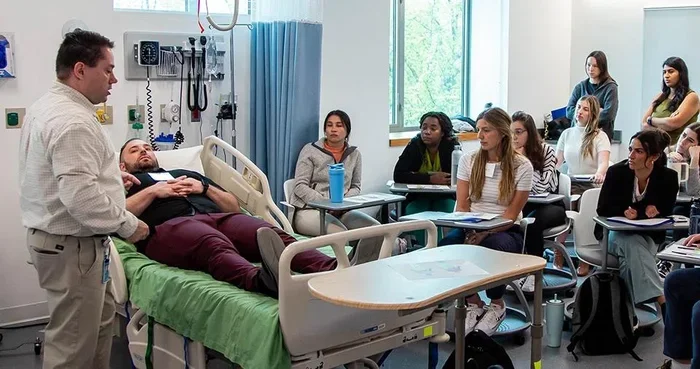
Nursing school is not just about books and exams. You will gain real-world skills that you use every day on the job. The clinical training for nurses component is built into every accredited program.
During your clinical rotations, you will work directly with patients under the supervision of experienced nurses. You will learn how to take vital signs, administer medications, wound care, and communicate with families. These hands-on experiences are essential to education in the nursing field.
Here are some key skills you will develop:
- Patient assessment: Learning to read symptoms and recognize warning signs quickly.
- Medication administration: Understanding dosages, interactions, and safe delivery methods.
- Communication: Talking clearly with patients, families, and the broader healthcare team.
- Critical thinking: Making fast, sound decisions in high-pressure situations.
- Technical skills: Using medical equipment, monitoring systems, and electronic health records.
- Empathy and emotional resilience: Supporting patients through difficult moments with care and compassion.
These skills are what separate a great nurse from a good one. Your education gives you the knowledge. Your clinical hours give you the confidence. Together, they prepare you for the realities of the job.
Many programs also teach nursing specializations early on. You might explore areas like pediatrics, geriatrics, emergency care, or mental health. This exposure helps you decide where you want to focus your career later on.
How to Choose the Right Nursing Program
Choosing a program is one of the biggest decisions you will make. Not all programs are created equal. Here are the factors you should consider before you apply.
Accreditation Matters
Always choose an accredited nursing program. Accreditation means an independent body has reviewed the program and confirmed it meets quality standards. Without accreditation, your degree may not be recognized by employers or licensing boards.
Look for programs accredited by the Commission on Collegiate Nursing Education (CCNE) or the Accreditation Commission for Education in Nursing (ACEN). These are the two main accrediting bodies for nursing education in the United States.
Clinical Placement Opportunities
A strong program will have partnerships with local hospitals and clinics. These partnerships give you access to quality clinical placement opportunities. The more diverse your clinical experiences, the better prepared you will be for the workforce.
Ask prospective schools about their placement rates. A program that places most of its graduates in clinical settings is a good sign. It means they have strong relationships with healthcare facilities in the area.
Cost and Financial Aid
Nursing school can be expensive. Tuition, books, and clinical supplies add up quickly. But there are many options to help you manage costs. Look into federal financial aid, scholarships, and employer tuition reimbursement programs.
Many hospitals offer scholarship programs for students who commit to working at their facility after graduation. This is a great way to reduce debt while gaining valuable experience. Do not let cost stop you from pursuing your dream.
Continuing Education for Career Growth
Your education does not end when you get your license. The nursing field is always evolving with new research, technologies, and best practices. To stay competitive and provide the best care, you need to keep learning.
Advanced Degrees and Specializations
Many nurses go on to earn a Master of Science in Nursing (MSN) or a Doctor of Nursing Practice (DNP). These advanced degrees open doors to roles like nurse practitioner, nurse educator, and nurse administrator.
With an advanced degree, you can specialize in areas like:
- Nurse Practitioner (NP): Diagnosing and treating patients, often with prescriptive authority.
- Nurse Anesthetist (CRNA): Administering anesthesia and managing patient care during procedures.
- Nurse Educator: Teaching the next generation of nurses in classrooms and clinical settings.
- Nurse Administrator: Managing healthcare teams, budgets, and facility operations.
Each of these paths requires additional education and certification. But the payoff is significant. Advanced practice nurses often earn higher salaries and have more autonomy in their roles.
Certifications and Professional Development
Even without a graduate degree, you can boost your career through certifications. Organizations like the Australian Nurses Credentialing Center (ANCC) offer specialty certifications in areas like critical care, pediatrics, and oncology.
These certifications show employers you are committed to your field. They can also lead to higher pay and better job opportunities. Most certifications require continuing education credits and a minimum amount of clinical experience.
Think of continuing education as the effort that pays off over time. The more you invest in your learning, the more you get back in career satisfaction and earning potential.
Final Thoughts on What It Takes to Succeed
So, to be a nurse what education is required? The short answer is: it depends on your goals. You can start with a diploma or associate degree and begin working quickly. Or you can invest in a bachelor’s degree for broader opportunities. Either way, you will need to pass the NCLEX-RN and meet your state’s licensing requirements.
The nursing career path is not just about degrees and exams. It is about dedication, compassion, and a willingness to keep learning. The healthcare field needs nurses who are curious, resilient, and committed to their patients.
If you are just starting out, pick a program that fits your life and goals. If you are already a nurse, look for ways to grow through certifications and advanced degrees. Every step you take in your nursing education brings you closer to the career you want.
The journey to becoming a nurse is challenging but deeply rewarding. You will make a difference in people’s lives every single day. And with the right education behind you, you will be ready for whatever comes your way.
Frequently Asked Questions
What is the fastest way to become a nurse?
The fastest route is an Associate Degree in Nursing (ADN), which takes about two years. You can also complete a diploma program in roughly the same timeframe. After graduating, you must pass the NCLEX-RN exam to get your license and start working as a registered nurse.
Can I become a nurse with an online degree?
Yes, many schools offer online nursing programs for both classroom and clinical components. However, clinical hours still require in-person hours at approved healthcare facilities. Make sure any online program you choose is accredited and recognized by your state’s nursing board.
Do I need a bachelor’s degree to be a nurse?
No, a bachelor’s degree is not strictly required to start. An ADN or diploma is enough to become a licensed RN. However, many employers prefer BSN-prepared nurses, and having a bachelor’s degree gives you more options for career advancement and specialization.
How long does nursing school take?
It depends on the program. A diploma program takes about two to three years. An ADN takes about two years. A BSN takes four years. If you already have a degree in another field, you can enroll in an accelerated BSN program that takes 12 to 18 months.
What is the NCLEX-RN exam like?
The NCLEX-RN is a computer-adaptive exam that tests your knowledge across four areas: safe care environments, health promotion, psychosocial integrity, and physiological integrity. The exam adjusts in difficulty as you answer questions. Most students need four to twelve weeks of focused study to feel prepared.
Is nursing a good career choice?
Absolutely. Nursing offers job stability, competitive pay, and the chance to make a real difference in people’s lives. The demand for nurses continues to grow, and there are many paths for career growth, from bedside care to advanced practice roles and education.


