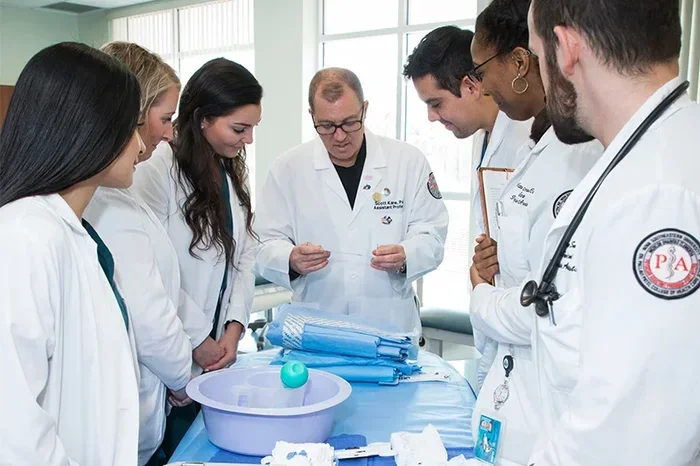
What education does a physician assistant need? This guide covers everything from undergraduate prerequisites to master’s programs, clinical rotations, and licensure. You’ll learn the exact steps to become a PA and how to succeed in healthcare.
What education does a physician assistant need? It is a question many future healthcare professionals ask. The path to becoming a PA is demanding but deeply rewarding. You will spend years building knowledge and hands-on skills. This guide walks you through every step of the journey. From undergraduate classes to master’s programs and licensure, you will find clear answers here.
The world of medical education is full of powerful language. The journey of learning is often described using idioms for education that capture both struggle and triumph. Just as similes for education compare learning to a long race, the path to becoming a PA requires steady endurance. And the metaphors for education remind us that the brain is a muscle that grows stronger with use. These phrases paint a vivid picture of what you are about to undertake.
Key Takeaways
- Undergraduate foundation: Complete a bachelor’s degree with science prerequisites before applying to PA school.
- Master’s degree required: All PAs must earn a master’s from an accredited program, typically taking 2-3 years.
- Clinical rotations are essential: Hands-on training in hospitals and clinics builds real-world patient care skills.
- Licensure and certification: Pass the PANCE exam and maintain your PA-C credential through continuing education.
- Continuing education keeps you current: PAs must earn 100 CME credits every two years to stay licensed.
- Specialties offer flexibility: You can choose from dozens of fields like surgery, pediatrics, or emergency medicine.
📑 Table of Contents
What Education Does a Physician Assistant Need
Physician assistant education is a structured process. It blends classroom science with real patient care. You cannot skip any step. Every phase builds on the last. The goal is to create a competent, confident healthcare provider. Let us break down the full timeline and requirements.
Undergraduate Prerequisites
Before you can enter a PA program, you need a bachelor’s degree. Most students choose a science field like biology or chemistry. But any major is acceptable if you complete the required courses. These typically include anatomy, physiology, microbiology, and organic chemistry. You will also need a strong GPA, usually 3.0 or higher. Many programs also value healthcare experience. Working as a medical assistant or EMT can strengthen your application.
Quick Tips for Undergraduates
- Start your prerequisite courses early.
- Aim for a GPA above 3.5 to be competitive.
- Shadow a PA to understand the profession firsthand.
- Gain at least 1,000 hours of healthcare experience.
- Build relationships with professors for strong letters of recommendation.
Common Mistakes in the Undergraduate Years
Many students wait too long to take prerequisites. Others focus only on grades and ignore clinical exposure. Some apply with a weak personal statement. Avoid these pitfalls by planning your coursework early. Do not neglect volunteer work or part-time jobs in clinics. The PA school application is holistic. Every piece matters.
Master’s-Level PA Programs: What to Expect
Once you are admitted, you enter a graduate program. These programs usually last 27 months. That is about 2 to 3 years of intense study. The curriculum is divided into two main parts. The first part is didactic learning. The second part is clinical rotations. Both are essential for your growth.
| Program Component |
Duration |
Focus |
| Didactic Phase |
12-15 months |
Classroom science, pharmacology, pathology, and medical ethics |
| Clinical Phase |
12-15 months |
Hands-on patient care in hospitals and clinics |
| Total Program Length |
27 months (average) |
Master’s degree awarded upon completion |
The Didactic Phase
During the didactic phase, you will sit in classrooms and labs. You will study anatomy, physiology, and pharmacology in depth. You will learn how to diagnose illnesses and create treatment plans. The coursework is rigorous. You will have exams almost every week. Study groups become your best friends. This phase builds your medical knowledge base.
The Clinical Phase
The clinical phase is where theory meets practice. You will rotate through different specialties. You might spend weeks in surgery, then weeks in pediatrics. You will work under the supervision of licensed physicians. You will take patient histories, perform physical exams, and assist in procedures. This hands-on experience is invaluable. It transforms students into confident clinicians.
Expert Insights on PA School
Dr. Sarah Lin, a PA program director, says: “The clinical year is the true test. Students who stay humble and curious learn the most. They ask questions, observe closely, and never stop learning.” Her advice is simple: soak up every moment of clinical training.
Clinical Rotations: Hands-On Training
Clinical rotations are the heart of physician assistant education. They give you real-world experience. You will work in hospitals, outpatient clinics, and community health centers. Each rotation lasts several weeks. You will be evaluated by physicians and other healthcare professionals. These evaluations shape your final grade and your readiness for practice.
Core Rotations
Most programs require core rotations in family medicine, internal medicine, surgery, pediatrics, obstetrics, and psychiatry. These rotations ensure you have a broad foundation. You learn to handle common conditions across all age groups. You also develop strong communication skills with patients and families.
Elective Rotations
Elective rotations let you explore your interests. You might choose emergency medicine, dermatology, or orthopedic surgery. These experiences help you decide on a specialty later. They also make your resume stand out. Many PAs use electives to secure job offers before graduation.
Common Mistakes During Rotations
- Arriving late or unprepared to clinical sites.
- Failing to introduce yourself to the care team.
- Not keeping a detailed log of procedures and cases.
- Avoiding feedback from supervising physicians.
- Underestimating the importance of bedside manner.
Licensure and Certification: The Final Hurdle
After you graduate, you must pass a national exam. This exam is called the Physician Assistant National Certifying Exam, or PANCE. It tests your medical knowledge. You must pass it to become a licensed PA. Once you pass, you earn the title PA-C, which stands for Physician Assistant Certified.
What Does the PANCE Cover?
The PANCE covers all major areas of medicine. You will answer questions about anatomy, pharmacology, and clinical diagnosis. The exam has 300 multiple-choice questions. You have five hours to complete it. Preparation usually takes several months of focused study. Many candidates use review courses and practice tests.
Key Takeaways for Licensure
- You must graduate from an ARC-PA accredited program.
- The PANCE is a computer-based exam offered year-round.
- You have six attempts to pass within six years.
- Recertification requires 100 CME credits every two years.
- State licensing requirements may vary slightly.
Continuing Education: Lifelong Learning
Education does not stop after you earn your PA-C. Medicine changes fast. New drugs, techniques, and guidelines emerge every year. To stay licensed, you must complete continuing education. This is called CME, or Continuing Medical Education.
How Many CME Credits Do You Need?
The National Commission on Certification of PAs requires 100 CME credits every two years. Of these, at least 50 must be Category 1 credits. Category 1 credits come from approved activities like conferences, online courses, and journal articles. You can also earn credits through hands-on workshops.
Staying Current in Your Specialty
Many PAs choose to focus on a specific area. Cardiology, oncology, and emergency medicine are popular choices. Specialty CME courses help you stay sharp in your field. They also open doors to advanced roles. Some PAs pursue fellowships after graduation to gain extra training.
Why Physician Assistant Education Matters
The education you receive shapes your entire career. A strong foundation in science and clinical practice builds confidence. Patients trust well-trained PAs. Employers value graduates from accredited programs. The rigorous training ensures you can handle complex medical situations. It also prepares you for a lifetime of service.
Understanding what education does a physician assistant need helps you plan your future. You will know exactly what courses to take, what exams to study for, and what skills to develop. The journey is long, but every step brings you closer to a meaningful career in healthcare. Embrace the challenge, and you will find the reward is well worth the effort.
Frequently Asked Questions
How long does it take to become a physician assistant?
Most PA programs take about 27 months to complete. That is roughly 2 to 3 years after you finish your bachelor’s degree. Adding the undergraduate years, the total journey is around 6 to 7 years of higher education.
Can I become a PA without a science degree?
Yes, you can. PA programs accept students from many backgrounds. You just need to complete the prerequisite science courses. These usually include anatomy, physiology, biology, and chemistry. Your personal statement and healthcare experience also matter.
What is the difference between a PA and a nurse practitioner?
PAs train under the medical model, similar to doctors. They diagnose and treat illnesses across most specialties. Nurse practitioners train under a nursing model and often focus on a specific population. Both are licensed to provide patient care, but their education paths differ.
How hard is the PANCE exam?
The PANCE is challenging but passable with proper preparation. It covers a wide range of medical knowledge. Most students study for 3 to 6 months before taking the exam. Using review courses and practice questions greatly increases your chances of success.
Do PAs need to complete continuing education?
Yes, PAs must earn 100 CME credits every two years. This keeps their knowledge current and their license active. At least 50 of those credits must be Category 1 credits from approved activities.
What specialties can a physician assistant work in?
PAs can work in nearly every medical field. Common specialties include surgery, emergency medicine, dermatology, and pediatrics. Some PAs also work in research, education, or administration. The versatility of the profession is one of its biggest strengths.