
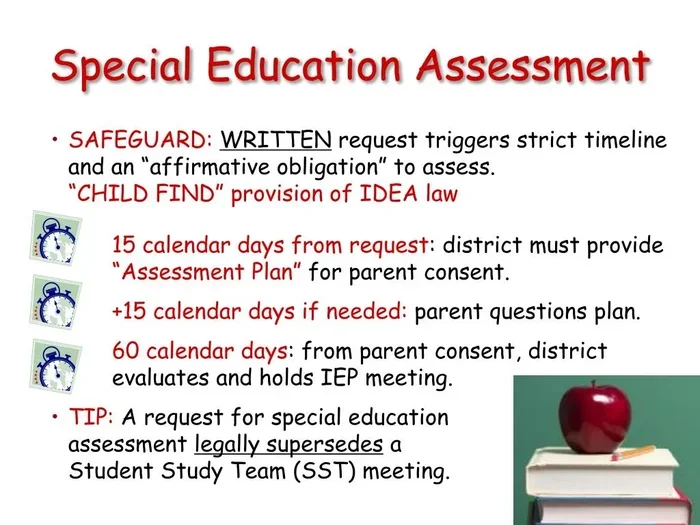
An IEE in special education is an independent evaluation conducted by a qualified professional outside the school district. It gives parents a second opinion when they disagree with their child’s school-based assessment. Understanding this process is one of the most powerful tools parents have in special education advocacy.
Key Takeaways
- An IEE provides an unbiased evaluation: It offers a fresh perspective when parents question the school district’s assessment of their child.
- Parents have legal rights: Under IDEA, families can request an IEE at public expense if they disagree with the school’s evaluation.
- The process is straightforward: You submit a written request, and the school district must either comply or initiate a due process hearing.
- Independent evaluators are often more thorough: They may identify needs the school evaluation missed.
- IEE results carry weight: The IEP team must consider the findings when developing or updating your child’s plan.
- You are not alone: Many resources and advocates can help you navigate the IEE process.
📑 Table of Contents
What Is IEE in Special Education?
An IEE in special education stands for Independent Educational Evaluation. It is an evaluation of a child’s learning, behavioral, or developmental needs conducted by a professional who is not employed by the school district. Think of it as a second opinion from someone who has no ties to the school.
When a school evaluates a child for special education services, the evaluation is done by staff members the district employs. Sometimes, parents feel that this evaluation is incomplete, biased, or inaccurate. That is where an IEE comes in. It gives families a way to get a more thorough and independent look at their child’s needs.
The idea behind an IEE is simple. Every child deserves a fair and accurate assessment. When a school evaluation falls short, parents should have a clear path to seek answers. An IEE in special education makes that path possible.
Just as idioms for someone special help us express deep feelings in simple ways, an IEE helps parents express their child’s true needs in clear, documented terms. It bridges the gap between what the school sees and what the family knows about their child.
Who Can Request an IEE?
Any parent or guardian of a child who is being evaluated for special education services can request an IEE. You do not need to be an education expert. You do not need a lawyer. You just need to believe that your child’s school evaluation does not fully capture their abilities or challenges.
In some cases, a school district may also recommend an IEE. This usually happens when the district feels its own evaluation needs additional input. However, most of the time, it is the parent who initiates the request.
Who Conducts an IEE?
An IEE must be conducted by a qualified professional who is not employed by the school district. This person should have the right credentials and experience in the area being evaluated. For example, if the evaluation focuses on speech and language skills, the independent evaluator should be a licensed speech-language pathologist.
The evaluator should have no personal or financial ties to the school district. This ensures the assessment remains objective and fair. Parents often have the freedom to choose the evaluator, as long as the professional meets the district’s criteria.
When Should You Request an IEE?
Knowing when to request an IEE is a key part of advocating for your child. There are several common situations where an IEE in special education makes sense.
You Disagree with the School’s Findings
This is the most common reason parents seek an IEE. Maybe the school says your child does not qualify for services. Or perhaps the evaluation says your child’s needs are less severe than you believe. When you feel the school’s conclusion does not match your child’s reality, an IEE can provide clarity.
The Evaluation Missed Key Areas
Sometimes, a school evaluation focuses on one or two areas and overlooks others. For instance, the school might test academic skills but skip social-emotional or sensory processing concerns. An IEE in special education can fill in those gaps and give you a more complete picture.
Your Child’s Needs Have Changed
Children grow and change. A school evaluation from a year ago may not reflect your child’s current struggles. If you feel the old evaluation is outdated, requesting a new independent assessment can be the right move.
You Want Stronger Evidence for an IEP Meeting
Independent evaluations often carry significant weight in IEP meetings. They can support your requests for specific services, accommodations, or placements. When you have clear, professional documentation of your child’s needs, it becomes much harder for the school to ignore them.
How the IEE Process Works
The process of getting an IEE is simpler than many parents expect. Here is a step-by-step look at how it works.
Step 1: Review the School Evaluation
Before requesting an IEE, read the school’s evaluation report carefully. Identify the parts you agree with and the parts you do not. Make notes. This will help you explain your concerns clearly when you submit your request.
Step 2: Submit a Written Request
You need to put your IEE request in writing. Send a letter or email to the school district. Be clear and direct. State that you disagree with the school’s evaluation and request an independent educational evaluation at public expense.
Keep a copy of everything. Document the date you sent the request. This paper trail matters if there are disputes later on.
Step 3: Wait for the District’s Response
Once the school receives your request, they have two options. They can either agree to pay for the IEE, or they can file for a due process hearing to defend their own evaluation. The district must tell you about both options and the timelines involved.
If the school agrees, they will provide you with a list of qualified evaluators. You can choose one from the list or suggest your own, as long as they meet the district’s standards.
Step 4: The Independent Evaluation Takes Place
The independent evaluator will assess your child using appropriate tools and methods. This may include observations, interviews, standardized tests, and review of school records. The process is usually more thorough than the school evaluation because the evaluator has no time constraints imposed by the district.
After the evaluation, you will receive a detailed report. This report will include findings, diagnoses, and recommendations. Share this report with the IEP team at your next meeting.
Step 5: Use the Results in Your IEP Meeting
The IEP team must consider the results of the IEE. While the team does not have to follow every recommendation, they must give the report serious attention. Use the findings to push for the services and supports your child needs.
Think of it this way. Just as similes for education help us compare and understand complex ideas, an IEE helps compare the school’s view with an independent perspective. Both views matter, and together they create a fuller picture.
Your Rights Under IDEA
The Individuals with Disabilities Education Act (IDEA) is the federal law that protects the rights of children with disabilities. It gives parents clear rights when it comes to evaluations and IEEs.
The Right to an IEE at Public Expense
Under IDEA, parents have the right to an IEE at public expense if they disagree with the school’s evaluation. This means the school district pays for it. You should never have to pay out of pocket for a fair and independent assessment.
The Right to an Unbiased Evaluator
The evaluator must not be employed by the school district. They must have the proper credentials and experience. This ensures the evaluation is truly independent and unbiased.
The Right to Have Your IEE Considered
Once you obtain an IEE, the school must consider its results. The IEP team cannot simply ignore the report. They must discuss it and use it to inform decisions about your child’s education.
The Right to Due Process
If the school refuses your IEE request, you have the right to due process. This is a formal hearing where an impartial officer decides whether the school’s evaluation was appropriate. You can also file a complaint with your state’s education agency.
Understanding these rights is essential. Many parents do not know they have the power to request an IEE. Once you know your rights, you can advocate more effectively for your child.
How This Connects to Broader Advocacy
Advocating for your child’s education is about more than just one evaluation. It is about understanding the whole system. Just as metaphors for education help us grasp big ideas through simple comparisons, understanding the evaluation system helps parents see the bigger picture of their child’s educational journey.
IEE vs. School District Evaluation: Key Differences
It helps to compare an IEE directly with a school district evaluation. Here is a side-by-side look at the key differences.
| Feature | School District Evaluation | Independent Educational Evaluation (IEE) |
|---|---|---|
| Who Conducts It | School district employees | Qualified professional outside the district |
| Who Pays | School district | School district (at public expense) or parent |
| Objectivity | May have institutional bias | No ties to the district |
| Scope | Based on district criteria | Often more comprehensive and thorough |
| Recommendations | Follows district guidelines | Independent recommendations based on findings |
| Parental Input | Limited | Parents can choose the evaluator |
| Legal Weight in IEP | Primary evaluation | Must be considered by the IEP team |
Both types of evaluations have value. The school evaluation is the starting point. But when parents feel it is not enough, an IEE steps in to fill the gaps. Together, they build a stronger foundation for your child’s IEP.
Quick Tips for a Successful IEE
- Start early: Request the IEE as soon as you have concerns. Do not wait until an IEP meeting is right around the corner.
- Be specific: Clearly explain which parts of the school evaluation you disagree with and why.
- Choose the right evaluator: Look for someone with experience in your child’s specific area of need.
- Keep records: Save all emails, letters, and reports related to the IEE process.
- Stay calm and professional: A respectful tone goes a long way in building trust with the school district.
- Share the report with your IEP team: Bring the IEE results to every meeting where your child’s plan is discussed.
Common Mistakes to Avoid
- Waiting too long: Delays can affect your child’s access to timely services.
- Not reading the school evaluation carefully: You cannot effectively challenge what you have not reviewed.
- Choosing an unqualified evaluator: Make sure the professional meets the district’s requirements.
- Assuming the IEE will automatically change everything: The IEP team must consider the IEE, but they are not bound by every recommendation.
- Going into the process alone: Seek support from advocates, parent groups, or attorneys if needed.
Expert Insights on the IEE Process
Special education advocates and attorneys often highlight the importance of IEEs. They note that school districts sometimes rush evaluations or use limited assessment tools. An IEE counters these shortcuts by providing a deeper, more personalized look at the child.
Experienced parents also emphasize the value of preparation. Before requesting an IEE, gather all relevant documents. Understand the school’s evaluation methods. Know your child’s history. The more prepared you are, the stronger your position becomes.
Advocates also point out that IEEs are not just about disagreement. They are about partnership. When parents and schools work together with the best information, children benefit the most. An IEE supports that partnership by ensuring everyone has access to accurate, complete data.
Key Takeaways
- An IEE in special education gives parents a second opinion: It provides an independent, unbiased look at your child’s needs.
- You have legal rights under IDEA: Parents can request an IEE at public expense when they disagree with the school’s evaluation.
- The process is clear and structured: From the written request to the IEP meeting, each step has defined procedures.
- IEE results must be considered: The IEP team cannot ignore the findings of an independent evaluation.
- Knowledge is power: Understanding the IEE process equips parents to advocate more effectively for their child.
Conclusion
Navigating the world of special education can feel overwhelming. But understanding the IEE in special education process gives parents a clear path to better support for their child. An independent educational evaluation is more than just a second opinion. It is a tool for truth, clarity, and empowerment.
When you request an IEE, you are saying that your child deserves a fair and thorough assessment. You are saying that their unique needs matter. And most importantly, you are taking an active role in shaping their educational future.
Remember, you do not have to do this alone. Reach out to parent advocacy groups, special education attorneys, or trusted professionals. The more you know about your rights and the evaluation process, the better equipped you will be.
An IEE in special education is not just a procedural step. It is a statement of love, commitment, and determination on behalf of your child. Use it wisely, and you will make a real difference in their educational journey.
Frequently Asked Questions
What does IEE stand for in special education?
IEE stands for Independent Educational Evaluation. It is an evaluation conducted by a professional who is not employed by the school district. It gives parents a second opinion on their child’s educational needs.
Who pays for an IEE in special education?
Under IDEA, if a parent requests an IEE at public expense, the school district must either pay for it or file for a due process hearing. In most cases, the district covers the cost when the request is made in good faith.
Can the school district refuse my IEE request?
Yes, but only by initiating a due process hearing. The district must prove that its own evaluation was appropriate. If the district refuses, parents have the right to seek legal support and due process.
How is an IEE different from a school evaluation?
A school evaluation is conducted by district employees using district-approved methods. An IEE is conducted by an independent professional who has no ties to the school. IEEs are often more comprehensive and provide a fresh perspective.
What should I look for when choosing an IEE evaluator?
Look for a qualified professional with experience in the specific area of concern. They should not be employed by the school district. Check their credentials, reviews, and familiarity with special education evaluation standards.
Do IEE results automatically change my child’s IEP?
No, but the IEP team must consider the IEE results. The findings can strongly influence decisions about services, accommodations, and placements. They provide valuable evidence to support your requests during IEP meetings.


