
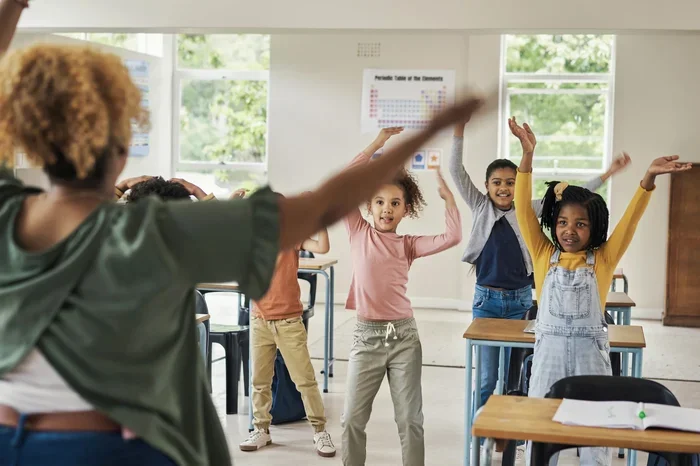
TPR in education, short for Total Physical Response, is a powerful teaching method that links language and movement. It helps students learn faster by using their bodies as a learning tool. Teachers use TPR to boost comprehension, engagement, and long-term memory retention in classrooms of all ages and levels.
Have you ever noticed how kids learn best when they can move? They jump, clap, point, and act things out before they can even read a full sentence. That natural instinct is exactly what TPR in education taps into.
Total Physical Response is a teaching method that connects words and ideas with physical actions. Instead of just sitting and listening, students use their bodies to show what they understand. This simple shift can change the entire learning experience.
In this article, we will break down what TPR really means, why it works so well, and how you can use it in your own classroom. Whether you are a new teacher or a seasoned educator, these ideas will help you reach your students in a whole new way.
Key Takeaways
- TPR stands for Total Physical Response: A teaching method that connects language with physical actions to deepen learning.
- It boosts comprehension: Students understand new words and concepts faster when they act them out.
- Works for all ages: From young children to adult learners, TPR adapts to any classroom setting.
- Reduces stress and anxiety: The low-pressure approach makes language learning feel natural and fun.
- Supports multiple learning styles: Especially effective for kinesthetic and visual learners who thrive on movement.
- Easy to implement: Teachers need minimal materials — just their voice, body, and a willingness to move.
- Builds long-term retention: Physical association with words helps students remember vocabulary for longer periods.
📑 Table of Contents
What Is TPR in Education?
TPR stands for Total Physical Response. It is a language teaching method built on the idea that we learn best when we combine words with body movements. The approach was developed by Dr. James Asher in the 1960s and has grown in popularity ever since.
The core idea is simple. When a teacher gives a command like “stand up” or “touch your nose,” students do it. They hear the words and they move their bodies. Over time, the brain starts to link the language directly to the action — without needing translation or long explanations.
This method draws from how babies learn their first language. Parents do not hand toddlers a grammar book. They say “come here” and hold out their arms. The child responds physically before they ever fully understand the words. TPR in education uses that same natural process in a structured classroom setting.
Why Movement Matters in Learning
Our brains are wired for movement. When we use our bodies, we activate more regions of the brain at once. This means more neural connections form, and memories stick better.
Research in educational psychology shows that kinesthetic learners — those who learn by doing — retain information far better when physical activity is involved. But here is the good news: TPR helps all types of learners, not just those who love to move.
When students act out words, they create a mental image tied to a physical feeling. That dual coding makes recall easier later. It is the same reason you remember a song better than a plain list of words.
How TPR Works in the Classroom
TPR in education follows a clear sequence of steps. Teachers do not just tell students to move randomly. There is a method behind the movement.
Step 1: Teacher Models the Action
The teacher first demonstrates the action while saying the word or phrase clearly. For example, the teacher might say “walk” while walking in place. The students watch and listen.
Step 2: Students Respond Physically
Next, the teacher gives the command, and students respond. They walk, jump, point, or whatever the action requires. No one is forced to participate, which keeps the atmosphere relaxed.
Step 3: Students Take Turns Leading
As students grow more confident, they can take the lead. They give commands to their classmates. This builds ownership and deepens understanding even further.
The beauty of this method is that it does not require any reading or writing at first. Students can respond to commands before they ever see the written form of a word. This removes a lot of the pressure that comes with early language learning.
Benefits of Using TPR in Education
There are many reasons why teachers around the world swear by Total Physical Response. Let us look at the biggest benefits.
1. Boosts Comprehension Fast
Students do not need to translate words in their heads. The action gives them instant meaning. When a teacher says “sit down” and the students sit, the connection is immediate and clear.
2. Lowers Anxiety
Traditional language classes can feel stressful. Students worry about making mistakes or sounding silly. TPR in education removes that fear because the focus is on doing, not on being perfect.
3. Improves Vocabulary Retention
When you pair a word with a physical action, your brain stores it in multiple ways. You remember the sound, the meaning, and the movement. This triple layer of memory makes vocabulary stick much longer.
4. Increases Student Engagement
Let us face it — sitting still for an hour is hard. TPR gets students up and moving. They pay more attention because they are actively involved, not just passively listening.
5. Supports Different Learning Styles
Some students are visual. Some are auditory. Some are kinesthetic. TPR reaches all three groups at once. Every student has a way in, which makes the method very inclusive.
TPR vs. Traditional Teaching Methods
How does TPR in education compare to the way most of us learned in school? The differences are striking.
| Feature | Traditional Method | TPR Method |
|---|---|---|
| Focus | Reading and writing first | Listening and doing first |
| Student Role | Passive listener | Active participant |
| Error Tolerance | Mistakes are corrected often | Mistakes are ignored at first |
| Learning Style | Mostly auditory and visual | Kinesthetic, auditory, and visual |
| Student Stress | Often high | Low and playful |
| Speed of Comprehension | Slower for beginners | Faster for beginners |
Traditional methods often start with textbooks and grammar rules. TPR starts with the body. Both have their place, but for young learners and beginners, the physical approach tends to win hands down.
Real-World Examples of TPR Activities
You might be wondering how this looks in practice. Here are some easy TPR activities you can try today.
Simon Says
This classic game is perfect for TPR. The teacher says “Simon says touch your toes,” and students do it. If the teacher says just “touch your toes” without “Simon says,” students should stay still. It teaches listening skills along with physical action.
Action Songs and Chants
Songs that involve movement are a natural fit for TPR. Think of “Head, Shoulders, Knees, and Toes.” Students sing and touch the right body parts. The rhythm and movement reinforce the words.
Command Games
The teacher gives simple commands: “jump,” “clap,” “run to the door.” Students follow. As they improve, the commands get more complex: “pick up the red book and put it on the table.”
Story Acting
After reading a short story, the teacher asks students to act out key scenes. This brings the language to life and helps students understand narrative structure through movement.
These activities are not just for language classes. TPR in education works in science, math, and even history lessons. Any time you want students to remember a concept, adding a physical element helps.
Teaching Figurative Language with TPR
One creative way to use TPR is when teaching expressions and figurative language. For instance, when students encounter idioms for education like “break the ice” or “hit the books,” acting them out helps them understand the meaning beyond the literal words. Similarly, similes for education such as “sharp as a tack” or “busy as a bee” become clearer when students physically demonstrate the comparison. Even metaphors for education like “a lightbulb moment” can be brought to life through gestures and movement, making abstract concepts feel concrete and memorable.
When students physically act out these expressions, they build a deeper understanding of how language works beyond the literal meaning. This approach bridges the gap between language acquisition and comprehension-based instruction in a way that feels playful and natural.
Common Mistakes to Avoid with TPR
TPR is simple, but there are some pitfalls to watch out for.
- Overcomplicating commands: Start with very simple actions. Do not jump to multi-step directions too fast.
- Forcing participation: Some students feel shy about moving. Let them observe first. They will join when they are ready.
- Skipping the modeling step: Always demonstrate the action first. Students need to see what is expected.
- Using TPR for too long: It is a great tool, but not the only one. Mix it with other methods for balanced instruction.
- Ignoring individual needs: Some students have physical limitations. Adapt the activities so everyone can participate in their own way.
Expert Insights on TPR in Education
Dr. James Asher, the creator of Total Physical Response, believed that the human brain has a natural way of learning through physical coordination. He compared it to how we learn our native language as infants — through listening and responding to physical cues long before we ever speak.
Modern educational psychology supports this view. Studies show that when students move their bodies while learning, they form stronger memories. The motor cortex, the part of the brain that controls movement, becomes deeply involved in the learning process.
Many experienced teachers also note that TPR creates a positive classroom culture. Students laugh together, help each other, and feel safe to try new things. That emotional safety is a huge factor in language acquisition and overall academic growth.
As one veteran teacher put it, “TPR turned my quiet, shy students into active participants. They were not afraid to make mistakes because the whole point was to move and have fun.”
How to Get Started with TPR Today
Ready to bring TPR in education into your classroom? Here is a simple roadmap.
- Start small. Pick five to ten basic commands and practice them with your students over a few days.
- Keep it fun. Use games, songs, and laughter to build comfort and excitement.
- Gradually increase complexity. Once students are confident, add more detailed commands and longer sequences.
- Let students lead. Give students a chance to be the teacher and give commands to the class.
- Combine with other methods. TPR works best when paired with reading, writing, and conversation practice.
- Observe and adapt. Watch how your students respond and adjust your approach to fit their needs.
You do not need special equipment or a big budget. All you need is your voice, your body, and a willingness to be a little playful. The results will speak for themselves.
Final Thoughts
TPR in education is one of the most effective and enjoyable ways to teach language and build comprehension. It honors how our brains naturally learn — through movement, repetition, and real-world connection. Whether you are teaching young children just starting out or adult learners picking up a second language, TPR has something valuable to offer.
The method is flexible, low-stress, and backed by decades of research. It reaches every type of learner and turns the classroom into a place of active discovery. If you have not tried it yet, now is the perfect time to start. Your students will thank you for it.
Remember, the goal of Total Physical Response is not perfect grammar or flawless pronunciation. It is about building confidence, creating connection, and making learning feel alive. Start with a simple command today and watch your students light up with understanding.
Frequently Asked Questions
What does TPR stand for in education?
TPR stands for Total Physical Response. It is a teaching method that connects language with physical movement to help students learn faster and remember longer.
Who developed the TPR method?
Dr. James Asher, a language education researcher, developed the Total Physical Response method in the 1960s. He based it on how babies learn their first language through listening and responding to physical cues.
Is TPR only for language classes?
No, TPR works across all subjects. While it originated in language teaching, it is now used in science, math, physical education, and even history to help students remember concepts through movement and action.
Can TPR help shy or anxious students?
Yes, TPR is especially helpful for shy students because it does not require them to speak right away. They can respond through actions first, which lowers anxiety and builds confidence over time.
What age groups benefit most from TPR?
TPR works for all ages, but it is especially effective for young children and beginner language learners. Teenagers and adults also benefit, especially when the activities feel fun and low-pressure.
How often should teachers use TPR in class?
There is no set rule, but most teachers find that using TPR for 10 to 15 minutes per lesson keeps things fresh without overwhelming the class. It works best as a regular supplement to other teaching methods.


