
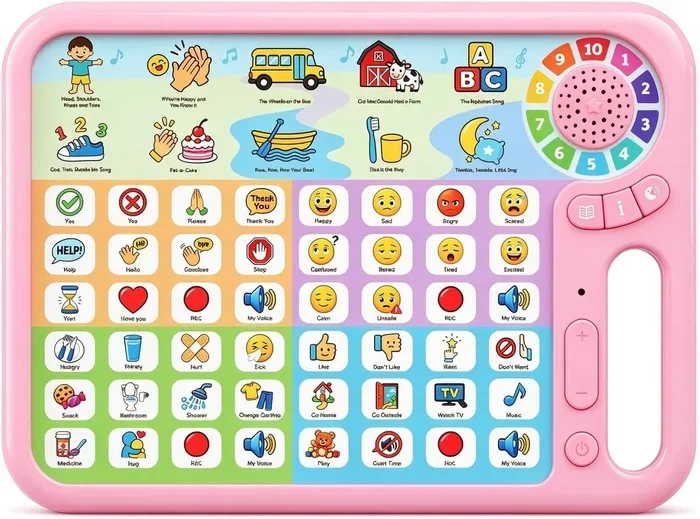
AAC stands for Augmentative and Alternative Communication, a vital set of tools and strategies used in special education to help students who struggle with verbal communication. These systems range from simple picture boards to advanced speech-generating devices that give every child a voice. Understanding AAC can transform how educators, parents, and therapists support nonverbal and minimally verbal learners in inclusive classrooms.
This is a comprehensive guide about what does aac stand for in special education.
Key Takeaways
- AAC means Augmentative and Alternative Communication: It covers all methods of communication beyond spoken speech used to support students with disabilities.
- Two main types exist: Unaided AAC (body-based signals) and aided AAC (tools and devices) each serve different needs.
- AAC supports language development: It does not replace speech but often encourages verbal growth in children with communication delays.
- Many students benefit: Children with autism, cerebral palsy, apraxia, and other conditions use AAC daily.
- Early intervention matters: Introducing AAC tools early leads to better communication outcomes and academic success.
- Technology is evolving: Eye-tracking, AI-powered devices, and apps are making AAC more accessible than ever before.
[FEATURED_IMAGE_PLACEHOLDER]
What Does AAC Stand for in Special Education?
AAC stands for Augmentative and Alternative Communication. In special education, it refers to all the methods and tools that help students communicate when spoken language is difficult or impossible. These tools fill the gap between what a child wants to say and how they can say it.
The term “augmentative” means something that adds to a person’s existing speech. “Alternative” means it replaces speech entirely when needed. Together, AAC gives every student a way to share their thoughts, feelings, and needs. It plays a huge role in special education because communication is the foundation of learning.
Many people assume AAC is just one device. But it is actually a broad field. It includes everything from a simple gesture to a high-tech tablet that speaks for the user. Teachers, speech-language pathologists, and families all work together to find the right fit for each student.
Communication is a basic human right. AAC ensures that no child is left out of the conversation just because they cannot speak in the traditional way. The goal is always to give power back to the student.
Why AAC Matters in the Classroom
Without a reliable way to communicate, students can become frustrated, withdrawn, or even disruptive. AAC changes this dynamic. When a child has a functional communication system, behavior often improves. Learning becomes more accessible. Participation increases.
Think about how much learning happens through talking in a classroom. Asking questions, answering prompts, sharing ideas, asking for help. If a student cannot do any of that verbally, they miss out. AAC bridges that gap and opens the door to full participation.
How AAC Systems Work in Special Education Settings
AAC systems work by giving students alternative ways to send and receive messages. The approach depends on the individual student’s abilities, needs, and learning style. A speech-language pathologist usually leads the assessment and implementation process.
Before choosing a system, professionals evaluate the student’s motor skills, cognitive abilities, vision, and hearing. This evaluation ensures the chosen method matches the student’s strengths. A one-size-fits-all approach never works in special education.
Unaided AAC Systems
Unaided systems do not require any external device. The student uses their own body to communicate. Common examples include:
- Sign language — a structured system of hand gestures and movements
- Facial expressions — using smiles, frowns, and eye movements to convey meaning
- Gestures and pointing — indicating objects or choices with a finger or hand
- Body language — using posture and movement to express needs
These methods work well for some students but may not be enough on their own. That is where aided systems come in.
Aided AAC Systems
Aided systems use external tools or devices. They fall into two categories: low-tech and high-tech.
Low-tech aided systems include picture boards, communication books, and symbol charts. A student might point to pictures or letters to form messages. These tools are affordable and easy to use in any classroom setting.
High-tech aided systems include speech-generating devices and tablet-based apps. These tools can produce spoken output automatically. Some use eye-tracking technology so students can select words just by looking at them. Others respond to touch, switches, or even brain signals.
Both low-tech and high-tech options have their place. The best choice depends on the student’s physical abilities, learning pace, and communication goals.
Types of AAC Devices and Tools Used in Special Education
The world of AAC devices has grown enormously in recent years. Today’s options are more diverse and user-friendly than ever. Here is a closer look at the most common types used in special education programs.
Picture Exchange Communication System (PECS)
PECS is one of the most widely recognized low-tech AAC methods. Students hand picture cards to a communication partner to express what they want. It was originally designed for young children with autism but now helps many different populations.
PECS starts simple. A child hands a picture of a snack to a teacher and receives the snack. Over time, the system grows to include sentence strips and more complex exchanges. It teaches intentional communication from the very first session.
Speech-Generating Devices (SGDs)
Speech-generating devices are electronic tools that produce spoken output. Students select words, phrases, or symbols on a screen, and the device speaks for them. Modern SGDs offer voices that sound natural and age-appropriate.
These devices can be dedicated units or apps on a tablet. They often include core vocabulary boards, which focus on the most frequently used words in everyday language. Core vocabulary approach helps students build sentences quickly and naturally.
Communication Apps and Software
Many tablets now run specialized communication apps. These apps turn a standard device into a powerful AAC tool. Popular options include Proloquo2Go, LAMP Words for Life, and TouchChat. Each offers different layouts and features to match individual needs.
Apps are often more affordable than dedicated devices. They also allow for customization and updates. However, they require a compatible tablet and some training for the user and their support team.
Symbol-Based and Text-Based Systems
Some students communicate best with visual symbols. Others prefer typed text. AAC systems accommodate both approaches. Symbol-based systems use pictures or icons to represent words. Text-based systems let students type or select letters to spell out messages.
The choice between symbols and text depends on the student’s literacy level and cognitive profile. Many modern systems combine both, giving students flexibility as their skills grow.
Who Benefits from AAC in Special Education?
AAC is not limited to one condition or diagnosis. It helps a wide range of students who face communication barriers. The key is matching the right tool to the right student at the right time.
Students with Autism Spectrum Disorder
Many children with autism are nonverbal or have limited verbal skills. AAC gives them a reliable way to express themselves. It reduces frustration and challenging behaviors that often stem from unmet communication needs. Autism communication tools like PECS and tablet apps have shown remarkable results in classrooms worldwide.
Students with Cerebral Palsy
Cerebral palsy can affect muscle control, including the muscles needed for speech. AAC allows these students to communicate independently. Eye-tracking devices are especially helpful for students with limited motor control in their hands.
Students with Apraxia of Speech
Childhood apraxia makes it hard to plan and coordinate the movements needed for speech. AAC provides a backup communication method while the student works on speech therapy. It does not replace speech practice but supports it alongside.
Students with Intellectual Disabilities
Students with significant intellectual disabilities may need AAC to participate in learning. These tools help them answer questions, make choices, and interact with peers. Inclusive education relies heavily on AAC to ensure every student has a voice.
Students with Traumatic Brain Injuries or Degenerative Conditions
Acquired conditions can strip away verbal abilities overnight. AAC provides immediate support during recovery and long-term communication as conditions progress. Early access to AAC can maintain a student’s quality of life and sense of autonomy.
Implementing AAC: Tips for Educators and Parents
Introducing AAC into a student’s routine takes planning and teamwork. Success depends on consistency, training, and a supportive environment. Here are practical tips for getting started.
Start with a Professional Assessment
Never guess which AAC system a student needs. A qualified speech-language pathologist should conduct a thorough evaluation. They consider the student’s physical abilities, cognitive level, communication needs, and environment. The assessment results guide the selection of the right tools.
Involve the Whole Team
AAC works best when everyone is on the same page. Teachers, parents, therapists, and aides should all learn how to use the system. They should model it constantly, just like they model spoken language for young children.
Create Opportunities for Communication
Do not rush to answer for the student. Wait. Give them time to find the right symbol or word. Create situations that naturally invite communication, like placing favorite items slightly out of reach. These moments build motivation and confidence.
Model AAC Use Daily
Modeling means using the AAC system yourself. If a student uses a picture board, the teacher should use it too. This shows the student that the tool is valuable and worth learning. Modeling is one of the most powerful strategies in speech therapy and special education.
Update and Adapt Over Time
Students grow. Their communication needs change. An AAC system that worked six months ago may need adjustment. Regular check-ins with the support team keep the system aligned with the student’s progress. Do not set it and forget it.
Celebrate Every Communication Attempt
Every time a student uses their AAC system, that is a win. Celebrate it. Respond to it. Show the student that their voice matters. Positive reinforcement builds the habit of communicating and strengthens the bond between the student and their support network.
The Future of AAC in Special Education
The future of augmentative and alternative communication looks incredibly promising. Technology continues to advance at a rapid pace, and AAC is no exception. Researchers and developers are pushing boundaries to make communication more natural and accessible.
Artificial intelligence is playing a bigger role in AAC. Predictive text, smart word suggestions, and personalized vocabulary learning are becoming standard features. These tools help students communicate faster and with less effort.
Eye-tracking and brain-computer interfaces are opening doors for students with the most complex physical needs. Imagine a student who cannot move a muscle but can communicate through thought alone. That future is closer than many people realize.
Another exciting trend is the push for universal design in classrooms. As more schools embrace inclusive education, AAC tools are becoming a normal part of the learning environment rather than a separate accommodation. This shift benefits all students, not just those with communication disabilities.
Funding and insurance coverage for AAC devices are also improving in many regions. Advocacy efforts continue to break down barriers that once kept students from accessing the tools they need. The message is clear: every student deserves a way to communicate.
As awareness grows, more educators receive training in AAC implementation. More parents learn their rights and options. More students find their voice. The ripple effect of one child gaining the ability to communicate cannot be overstated. It changes everything — relationships, learning, self-esteem, and life outcomes.
Conclusion
AAC stands for Augmentative and Alternative Communication, and it is one of the most powerful tools in special education today. It gives a voice to students who might otherwise go unheard. Whether through a simple picture board or a cutting-edge speech-generating device, AAC transforms lives every single day.
Educators, parents, and therapists all play a role in making AAC work. Start with assessment, involve the whole team, model consistently, and never stop adapting. The right AAC system can unlock a world of possibility for any student who needs it.
If you want to learn more about communication tools and language strategies, explore our articles on idioms for education, metaphors for education, and idioms for someone special for additional resources that enrich your understanding of language and communication in educational settings.
The journey of AAC in special education is far from over. It is evolving, improving, and reaching more students every year. Stay curious. Stay informed. And always remember: every student has something important to say.
Frequently Asked Questions
What does AAC stand for in special education?
AAC stands for Augmentative and Alternative Communication. It refers to all the tools, systems, and strategies used to help students with communication disabilities express themselves when spoken language is not enough or not possible.
Is AAC only for nonverbal students?
No. While AAC is often associated with nonverbal students, it also helps minimally verbal students and those who need support to communicate more effectively. Even students with some speech can benefit from AAC tools in certain situations.
Does using AAC prevent a child from developing speech?
Not at all. Research consistently shows that AAC does not replace or hinder speech development. In many cases, it actually encourages verbal communication by reducing frustration and building confidence. AAC and speech therapy work together.
At what age should a child start using AAC?
There is no minimum age. Children as young as two years old can begin using simple AAC systems like picture boards. Early intervention with AAC often leads to better long-term communication outcomes. The key is matching the tool to the child’s developmental level.
What role do parents play in AAC implementation?
Parents are essential partners in AAC success. They can model AAC use at home, practice communication opportunities during daily routines, and collaborate closely with the school team. Consistency across home and school environments makes the biggest difference.
Are AAC devices covered by insurance or school funding?
Many AAC devices and apps are covered by health insurance, Medicaid, or school funding programs. However, coverage varies by location, diagnosis, and individual plan. A speech-language pathologist can help families navigate the funding and approval process.
=== META TITLE ===
What Does AAC Stand for in Special Education Explained
=== URL SLUG ===
what-does-aac-stand-for-in-special-education
=== SEO TITLE ===
What Does AAC Stand for in Special Education Explained


