
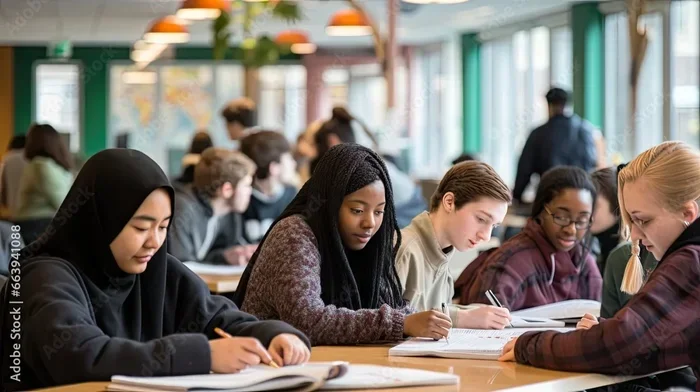
So, is education a human right? Yes — it is recognized worldwide as a fundamental right for every person. The idioms for education reflect how deeply learning is woven into our culture, and understanding this right helps us fight inequality and poverty.
Is education a human right? It is one of the most important questions we can ask about fairness and justice in the world today. The answer is a clear yes. Education is recognized as a basic right for every human being, no matter where they live, how much money their family has, or what their background is.
When we talk about this right, we are really talking about something bigger than just sitting in a classroom. We are talking about dignity, opportunity, and freedom. Learning gives people the tools they need to build better lives. It opens doors that might otherwise stay shut forever.
In this article, we will explore the full picture. You will learn what the right to education really means, where it came from, why it matters so much, and what challenges still stand in the way. We will also look at what you can do to help make quality education a reality for everyone.
Key Takeaways
- Education is a universally recognized human right: International laws and declarations confirm that every person deserves access to learning.
- The right to education dates back decades: Landmark documents like the Universal Declaration of Human Rights established this principle in 1948.
- Millions still lack access: Poverty, conflict, and discrimination continue to block educational opportunities for vulnerable groups.
- Governments and organizations play a key role: Policies, funding, and global initiatives drive progress toward universal education.
- You can make a difference: Supporting local programs and advocating for change helps strengthen education rights worldwide.
- Education breaks the poverty cycle: Learning empowers individuals and transforms communities for generations.
📑 Table of Contents
- What Does “Education Is a Human Right” Actually Mean?
- The History of Education as a Recognized Right
- Why Education Matters for Every Person
- Current Challenges in Providing Universal Education
- How Governments and Organizations Protect Education Rights
- What You Can Do to Support Education Rights
- Conclusion
What Does “Education Is a Human Right” Actually Mean?
Let us start with the basics. When experts say that education is a human right, they mean that every person has the right to learn. This is not a luxury or a privilege. It is a fundamental need, just like the right to food, water, and safety.
The right to education includes several important ideas:
- Free access: Primary education should be available to all children without cost.
- Quality learning: Schools should provide real knowledge, not just empty classrooms.
- Inclusive opportunities: Every child, regardless of gender, disability, or background, should be welcome.
- Lifelong learning: Education does not stop after childhood. Adults also have the right to learn and grow.
Think of it this way. Just as we say similes for education like “learning is like a key that opens doors,” education truly is a gateway. It unlocks potential. Without it, people struggle to find good jobs, make informed decisions, or participate fully in society.
The Core Elements of the Right to Education
Several international agreements spell out what the right to education looks like in practice:
- Availability: Governments must build enough schools and hire enough teachers.
- Accessibility: Schools must be easy to reach for every group in society.
- Acceptability: Education must be culturally appropriate and free from discrimination.
- Adaptability: Curriculums should change with the times and meet different community needs.
These four elements form the foundation. When any one of them is missing, the right to education is not fully realized. For example, if a school exists but is too far away for rural children, accessibility fails. If a school accepts only boys, acceptability fails.
Understanding these pieces helps us see why so many children around the world still cannot go to school. It is not just about building buildings. It is about building systems that work for everyone.
The History of Education as a Recognized Right
The idea that learning belongs to every person did not just appear overnight. It grew over centuries through hard work, brave advocacy, and global cooperation. Let us walk through the key moments in this journey.
Early Foundations
Long before modern laws existed, thinkers argued that education was essential for a good society. Ancient philosophers in Greece and India believed that knowledge should not be kept from people. However, for most of history, education was reserved for the wealthy and powerful.
Things began to change during the Enlightenment era. Thinkers like John Locke and Jean-Jacques Rousseau argued that every person had natural rights. Education, they said, was one of them.
The 20th Century Milestones
The real breakthrough came in the 20th century. Here are the major moments:
- 1948: The Universal Declaration of Human Rights was adopted. Article 26 declared that everyone has the right to education. This was a game-changer.
- 1960: The UNESCO Convention against Discrimination in Education was signed. It called on nations to end unfair barriers to learning.
- 1989: The UN Convention on the Rights of the Child recognized that children have a specific right to education.
- 1990: The World Conference on Education for All in Jomtien, Thailand, set goals for universal primary education.
- 2000: The Millennium Development Goals included a target for universal primary education by 2015.
- 2015: The Sustainable Development Goals replaced the earlier targets, with SDG 4 focused on inclusive and equitable quality education.
Each of these moments built on the last. Progress was slow at times, but the direction was clear. The world was moving toward the belief that education for all is not just a nice idea. It is a basic requirement for a just society.
How the Language of Rights Has Evolved
Interestingly, the way we talk about education has also evolved. We use metaphors for education like “education is the backbone of society” to express its importance. These metaphors shape how people think about learning. When we frame education as a right rather than a benefit, it changes the conversation entirely. It shifts the responsibility from the individual to the government and society as a whole.
Why Education Matters for Every Person
Now that we know education is a right, let us talk about why it matters so much. The reasons go far beyond getting a good job. Education touches every part of human life.
Breaking the Cycle of Poverty
This is perhaps the most powerful reason. When children — especially girls — receive an education, they are far less likely to remain trapped in poverty. Studies show that each extra year of schooling can increase a person’s income by 10 percent or more.
But the impact goes deeper than money. Educated parents are more likely to:
- Send their own children to school
- Make better health decisions for their families
- Participate in community leadership
- Advocate for their rights
Education creates a ripple effect. One child learning to read can change the future of an entire family. This is why fighting for education equality is so urgent.
Building Stronger Communities
Educated communities are healthier, safer, and more prosperous. When people understand their rights, they can stand up against injustice. When people can read and think critically, they make better decisions about their lives and their neighborhoods.
Think of similes for a person who is well-educated. They are like a lighthouse in a storm — they guide others and provide direction. This is the kind of impact education has on communities around the world.
Supporting Mental Health and Personal Growth
Learning does something powerful for the mind. It builds confidence. It gives people a sense of purpose. For children who have experienced trauma or hardship, school can be a safe and stable place. It gives them hope for the future.
Adults who continue learning also report higher life satisfaction. Whether it is picking up a new skill or finishing a degree, education keeps the mind active and engaged at every age.
Current Challenges in Providing Universal Education
Even though the right to education is internationally recognized, millions of people still cannot access it. Understanding these challenges is the first step toward solving them.
Poverty and Economic Barriers
Poverty remains the biggest obstacle to education worldwide. Many families cannot afford school fees, uniforms, or books. In some regions, children are forced to work instead of attending class. When a family is struggling to survive, education often becomes a luxury they cannot prioritize.
Here is a hard truth. Children from the poorest households are five times more likely to be out of school than children from wealthy families. This inequality is not accidental. It is the result of systems that have failed to provide free education for all.
Conflict and Displacement
War and violence destroy schools and displace millions of children. In countries affected by conflict, classrooms become unsafe. Teachers flee. Books and supplies disappear. For refugee children, getting an education can feel like an impossible dream.
Yet even in the most difficult circumstances, learning continues. Community-run schools and mobile classrooms show that when there is a will, there is a way. But without international support, these efforts cannot scale to meet the need.
Gender Inequality
Girls face unique barriers to education in many parts of the world. Cultural norms, early marriage, and safety concerns keep millions of girls out of school. In some regions, less than half of girls complete primary education.
The consequences are severe. When girls are denied education, entire communities lose out. Research shows that educating girls leads to lower child mortality rates, smaller family sizes, and stronger local economies. The right to education means nothing if it is not applied equally to everyone.
Disability and Inclusion
Children with disabilities are often excluded from mainstream schools. Lack of ramps, specialized teachers, and adapted materials makes learning inaccessible. Inclusive education requires real investment and a genuine commitment to treating every child as equally valuable.
Many organizations are working to change this. They train teachers in inclusive practices and design learning materials that work for students of all abilities. But there is still a long way to go.
How Governments and Organizations Protect Education Rights
Protecting the right to education is not just an individual responsibility. Governments, international organizations, and local groups all play a part. Let us look at how they work together to make learning accessible.
National Laws and Policies
Many countries have written the right to education into their constitutions. Some have made primary education compulsory and free. However, having a law on paper is very different from putting it into practice. Enforcement matters just as much as legislation.
Countries that have made strong progress include:
- Finland: Known for its high-quality, equity-focused education system.
- Brazil: Implemented universal free education from primary through tertiary levels.
- Rwanda: Made significant strides in increasing school enrollment after the genocide.
- India: The Right to Education Act guarantees free education for children aged 6 to 14.
International Organizations and Global Goals
Organizations like UNESCO, UNICEF, and the World Bank work tirelessly to support education worldwide. They fund schools, train teachers, and develop programs that reach the most vulnerable children. The Sustainable Development Goal 4 aims to ensure inclusive and equitable quality education by 2030.
These global efforts matter. They create accountability. They bring attention to places where children are being left behind. And they provide the resources needed to build lasting change.
The Role of Technology in Expanding Access
Technology is opening new doors for education. Online learning platforms, mobile apps, and radio-based instruction are reaching children who have no access to traditional schools. During the COVID-19 pandemic, digital tools became even more important. They proved that learning can happen in creative ways, even when physical classrooms are not an option.
However, technology also highlights the digital divide. Many children in remote or low-income areas still lack internet access and devices. Bridging this gap is essential for true universal access to education.
What You Can Do to Support Education Rights
You might be wondering what one person can do about a global problem. The truth is, individual actions add up. Here are some meaningful ways to get involved.
Support Local Education Programs
Look for organizations in your community that work to expand educational opportunities. This could be a tutoring program, a book drive, or a scholarship fund. Even small contributions make a real difference in someone’s life.
Advocate for Policy Change
Write to your elected representatives. Support campaigns that push for increased education funding and fair policies. When enough people speak up, governments listen.
Spread Awareness
Share what you have learned with friends and family. Use social media to highlight the importance of education as a human right. The more people understand the issue, the stronger the movement becomes.
Volunteer Your Skills
If you have teaching experience or a particular expertise, consider volunteering with organizations that support education in underserved areas. Your knowledge can inspire and empower learners who might not otherwise have access to quality instruction.
Support Global Initiatives
Donate to reputable organizations working on education worldwide. Groups like Malala Fund, Room to Read, and UNICEF’s education programs are doing critical work on the ground. Every dollar helps provide books, build classrooms, and train teachers.
Conclusion
So, is education a human right? The evidence is overwhelming. Education is not a reward for the lucky or a benefit for the wealthy. It is a basic human right that belongs to every person on this planet. From the earliest international declarations to today’s global goals, the world has consistently affirmed that learning is essential for human dignity and flourishing.
But recognizing the right is only the first step. We must also act on it. Every child who is denied an education represents a failure of our collective commitment to justice and fairness. The challenges are real — poverty, conflict, discrimination, and inequality all stand in the way. Yet the progress we have made shows that change is possible.
When we invest in education, we invest in the future. We build stronger families, healthier communities, and more peaceful societies. The right to learn is one of the most powerful tools we have to create a better world. Let us all do our part to make sure that right is protected for everyone, everywhere.
The journey is not finished. But with awareness, action, and determination, we can move closer to a world where every single person has the opportunity to learn, grow, and thrive.
Frequently Asked Questions
Why is education considered a human right?
Education is considered a human right because it is essential for human dignity, personal development, and participation in society. International laws like the Universal Declaration of Human Rights explicitly recognize that every person has the right to learn. Without education, people cannot fully exercise their other rights or reach their potential.
Which countries still struggle with education access?
Many countries in sub-Saharan Africa, South Asia, and conflict-affected regions face significant challenges in providing education. Poverty, armed conflict, and lack of infrastructure are major barriers. Children in these areas are often the most affected, especially girls and children with disabilities.
What is the difference between free education and quality education?
Free education means that families do not have to pay for schooling. Quality education means that the schooling actually delivers meaningful learning outcomes. Both are important. A school can be free but still lack trained teachers, materials, or a safe environment. True education rights require both access and quality.
How does education help reduce poverty?
Education helps reduce poverty by giving people the skills they need to find better jobs and earn higher incomes. Educated individuals are also more likely to make informed health decisions, start businesses, and contribute to their local economies. The effects ripple outward, benefiting entire communities over time.
What role do parents and families play in education rights?
Parents and families are the first teachers and the strongest advocates for children’s education. When families value learning and support their children’s schooling, outcomes improve significantly. Families also have the right to participate in decisions about their children’s education and to demand quality services from schools and governments.
Can education rights be limited in any circumstances?
Some countries may restrict education during emergencies like armed conflict or natural disasters. However, these limitations should be temporary and proportional. International law requires that governments make every effort to restore educational access as quickly as possible, even during crises. Discriminating against certain groups in education is never acceptable.


