
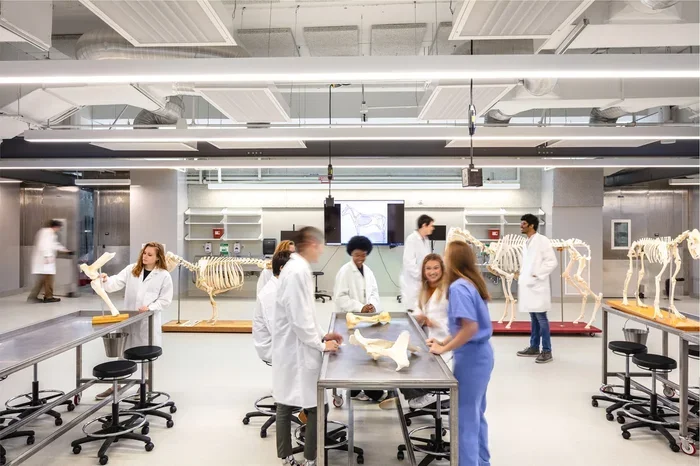
Becoming a veterinarian requires years of dedicated education, starting with a strong foundation in science during undergraduate studies and continuing through an accredited Doctor of Veterinary Medicine (DVM) program. After earning the degree, aspiring vets must pass national and state exams to earn their license. This journey typically takes seven to nine years of higher education.
Key Takeaways
- Undergraduate preparation: Complete pre-veterinary courses in biology, chemistry, and animal science before applying to veterinary school.
- DVM degree: A four-year Doctor of Veterinary Medicine program from an accredited institution is the core requirement.
- Licensure exams: Passing the NAVLE and state-specific exams is mandatory to practice as a licensed veterinarian.
- Specializations: Board-certified specialties require additional residency training of three to four years beyond the DVM.
- Time investment: Plan for seven to nine years of formal education to become a practicing veterinarian.
- Hands-on experience: Clinical rotations and volunteer work with animals strengthen both skills and school applications.
- Continuous learning: Veterinarians must pursue ongoing education to maintain their license and stay current in the field.
📑 Table of Contents
- Understanding the Veterinary Education Pathway
- Doctor of Veterinary Medicine (DVM) Degree
- Veterinary School Admission Requirements
- Licensure and Certification
- Specializations and Advanced Training
- Is Veterinary School Worth the Investment?
- Common Mistakes to Avoid on the Path to Becoming a Vet
- Expert Insights on Veterinary Education
- Conclusion
Understanding the Veterinary Education Pathway
Have you ever wondered what it takes to become a veterinarian? The answer is more involved than most people realize. Veterinary education is a long and rewarding journey that prepares you to care for animals of all kinds. From tiny hamsters to massive horses, veterinarians play a vital role in keeping our animal friends healthy.
The path to becoming a vet starts early. Long before you step foot in a veterinary school, you need a solid educational foundation. Think of it like building a house. You need a strong base before you can add the walls and the roof. Similarly, you need the right coursework and experiences before you can succeed in a Doctor of Veterinary Medicine program.
Education in the veterinary field is no small commitment. It demands years of focused study, hands-on practice, and rigorous testing. But for those who love animals, every moment is worth it. This guide will walk you through each stage of the journey. You will learn what courses you need, what exams you must pass, and how to choose the right path for your career.
What Does a Veterinarian Do?
Before diving into the education details, it helps to understand the job itself. Veterinarians diagnose and treat animals. They perform surgeries, prescribe medications, and educate pet owners. Some vets work with farm animals. Others focus on exotic species or wildlife. There are even veterinarians who work in research and public health.
No matter the specialty, all vets need a deep understanding of animal anatomy, physiology, and disease. They must also have strong communication skills. After all, a big part of the job involves talking to animal owners. The education pathway ensures that every licensed vet meets a high standard of knowledge and competence.
The Pre-Veterinary Stage
Most veterinary schools require applicants to complete an undergraduate degree first. This usually takes about four years. During this time, students focus on pre-veterinary courses that build a strong science background. Common subjects include biology, chemistry, organic chemistry, and physics.
Many aspiring vets choose a major in animal science, biology, or a related field. However, veterinary schools accept students from diverse academic backgrounds. What matters most is completing the required prerequisite courses. These typically include:
- General biology with lab work
- General chemistry and organic chemistry
- Physics with a lab component
- Biochemistry
- Mathematics and statistics
- English or communications
- Animal nutrition or animal behavior (sometimes)
It is worth noting that education in the sciences during undergraduate years is crucial. Students who struggle with chemistry or biology often find the veterinary curriculum very challenging. So, take your pre-vet courses seriously. They set the stage for everything that comes next.
Beyond coursework, most schools look for relevant experience. Volunteering at animal shelters, working on a farm, or shadowing a practicing vet can make a big difference. These experiences show admissions committees that you are genuinely committed to the field. As they say, education is not just about books. Real-world exposure matters too.
Doctor of Veterinary Medicine (DVM) Degree
The DVM degree is the heart of veterinary education. This professional degree typically takes four years to complete. It is offered by accredited veterinary schools across the United States and around the world. In the U.S., there are currently about 33 accredited veterinary schools. Competition for admission is fierce, so preparation is key.
The DVM program covers a wide range of topics. Students learn about animal diseases, pharmacology, surgery, and pathology. They also study animal welfare and ethics. The first two years usually focus on classroom and lab instruction. The last two years shift toward clinical training.
What the DVM Program Covers
The first half of the DVM program builds a strong scientific foundation. Courses include anatomy, physiology, microbiology, and immunology. Students also study pharmacology, which teaches them how medications work in different species. Pathology classes help them understand diseases at the cellular level.
As students progress, they dive into more specialized subjects. These include surgery, internal medicine, and diagnostic imaging. Many programs also cover public health and zoonotic diseases. These are illnesses that can spread from animals to humans. Understanding this connection is increasingly important in modern veterinary practice.
One thing that sets veterinary education apart is the breadth of species covered. Unlike human medicine, veterinary training must account for animals of all shapes and sizes. A vet student might study a cow one week and a bird the next. This diversity makes the curriculum both challenging and exciting.
Clinical Rotations and Hands-On Training
The final years of the DVM program are all about practical experience. Students participate in clinical rotations at teaching hospitals and clinics. They work directly with animals under the supervision of licensed veterinarians. These rotations cover areas like small animal medicine, large animal surgery, and emergency care.
Hands-on training is essential. It bridges the gap between theory and real practice. Students learn to perform physical exams, administer anesthesia, and assist in surgeries. They also develop their communication skills by interacting with pet owners. This clinical experience is a core part of any quality veterinary curriculum.
During rotations, students often rotate through different departments. One week might be spent in the oncology ward. The next could be in the emergency room. This variety helps graduates feel confident in many areas of practice. It also helps them discover which specialty interests them most.
Veterinary School Admission Requirements
Getting into veterinary school is competitive. Schools look for students who have both strong grades and a passion for animals. Understanding the admission requirements early can help you plan your education path more effectively.
GPA and Test Score Expectations
Most accredited veterinary schools require a competitive GPA. Aim for a 3.5 or higher on a 4.0 scale. Science prerequisite courses are especially important. Admissions committees pay close attention to grades in biology, chemistry, and physics.
Some schools still require the Graduate Record Examination (GRE). However, many have dropped this requirement in recent years. Check each school’s website for the latest admission criteria. A strong veterinary school application includes more than just test scores. It tells a story of dedication and growth.
Extracurricular and Volunteer Experience
Schools want to see that applicants have real experience with animals. This can come from many sources. Working as a veterinary assistant is one of the most valuable experiences. So is volunteering at an animal shelter or wildlife rehabilitation center.
Shadowing a practicing veterinarian is another excellent way to strengthen your application. It shows that you understand what the profession really involves. Many schools expect applicants to have logged at least 100 to 200 hours of animal-related experience. The more hands-on exposure you gain, the better prepared you will be for both the application process and the veterinary career path ahead.
Licensure and Certification
Earning a DVM degree is a huge accomplishment. But it is not the final step. To practice as a veterinarian, you must obtain a license. This ensures that every practicing vet meets the minimum standards of competence and ethics.
The NAVLE Exam
The North American Veterinary Licensing Examination (NAVLE) is the primary licensing exam in the United States. It is a computer-based test that covers all major areas of veterinary medicine. The exam includes questions on animal health, diagnostics, and treatment planning.
Most students take the NAVLE during their final year of veterinary school or shortly after graduation. Passing this exam is essential. Without it, you cannot obtain a license to practice. Study resources are widely available. Many schools offer review courses and practice tests to help students prepare.
State Licensing Requirements
In addition to the NAVLE, each state has its own licensing requirements. Some states require a separate state-specific exam. Others have additional jurisprudence tests that cover laws and regulations. It is important to research the requirements for the state where you plan to practice.
Once licensed, veterinarians must maintain their credentials through continuing education. This ensures that they stay current with new treatments, technologies, and research. Continuing education is a lifelong commitment in the veterinary field. It keeps practitioners sharp and animal care at the highest standard.
Specializations and Advanced Training
Not all veterinarians follow the same path after graduation. Many choose to specialize in a particular area of animal care. Specialization requires additional training beyond the DVM degree. It opens doors to advanced and rewarding career opportunities.
Veterinary Residency Programs
After earning a DVM, some vets enter a residency program. These programs typically last three to four years. They provide intensive training in a specific area of veterinary medicine. Residencies are offered in fields like surgery, internal medicine, and cardiology.
During a residency, veterinarians work closely with specialists. They gain advanced clinical skills and research experience. Residency training is demanding but incredibly valuable. It prepares vets for the rigors of a specialized practice.
Board-Certified Specialties
After completing a residency, veterinarians can sit for a board certification exam. Board certification is recognized as the highest standard of excellence in veterinary medicine. There are many specialties to choose from, including dermatology, oncology, neurology, and ophthalmology.
Becoming a board-certified veterinarian takes years of additional training. But it allows vets to handle the most complex cases. These specialists often work in referral hospitals or academic settings. They play a key role in advancing the field of veterinary medicine as a whole.
Is Veterinary School Worth the Investment?
Let us talk about the practical side of things. Veterinary school is expensive. Tuition at many accredited programs can exceed $300,000 for the full four years. Add living expenses and student loans, and the financial picture can feel daunting.
However, many veterinarians find the career deeply fulfilling. The ability to help animals and comfort their owners is a powerful motivator. Salaries vary widely depending on location, specialty, and experience. The average starting salary for a new graduate is around $70,000 to $85,000 per year. Experienced vets in specialty fields can earn significantly more.
Before committing to this path, consider your goals carefully. Talk to practicing veterinarians. Shadow them in different settings. Ask about their education debt and career satisfaction. The more you know, the better prepared you will be to make informed decisions about your own veterinary education journey.
Education is an investment in yourself. And for those who truly love animals, it is an investment that pays dividends in ways that go far beyond money. The journey is long and challenging. But the reward of making a difference in the lives of animals is immeasurable.
Common Mistakes to Avoid on the Path to Becoming a Vet
Every journey has pitfalls. The veterinary education path is no different. Here are some common mistakes that aspiring veterinarians should avoid:
- Neglecting science prerequisites: Weak grades in chemistry or biology can hurt your application. Take these courses seriously from day one.
- Waiting too late to gain experience: Start volunteering or working with animals early. Do not wait until the application cycle begins.
- Ignoring mental health: Veterinary school is stressful. Burnout is real. Build healthy habits and support systems before you start.
- Applying to only one school: Competition is high. Apply to multiple accredited programs to increase your chances.
- Overlooking financial planning: Understand the cost of tuition and explore scholarships, grants, and loan forgiveness programs.
Expert Insights on Veterinary Education
Dr. Sarah Mitchell, a practicing veterinarian with over 15 years of experience, shares this advice: “The education required to become a veterinarian is rigorous, but it is also incredibly rewarding. Stay curious, stay compassionate, and never stop learning. The animals need people who care deeply, and the right education will equip you to do just that.”
Another experienced vet, Dr. James Rivera, emphasizes the importance of diverse experience. “Do not limit yourself to only small animal practice during your training. Explore large animal medicine, exotic species, and even research. The broader your foundation, the more versatile and confident you will become as a practitioner.”
These insights remind us that veterinary education is about more than just passing exams. It is about developing the skills, knowledge, and empathy needed to serve animals and their human families throughout a lifetime of practice.
Conclusion
The education required to become a veterinarian is a significant commitment. It spans roughly seven to nine years of formal study and training. From pre-veterinary undergraduate courses to a four-year DVM program and licensure exams, every step matters. The journey demands dedication, resilience, and a genuine love for animals.
But the rewards are profound. Licensed veterinarians make a tangible difference in the lives of animals every single day. They contribute to public health, food safety, and wildlife conservation. If you feel called to this profession, start planning your education path today. The road is long, but every step brings you closer to a career that truly matters.
Remember, becoming a great veterinarian starts with the right foundation. Build that foundation with care. Seek out hands-on experience. Stay focused on your goals. And never lose sight of the reason you chose this path. The animals are counting on you.
Frequently Asked Questions
What degree do you need to become a veterinarian?
You need a Doctor of Veterinary Medicine (DVM) degree from an accredited veterinary school. This is a four-year professional program that follows an undergraduate degree. Together, the education takes about seven to nine years to complete.
How long does it take to become a licensed vet?
The typical timeline is seven to nine years. This includes four years of undergraduate pre-veterinary study and four years of veterinary school. Additional time may be needed if you pursue a specialization through a residency program.
Is veterinary school harder than medical school?
Both are challenging in different ways. Veterinary school covers a wider range of species, which adds complexity. Medical school focuses on one species but goes deeper into that area. Both require strong science backgrounds and dedicated study habits.
Can you become a vet without a DVM degree?
No. In the United States, a DVM or equivalent degree from an accredited institution is required. You must also pass the NAVLE and meet state licensing requirements. There is no shortcut around formal veterinary education.
What is the NAVLE exam?
The NAVLE is the North American Veterinary Licensing Examination. It is a standardized test that assesses knowledge across all areas of veterinary medicine. Passing this exam is required to obtain a license to practice in most states.
Are there online programs for veterinary education?
Some universities offer online pre-veterinary or animal science degrees. However, the DVM program itself requires in-person clinical training. You cannot earn a full veterinary degree entirely online due to the hands-on nature of the field.


