
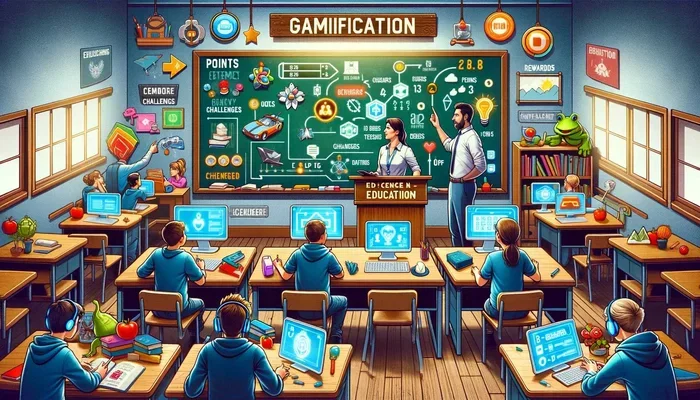
Gamification in education means using game-like elements—such as points, badges, and leaderboards—in learning to make it more engaging and fun. It taps into what naturally motivates students, turning lessons into interactive experiences that drive participation and improve student engagement. This guide covers everything from core game mechanics to real-world examples and practical tips you can use today.
Key Takeaways
- Boosts Student Engagement: Game mechanics like points and badges make learning feel exciting and rewarding.
- Improves Motivation: Gamification taps into intrinsic and extrinsic motivation, keeping students eager to learn.
- Enhances Learning Outcomes: Interactive and game-based approaches help students retain information better.
- Easy to Implement: You don’t need expensive tech—simple tools and creative ideas go a long way.
- Supports All Ages: From elementary school to higher education, gamification works across all levels.
- Measurable Results: Teachers can track progress through game-based metrics and feedback loops.
📑 Table of Contents
- What Is Gamification in Education?
- Core Game Mechanics in the Classroom
- Benefits of Gamification in Education
- Real-World Examples of Gamification in Education
- How to Implement Gamification in Your Classroom or Course
- Common Mistakes to Avoid
- Expert Insights on Gamification in Education
- The Future of Gamification in Education
- Conclusion
What Is Gamification in Education?
Let’s start with the basics. Gamification in education is the practice of applying game design elements to learning environments. The goal? To make education more engaging, interactive, and fun for students of all ages.
Think about what makes games so addictive. They give you clear goals, instant feedback, and a sense of progress. Now imagine bringing those same elements into a classroom or online course. That is gamification in a nutshell.
It is important to understand that gamification is not about turning every lesson into a video game. It is about borrowing smart strategies from games and using them to enhance the learning experience. Whether you are a teacher looking for new ways to reach your students or a learner wanting more motivation, gamification in education offers powerful tools.
Over the past decade, this approach has grown rapidly. Schools, universities, and online learning platforms have all started using game-based learning techniques. The results speak for themselves—students participate more, retain information longer, and actually enjoy the process of learning.
Why Gamification Works
The science behind gamification is fascinating. Our brains are wired to respond to rewards, challenges, and progress. When you introduce game mechanics into education, you activate the same neural pathways that make games so compelling.
Dopamine—the feel-good chemical in our brain—gets released when we achieve a goal or earn a reward. This is exactly what happens when a student completes a quiz and earns a badge. The brain starts associating learning with positive feelings, which builds a habit of engagement over time.
Another key factor is the sense of autonomy. Games let players make choices. When students feel they have control over their learning path, they become more invested in the outcome. This is why gamification in education works so well across different age groups and subjects.
Core Game Mechanics in the Classroom
Now let us look at the building blocks of gamification. These are the specific elements that teachers and designers use to create engaging learning experiences.
Points and Scoring Systems
Points are the most basic game mechanic. Students earn points for completing assignments, participating in discussions, or answering questions correctly. These points provide immediate feedback and a clear sense of progress.
Teachers can use points to create a reward system that motivates students to stay on track. For example, each completed homework assignment might be worth 10 points, while class participation earns 5 points. At the end of the term, students can redeem their points for small rewards or privileges.
Badges and Achievements
Badges are visual symbols of accomplishment. They serve as tangible proof that a student has mastered a skill or reached a milestone. Think of them like digital trophies that students can display with pride.
Badges work especially well because they appeal to our natural desire for recognition. When a student earns a “Math Master” badge or a “Creative Writer” badge, it boosts their confidence and encourages them to keep going. You can find great examples of how descriptive language enhances these achievements by exploring similes for education or metaphors for education to add creative flair to your badge descriptions.
Leaderboards
Leaderboards create a sense of healthy competition. They display rankings based on points, badges, or other metrics. Students can see how they compare to their peers, which drives motivation.
However, leaderboards need to be used carefully. For some students, competition can feel stressful rather than motivating. The key is to focus on personal growth rather than just ranking. You might create leaderboards that track improvement over time instead of absolute scores.
Levels and Progression
Breaking learning content into levels gives students a clear path forward. Each level represents a new challenge or milestone. As students progress, the difficulty can increase gradually, keeping them engaged without overwhelming them.
This structure mirrors how most games work—you start easy and gradually face harder challenges. In education, this approach helps students build confidence as they master each level before moving on to the next.
Challenges and Quests
Turning assignments into quests adds an element of adventure to learning. Instead of simply saying “complete chapter five,” a teacher might present it as “Embark on a quest to unlock the secrets of fractions.” This small shift in language makes a big difference in how students perceive the task.
Challenges can be individual or team-based. Group quests encourage collaboration and peer learning, which are essential skills for the modern world.
Benefits of Gamification in Education
The advantages of gamification in education go far beyond just making things more fun. Let us explore the real, measurable benefits that educators and students experience.
Increased Student Engagement
This is the most obvious benefit—and arguably the most important. When learning feels like a game, students pay more attention and participate more actively. Boring lessons suddenly become exciting challenges that students want to tackle.
Engagement leads to more time on task. The more time students spend actively engaging with material, the more they learn. Gamification in education creates a virtuous cycle where engagement breeds deeper learning.
Improved Motivation
Motivation is the engine of learning. Without it, even the best curriculum will fall flat. Gamification feeds both intrinsic and extrinsic motivation.
Extrinsic motivation comes from external rewards like points and badges. Intrinsic motivation comes from the joy of learning itself. The best gamified learning environments balance both, creating experiences that are rewarding on the outside and fulfilling on the inside.
Better Knowledge Retention
When students actively participate in their learning, they remember more. Game mechanics encourage repetition and practice in ways that feel natural rather than tedious.
For instance, replaying a level to master a concept feels like fun, notdrudgery. This repeated exposure without boredom is one of the hidden superpowers of game-based learning.
Immediate Feedback
Games give players instant feedback—you know right away if you succeeded or need to try again. Education can do the same. Digital gamification tools provide real-time results on quizzes and assignments.
This immediate feedback loop helps students identify gaps in their understanding quickly. Teachers also benefit, as they can spot struggling students faster and intervene sooner.
Development of Problem-Solving Skills
Games are essentially a series of problems to solve. When students navigate gamified learning environments, they naturally develop critical thinking and problem-solving abilities.
These skills transfer far beyond the classroom. Students who regularly engage with gamified challenges become better at tackling real-world problems with creativity and persistence.
Real-World Examples of Gamification in Education
Theory is great, but seeing how gamification works in practice helps bring it all to life. Here are some proven examples that show the power of this approach.
Kahoot! and Quiz-Based Games
Kahoot! is one of the most popular educational games platforms in the world. Teachers create quizzes that students answer using their phones or laptops. The fast-paced, competitive format keeps students on the edge of their seats.
What makes Kahoot! so effective is its simplicity. Any subject, any age group—just create a quiz and start playing. The instant leaderboard and music add excitement that traditional quizzes simply cannot match.
Classcraft
Classcraft turns your entire classroom into a role-playing game. Students create characters and earn experience points for positive behaviors like helping classmates or completing homework on time.
Teams work together to level up their characters. This creates a sense of community and shared purpose that transforms classroom dynamics. Teachers report that Classcraft has significantly reduced behavioral issues and increased collaboration.
Duolingo
Duolingo is a language-learning app that masterfully uses gamification in education. Users earn points for completing lessons, maintain streaks for daily practice, and level up as their skills improve.
The app’s success proves that gamification works for self-directed learning too. Millions of people stay motivated to learn new languages because the experience feels like playing a game, not studying.
Minecraft Education Edition
Minecraft has found its way into classrooms around the world. Teachers use it to teach everything from history to math to coding. Students build structures, solve puzzles, and collaborate on projects—all within a familiar and beloved game environment.
The open-ended nature of Minecraft allows for incredible creativity. Students learn by doing, which is one of the most powerful ways to acquire new knowledge.
How to Implement Gamification in Your Classroom or Course
Ready to try gamification yourself? Here is a practical guide to getting started.
Start Small
You do not need to overhaul your entire curriculum overnight. Start with one element—maybe a simple points system for participation or a badge for completing a tough assignment.
Small wins build confidence. Once you see how students respond, you can gradually add more game mechanics. The key is to keep it manageable and sustainable.
Know Your Audience
Different age groups respond to different game mechanics. Younger students love badges and tangible rewards. Older students might prefer leaderboards and progression systems that feel more mature.
Take time to understand what motivates your specific students. Some thrive on competition, while others prefer cooperative challenges. Tailoring your approach makes gamified learning far more effective.
Align Game Mechanics with Learning Goals
Every game element you introduce should serve a clear educational purpose. Points should track meaningful progress. Badges should recognize genuine achievements. Leaderboards should encourage growth, not just winning.
When game mechanics align with learning objectives, they become powerful tools rather than distractions. Always ask yourself: “Does this element help students learn better?” If the answer is no, reconsider its use.
Use Technology Wisely
There are countless tools and platforms designed for gamification in education. From Kahoot! to Classcraft to ClassDojo, the options are vast. Choose tools that fit your budget, your technical comfort level, and your students’ needs.
You do not need fancy software either. A simple spreadsheet tracking points and a whiteboard displaying badges can be just as effective. Technology is a tool, not a requirement.
Balance Competition and Collaboration
One of the biggest mistakes teachers make is focusing too heavily on competition. While leaderboards and rankings can motivate some students, they can discourage others.
Blend competitive elements with cooperative ones. Team challenges, group quests, and peer recognition systems ensure that everyone feels included and valued. The best gamified classroom environments celebrate both individual achievement and teamwork.
Gather Feedback and Iterate
Ask your students what they think. Do they enjoy the game elements? Are they motivated by the rewards? What would they change?
Gamification is not a set-it-and-forget-it strategy. It evolves based on feedback. Regular check-ins with students help you refine your approach and keep things fresh and engaging.
Common Mistakes to Avoid
Even with the best intentions, gamification can go wrong. Here are some pitfalls to watch out for.
- Overcomplicating the system. If the game mechanics are too confusing, students will lose interest. Keep it simple and intuitive.
- Focusing only on extrinsic rewards. Points and badges are great, but they should not replace genuine curiosity and love of learning.
- Ignoring struggling students. Make sure your gamified system supports all learners, not just the high achievers. Consider progress-based rewards rather than just absolute performance.
- Neglecting the learning goal. The game serves the learning—not the other way around. Never let flashy mechanics overshadow actual educational content.
- Using rewards inconsistently. If students do not know what earns them points or badges, the system loses its power. Be clear and consistent with your expectations.
To add creative depth to your gamified content, consider incorporating figurative language that resonates with learners. Check out our collection of idioms for education to find colorful expressions that bring your challenges and quests to life.
Expert Insights on Gamification in Education
We spoke with several educators who have successfully implemented gamification in education in their classrooms. Here is what they had to say.
Sarah, a middle school science teacher: “I started using a simple point system for lab participation, and the change was immediate. Students who used to dread lab days now beg to stay after class to finish experiments. Gamification turned my classroom around.”
Marcus, a university online course designer: “My students were dropping out at high rates. After adding badges and progress tracking, completion rates jumped by 40 percent. The students told me it made them feel like they were actually achieving something, not just checking boxes.”
Lina, an elementary school teacher: “I use a quest-based system where each week has a theme and a final challenge. The kids love it. They remind me every Monday about what quest we are starting next. That level of excitement about learning is something I never thought I would see.”
These stories highlight a common thread—gamification in education works when it is done thoughtfully. The key is to keep learning at the center and use game elements to support, not overshadow, the educational experience.
The Future of Gamification in Education
The future looks bright for gamified learning. As technology continues to advance, we can expect even more immersive and personalized experiences. Virtual reality, augmented reality, and artificial intelligence are already beginning to shape the next generation of educational games.
Imagine putting on a VR headset and exploring ancient Rome as part of a history lesson. Or using AI to create personalized quests that adapt to each student’s learning pace and style. These technologies will make game-based learning more powerful and accessible than ever before.
But even without high-tech tools, the core principles of gamification remain the same. Make learning engaging. Give students clear goals and meaningful feedback. Celebrate their progress. And always keep the focus on genuine understanding, not just points on a screen.
As more educators discover the power of gamification in education, we can expect to see classrooms transform into dynamic, interactive spaces where students are excited to learn and eager to grow.
Conclusion
Gamification in education is more than just a trend—it is a proven strategy that transforms how students learn and engage. By incorporating game mechanics like points, badges, leaderboards, and quests, educators can create learning experiences that are both effective and enjoyable.
The benefits are clear: higher engagement, better motivation, improved retention, and stronger problem-solving skills. Whether you are a teacher, a parent, or a lifelong learner, understanding and applying gamification in education can make a real difference.
Start small, stay focused on learning goals, and always listen to your students. With the right approach, you can turn any lesson into an adventure that students will love.
Frequently Asked Questions
What does gamification mean in education?
Gamification in education means using game-like elements such as points, badges, and leaderboards in learning environments to increase engagement and motivation. It applies game design strategies to make education more interactive and enjoyable for students.
Is gamification the same as game-based learning?
No, they are related but different. Gamification adds game elements to existing learning activities, while game-based learning uses actual games as the learning tool. Both approaches fall under the broader umbrella of gamification in education and aim to improve student outcomes.
What age groups benefit most from gamification?
Gamification works across all age groups, from elementary school to university and beyond. Younger students often respond well to badges and visual rewards, while older students may prefer progression systems and challenges. The key is to tailor the approach to the specific audience.
Can gamification replace traditional teaching methods?
Gamification is best used as a supplement to traditional teaching, not a replacement. It enhances existing methods by adding engagement and motivation. The most effective educators blend gamified elements with solid instructional practices for the best results.
What tools are best for implementing gamification?
Popular tools include Kahoot!, Classcraft, Duolingo, and ClassDojo. However, you can also implement basic gamification with simple tools like spreadsheets and classroom reward charts. The best tool is one that fits your budget, your students, and your learning goals.
Are there any downsides to gamification in the classroom?
When done poorly, gamification can create unhealthy competition or over-rely on external rewards. Some students may feel pressured by leaderboards. The key is to balance competition with collaboration and ensure that the focus remains on genuine learning rather than just earning points.


