
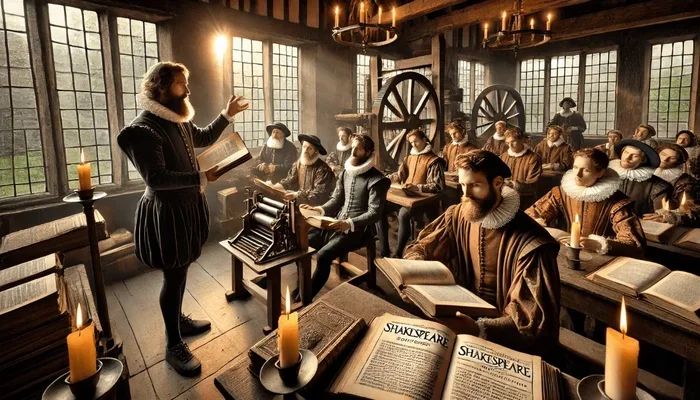
Shakespeare’s education began at King’s New School in Stratford-upon-Avon, where he studied Latin, classical literature, and rhetoric. His grammar school training gave him the tools to become one of history’s greatest writers. Understanding his educational background helps us see how a young boy from a modest town grew into a literary legend.
Have you ever wondered how a boy from a small English town became the greatest writer in the English language? The answer starts with Shakespeare’s education. His journey from a student at a local grammar school to a world-famous playwright is nothing short of remarkable. Let’s dive into what we know about his schooling and how it fueled his incredible talent.
Understanding Shakespeare’s education gives us a window into his mind. It explains why his writing style was so rich, why his wordplay was so clever, and why his literary genius still captivates us today. Whether you are a student, a teacher, or just a curious reader, this story is worth knowing.
Key Takeaways
- Shakespeare attended King’s New School: This grammar school in Stratford provided a rigorous classical education focused on Latin and rhetoric.
- His curriculum was surprisingly advanced: Students studied classical texts, memorized speeches, and practiced dramatic performances daily.
- Elizabethan education shaped his writing style: The teaching methods of his time directly influenced how he crafted plays and poems.
- No university degree did not hold him back: Shakespeare became a genius through self-learning and real-world experience.
- His education explains his mastery of language: Latin training gave him deep wordplay skills that shine through in every work.
- He used his schooling in practical ways: Theatrical performances at school likely sparked his lifelong passion for drama.
📑 Table of Contents
- Shakespeare’s Early Life and School Days
- The Grammar School Curriculum
- How Elizabethan Education Shaped His Writing
- Shakespeare’s Self-Education and Literary Influences
- The Debate: Did Shakespeare Have Formal Education?
- How His Education Influenced His Genius
- Common Misconceptions About Shakespeare’s Education
- Key Takeaways
- Conclusion
Shakespeare’s Early Life and School Days
William Shakespeare was born in 1564 in Stratford-upon-Avon, England. His father, John Shakespeare, was a glove maker and a prominent town figure. His mother, Mary Arden, came from a wealthy farming family. The family was comfortable but not wealthy by any means.
Young William likely started his education around age seven. At that time, Elizabethan education was structured and disciplined. Boys from modest families like Shakespeare’s had access to local grammar schools. These schools were the backbone of Renaissance learning in England.
The World of Tudor Education
The Tudor education system was tough but effective. Tudor education system schools focused heavily on discipline and memorization. Students spent long hours reciting Latin grammar rules and reading classical texts. The goal was to produce well-spoken young men ready for careers in law, church, or government.
Shakespeare’s family was considered middle class. His father held an important position as an alderman in Stratford. This status meant young William qualified for a free spot at the local school. Not every boy got this opportunity in the 1500s.
The Grammar School Curriculum
Shakespeare almost certainly attended King’s New School in Stratford. This was a grammar school run by the Stratford Guild. The curriculum was intense and focused on one main language: Latin.
Latin Was the Heart of Learning
Latin studies dominated the school day. Students began with basic grammar and worked their way up to complex translations. By the time a student reached Shakespeare’s age, they were reading works by Ovid, Virgil, and Cicero in the original Latin.
Here is what a typical day might have looked like for young Shakespeare:
- Early morning: Memorizing Latin verbs and declensions
- Mid-morning: Translating classical passages from Latin to English
- Afternoon: Reading and analyzing classical literature
- Late afternoon: Practicing rhetoric and public speaking
- Evening: Memorizing speeches and poems
The grammar school curriculum was designed to train the mind. Students learned to think logically, argue persuasively, and express themselves clearly. These skills became the foundation of Shakespeare’s writing style.
Rhetoric and Public Speaking
Rhetorical training was a major part of the curriculum. Students practiced speaking in front of their peers. They learned how to use persuasion, emotion, and logic in their arguments. This training explains why Shakespeare’s dialogue feels so alive and natural.
Imagine a teenage Shakespeare standing in front of his classmates, delivering a speech in Latin. That experience gave him confidence and skill. It shaped the way he wrote characters who spoke with power and conviction.
How Elizabethan Education Shaped His Writing
The Elizabethan education system did more than teach Latin. It taught students how to think creatively and express complex ideas. This environment was perfect for a young boy with Shakespeare’s imagination.
Classical Literature as Inspiration
Students at grammar schools read classical literature from ancient Greece and Rome. They studied myths, histories, and moral tales. These stories gave Shakespeare a deep well of themes and characters to draw from.
For example, Shakespeare’s plays like Julius Caesar and Antony and Cleopatra show his deep knowledge of Roman history. His classical education gave him the background to write these stories with authenticity and depth.
The Power of Metaphor and Simile
One of the most striking things about Shakespeare’s writing is his use of figurative language. He was a master of metaphor and simile. His Shakespeare’s writing style is filled with vivid comparisons that make his work unforgettable.
His training in rhetoric taught him how to use these tools effectively. The metaphors for education he later employed in his plays reflect the very techniques he learned as a student. If you want to explore how metaphors for education work in teaching, you can check out this helpful guide on metaphors for education.
Similarly, Shakespeare’s use of similes was extraordinary. He compared love to summer’s day, jealousy to a green-eyed monster, and life to a brief candle. These comparisons came naturally to him because of his rhetorical training.
His understanding of similes for education and how comparisons aid learning was likely sharpened during his school years. To learn more about how similes work in educational contexts, visit this resource on similes for education.
Idioms and Phrases We Still Use Today
Shakespeare is credited with inventing hundreds of words and phrases. Many of these started as classroom exercises or stage directions. His literary genius turned simple ideas into timeless expressions.
Phrases like “break the ice,” “wild goose chase,” and “heart of gold” all come from his plays. His educational background gave him the linguistic tools to create these expressions. The idioms for education that emerged from his work continue to influence how we teach and communicate today. You can explore more about how these expressions shape learning in this guide on idioms for education.
Shakespeare’s Self-Education and Literary Influences
While formal schooling gave Shakespeare a strong foundation, he continued learning throughout his life. His self-education played a huge role in his development as a writer.
Learning from the Theater
Shakespeare moved to London in his late twenties. There, he immersed himself in the theater world. He watched performances, acted in plays, and learned from other writers. The London theater scene was his real university.
He read widely and drew inspiration from many sources. History books, travel narratives, and earlier plays all fed his creativity. His educational background gave him the reading skills to absorb all of this information quickly.
Collaboration with Other Writers
Shakespeare did not work in isolation. He collaborated with other playwrights like Christopher Marlowe and Ben Jonson. These interactions sharpened his skills and exposed him to new ideas. The Elizabethan era schooling he received taught him how to learn from others, too.
This collaborative spirit is something his grammar school training encouraged. Students were expected to debate, discuss, and build on each other’s ideas. Shakespeare carried this approach into his writing career.
The Debate: Did Shakespeare Have Formal Education?
Over the years, some scholars have questioned whether Shakespeare received a proper education. There are no surviving records of his attending university. This fact has fueled speculation among some researchers.
What We Know for Sure
Here are the facts we can confirm about Shakespeare’s education:
- He attended King’s New School in Stratford. Records show his father paid fees for his attendance.
- The school followed a standard Elizabethan curriculum. It focused on Latin, classical literature, and rhetoric.
- Shakespeare’s works show deep classical knowledge. His plays reference Greek and Roman texts extensively.
- His language skills were exceptional. He wrote in multiple registers, from common speech to elevated poetry.
Why the Debate Persists
Some people find it hard to believe that a man without a university degree could write such complex works. However, this view underestimates the power of grammar school education in the 1500s. The training Shakespeare received was rigorous and comprehensive.
Many great writers throughout history did not attend university. Their educational background came from life experience, wide reading, and dedicated practice. Shakespeare is the perfect example of this truth.
How His Education Influenced His Genius
Now let us connect the dots. How did Shakespeare’s education shape the man and writer we know today?
Mastery of Language
Latin studies gave Shakespeare a deep understanding of language structure. He knew how words worked, how they could be twisted, and how they could move people. This mastery is evident in every line he wrote.
His wordplay often relies on double meanings in Latin and English. He could switch between languages and registers effortlessly. This skill came directly from his years of classical education.
Understanding of Human Nature
The classical texts Shakespeare studied explored human emotions and motivations. Reading about heroes, villains, and tragic figures gave him insight into human behavior. This understanding is why his characters feel so real, even today.
His literary genius was not just about words. It was about understanding people. His educational background gave him the tools to explore the human condition deeply.
Dramatic Structure and Performance
Shakespeare’s school likely included regular dramatic performances. Students acted out scenes from classical plays. This early exposure to theater shaped his understanding of dramatic structure.
He knew how to build tension, create suspense, and deliver a powerful ending. These skills did not come from nowhere. They were nurtured by the Elizabethan era schooling he received as a boy.
Quick Tip: If you want to understand Shakespeare better, try reading his plays aloud. His writing style was meant to be performed, not just read silently. The rhythm and sound of his language come alive when spoken.
Common Misconceptions About Shakespeare’s Education
There are several myths surrounding Shakespeare’s education. Let us clear up a few of the most common ones.
- Myth: Shakespeare was uneducated because he did not go to university.
- Fact: Grammar school in the 1500s was a serious and advanced institution. His training was rigorous and respected.
- Myth: Shakespeare could not have written such complex works without formal higher education.
- Fact: Many successful writers throughout history were self-taught or had only grammar school education. His educational background was more than sufficient.
- Myth: Shakespeare learned everything he knew from books alone.
- Fact: His real-world experiences in London’s theater scene were just as important as his formal schooling.
Key Takeaways
- Shakespeare attended King’s New School in Stratford: This grammar school provided a rigorous classical education focused on Latin and rhetoric.
- His curriculum was surprisingly advanced: Students studied classical texts, memorized speeches, and practiced dramatic performances daily.
- Elizabethan education shaped his writing style: The teaching methods of his time directly influenced how he crafted plays and poems.
- No university degree did not hold him back: Shakespeare became a genius through self-learning and real-world experience.
- His education explains his mastery of language: Latin training gave him deep wordplay skills that shine through in every work.
- He used his schooling in practical ways: Theatrical performances at school likely sparked his lifelong passion for drama.
Conclusion
Shakespeare’s education was the foundation upon which his genius was built. His time at King’s New School gave him the linguistic tools, classical knowledge, and dramatic instincts that made him extraordinary. The grammar school curriculum of the Elizabethan era was demanding, but it produced writers and thinkers of the highest caliber.
We may never know every detail of his school days. But the evidence is clear. His educational background shaped his writing style, fueled his literary genius, and gave him the voice that still resonates with audiences around the world.
So the next time you read a Shakespeare play or watch one performed, remember the boy from Stratford who sat in a grammar school classroom, dreaming of stories yet to be told. His education was simple in many ways. But the results were anything but simple.
Shakespeare’s education reminds us that greatness does not always come from fancy institutions. Sometimes, it comes from a good teacher, a strong curriculum, and a curious mind willing to learn. That is a lesson worth remembering for all of us.
Frequently Asked Questions
Where did Shakespeare go to school?
Shakespeare attended King’s New School in Stratford-upon-Avon. This was a local grammar school that provided a classical education focused on Latin, rhetoric, and classical literature. The school was free for boys whose families met certain status requirements.
Did Shakespeare go to university?
No, there is no evidence that Shakespeare attended university. His formal education ended at the grammar school level. However, his grammar school education was thorough, and he continued learning throughout his life through reading and theater experience.
How did Latin education influence Shakespeare’s writing?
Latin studies gave Shakespeare a deep understanding of language structure, wordplay, and rhetoric. Many of his wordplay techniques rely on Latin roots and double meanings. His classical education also exposed him to the themes and stories that appear throughout his plays.
What subjects did Shakespeare study at grammar school?
Students at Elizabethan grammar schools studied Latin grammar, classical literature, rhetoric, and public speaking. They memorized speeches, translated texts, and often performed dramatic scenes. The curriculum was designed to produce eloquent and educated young men.
Could Shakespeare’s education really have produced such great works?
Absolutely. The Elizabethan education system was rigorous and effective. Many great writers and thinkers emerged from grammar school education. Shakespeare’s combination of formal training, wide reading, and real-world theater experience made him uniquely gifted.
What role did theater play in Shakespeare’s education?
Theater was a vital part of Elizabethan era schooling. Students regularly performed plays and speeches. This early exposure to drama gave Shakespeare practical skills in storytelling, character development, and audience engagement that he used throughout his career.


