
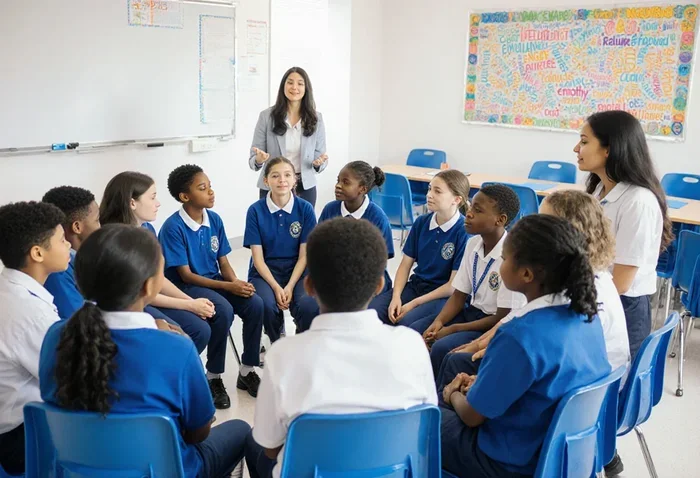
SEL in education stands for Social and Emotional Learning — a framework that helps students build essential life skills like empathy, self-awareness, and responsible decision-making. It is not just a trend; research shows it improves grades, behavior, and mental health. Schools that embrace SEL in education create safer, more supportive environments where every child can thrive. This guide breaks down the five core competencies, real-world benefits, and simple strategies you can start using today.
Key Takeaways
- SEL in education teaches five core competencies: self-awareness, self-management, social awareness, relationship skills, and responsible decision-making.
- It boosts academic performance: students with strong social-emotional skills tend to score higher on tests and stay engaged in class.
- SEL improves classroom climate: teachers report fewer behavioral issues and stronger peer connections when SEL practices are in place.
- It supports mental health: emotional regulation tools help students manage stress, anxiety, and conflict in healthy ways.
- SEL benefits last a lifetime: these skills carry into adulthood, shaping better workers, partners, and community members.
- You do not need a fancy program: simple daily habits like active listening and reflection can bring SEL to any classroom.
📑 Table of Contents
What Is SEL in Education?
SEL stands for Social and Emotional Learning. It is a teaching approach that focuses on more than just academics. SEL in education helps students understand their emotions, build healthy relationships, and make thoughtful choices. Think of it as the hidden curriculum that shapes how kids interact with the world every single day.
You might already use some SEL techniques without realizing it. When you ask a student how they feel before a test, you are building self-awareness. When you role-play a conflict at recess, you are teaching relationship skills. SEL in education simply makes these practices intentional and consistent.
The framework has been around for decades, but it has gained serious momentum in recent years. Educators, parents, and policymakers now recognize that academic success means little if a student cannot manage stress or work with others. That is why SEL in education has become a cornerstone of modern teaching.
The Five Core Competencies of SEL
The Collaborative for Academic, Social, and Emotional Learning (CASEL) identifies five core areas. Each one plays a vital role in a child’s development.
1. Self-Awareness
This is the ability to recognize your own emotions, values, and strengths. A self-aware student can say, “I feel frustrated right now” instead of acting out. It also involves understanding how your feelings connect to your behavior.
2. Self-Management
Self-management means controlling your impulses and regulating your emotions. Students who master this skill can set goals, stay organized, and handle stress without shutting down. It is one of the most powerful predictors of long-term success.
3. Social Awareness
Social awareness is the ability to understand and empathize with others. It includes recognizing social cues, appreciating diversity, and feeling compassion for people from different backgrounds. This competency helps students build inclusive classrooms.
4. Relationship Skills
Relationship skills cover communication, cooperation, and conflict resolution. Students learn how to listen actively, ask for help, and work as part of a team. These skills are the foundation of healthy friendships and future workplaces.
5. Responsible Decision-Making
This competency teaches students to make ethical, constructive choices. It involves weighing consequences, considering others’ feelings, and reflecting on outcomes. Responsible decision-making applies to everything from classroom rules to real-life dilemmas.
Why SEL in Education Matters So Much
You might wonder why schools should spend precious time on emotional skills when there is so much content to cover. The answer is simple: SEL in education creates the conditions for deeper learning.
When students feel safe and understood, their brains are ready to absorb new information. Anxiety and emotional turmoil actually block cognitive function. By addressing the emotional side first, teachers unlock academic potential that traditional instruction alone cannot reach.
Research backs this up. Studies show that students who participate in SEL in education programs see an average 11 percentile gain in academic achievement. That is a massive impact for a relatively simple shift in classroom practice.
Better Mental Health for Students
Childhood mental health challenges are rising. Anxiety, depression, and loneliness affect millions of young people. SEL in education gives students practical tools to cope with these struggles. They learn to name their emotions, seek support, and use calming strategies before problems escalate.
Teachers also benefit. When classrooms have a strong SEL foundation, educators spend less time managing behavior and more time teaching. The entire school culture shifts toward positivity and respect.
Stronger Peer Relationships
Peer conflict is one of the biggest disruptions in any classroom. SEL in education equips students with the vocabulary and skills to resolve disagreements peacefully. Instead of resorting to bullying or withdrawal, students learn to communicate their needs and listen to others.
Think about it this way. Just as we use similes for education to make abstract ideas more relatable, SEL in education gives students concrete frameworks for understanding complex social situations.
How SEL in Education Looks in the Classroom
You do not need a special program or expensive materials to bring SEL in education into your teaching. Small, consistent actions make the biggest difference.
Morning Meetings
Starting the day with a brief check-in helps students connect. Teachers might ask, “How are you feeling today, and why?” This simple routine builds self-awareness and creates a sense of belonging.
Emotion Check-Ins
Giving students a quick way to label their emotions — through a scale, a color chart, or a journal prompt — reinforces self-management. Over time, students become more skilled at recognizing and regulating their feelings.
Collaborative Projects
Group work naturally builds relationship skills. When students work together on a project, they practice communication, compromise, and shared responsibility. Teachers can scaffold this by assigning roles and modeling respectful disagreement.
Reflection Time
Ending the day with a reflection question encourages responsible decision-making. Students might discuss what went well, what they would change, and how their choices affected others. This habit builds metacognition and emotional maturity.
Using Creative Language to Teach SEL Concepts
One powerful way to deepen SEL in education is through creative language exercises. When students explore metaphors for education, they develop richer emotional vocabulary. For example, asking “What does confidence feel like inside?” invites metaphorical thinking that strengthens self-awareness.
Similarly, teaching common idioms for education helps students understand figurative language in social contexts. Phrases like “walking in someone else’s shoes” directly connect to empathy and social awareness. These language activities make SEL in education engaging and memorable.
The Science Behind SEL in Education
SEL in education is not just good intuition — it is backed by solid science. Neuroscience research shows that the prefrontal cortex, which governs emotional regulation and decision-making, continues developing well into a person’s twenties. Young people need guided practice to strengthen these neural pathways.
When students regularly engage in SEL in education activities, they build what psychologists call executive function skills. These include working memory, flexible thinking, and inhibitory control. All three are essential for learning and life success.
Studies from the Collaborative for Academic, Social, and Emotional Learning (CASEL) confirm that SEL in education produces lasting results. Students who participated in quality programs showed improved attitudes, fewer conduct problems, and reduced emotional distress — even years after the intervention ended.
Long-Term Benefits Beyond School
The skills taught through SEL in education do not disappear when students graduate. They form the foundation for healthy adult relationships, workplace success, and civic engagement. People with strong emotional intelligence tend to earn higher incomes, maintain stable relationships, and report greater life satisfaction.
In a rapidly changing world, technical knowledge alone is not enough. Employers consistently rank communication, teamwork, and adaptability as top skills. SEL in education directly develops all of these competencies.
Common Challenges and How to Overcome Them
Implementing SEL in education is not always smooth. Teachers face real obstacles, from tight schedules to skepticism from colleagues. Here are the most common challenges and practical solutions.
Challenge 1: No Time in the Curriculum
It is easy to feel like SEL takes away from academic instruction. In reality, SEL in education saves time by reducing disruptions and improving focus. Even five minutes of daily practice creates a calmer, more productive classroom.
Challenge 2: Lack of Training
Many teachers feel unprepared to teach emotional skills. The good news is that you do not need a degree in psychology. Start small. Model emotional language yourself. Read aloud books that explore feelings. Over time, your comfort will grow.
Challenge 3: Student Resistance
Some students, especially older ones, may resist SEL activities. Make them optional at first. Use games, discussions, and real-world scenarios to make the content feel relevant. SEL in education works best when students see it as empowering, not preachy.
Quick Tips for Getting Started
- Start with one competency at a time. Do not try to teach everything at once.
- Use feeling charts or emotion wheels to help students name their emotions.
- Practice active listening yourself — students learn by watching, not just listening.
- Celebrate emotional growth as enthusiastically as academic growth.
- Partner with families to reinforce SEL in education at home.
Key Takeaways
- SEL in education is a framework for teaching social and emotional skills alongside academics, and it has been proven to improve student outcomes across the board.
- The five core competencies — self-awareness, self-management, social awareness, relationship skills, and responsible decision-making provide a clear roadmap for educators.
- SEL in education strengthens mental health, reduces behavioral issues, and creates a positive classroom climate where every student feels valued.
- You can start small with morning meetings, emotion check-ins, and reflection time — no special program required.
- The benefits of SEL in education extend far beyond school, shaping emotionally intelligent adults who contribute positively to society.
- Creative language activities like exploring metaphors, similes, and idioms make SEL in education engaging and deeply effective.
Conclusion
SEL in education is more than a teaching trend — it is a fundamental shift toward educating the whole child. When we prioritize emotional growth alongside academic instruction, we give students the tools they need to succeed in school and in life. The five core competencies provide a clear, research-backed framework that any educator can implement.
The evidence is overwhelming. Students who learn self-awareness, empathy, and responsible decision-making perform better academically, form stronger relationships, and enjoy better mental health. SEL in education is not a luxury — it is a necessity in today’s classrooms.
You do not need to overhaul your entire teaching practice overnight. Start with one strategy. Try a morning check-in. Introduce an emotion vocabulary wall. Watch how your classroom transforms. SEL in education is about progress, not perfection. And every small step you take creates a ripple effect that shapes the lives of your students for years to come.
Frequently Asked Questions
What does SEL stand for in education?
SEL stands for Social and Emotional Learning. It is a framework that teaches students skills like self-awareness, empathy, and responsible decision-making alongside traditional academic subjects.
Why is SEL important in schools?
SEL in education matters because it addresses the emotional and social needs of students, which directly impact their ability to learn. Research shows that strong social-emotional skills improve grades, behavior, and long-term mental health.
What are the five core competencies of SEL?
The five competencies are self-awareness, self-management, social awareness, relationship skills, and responsible decision-making. Together, they form the foundation of emotional intelligence in young people.
Can SEL be taught at any age?
Yes, SEL in education can be adapted for all age groups, from early childhood through high school. The core concepts remain the same, but the activities and language adjust to match developmental levels.
Do I need a special program to teach SEL?
No, you do not need a formal program. Simple daily practices like emotion check-ins, morning meetings, and reflection questions can bring SEL into any classroom naturally and effectively.
How does SEL affect academic performance?
Studies show that SEL in education programs lead to an average 11 percentile gain in academic achievement. When students feel emotionally safe and supported, their brains are better equipped to focus, retain information, and engage in learning.


