
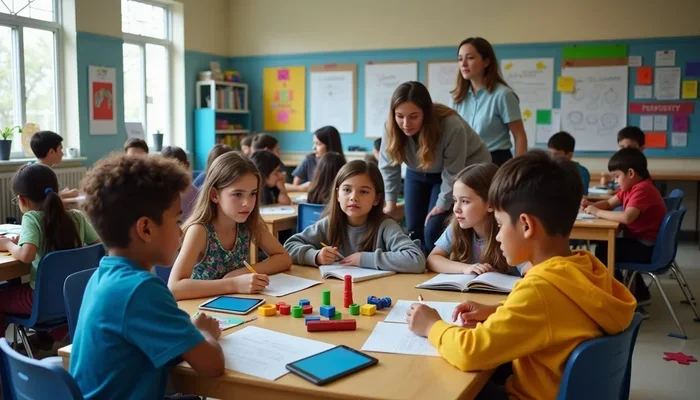
EL Education is a student-centered learning model that uses project-based learning, crew culture, and real-world expeditions to deepen engagement and build critical thinking skills. It transforms traditional classrooms into active, collaborative spaces where students take ownership of their learning. This model is reshaping education by putting character development and academic rigor at the heart of every lesson.
EL Education is not just another educational trend. It is a complete school model that reimagines how students learn and how teachers teach. Built on decades of research and classroom practice, this approach puts students at the center of every lesson. It replaces passive listening with active exploration, group work, and real-world problem-solving.
If you have ever wondered why some classrooms feel electric with energy while others feel flat, EL Education holds the answer. It creates learning environments where curiosity drives everything. Students leave school not just with knowledge but with the confidence to use it. This is what makes EL Education different from traditional models.
In the sections below, we will break down exactly what this model is, how it works, and why so many schools are adopting it. You will learn about its core principles, see real examples of classroom transformation, and discover how it benefits both students and teachers. Whether you are an educator, parent, or simply curious about modern instructional practices, this guide has something valuable for you.
Key Takeaways
- EL Education is a comprehensive school model focused on deeper learning and student engagement
- Crew culture builds strong relationships and a sense of community in every classroom
- Learning expeditions connect students to real-world challenges and hands-on projects
- Character education is woven into every aspect of the EL Education framework
- Performance assessments replace traditional testing with meaningful, authentic evaluation
- Teacher development is a core pillar, ensuring educators grow alongside their students
- Classroom transformation happens when students become active creators, not passive listeners
📑 Table of Contents
What Is EL Education?
EL Education is a comprehensive school model developed from the Outward Bound tradition. It combines rigorous academics with character development and collaborative learning. The model was founded on the belief that all students can achieve at high levels when given the right support and structure.
At its core, EL Education focuses on three pillars. First, it emphasizes deeper learning over surface-level memorization. Second, it builds character education into everyday school life. Third, it promotes active learning through hands-on projects and expeditions. Together, these pillars create a framework that prepares students for success in college, career, and life.
The model is used in thousands of schools across the United States. It serves diverse communities and aims to close gaps in educational equity. Schools that adopt the EL Education curriculum framework commit to a shared vision of what great teaching and learning look like.
Who Created EL Education?
EL Education grew out of a partnership between Outward Bound USA and Harvard Graduate School of Education. It was officially launched in 1991. The founders believed that adventure and challenge could spark deeper growth in young people. Over the decades, the model has evolved but kept its core focus on equity, engagement, and excellence.
Core Principles of EL Education
Understanding the principles behind EL Education helps you see why it works so well. These principles guide every decision a school makes. They shape lesson plans, classroom culture, and even how students are assessed.
Crew Culture
One of the most distinctive features of EL Education is the crew model. Every student belongs to a small group called a crew. The crew meets daily and serves as a support system. Students build trust, set goals, and hold each other accountable. This crew culture creates a sense of belonging that is often missing in larger schools.
In a crew, students learn that they are not alone in their journey. They celebrate wins together and work through challenges as a team. This builds collaborative learning skills that carry over into every subject. Teachers also belong to crews, which strengthens the bond between staff and students.
Learning Expeditions
Learning expeditions are long-term, in-depth projects that connect classroom learning to real-world issues. These expeditions might involve studying local ecosystems, interviewing community elders, or designing solutions for neighborhood problems. Students conduct research, gather evidence, and present their findings to authentic audiences.
What makes learning expeditions powerful is that they go beyond textbook exercises. They require critical thinking skills and creativity. Students must ask questions, make connections, and communicate their ideas clearly. In this way, EL Education turns the classroom into a launchpad for meaningful discovery.
For example, a class studying local water quality might collect samples, test them in a lab, and present their data to city officials. This kind of real-world learning gives students a sense of purpose. It shows them that their work matters beyond the classroom walls.
High-Quality Student Work
EL Education holds students to high standards. The model believes that when given clear expectations and feedback, students can produce work that is thoughtful, polished, and meaningful. This is not about perfection. It is about pride, effort, and growth. Teachers use performance assessments to evaluate student work in ways that go beyond grades. They look at depth of understanding, craftsmanship, and originality.
How EL Education Transforms Classrooms
The classroom transformation that comes with EL Education is dramatic. Traditional classrooms often rely on lectures, worksheets, and standardized tests. EL Education replaces these with dynamic, student-driven experiences. Teachers become facilitators and guides rather than sole sources of information.
In an EL Education classroom, you will see students working in small groups, debating ideas, and building projects. You will hear questions flying in every direction. Students are not waiting for the teacher to tell them what to think. They are actively constructing their own understanding. This shift from passive to active learning is at the heart of the model.
The physical space of an EL Education classroom also changes. Walls are covered with student work, research displays, and crew charts. The environment becomes a reflection of the learning happening inside it. Every surface tells a story of curiosity and effort.
Traditional Education vs. EL Education
| Aspect | Traditional Education | EL Education |
|---|---|---|
| Teaching Style | Teacher-centered lectures | Student-centered facilitation |
| Assessment | Standardized tests | Performance-based assessments |
| Learning Approach | Memorization and repetition | Deeper learning through exploration |
| Classroom Culture | Individual achievement | Collaborative learning and crew |
| Student Role | Passive listener | Active creator and researcher |
| Real-World Connection | Limited | Core to learning expeditions |
This comparison shows that EL Education is not just a minor adjustment. It is a fundamental shift in how schools operate. The model treats students as capable, curious individuals who deserve meaningful work.
From Metaphors to Meaning
One powerful way EL Education deepens learning is through the use of figurative language. When students explore metaphors for education, they develop a richer understanding of how learning works. For instance, comparing the brain to a muscle helps students grasp the idea that effort leads to growth. These kinds of comparisons are woven into lessons, discussions, and student presentations.
Similarly, teachers might use similes for education to help students make vivid connections between ideas. Comparing a learning journey to a road trip gives students a familiar frame of reference. These language tools are not just decorative. They build deeper learning by helping students think in new and creative ways. The curriculum encourages students to explore figurative language as part of their instructional practices, building both literacy and imagination.
Building Character Through Language
Language plays a central role in EL Education classrooms. Students learn to express themselves clearly and persuasively. They study how words shape understanding and influence others. This connects naturally to the study of idioms for education, where students explore common expressions and their deeper meanings. Understanding idioms builds cultural literacy and sharpens communication skills. In EL Education, language is not just a subject to study. It is a tool for thinking, connecting, and leading.
Benefits for Students and Teachers
The benefits of EL Education extend far beyond test scores. While academic achievement does improve, the model’s deeper impact lies in how it shapes young people as learners and human beings.
Benefits for Students
- Greater engagement: Students are more motivated when they work on projects that feel real and relevant.
- Stronger critical thinking: Learning expeditions challenge students to analyze, evaluate, and create.
- Better collaboration: Crew culture teaches students how to work effectively with others.
- Increased confidence: Presenting work to real audiences builds public speaking skills and self-assurance.
- Deeper understanding: Rather than memorizing facts, students learn to think conceptually and make connections.
- Academic rigor: High expectations push students to achieve more than they thought possible.
- Student-centered learning: Each student’s voice and choice matter in the learning process.
Benefits for Teachers
- Renewed purpose: Teachers report feeling more energized when they see students genuinely invested in learning.
- Professional growth: EL Education provides ongoing teacher development through coaching and professional learning communities.
- Creative freedom: The model gives teachers room to design lessons that reflect their students’ interests and needs.
- Stronger relationships: Crew structures help teachers know every student as an individual.
Quick Tips for Observing an EL Education Classroom
Want to see EL Education in action? Here are a few things to look for when visiting a school:
- Students working in small, focused groups on a shared task.
- Wall displays showing student work, research, and crew goals.
- Teachers asking open-ended questions that spark discussion.
- Students presenting their learning to peers or outside audiences.
- A visible sense of respect and energy in the room.
Common Mistakes Schools Make When Adopting EL Education
While EL Education is a powerful model, schools sometimes stumble during implementation. Here are a few common mistakes to avoid:
- Skipping crew culture: Some schools jump straight into projects without building the crew foundation first. This is a mistake. Crew culture is the backbone of the model and must come before anything else.
- Overloading expeditions: Trying to do too many learning expeditions at once can overwhelm both teachers and students. Start with one or two per semester and build from there.
- Ignoring teacher training: EL Education requires a shift in teaching mindset. Without proper teacher development, the model will not take root.
- Treating it as a program, not a philosophy: The deepest mistake is adopting the surface-level practices without embracing the underlying beliefs about equity, engagement, and excellence.
Expert Insights on EL Education
Educators who have spent years in EL Education schools share a common thread. They all point to the same thing: the model changes how students see themselves as learners. One veteran teacher put it simply: “I stopped teaching subjects and started teaching thinkers.”
Experts in competency-based education often highlight how EL Education aligns with modern understanding of how students learn best. The model does not just cover content. It builds the habits of mind that students need for lifelong success. As one school leader noted, “When students feel ownership of their learning, everything changes.”
Research supports these observations. Studies have shown that students in EL Education schools demonstrate stronger problem-solving abilities and greater motivation. The combination of rigorous academics and character development creates an environment where both grow together.
Conclusion
EL Education is more than a teaching method. It is a vision for what school can and should be. It believes that every student deserves a learning experience that is rigorous, relevant, and rewarding. Through crew culture, learning expeditions, and a commitment to character education, this model creates classrooms where students thrive.
The classroom transformation that EL Education brings is not about flashy gadgets or trendy methods. It is about building a culture of respect, curiosity, and high expectations. When students feel seen, challenged, and supported, they rise to meet those expectations. That is the true power of EL Education.
If you are an educator looking for a way to reignite passion in your classroom, or a parent seeking a school that truly cares about your child’s growth, EL Education offers a proven path forward. The question is no longer whether this model works. The question is why more schools have not yet embraced it.
Frequently Asked Questions
What makes EL Education different from traditional education?
Traditional education often focuses on lectures, memorization, and standardized tests. EL Education flips this model by emphasizing hands-on projects, crew culture, and real-world connections. Students learn by doing, not just by listening. This approach builds deeper understanding and long-term retention of knowledge.
Is EL Education only for certain grade levels?
No, EL Education serves students from kindergarten through high school. The model adapts its principles and practices to fit each age group. Elementary schools focus on exploration and crew building, while high schools emphasize complex research and public presentations. The core values remain consistent across all grade levels.
How does EL Education support teachers who are new to the model?
EL Education provides extensive professional development and coaching for educators. Teachers receive training in instructional practices, crew facilitation, and performance assessment design. The organization also connects teachers with a national network of partner schools where they can share ideas and strategies. This support system ensures that even educators new to the model feel confident and prepared.
Can EL Education work in schools with limited resources?
Yes, one of the strengths of EL Education is its flexibility. The model does not require expensive technology or specialized materials. It relies on creativity, community connections, and student curiosity. Many schools in under-resourced communities have successfully implemented the model and seen significant gains in student engagement and achievement.
How are students assessed in EL Education classrooms?
Instead of relying solely on standardized tests, EL Education uses performance assessments to evaluate student growth. These include presentations, portfolios, and projects that demonstrate real understanding. Teachers provide detailed feedback that helps students reflect on their work and set goals for improvement. Assessment becomes a learning tool, not just a judgment.
What role does character education play in EL Education?
Character education is one of the three core pillars of EL Education. It is woven into every aspect of school life, from crew meetings to learning expeditions. Students develop qualities like perseverance, empathy, and responsibility. The model believes that academic success and character growth go hand in hand, and that both are essential for a fulfilling life.


