
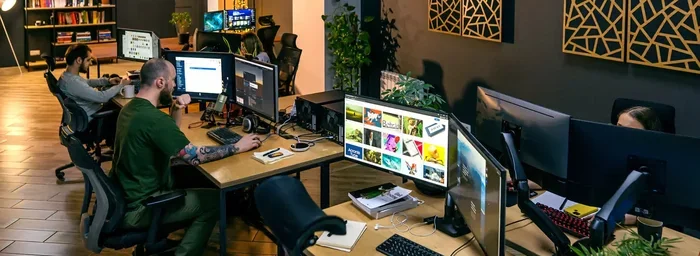
So you want to build video games for a living? What education do you need to be a game developer depends on your goals, budget, and learning style. You can pursue a formal college degree, attend a coding bootcamp, or teach yourself through online resources. Each path has real advantages, and many successful developers have taken different routes. This guide breaks down every option so you can choose the best fit for your game developer journey.
Starting a career in game development is exciting. It combines creativity, technology, and storytelling into one thrilling field. But many beginners ask the same question: what education do you need to be a game developer? The answer might surprise you. There is no single correct path, and the industry is more open than ever.
Some top developers have computer science degrees from famous universities. Others learned everything through online tutorials and personal projects. The game development world values skills and portfolios over credentials. This guide will walk you through every education option, the skills you need, and how to start your journey today.
Education in any field comes with its own colorful language. Think of how people describe learning paths using similes for education, metaphors for education, and even idioms for education. These expressions reflect the many ways people think about learning. Game development education is no different. Let us explore your options in detail.
Key Takeaways
- No single path exists: You can enter game development through a college degree, a bootcamp, or self-study.
- Technical skills matter most: Programming, game engines, and math form the core foundation.
- Portfolios beat diplomas: Employers care more about what you can build than what degree you hold.
- Soft skills are essential: Teamwork, communication, and problem-solving set great developers apart.
- Specialization is key: Game development includes many roles, from programming to art to design.
- Learning never stops: The industry evolves fast, so continuous skill-building is critical.
📑 Table of Contents
- What Education Do You Need to Be a Game Developer?
- Key Skills Every Game Developer Needs
- Comparing Education Paths: Which Is Right for You?
- Building a Portfolio That Gets You Hired
- The Game Developer Career Path
- Quick Tips for Success in Game Developer Education
- Common Mistakes to Avoid
- Expert Insights on Game Development Education
- Conclusion
What Education Do You Need to Be a Game Developer?
The short answer is: it depends on the role you want. Game developer education requirements vary widely across the industry. Some positions demand a formal degree, while others care only about your ability to write great code or design engaging experiences. Let us look at the three main paths people take.
Path One: The College Degree Route
A bachelor’s degree in computer science or game development remains the most traditional route. Many universities now offer dedicated game design programs. These degrees typically take four years to complete and cover a wide range of topics.
Here is what a typical game development degree program includes:
- Programming fundamentals with languages like C++, C#, and Python
- Mathematics, especially linear algebra and calculus
- Game engine usage, such as Unity or Unreal Engine
- Game design theory and level design
- Digital art and animation basics
- Team-based project courses that mimic real studio environments
A degree gives you structure, accountability, and networking opportunities. You will meet professors, industry guests, and future collaborators. However, college is expensive and time-consuming. Not every game developer needs a four-year degree to succeed.
Path Two: Coding Bootcamps
Coding bootcamps have exploded in popularity. These intensive programs usually last three to six months. They focus on practical, job-ready skills. Many bootcamps now offer game development tracks.
Benefits of bootcamps include:
- Speed: You can learn core skills in months, not years
- Cost: Most bootcamps cost far less than a four-year degree
- Hands-on focus: You build real projects from day one
- Career support: Many programs offer job placement assistance
Bootcamps work best for people who already have some basic tech knowledge. They are intense and fast-paced. If you can handle a rigorous schedule, a bootcamp can launch your game developer career quickly.
Path Three: Self-Taught Learning
The internet has made self-education more accessible than ever. Many successful game developers are entirely self-taught. You can learn game programming through free or low-cost online resources.
Popular self-learning resources include:
- YouTube tutorials covering Unity, Unreal Engine, and Godot
- FreeCodeCamp and Codecademy for programming basics
- Game development communities on Reddit and Discord
- Online courses from platforms like Udemy and Coursera
- Open-source game projects you can study and remix
Self-teaching requires discipline and motivation. Without a classroom structure, you must set your own schedule and goals. But the flexibility is unmatched. You can learn at your own pace and focus on exactly the skills you need.
Key Skills Every Game Developer Needs
Education is one thing. Skills are another. Whether you earn a degree or teach yourself, certain technical skills and creative skills are essential for every game developer.
Technical Skills
Game development sits at the intersection of programming and creativity. You need solid technical foundations to thrive in the video game industry.
Core technical skills include:
- Programming languages: C++ and C# are the industry standards. Python is great for beginners and scripting. JavaScript powers browser-based games.
- Game engines: Unity, Unreal Engine, and Godot are the top choices. Each has strengths for different types of games.
- Mathematics: Vectors, matrices, physics, and trigonometry form the backbone of game mechanics and movement.
- Version control: Git and GitHub are essential for team collaboration and code management.
- Debugging and testing: Finding and fixing bugs is a daily part of the job.
Creative and Soft Skills
Technical ability alone will not make you a great game developer. The best developers also bring creative thinking and strong communication to the table.
- Problem-solving: Games are full of complex challenges. You need to find clever solutions every day.
- Teamwork: Game development is almost always a team effort. You will work with artists, designers, and sound engineers.
- Storytelling: Even action games benefit from strong narrative structure and world-building.
- Time management: Meeting deadlines is critical in the fast-paced game development industry.
- Adaptability: Technology changes fast. You must be willing to learn new tools and techniques constantly.
Comparing Education Paths: Which Is Right for You?
Choosing between a degree, bootcamp, and self-taught route can feel overwhelming. Each path has trade-offs in cost, time, and career outcomes. Let us compare them side by side.
| Factor | College Degree | Coding Bootcamp | Self-Taught |
|---|---|---|---|
| Time Commitment | 4 years | 3–6 months | Flexible (months to years) |
| Cost | $20,000–$100,000+ | $5,000–$20,000 | Free to $2,000 |
| Structure | High | High | Low (self-driven) |
| Networking | Strong | Moderate | Low (unless you build it) |
| Job Placement Help | Career services | Dedicated support | Self-managed |
| Depth of Knowledge | Very deep | Practical and focused | Varies widely |
There is no single “best” path. Your choice depends on your financial situation, available time, and learning preferences. Many developers combine approaches. For example, you might start with a bootcamp, then build your skills through self-study while working on personal projects.
Building a Portfolio That Gets You Hired
In the game development world, your portfolio speaks louder than any diploma. Employers want to see what you can create. A strong portfolio demonstrates your technical skills and your creative vision.
What Should Be in Your Portfolio?
- Completed games: Even small, simple games show you can finish a project. Start with a basic platformer or puzzle game.
- Code samples: Share clean, well-documented code on GitHub. This shows your programming ability.
- Game design documents: These show you can plan and conceptualize experiences, not just code them.
- Variety: Show different types of work. Include both technical demos and creative projects.
- Personal projects: These reveal your passion and curiosity. They show you go beyond assigned work.
Quality matters more than quantity. One polished, complete game is worth more than ten unfinished experiments. Focus on finishing projects and making them shine.
The Game Developer Career Path
Understanding the career path helps you plan your education wisely. Game development offers many specializations, and your education should align with your goals.
Common Game Developer Roles
- Game Programmer: Writes the code that makes games function. This is the most technical role.
- Game Designer: Plans gameplay mechanics, levels, and player experiences.
- Game Artist: Creates visual assets, characters, environments, and animations.
- Game Tester: Finds bugs and ensures quality before release.
- Technical Designer: Bridges the gap between programming and design.
Entry-Level Expectations
Most entry-level positions expect at least some formal training. This could be a degree, a bootcamp certificate, or a strong portfolio of self-taught work. Starting salaries vary by location and role, but the video game industry offers solid growth potential for talented developers.
Many developers start in smaller studios or as indie creators. This hands-on experience builds skills and reputation. Over time, you can move to larger studios or specialize in a niche area of game programming.
Quick Tips for Success in Game Developer Education
Whether you are just starting or already on your learning journey, these tips will help you stay on track.
- Start small and build up. Do not try to create the next AAA title on day one. Begin with simple projects and grow from there.
- Learn one engine deeply. Mastering Unity or Unreal Engine is more valuable than dabbling in five tools.
- Join a community. Game development can be isolating. Online communities provide support, feedback, and motivation.
- Study other games. Play games analytically. Ask yourself how mechanics work and what makes them fun.
- Set deadlines for yourself. Personal projects need structure too. Finish what you start.
- Stay current. Follow industry news, attend game jams, and keep learning new technologies.
Common Mistakes to Avoid
Many aspiring developers make preventable mistakes. Avoiding these pitfalls can save you time and frustration.
- Waiting for the “perfect” education: There is no perfect time to start. Begin learning today with whatever resources you have.
- Skipping fundamentals: Jumping into advanced topics without understanding basics leads to confusion. Build a solid foundation first.
- Neglecting your portfolio: A degree means little without proof of your abilities. Always be building and showcasing work.
- Working in isolation: Game development is collaborative. Practice teamwork and learn to accept feedback.
- Ignoring soft skills: Communication and problem-solving matter just as much as coding ability.
Expert Insights on Game Development Education
We spoke with several industry professionals about education paths. Their advice was consistent and encouraging.
“I hired developers from all three paths. The ones who stand out are the ones who keep learning and build things outside of class or work. Passion matters more than the piece of paper on the wall.”
Sarah Chen, Lead Developer at Indie Studio
“Your portfolio is your real degree. I look at what someone has built, not where they went to school. A great project can open doors that no diploma can.”
Marcus Rivera, Hiring Manager at Major Studio
These insights reinforce a key truth: in game development, what you can do matters more than how you learned to do it. Your education is a tool, not a guarantee. What you build with it is what truly counts.
Conclusion
So, what education do you need to be a game developer? The honest answer is: there is no single requirement. You can pursue a college degree, attend a coding bootcamp, or teach yourself through online resources. Every successful developer has a unique story. What matters most is your commitment to learning, building, and improving.
The game development industry rewards creativity, persistence, and technical skill. Start where you are. Use whatever resources you have. Build projects, share your work, and never stop learning. Your journey into game development begins with a single step. Take it today.
Frequently Asked Questions
Do I need a degree to become a game developer?
No, a degree is not strictly required. Many game developers are self-taught or attended bootcamps. Employers care more about your portfolio and skills than your diploma. However, a degree can provide structure and networking opportunities that help you grow.
What is the best programming language for game development?
C# and C++ are the most widely used languages in the industry. C# works great with Unity, while C++ powers many Unreal Engine projects. Python is also excellent for beginners and scripting. Choose based on the game engine you want to learn.
How long does it take to become a game developer?
The timeline varies by path. A college degree takes four years. Bootcamps last three to six months. Self-taught learning depends entirely on your pace and dedication. Most people need six months to two years to gain job-ready skills, regardless of the path they choose.
Can I become a game developer without any prior experience?
Absolutely. Many successful developers started from zero. Begin with beginner-friendly resources and simple projects. Focus on building a portfolio that demonstrates your growing abilities. Consistency and curiosity will carry you further than any prior experience.
Is game development a good career choice?
Yes, game development offers creative fulfillment and solid career growth. The video game industry continues to expand globally. Salaries vary by role and location, but skilled developers are in high demand. It is a rewarding career for those who love games and technology.
Should I specialize in a specific area of game development?
Specializing can help you stand out in a competitive job market. Consider focusing on programming, design, art, or testing based on your strengths and interests. However, having a broad skill set as a beginner is also valuable. You can specialize later as you gain experience and discover your passions.


