
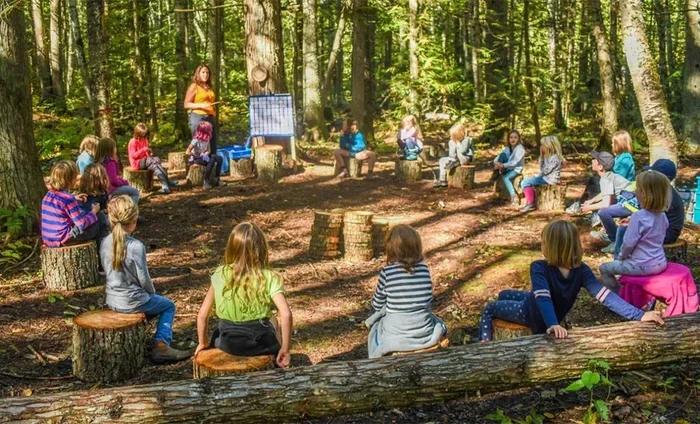
Adventure education combines outdoor challenges with hands-on learning to build real-world skills. It goes far beyond the classroom by using activities like hiking, team challenges, and problem-solving tasks to teach resilience, leadership, and collaboration. This approach works because it engages the mind and body at the same time, making lessons stick far longer than traditional methods.
What if the best classroom had no walls? That is the idea behind adventure education. It is a teaching approach that uses outdoor challenges, hands-on activities, and real-world experiences to help people learn. Instead of sitting at a desk, students climb, explore, solve problems, and work together. The results can be truly life-changing.
Many educators and parents are turning to this method because it works. It engages the whole person, not just the brain. Whether you are a teacher looking for fresh ideas or a curious learner, understanding adventure education can open up a whole new world of possibilities.
Key Takeaways
- Adventure education blends outdoor experiences with structured learning goals to create deeper understanding and retention.
- It builds essential life skills like teamwork, problem-solving, leadership, and emotional resilience.
- Students of all ages benefit from hands-on challenges that go beyond textbook knowledge.
- Research supports its effectiveness in improving confidence, social skills, and academic engagement.
- You can start small with simple outdoor activities or join established programs for a full experience.
- Risk-taking in a safe environment is a core principle that drives personal growth.
📑 Table of Contents
- What Is Adventure Education?
- The Core Principles Behind Adventure Education
- Key Benefits of Adventure Education
- How Adventure Education Works in Practice
- Adventure Education vs Traditional Classroom Learning
- How to Get Started with Adventure Education
- Common Mistakes to Avoid
- Expert Insights on Adventure Education
- Final Thoughts
What Is Adventure Education?
Adventure education is a form of experiential learning that uses outdoor activities and challenges to teach important skills. It combines physical experiences with structured learning goals. The idea is simple: when you face a real challenge, you learn more deeply than when you just read about it.
This approach can include a wide range of activities. Think rock climbing, raft building, hiking, orienteering, and team obstacle courses. Each activity is designed to push participants just outside their comfort zone. That is where the real growth happens.
The roots of adventure-based learning go back several decades. Educators noticed that students who participated in outdoor programs showed better confidence, stronger social skills, and improved problem-solving abilities. Today, adventure education is used in schools, therapy programs, corporate training, and youth development organizations around the world.
How Is It Different from Regular Outdoor Activities?
Not every outdoor trip counts as adventure education. The key difference is the learning structure. A regular hike is fun, but adventure education adds intentional goals and guided reflection. After each activity, facilitators help participants process what they learned. This reflection step is what turns a fun outing into a powerful learning experience.
For example, after a team challenge, a facilitator might ask, “What strategies did your group try?” or “How did you handle the moment when things got tough?” These questions help students connect the experience to real-life situations. They start to see patterns in their own behavior and thinking.
The Core Principles Behind Adventure Education
Understanding the principles helps you see why this approach is so effective. Every element is designed with a purpose. Here are the foundational ideas that drive adventure education.
Learning by Doing
The most important principle is hands-on experience. People remember what they do far better than what they hear or read. When a student physically navigates a challenge course, they are not just following instructions. They are making decisions, facing fears, and adapting to changing situations.
This ties directly to the concept of experiential learning. The cycle goes like this: experience, reflect, conceptualize, and apply. Each adventure activity hits all four stages. Students live through something, think about it, extract lessons, and then use those lessons in new situations.
Safe Risk-Taking
Adventure education encourages calculated risk. This does not mean putting anyone in danger. It means creating environments where people can step outside their comfort zone in a controlled way. Climbing a wall or crossing a rope bridge feels risky, but the safety measures are in place.
This principle teaches a valuable life lesson: growth happens at the edge of comfort. When students learn to take managed risks, they build confidence that carries over into everyday life. They start to believe they can handle difficult situations.
Teamwork and Collaboration
Most adventure activities are group-based. Participants must work together to succeed. This naturally builds communication skills, trust, and mutual respect. No one can climb a rock wall alone, and no one can build a raft without help.
These team building moments create bonds that are hard to replicate in a traditional classroom. Students learn to appreciate different strengths and perspectives. They discover that collaboration leads to better outcomes than going it alone.
Reflection and Processing
After every activity, there is a debrief. This is where the real learning sinks in. Facilitators guide participants through questions that help them make connections between the activity and their personal lives. Reflection turns experience into insight.
Without this step, adventure education would just be recreation. With it, every challenge becomes a lesson in character development and self-awareness.
Key Benefits of Adventure Education
The benefits of adventure education are wide-ranging and well-documented. Let us look at the most impactful ones.
Builds Confidence and Self-Esteem
There is nothing quite like conquering a fear to boost your confidence. When a student completes a challenging activity they thought was impossible, something shifts. They realize they are capable of more than they believed.
This confidence boost often extends into other areas of life. Students who succeed in outdoor challenges tend to speak up more in class and take on new tasks with less hesitation.
Develops Problem-Solving Skills
Adventure activities are full of unexpected twists. The weather changes. Equipment fails. Team members disagree. These real-time challenges force participants to think on their feet and come up with creative solutions.
Over time, this builds strong problem-solving skills that transfer to academic and professional settings. Students learn that there is often more than one way to solve a problem, and that persistence matters.
Strengthens Social and Emotional Skills
Working closely with others in challenging situations builds empathy and emotional intelligence. Students learn to read social cues, manage frustration, and support peers who are struggling.
These social-emotional learning skills are increasingly recognized as essential for success in school and beyond. Adventure education provides a natural, engaging way to develop them.
Encourages Physical Fitness and Well-Being
Let us not forget the physical benefits. Adventure activities get students moving. They build strength, coordination, and endurance. But the mental health benefits are just as important. Being outdoors, breathing fresh air, and connecting with nature reduce stress and improve mood.
In a world where screen time dominates, nature-based learning offers a much-needed reset for both body and mind.
Fosters Resilience and Perseverance
Not every challenge goes smoothly. Sometimes teams fail. Sometimes individuals struggle. But these moments of difficulty teach the most valuable lessons. Students learn that failure is not the end, it is part of the process.
This resilience training prepares them for the inevitable setbacks in life. They develop a growth mindset and learn to keep going even when things get tough.
How Adventure Education Works in Practice
Wondering what a typical adventure education program looks like? Let us walk through it.
Program Structure
Most programs follow a clear structure. It starts with icebreakers and trust-building exercises. Then comes the main activities, which are carefully chosen to match the group’s goals and skill level. Each activity is followed by a guided reflection session. Programs can range from a single day to multi-week expeditions.
Facilitators play a crucial role. They are not just instructors, they are guides who create safe spaces for learning and growth. A good facilitator knows when to push and when to support. They adapt the experience to meet each participant where they are.
Common Activities
Here are some of the most popular activities found in adventure education programs:
- High ropes courses – challenge participants to navigate obstacles at height
- Group initiatives – team problems that require collaboration to solve
- Wilderness expeditions – multi-day trips involving navigation and survival skills
- Kayaking and canoeing – water-based team activities that build coordination
- Camping and survival skills – teach self-reliance and resourcefulness
- Trust falls and blindfolded exercises – build trust and communication
Each activity is designed with specific learning outcomes in mind. The facilitator helps participants see the connection between what they are doing and what they are learning.
The Role of Metaphor and Analogy
One powerful tool in adventure education is the use of metaphor. Facilitators often draw parallels between the challenge at hand and real-life situations. For instance, crossing a high wire can represent facing a fear in daily life. Building a raft can symbolize working together toward a shared goal.
Using metaphors for adventure helps students grasp abstract concepts through concrete experiences. This makes the lessons more vivid and memorable. Similarly, facilitators might use similes for adventure to describe the learning journey, comparing it to climbing a mountain or navigating a river. These language tools bring depth to the reflection process and help students articulate what they have learned.
Some programs also incorporate idioms for adventure into their teaching. Phrases like “take the plunge” or “push forward” become more than just words. They take on real meaning when a student has literally taken the plunge off a climbing wall or pushed forward through a tough hike. The language becomes lived experience.
Adventure Education vs Traditional Classroom Learning
How does adventure education compare to the traditional classroom? Let us look at a side-by-side comparison.
| Aspect | Traditional Classroom | Adventure Education |
|---|---|---|
| Setting | Indoor, desk-based | Outdoor, hands-on |
| Learning Style | Passive listening and reading | Active participation and doing |
| Student Engagement | Varies, often low | Typically high and immediate |
| Skill Development | Primarily cognitive | Cognitive, physical, and emotional |
| Retention | Moderate | High due to experiential nature |
| Teamwork | Limited group work | Built into every activity |
| Risk and Challenge | Minimal | Structured and managed |
| Real-World Connection | Abstract | Direct and tangible |
Neither approach is perfect on its own. The traditional classroom excels at delivering structured academic content. Adventure education shines at developing the soft skills that textbooks struggle to teach. The most effective education often combines both.
Teachers can bring elements of adventure education into the classroom. Simple activities like group discussions, role-playing scenarios, and hands-on projects add an experiential dimension to any lesson. You do not need a mountain or a river to start.
How to Get Started with Adventure Education
If you are excited about the idea of adventure education, here is how you can begin.
Start Small
You do not need a massive budget or a remote wilderness location. Start with simple activities that require minimal equipment. A trust walk around the schoolyard, a team-building puzzle, or a nature scavenger hunt can all introduce the core principles of adventure learning.
The key is intentionality. Every activity should have a clear learning goal and a structured reflection component. Without these, it is just play time.
Find or Create a Program
Many organizations offer established adventure education programs. Look for local outdoor education centers, youth development organizations, or experiential learning providers. They have trained facilitators and proven curricula.
If you are a teacher or parent, you can also design your own program. Start with a clear list of goals. Choose activities that align with those goals. Plan for reflection after each session. Keep safety as the top priority at all times.
Involve the Whole Community
Adventure education works best when the whole community supports it. Parents, teachers, and community leaders can all play a role. Share the benefits and the research. Invite families to participate in events. Build a culture that values hands-on, experiential learning.
Measure and Share Results
To sustain support, track the outcomes. Use surveys, observations, and student feedback to document growth. Share success stories with stakeholders. When people see the real impact of adventure education, they become strong advocates.
Common Mistakes to Avoid
Even well-intentioned programs can go wrong. Here are some common pitfalls to watch out for.
- Skipping the reflection phase. This is the most common mistake. Without debriefing, the learning stays surface-level.
- Overestimating participants’ abilities. Activities should be challenging but achievable. Setting people up to fail does more harm than good.
- Neglecting safety protocols. Adventure education should always be safe. Proper training, equipment, and supervision are non-negotiable.
- Treating it as just recreation. Fun is important, but every activity needs a learning purpose. Without structure, it becomes a field trip rather than education.
- Ignoring individual differences. Not every student thrives in the same way. Good facilitators adapt their approach to meet diverse needs and comfort levels.
Expert Insights on Adventure Education
Research consistently supports the value of adventure education. Studies show that students who participate in experiential outdoor programs demonstrate improved academic motivation, better peer relationships, and stronger self-regulation skills. The outdoor classroom is not a replacement for traditional learning, it is a powerful complement.
Experts in the field emphasize that the magic of adventure education lies in its ability to engage the whole person. When the body, mind, and emotions are all involved, learning becomes deeper and more meaningful. This holistic approach is why so many educators are embracing it.
Dr. Kurt Hahn, a pioneer of outdoor education, once said that education should develop both the mind and the spirit of adventure. His vision lives on in modern adventure programs around the world. The core belief remains the same: people learn best when they are actively engaged, emotionally invested, and challenged to grow.
Final Thoughts
Adventure education is more than a trendy teaching method. It is a proven approach that builds confident, resilient, and collaborative learners. By stepping outside the traditional classroom and into real-world challenges, students discover abilities they did not know they had.
Whether you are an educator, a parent, or simply someone who loves learning, the principles of adventure education can enrich your life. Start small, stay intentional, and always make time for reflection. The adventure of learning does not have to stop at the classroom door.
Ready to explore more about how language and expression enhance the adventure learning experience? Check out our resources on similes for adventure, metaphors for adventure, and idioms for adventure to deepen your understanding of how creative language can enrich your outdoor learning journey.
Frequently Asked Questions
What age group is adventure education best suited for?
Adventure education works for almost all ages, from young children to adults. Programs are typically tailored to the group’s age and ability level. Young children benefit from simpler, play-based outdoor activities, while teens and adults can handle more complex challenges and deeper reflection exercises.
Do you need special equipment for adventure education?
It depends on the activities you choose. Some programs require ropes, harnesses, and climbing gear, while others use simple materials like ropes, blindfolds, and natural objects. You can start with very basic equipment and scale up as your program grows. Safety equipment is always a priority.
Can adventure education be done indoors?
Yes, many elements can be adapted for indoor settings. Team-building games, problem-solving challenges, and reflective discussions can all happen inside. However, the full benefits of adventure education are best realized outdoors, where nature adds an extra layer of engagement and discovery.
Is adventure education the same as wilderness therapy?
They share similarities but are not the same. Wilderness therapy focuses on therapeutic healing, often for individuals dealing with mental health challenges. Adventure education is broader and focuses on general learning, skill development, and personal growth for a wide range of participants.
How does adventure education improve academic performance?
Adventure education boosts academic performance indirectly by improving confidence, focus, and motivation. Students who feel capable and engaged in their learning are more likely to succeed in academic settings. The problem-solving and teamwork skills developed also support classroom learning.
What training do adventure education facilitators need?
Facilitators typically need training in outdoor education, first aid, and group facilitation. Many pursue certifications through recognized organizations. They also need strong communication skills and the ability to adapt activities to different groups and learning environments.
=== CONCLUSION ===
Adventure education is a powerful approach that transforms how people learn and grow. By combining outdoor challenges with structured reflection, it builds confidence, resilience, teamwork, and problem-solving skills that last a lifetime. The principles are simple, but the impact is profound. Whether you are a teacher, a parent, or a lifelong learner, embracing the spirit of adventure in education can unlock potential you never knew existed. Start today, take the first step outside your comfort zone, and discover what adventure learning can do for you.


