
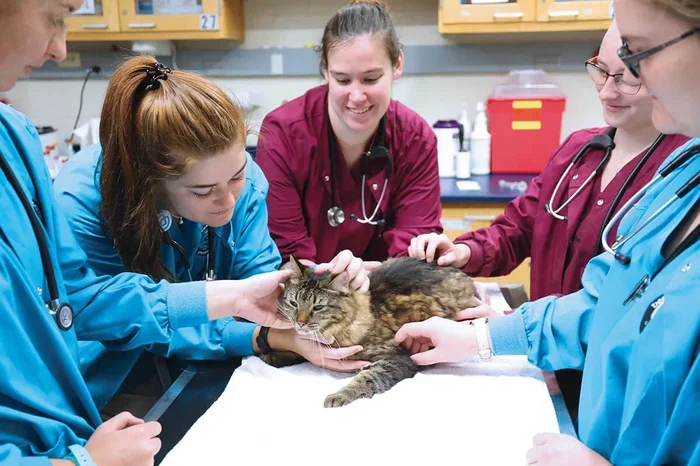
Becoming a veterinarian requires extensive education, including a bachelor’s degree, four years of veterinary school, and state licensing exams. The journey typically takes 7–9 years of higher education, covering pre-veterinary studies, clinical training, and hands-on animal care experience. This guide walks you through every step of the veterinary education path, from undergraduate prep to specialization options.
Have you ever wondered what it takes to become a veterinarian? The path to becoming an animal doctor is long, rewarding, and filled with hard work. What education is required for a veterinarian goes far beyond just loving animals. It involves years of structured learning, clinical training, and passing rigorous exams.
Many people dream of working with animals every day. But the veterinary education path demands dedication and persistence. From undergraduate pre-veterinary studies to a four-year Doctor of Veterinary Medicine program, every step builds the skills you need to care for animals. This article breaks down the entire journey so you know exactly what to expect.
The road to becoming a vet is not a quick one. It typically spans seven to nine years of higher education. Along the way, you will face challenging coursework, hands-on clinical rotations, and licensing exams. But for those passionate about animal health, the reward is a fulfilling career helping animals live healthier lives.
Key Takeaways
- Veterinary school is mandatory: You must earn a Doctor of Veterinary Medicine (DVM) degree from an accredited program.
- Pre-veterinary coursework takes 2–4 years: Most students complete a bachelor’s degree before applying to vet school.
- Licensing exams are required in every state: You must pass the NAVLE and any state-specific exams to practice.
- Specializations require additional training: Residency programs can add 3–4 years after veterinary school.
- Hands-on clinical experience matters: Veterinary programs include extensive clinical rotations and internships.
- The total timeline is 7–9 years: From undergraduate studies to full licensure as a practicing vet.
📑 Table of Contents
- Understanding the Veterinary Education Path
- Veterinary School and the DVM Degree
- Licensing and Certification Requirements
- Specializations and Advanced Training
- How Long Does It Take to Become a Veterinarian?
- Common Mistakes to Avoid on the Veterinary Education Path
- Final Thoughts on Veterinary Education
Understanding the Veterinary Education Path
The veterinary education path is a multi-step process. Each stage builds on the last, preparing you for real-world animal care. Understanding this path helps you plan your academic journey effectively.
Unlike some careers where you can jump straight into training, veterinary medicine requires a strong academic foundation. The veterinary curriculum covers anatomy, pharmacology, surgery, and animal diseases. You must master both classroom theory and practical skills.
Think of it this way. Education is the foundation of every successful veterinary career. Without proper training, you cannot diagnose or treat animals safely. The entire veterinary education path is designed to ensure every practicing vet meets the highest standards of animal care.
Let us break down the stages. Each one plays a critical role in shaping you into a competent and confident animal doctor.
Stage 1: Pre-Veterinary Undergraduate Studies
Before you can enter veterinary school, you need to complete undergraduate education. Most aspiring vets earn a bachelor’s degree, which takes about four years. Some students finish in three years if they carry a heavy course load.
During this stage, you will focus on pre-veterinary studies. These courses lay the groundwork for advanced veterinary topics. Common subjects include biology, chemistry, organic chemistry, and physics. Many programs also require courses in animal science or zoology.
Here is a quick look at typical pre-vet coursework:
- Biology: Study of living organisms and life processes.
- General Chemistry: Understanding chemical reactions and molecular structures.
- Organic Chemistry: Focus on carbon-based compounds and reactions.
- Physics: Principles of motion, energy, and forces.
- Mathematics and Statistics: Data analysis and quantitative reasoning.
- Animal Science or Zoology: Introduction to animal behavior and physiology.
- English and Communication: Writing and presenting scientific information clearly.
Not every student follows the exact same path. Some enter college knowing they want to be vets. Others discover their passion during their undergraduate years. Idioms for education often capture this journey perfectly — learning is a marathon, not a sprint. The key is to maintain a strong GPA and gain relevant experience with animals.
Stage 2: Gaining Veterinary Experience
Most veterinary schools look for more than just good grades. They want applicants who understand what the profession demands. This is why gaining hands-on experience is so important.
You should aim to volunteer at animal shelters, veterinary clinics, or wildlife rehabilitation centers. Shadowing a practicing vet gives you a real feel for the day-to-day work. Many programs require a minimum number of hours working with animals before they will consider your application.
This experience also helps you decide if veterinary medicine is truly the right fit for you. It exposes you to the emotional and physical demands of the job. Some students realize during this stage that they prefer a different animal-related career. That is perfectly fine. The experience still builds valuable skills.
Veterinary School and the DVM Degree
Once you are accepted into a veterinary school, you begin the most intensive phase of your education. The Doctor of Veterinary Medicine (DVM) degree is the standard credential required to practice in the United States and many other countries.
A DVM program typically lasts four years. The first two to three years focus on classroom and laboratory instruction. You will study subjects like animal anatomy, physiology, microbiology, pathology, and pharmacology. The final year is mostly dedicated to clinical rotations, where you work directly with animals under supervision.
The veterinary curriculum is rigorous. You will cover topics ranging from small animal medicine to large animal surgery. Here is a closer look at what each year typically involves:
- Year 1: Foundational sciences including anatomy, histology, and basic pharmacology.
- Year 2: Organ systems, pathology, microbiology, and disease mechanisms.
- Year 3: Advanced clinical subjects, diagnostic techniques, and treatment planning.
- Year 4: Clinical rotations in various specialties such as surgery, internal medicine, and emergency care.
Think of veterinary school as a metaphor for growth. Metaphors for education often describe learning as building a bridge — each course you complete adds another plank. By graduation, you have a solid bridge of knowledge connecting theory to practice.
Accreditation matters a great deal. Make sure the veterinary school you attend is accredited by the American Veterinary Medical Association (AVMA). Graduating from an accredited program is essential for licensure and employment.
Choosing the Right Veterinary Program
Not all veterinary programs are the same. Some focus more on small animal practice, while others emphasize large animal or exotic animal medicine. Research each program thoroughly before applying.
Consider factors like clinical training opportunities, faculty expertise, and school facilities. Location also plays a role. Some students prefer to stay close to home, while others seek programs in different regions to gain diverse experience.
The admissions process is competitive. Most schools require strong GRE scores, a high GPA, letters of recommendation, and a personal statement. Start preparing early, and do not be discouraged by rejection. Many successful vets applied more than once before gaining acceptance.
Licensing and Certification Requirements
Earning your DVM degree is a huge milestone. But you cannot practice as a vet yet. You must first pass licensing exams and meet your state’s specific requirements.
The North American Veterinary Licensing Examination (NAVLE) is the primary exam for aspiring vets in the United States. It tests your knowledge of veterinary medicine and surgery. The exam consists of 360 multiple-choice questions, and you must score high enough to pass.
After passing the NAVLE, you may also need to complete a state-specific exam. Some states test your knowledge of local laws and regulations related to veterinary practice. This ensures that every licensed vet understands the legal framework of their practice area.
Here is a simple breakdown of the licensing process:
- Complete your DVM degree from an accredited veterinary school.
- Prepare for and pass the NAVLE — the national veterinary licensing exam.
- Complete any state-specific requirements — some states have additional exams or coursework.
- Apply for your state license — each state has its own licensing board.
- Maintain your license — continuing education is required to keep your credentials active.
Licensing is not just a formality. It protects animals and the public by ensuring that only qualified professionals provide veterinary care. Think of it as a simile for responsibility — just as a pilot must earn a license before flying, a vet must earn one before treating animals.
Similes for education often highlight the idea of earning credentials. Licensing is the final credential that proves you are ready to practice. Without it, your years of hard work would not translate into a legal career.
Specializations and Advanced Training
Once you are licensed, you can start practicing general veterinary medicine. But many vets choose to specialize. Veterinary specializations allow you to focus on a specific area of animal health that you are passionate about.
Specialization requires additional training beyond the DVM degree. Most specializations involve a residency program that lasts three to four years. During this time, you work under the guidance of experienced specialists and gain deep expertise in your chosen field.
Here are some common veterinary specializations:
- Surgery: Performing operations on animals, from routine spay and neuter to complex procedures.
- Internal Medicine: Diagnosing and treating complex diseases affecting internal organs.
- Dentistry: Focusing on animal oral health, dental cleanings, and oral surgery.
- Pathology: Studying diseases through laboratory analysis of tissues and fluids.
- Zoological Medicine: Treating exotic and wild animals in zoos, aquariums, and wildlife centers.
- Theriogenology: Specializing in animal reproduction and breeding.
- Radiology: Using imaging technologies like X-rays and MRIs to diagnose conditions.
Specializing is like adding another layer to your veterinary education path. It deepens your knowledge and opens doors to higher-paying and more focused career opportunities. Many specialists work in referral hospitals or academic settings where they also teach the next generation of vets.
If you are considering a specialization, start thinking about it during veterinary school. Talk to professors, attend specialty workshops, and seek out clinical experiences in areas that interest you. The earlier you explore, the better prepared you will be.
How Long Does It Take to Become a Veterinarian?
The total timeline from starting college to becoming a licensed vet is typically seven to nine years. Here is a quick breakdown:
- Undergraduate studies: 3 to 4 years
- Veterinary school (DVM): 4 years
- Licensing exams: Completed during or after veterinary school
- Specialization (optional): 3 to 4 additional years
So how many years of school to become a vet? At minimum, you are looking at seven years. If you pursue a specialization, the total can reach twelve years or more. It is a significant commitment. But for those who love animals, the investment is absolutely worth it.
The journey may seem long, but every year serves a purpose. Undergraduate studies build your scientific foundation. Veterinary school develops your clinical skills. Licensing ensures you meet professional standards. And specialization allows you to excel in a niche area of animal health.
Idioms for education remind us that persistence pays off. The veterinary profession demands patience, but the reward — a career dedicated to animal welfare — is unmatched. Every year of schooling brings you closer to making a real difference in the lives of animals and their owners.
Common Mistakes to Avoid on the Veterinary Education Path
Many aspiring vets make avoidable mistakes that can delay their progress or weaken their applications. Being aware of these pitfalls helps you stay on track.
One common mistake is neglecting hands-on experience. Strong grades matter, but veterinary schools also value real-world exposure. Another mistake is applying to only one or two programs. The admissions process is competitive, so casting a wider net increases your chances.
Some students also underestimate the emotional demands of the profession. Veterinary medicine involves difficult cases, euthanasia, and grieving pet owners. Building emotional resilience early through counseling, mentorship, and peer support is essential.
Finally, do not overlook the importance of networking. Attend veterinary conferences, join student organizations, and connect with professionals in the field. Relationships built during your education can lead to job opportunities, mentorships, and lifelong professional connections.
Final Thoughts on Veterinary Education
The journey to becoming a veterinarian is challenging but deeply rewarding. From pre-veterinary studies to earning your DVM degree and passing licensing exams, every step prepares you for a career of caring for animals. The veterinary education path requires dedication, but the impact you make on animal lives is immeasurable.
If you are considering this career, start planning early. Focus on building a strong academic foundation, gaining hands-on experience, and exploring areas of interest. The road is long, but the destination — a fulfilling career as a licensed veterinarian — is well worth the effort.
Remember, every expert vet started exactly where you are now. With persistence and passion, you can navigate the veterinary education path and achieve your dream of becoming an animal doctor.
Frequently Asked Questions
What education is required for a veterinarian to practice?
To practice as a veterinarian, you must earn a Doctor of Veterinary Medicine (DVM) degree from an accredited veterinary school and pass the NAVLE licensing exam. Most vets also complete a bachelor’s degree before entering veterinary school, making the total education timeline about seven to nine years.
How many years of school does it take to become a veterinarian?
It typically takes seven to nine years. This includes three to four years of undergraduate studies followed by four years of veterinary school. Additional years are needed if you choose to pursue a specialization through a residency program.
Can I become a vet without a bachelor’s degree?
Some veterinary schools accept students without a full bachelor’s degree if they have completed the required pre-veterinary coursework. However, most applicants hold a bachelor’s degree, and having one strengthens your application significantly.
Is veterinary school harder than medical school?
Both programs are demanding in their own ways. Veterinary school covers a wide range of species and medical disciplines, while medical school focuses specifically on human medicine. The difficulty depends on your strengths and interests.
What is the NAVLE exam?
The North American Veterinary Licensing Examination (NAVLE) is the standard licensing exam for veterinarians in the United States and Canada. It tests your knowledge of veterinary medicine and surgery and is required to obtain a practicing license.
Do veterinarians need to continue education after licensing?
Yes, most states require veterinarians to complete continuing education credits to maintain their license. This ensures that vets stay current with the latest advancements in animal medicine and surgical techniques.


