
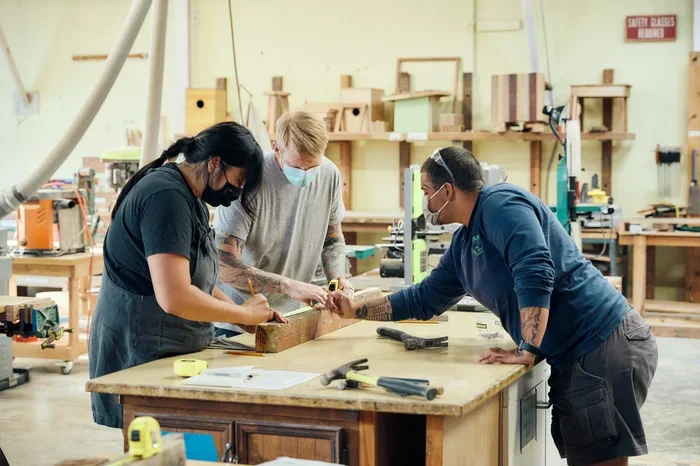
Becoming a skilled carpenter requires a mix of formal education, hands-on training, and real-world experience. You can choose from apprenticeship programs, trade schools, or community college courses to build your carpentry skills. This guide walks you through every step of the education needed to become a carpenter so you can start your journey with confidence.
Key Takeaways
- Apprenticeships are the gold standard: They combine classroom learning with paid on-the-job training over 3 to 4 years.
- Trade schools offer fast tracks: Certificate and diploma programs can be completed in 1 to 2 years.
- Community college degrees add depth: An associate degree in carpentry or construction technology opens doors to higher-paying roles.
- Certifications boost your credibility: Earning a carpentry certification proves your skills to employers and clients.
- Soft skills matter just as much: Communication, math, and problem-solving are essential on any job site.
- Licensing requirements vary by state: Always check your local rules before starting your career path.
- Continuous learning keeps you competitive: The skilled trades field evolves with new tools, materials, and building codes.
📑 Table of Contents
- What Education Is Needed to Become a Skilled Carpenter
- Understanding the Carpentry Education Landscape
- Path 1: Apprenticeship Programs
- Path 2: Trade Schools and Vocational Programs
- Path 3: Community College Degrees
- Certifications and Licenses You Should Know About
- Essential Skills Beyond the Classroom
- How to Choose the Right Education Path
- Conclusion
What Education Is Needed to Become a Skilled Carpenter
Many people dream of working with their hands and building things that last. If you are one of them, you might wonder about the education needed to become a carpenter. The good news is that there are several clear paths you can follow. You do not need a four-year college degree to succeed in this field.
Carpentry is one of the most rewarding skilled trades you can enter. It offers good pay, job stability, and the joy of creating something real. Whether you want to build homes, craft furniture, or work on big construction projects, the right carpentry training will set you up for success. Let us walk through each option step by step.
Understanding the Carpentry Education Landscape
The world of carpentry education is wider than most people think. There is no single “right” way to learn this craft. Different paths suit different people, budgets, and timelines. Some learners thrive in classrooms. Others prefer to jump right into real work sites. The key is finding the path that fits your life and goals.
When you explore your options, you will hear terms like vocational school, trade school, and apprenticeship program. Each one plays a unique role in building your woodworking skills. Think of them as different roads that all lead to the same destination: a fulfilling career as a carpenter.
Why Formal Education Matters
You might ask, “Do I really need formal carpentry education?” The short answer is no, but it helps a lot. Formal training gives you a strong foundation. You learn the basics of construction math, how to read blueprints, and which building codes apply in your area. These skills make you safer and more valuable on the job.
Employers also look for formal credentials. A certificate or degree shows that you have put in real effort. It tells them you are serious about your career in carpentry. This can give you a big edge when competing for jobs.
The Role of On-the-Job Training
Nothing replaces hands-on experience. Many master carpenters started as helpers and learned by watching and doing. On-the-job training lets you earn money while you learn. You pick up tips and tricks that no textbook can teach. This is where real carpentry skills truly develop.
If you think about similes for education, learning carpentry on the job is like building a house one brick at a time. Each day, you add a little more knowledge. Over time, those small lessons stack up into real expertise. This hands-on approach is one of the most respected ways to grow in the skilled trades.
Path 1: Apprenticeship Programs
An apprenticeship program is often the best way to become a carpenter. These programs combine classroom instruction with real work experience. You earn a wage from day one, and your pay grows as your skills improve.
Most carpentry apprenticeships last between 3 and 4 years. During this time, you work under the guidance of experienced professionals. You also attend classes, usually a few hours per week or during certain seasons. The balance of work and study makes apprenticeships a powerful way to learn.
What to Expect in an Apprenticeship
Your day-to-day tasks will depend on the type of carpentry you choose. You might work on residential homes, commercial buildings, or industrial projects. Here is what a typical apprenticeship covers:
- Safety and first aid training on the job site
- Hand tool and power tool use and maintenance
- Lumber materials selection and handling
- Joinery techniques like framing, decking, and roofing
- Blueprint reading and construction math
- Building codes and local regulations
Think of an apprenticeship as your metaphors for education come to life. It is like planting a seed and watching it grow into a strong tree. You start small, you put in the work, and over time you develop deep roots in your craft. By the end, you are ready to stand tall as a skilled journeyman carpenter.
How to Find an Apprenticeship
You can find carpentry apprenticeship programs through unions, contractor associations, and trade organizations. Some community colleges also partner with local employers to offer these programs. Start by searching online or visiting your local workforce development office. The sooner you apply, the better your chances of landing a spot.
Path 2: Trade Schools and Vocational Programs
Trade schools and vocational programs offer a faster route into carpentry. These schools focus entirely on teaching practical trades. You will not spend time on general education classes like you would in a traditional college. Instead, every course is designed to build your carpentry skills.
Most trade school programs take between 1 and 2 years to complete. Some accelerated programs can be finished in as few as 6 months. The shorter timeline makes trade school a great option if you want to enter the workforce quickly.
What Trade Schools Teach
A quality carpentry school covers a wide range of topics. You will learn both theory and practice. Here are common subjects you can expect:
- Introduction to hand tools and power tools
- Woodworking techniques and joinery methods
- Construction math and measurements
- Blueprint reading and site layout
- Building materials and lumber identification
- Safety standards and OSHA regulations
Many trade schools also offer carpentry certification upon graduation. This credential can help you land your first job faster. It shows employers that you have completed a structured training program and that you are ready to work.
Pros and Cons of Trade School
Like any path, trade school has its strengths and weaknesses. Here is a quick comparison:
- Pros: Short completion time, focused curriculum, hands-on training, industry-recognized credentials, and lower tuition costs.
- Cons: Less general education exposure, may not provide as much real-world experience as an apprenticeship, and some programs lack the depth of a full degree.
If you are debating between paths, remember that idioms for education often remind us that the journey matters more than the destination. A trade school certificate is a great start, but your real growth comes from the work you do after graduation.
Path 3: Community College Degrees
If you want a deeper and more well-rounded education, consider a community college program. Many community colleges offer associate degrees in carpentry, construction technology, or woodworking courses. These programs typically take 2 years to complete.
A community college degree gives you more than just carpentry skills. You also study general education subjects like English, science, and construction math. This broader knowledge can help you move into management roles or start your own business someday.
Benefits of Earning a Degree
An associate degree in carpentry or construction technology can open more doors than a certificate alone. Here are some key benefits:
- Higher earning potential over your career
- Transferable credits if you decide to pursue a bachelor’s degree later
- Stronger foundation in construction theory and blueprint reading
- Networking opportunities with instructors and industry professionals
- Eligibility for more specialized roles in the skilled trades
Think of a community college degree as a bridge. It connects your basic carpentry training to bigger opportunities. Many successful master carpenter professionals started with an associate degree and built their careers from there.
Certifications and Licenses You Should Know About
Once you complete your education or apprenticeship, you may want to earn additional carpentry certification. Certifications are not always required, but they can significantly boost your career. They prove to employers and clients that you meet a high standard of skill and knowledge.
Different organizations offer various types of carpentry credentials. The National Association of Home Builders (NAHB) and the National Center for Construction Education and Research (NCCER) are two well-known providers. Their certifications are widely respected in the industry.
Common Carpentry Certifications
Here are some of the most recognized carpentry certifications you can pursue:
- Certified Carpenter through NCCER
- Journeyman Carpenter license (varies by state)
- Master Carpenter credential for experienced professionals
- OSHA Safety Certification for workplace safety
- Green Building Certification for sustainable construction
When you explore similes for a person describing a certified carpenter, you might say they are as sharp as a well-maintained saw. Certifications keep your skills honed and your knowledge up to date. They show that you care about your craft and about the people who will use the structures you build.
Licensing Requirements by State
Carpentry licensing requirements vary from state to state. Some states require a general contractor license if you want to work independently. Others have specific carpentry licenses for different levels of expertise. Always check with your local licensing board before you start your career. Staying informed helps you avoid legal issues and builds trust with clients.
Essential Skills Beyond the Classroom
Education is only part of the equation. To truly excel as a carpenter, you need a mix of technical and personal skills. These abilities will set you apart from others in the skilled trades and help you grow throughout your career.
Technical Skills Every Carpenter Needs
Technical carpentry skills are the tools of your trade. They include:
- Precise measuring and cutting
- Blueprint reading and interpretation
- Knowledge of building codes and safety standards
- Tool mastery including both hand tools and power tools
- Understanding of lumber materials and their properties
- Joinery techniques for strong, lasting connections
You build these skills through a combination of classroom learning and real-world practice. The more you work with them, the more natural they become. Think of it this way: your metaphors for education journey in carpentry is like a metaphors for a forest growing over time. Each skill is a tree, and together they form a dense, strong canopy of expertise.
Soft Skills That Make a Difference
Technical skills get you hired, but soft skills help you succeed. Employers value carpenters who can communicate clearly, solve problems on the spot, and work well with a team. Here are some soft skills to develop:
- Communication with clients, coworkers, and supervisors
- Time management to meet project deadlines
- Problem-solving when plans change or issues arise
- Physical fitness for demanding work
- Attention to detail for quality craftsmanship
When you think about idioms for education, the phrase “practice makes perfect” fits carpentry perfectly. The more you practice your soft skills alongside your technical ones, the more well-rounded and confident you become on any job site.
How to Choose the Right Education Path
With so many options available, choosing the right path can feel overwhelming. The best choice depends on your personal goals, your budget, and the time you can commit. Let us break it down.
If you want to start earning quickly and learn by doing, an apprenticeship program is your best bet. If you prefer structured, fast-paced learning in a classroom, a trade school or vocational program works well. And if you want a deeper education with broader career options, a community college degree is the way to go.
No matter which path you choose, the most important thing is to start. The education needed to become a carpenter is within reach for almost anyone. You do not need perfect grades or a lot of money. You just need dedication, curiosity, and a willingness to learn. Each day you spend building your carpentry skills brings you closer to a career you can be proud of.
Remember that the skilled trades field is always evolving. New tools, new materials, and updated building codes mean there is always something new to learn. The best carpenters never stop growing. They treat every project as a chance to improve and every challenge as a lesson. If you stay curious and keep learning, your career in carpentry will continue to grow right along with you.
Conclusion
The education needed to become a carpenter is more accessible than most people think. You have multiple paths to choose from, and each one can lead to a successful and satisfying career. Whether you choose an apprenticeship program, a trade school, or a community college degree, what matters most is your commitment to learning and growing.
Start where you are, use the resources available to you, and never stop building your skills. The world of carpentry is waiting for you. Take that first step today and start shaping the future you deserve.
Frequently Asked Questions
Do I need a college degree to become a carpenter?
No, a college degree is not required. Most carpenters learn through apprenticeship programs, trade schools, or on-the-job training. These paths focus on practical carpentry skills and get you working faster than a traditional degree.
How long does carpentry education take?
It depends on the path you choose. Trade school programs take 1 to 2 years. Apprenticeships last 3 to 4 years. Community college degrees take about 2 years. Each option gives you the carpentry training you need to start your career.
What is the best carpentry certification to earn?
The NCCER Certified Carpenter credential is widely respected in the industry. The Journeyman Carpenter license is also valuable, especially if you want to work independently. Choose a certification that matches your career goals and local requirements.
Can I become a carpenter without any formal education?
Yes, it is possible. Some carpenters learn entirely through on-the-job training and self-study. However, formal education gives you a stronger foundation, better job prospects, and higher earning potential over time.
How much does carpentry school cost?
Trade school tuition varies but typically ranges from a few thousand to ten thousand dollars. Community college programs are often more affordable, especially if you attend a public school in your state. Many programs also offer financial aid and scholarships.
What skills should I focus on during my carpentry education?
Focus on blueprint reading, construction math, hand tools, power tools, and joinery techniques. Also build your communication and problem-solving skills. These soft skills will set you apart from other skilled trades professionals.


