
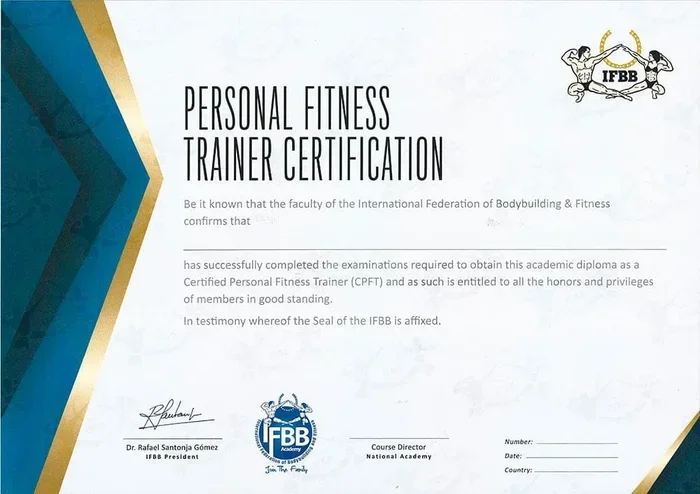
To become a personal trainer, you need a combination of formal education, accredited certification, and hands-on experience. Most trainers start with a fitness certification program from organizations like NASM, ACE, or NSCA, while others pursue a full exercise science degree for deeper knowledge. Whether you choose a quick certification path or a longer academic route, the right education for personal trainers sets the foundation for a successful and rewarding career.
Have you ever thought about turning your passion for fitness into a career? The journey to becoming a personal trainer starts with one big question: what education do you need to be a personal trainer? The good news is that there are several paths you can take. You do not need a four-year degree to get started, but having the right credentials opens doors and builds trust with clients.
The fitness industry is growing fast. More people are prioritizing health and wellness than ever before. This means personal trainers are in high demand. But standing out in a crowded market starts with proper fitness education and training. Whether you are a recent high school graduate or someone looking for a career change, understanding your options is the first step toward success.
Key Takeaways
- Certification is essential: Most employers require a nationally recognized personal training certification.
- Degree programs add depth: An exercise science or kinesiology degree gives you a competitive edge.
- Multiple certification options exist: NASM, ACE, NSCA, and ACSM are the top choices for aspiring trainers.
- Specializations boost your career: Nutrition coaching, corrective exercise, and sports performance are in-demand niches.
- Continuing education keeps you current: The fitness industry evolves fast, and ongoing learning is key.
- Soft skills matter just as much: Communication, motivation, and client relationship skills are critical for success.
- You can start with minimal education: A certification alone can get you job-ready in months.
📑 Table of Contents
- What Education Do You Need to Be a Personal Trainer
- Top Certification Options for Personal Trainers
- Degree Programs in Exercise Science and Related Fields
- Essential Knowledge Areas for Personal Trainers
- Continuing Education and Career Growth
- How to Choose the Right Education Path
- Common Mistakes to Avoid When Pursuing Education
- Frequently Asked Questions
- Final Thoughts
What Education Do You Need to Be a Personal Trainer
The short answer is that you need at least a personal training certification. However, the longer answer depends on your goals, budget, and timeline. Let us break down what the education landscape looks like for aspiring trainers.
Most certification programs require you to be at least 18 years old and hold a high school diploma or GED. From there, you can choose between a quick certification course or a more in-depth academic program. Both paths have their merits. The right choice depends on what you want to achieve in your career.
Think of it this way. Education in this field is like building a house. The certification is your foundation. A degree is the full structure. You can live in a house with just a foundation, but the more you build, the stronger and more valuable it becomes. When you explore idioms for education, you see how language shapes our understanding of learning. Similarly, the credentials you earn shape how clients and employers view your expertise.
Certification vs. Degree: What Is the Difference?
A certification proves you have passed a standardized exam covering exercise science, program design, and client safety. A degree provides a broader education that includes general studies alongside fitness-specific coursework. Here is a quick comparison:
- Certification programs: Take 3 to 6 months to complete. Cost ranges from $500 to $2,000. Focused entirely on personal training skills.
- Associate or Bachelor’s degrees: Take 2 to 4 years. Cost ranges from $5,000 to $40,000. Include general education courses alongside fitness training.
- Specialized workshops: Take a few days to a few weeks. Cost varies widely. Focus on niche areas like sports nutrition or corrective exercise.
Many successful trainers start with a certification and later pursue a degree. This approach lets you start earning while you continue learning. It is a smart strategy that balances speed with long-term growth.
Top Certification Options for Personal Trainers
Not all certifications are created equal. Employers and clients look for accredited credentials from recognized organizations. Here are the most respected options in the industry.
NASM Certified Personal Trainer (CPT)
The National Academy of Sports Medicine offers one of the most popular certifications. The NASM CPT uses their Optimum Motion Training model, which focuses on corrective exercise and performance enhancement. The study material is comprehensive, and the exam is challenging but fair. Many trainers find that NASM gives them a strong base of practical knowledge they can use immediately with clients.
ACE Certified Personal Trainer
The American Council on Exercise is another highly respected organization. ACE certifications are known for their research-based approach. The curriculum covers anatomy, exercise programming, and nutrition basics. ACE is often recommended for beginners because of its clear and accessible study materials. The passing rate is solid, and the credential is widely recognized by gyms and fitness centers nationwide.
NSCA Certified Personal Trainer (CPT)
The National Strength and Conditioning Association is ideal for trainers who love the science behind fitness. The NSCA CPT leans heavily into strength training and performance. This certification is especially valued by trainers who work with athletes or in sports-focused settings. If you want to dive deep into the mechanics of human movement, NSCA is a fantastic choice.
ACSM Certified Personal Trainer
The American College of Sports Medicine is one of the oldest and most prestigious fitness organizations. ACSM certifications carry strong credibility in both the fitness and medical communities. The material is science-heavy and covers topics like exercise physiology and clinical exercise prescription. Trainers who hold ACSM credentials often work in clinical or corporate wellness settings.
Each of these certifications requires you to pass an exam and maintain your credential through continuing education. When you think about how education is described, similes for education often compare learning to a journey. That is exactly what pursuing certification feels like, and the journey only gets more rewarding from there.
Degree Programs in Exercise Science and Related Fields
While a certification gets you started, a degree gives you a deeper understanding of the human body and exercise. Many top trainers hold degrees in exercise science, kinesiology, or a related field.
Associate Degree in Fitness Technology
An associate degree takes about two years to complete. It covers the basics of anatomy, physiology, and exercise programming. This is a great option if you want to get into the workforce quickly while still having formal education on your resume. Many community colleges offer affordable programs that prepare you for entry-level positions.
Bachelor’s Degree in Exercise Science
A bachelor’s degree provides a comprehensive education in how the body moves and responds to exercise. You will study topics like biomechanics, nutrition, and exercise physiology. This degree opens doors to higher-paying positions, management roles, and specialized careers in clinical settings. Some trainers with bachelor’s degrees go on to work with professional athletes or in rehabilitation centers.
Master’s Degree in Sports Performance
For those who want to reach the top of the field, a master’s degree is the way to go. This level of education is ideal for trainers who want to specialize in sports performance, work with elite clients, or teach at the college level. The investment of time and money is significant, but the return can be substantial in terms of career opportunities and earning potential.
If you want to describe the value of a degree in vivid terms, check out metaphors for education. Metaphors like “education is the key to the future” capture the transformative power of learning. The same is true for a fitness degree, which unlocks opportunities you might not even know exist.
Essential Knowledge Areas for Personal Trainers
Education for personal trainers goes beyond textbooks and exams. You need to develop a broad set of skills and knowledge areas to serve clients effectively.
Anatomy and Physiology
Understanding how the human body works is at the core of personal training. You need to know how muscles, bones, joints, and organs function during exercise. This knowledge helps you design safe and effective workout programs. It also allows you to explain exercises to clients in a way that builds their confidence and trust.
Exercise Programming and Design
Every client is different. A good trainer knows how to create customized programs based on individual goals, fitness levels, and limitations. This involves selecting the right exercises, sets, reps, and rest periods. Learning program design is one of the most valuable skills you will develop during your education.
Nutrition Fundamentals
While personal trainers are not dietitians, they should understand basic nutrition principles. Clients often look to their trainers for guidance on eating habits. Knowing the basics of macronutrients, hydration, and meal timing helps you support your clients’ overall fitness goals. Just remember to stay within your scope of practice and refer clients to a registered dietitian for specialized advice.
Client Assessment and Goal Setting
Before starting any program, you need to assess your client’s current fitness level. This includes fitness tests, posture analysis, and movement screenings. Setting clear, measurable goals is also essential. These skills are typically covered in certification courses but improve with hands-on experience over time.
Business and Communication Skills
Many trainers eventually work independently or run their own businesses. Understanding marketing, client retention, and scheduling is crucial. Communication skills are equally important. You need to motivate clients, explain complex concepts simply, and build lasting relationships. These soft skills often make the difference between a good trainer and a great one.
Continuing Education and Career Growth
The fitness industry never stops evolving. New research, training methods, and trends emerge all the time. That is why continuing education is so important for personal trainers.
Most certifications require you to earn continuing education credits (CECs) to maintain your credential. These credits come from workshops, webinars, advanced certifications, and academic courses. Staying current not only keeps your certification active but also sharpens your skills and expands your service offerings.
Advanced Certifications to Consider
- Corrective Exercise Specialist: Focuses on identifying and fixing movement imbalances.
- Sports Nutrition Coach: Teaches you to create nutrition plans for athletic performance.
- Group Fitness Instructor: Opens up opportunities to lead classes and reach more clients.
- Senior Fitness Specialist: Prepares you to work with older adults and address age-related fitness needs.
- Pre- and Postnatal Fitness: A growing niche that serves expecting and new mothers.
Continuing education is the fuel that keeps your career moving forward. Think of it as similes for a lot — there is a lot to learn, and the more you invest in your education, the more you get back in return.
How to Choose the Right Education Path
With so many options available, choosing the right path can feel overwhelming. Here are some practical tips to help you decide.
Define Your Career Goals
Ask yourself what you want to achieve. Do you want to work at a local gym, or do you dream of opening your own studio? Your goals will shape the education you need. A quick certification might be enough for a gym job, while a degree could help you stand out in a competitive market.
Consider Your Budget and Timeline
Certification programs are affordable and can be completed in a few months. Degree programs require a bigger investment of both time and money. Be honest about what you can commit to right now. You can always pursue further education later as your career grows.
Research Accreditation
Make sure any certification or degree program you choose is accredited by a recognized body. Accreditation ensures that the program meets industry standards and that your credential will be respected by employers. Look for organizations that are recognized by the National Commission for Certifying Agencies (NCCA) or the American National Standards Institute (ANSI).
Gain Hands-On Experience
Education is not just about coursework. Real-world experience is equally important. Look for internship opportunities, volunteer at local gyms, or shadow experienced trainers. Hands-on practice helps you apply what you learn and builds confidence in your abilities.
The journey of education is a lot like learning metaphors for a forest — each new piece of knowledge adds another layer of depth to your understanding. The more layers you build, the richer and more complete your expertise becomes.
Common Mistakes to Avoid When Pursuing Education
Not every path to becoming a personal trainer is smooth. Here are some common mistakes to watch out for.
- Skipping accreditation: Choose only accredited programs. Non-accredited certifications may not be recognized by employers.
- Focusing only on theory: Practical experience matters just as much as textbook knowledge. Get out there and practice.
- Ignoring business skills: Knowing how to train is only half the battle. Understanding how to run a business sets you apart.
- Stopping your education after certification: The fitness world changes constantly. Keep learning to stay relevant.
- Choosing a certification based on price alone: The cheapest option is not always the best. Look at reputation, content quality, and employer recognition.
Frequently Asked Questions
Do I need a college degree to become a personal trainer?
No, you do not need a college degree to start your career. A nationally recognized certification is typically all you need to get hired at most gyms. However, if you want to advance your career, work with special populations, or open your own business, a degree in exercise science or a related field can give you a significant advantage.
How long does it take to get certified as a personal trainer?
Most certification programs can be completed in 3 to 6 months of self-study. Some people finish faster if they study full-time. The exam itself usually takes a few hours. After passing, you receive your certification and can start applying for jobs right away.
Which personal trainer certification is the best?
The “best” certification depends on your goals and interests. NASM is great for corrective exercise, ACE is beginner-friendly, NSCA is ideal for strength and conditioning, and ACSM carries strong clinical credibility. All four are accredited and widely respected in the industry.
How much does personal trainer education cost?
Certification programs typically cost between $500 and $2,000, including study materials and exam fees. Degree programs cost significantly more, ranging from $5,000 for a two-year associate degree to $40,000 or more for a four-year bachelor’s program. Many employers offer tuition reimbursement, so it is worth asking about that benefit.
Can I become a personal trainer without any prior fitness experience?
Yes, you can. Most certification programs are designed for people at all experience levels. You will learn everything you need to know through the coursework. However, having a personal fitness background can make the material easier to understand and gives you credibility when working with clients.
What is continuing education and why is it important?
Continuing education refers to ongoing learning activities that help you maintain your certification and stay updated on industry trends. It is important because the fitness field is always evolving. New research and methods emerge regularly, and staying current ensures you provide the best possible service to your clients.
Final Thoughts
So, what education do you need to be a personal trainer? The answer is simpler than you might think. Start with a certification from a reputable organization, and you are already on the right track. If you want to go deeper, pursue a degree in exercise science or a related field. And no matter where you are in your journey, never stop learning.
The fitness industry rewards those who invest in their education. Every course you take, every certification you earn, and every client you work with adds to your growth. The path may look different for everyone, but the destination is the same: a fulfilling career helping others live healthier, stronger lives.
Take that first step today. Explore your options, choose a path that fits your goals, and commit to the journey. Your future as a personal trainer starts with the education you pursue right now.


