
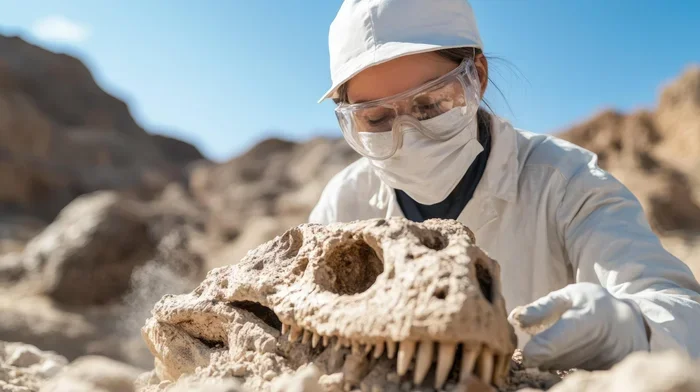
Becoming a paleontologist requires a strong foundation in science and a genuine passion for ancient life. You’ll need at least a bachelor’s degree in paleontology or a related field, and many professionals go on to earn a master’s or PhD. This guide breaks down the education you need to be a paleontologist, from high school classes to hands-on fieldwork.
When you talk about your academic journey, you might reach for similes for education to compare learning to climbing a mountain. Similarly, metaphors for education can describe the path as a fossil record—each layer building on the last. Even idioms for education like “the school of hard knocks” ring true when you face the challenges of fieldwork. But what education do you need to be a paleontologist? The answer is a mix of formal degrees, hands-on experience, and a deep love for ancient life.
Paleontology sits at the crossroads of geology, biology, and history. It’s a career that lets you dig up dinosaur bones, study ancient ecosystems, and piece together the story of life on Earth. But before you can call yourself a paleontologist, you need the right education. This article walks you through every step, from high school classes to doctoral programs.
Key Takeaways
- A bachelor’s degree is the minimum: Most paleontologists start with a geology, biology, or paleontology bachelor’s.
- A master’s or PhD opens doors: Research, teaching, and museum curator roles often require advanced degrees.
- Fieldwork is essential: Internships, digs, and museum volunteering give you real-world experience.
- Key subjects matter: Geology, biology, chemistry, and physics form the core of your studies.
- Soft skills count: Patience, attention to detail, and teamwork are just as important as coursework.
- The journey takes time: Expect 6 to 12 years of education depending on your career goals.
- Start early: High school classes in earth science and biology build a solid base.
📑 Table of Contents
- What Does a Paleontologist Actually Do?
- The Education Path to Becoming a Paleontologist
- Key Subjects and Skills You’ll Need
- Hands-On Experience: Internships and Fieldwork
- Certifications and Extra Training
- How Long Does It Take to Become a Paleontologist?
- Common Mistakes Aspiring Paleontologists Make
- Expert Insights: What Professionals Say
- Conclusion
What Does a Paleontologist Actually Do?
A paleontologist studies fossils to understand how life evolved on our planet. They might spend weeks in the desert excavating a new dinosaur species, then return to a lab to clean and analyze the bones. Some work in museums, curating collections and designing exhibits. Others teach at universities or work for oil companies, helping locate underground reservoirs. The day-to-day work varies widely, but all paleontologists share a curiosity about the deep past.
Your education directly shapes what you can do in this field. A bachelor’s degree qualifies you for entry-level lab work or field assistant roles. A master’s degree opens the door to independent research and project leadership. A PhD is typically required for university professorships and senior museum positions. Understanding these career paths helps you choose the right level of education to become a paleontologist.
The Education Path to Becoming a Paleontologist
The road to a paleontology career is a layered one, much like the sedimentary rocks you’ll study. Each stage builds on the last. Here’s a clear look at the typical path.
High School Preparation
You can start building a strong foundation before college. Focus on earth science, biology, chemistry, and physics. Math classes, especially algebra and statistics, are equally important. Join a science club or participate in a fossil-collecting trip if your area offers one. These early steps show you what a paleontology career actually looks like and help you decide if it’s the right fit.
Bachelor’s Degree in Paleontology or a Related Field
Most aspiring paleontologists earn a bachelor’s degree in paleontology, geology, biology, or earth science. A dedicated paleontology program is ideal, but few universities offer it as a standalone major. Instead, you might major in geology with a concentration in paleontology, or double-major in biology and geology. Coursework typically includes sedimentology, vertebrate paleontology, invertebrate paleontology, stratigraphy, and paleobotany.
A bachelor’s degree usually takes four years. During this time, you’ll also complete general education requirements in English, social sciences, and humanities. Many programs require a field camp or summer excavation, which gives you your first taste of real fieldwork. This hands-on experience is invaluable and often leads to your first professional connections.
Master’s Degree: Specialization and Fieldwork
A master’s degree typically takes two to three years after your bachelor’s. It allows you to specialize in a specific area, such as marine paleontology, micropaleontology, or paleobotany. You’ll conduct original research, write a thesis, and often publish your findings in a scientific journal. Many master’s programs include extended fieldwork, where you might travel to remote locations to collect fossils.
With a master’s degree, you can qualify for roles like research technician, museum curator assistant, or environmental consultant. Some government agencies and consulting firms prefer candidates with this level of education. If you want to lead your own research projects, a master’s is often the minimum requirement.
Doctorate (PhD) for Research and Teaching
A PhD is essential if you want to become a university professor or lead independent research at a museum. Doctoral programs take four to six years and involve extensive original research. You’ll write a dissertation that contributes new knowledge to the field. Many PhD students also teach undergraduate courses and mentor younger researchers.
The PhD journey is long and demanding, but it opens the highest levels of the profession. You’ll gain expertise in a narrow subfield, build a publication record, and establish yourself as an authority. For those passionate about ancient life studies and academic research, a PhD is the gold standard.
| Degree Level | Duration | Focus | Typical Career Options |
|---|---|---|---|
| Bachelor’s | 4 years | Broad foundation in geology and biology | Field assistant, lab technician, museum intern |
| Master’s | 2–3 years | Specialized research and fieldwork | Research technician, curator assistant, consultant |
| PhD | 4–6 years | Original research and dissertation | University professor, lead researcher, senior curator |
Key Subjects and Skills You’ll Need
Paleontology draws from many scientific disciplines. You’ll need a solid grasp of several core subjects to succeed.
Geology and Earth Science
Geology is the backbone of paleontology. You must understand how rocks form, how layers of sediment build up over time, and how fossils are preserved within them. Courses in sedimentology, stratigraphy, and structural geology teach you to read the Earth’s history like a book. Without geology, you can’t locate or properly interpret fossils.
Biology and Anatomy
Since paleontologists study ancient organisms, a strong biology background is crucial. You’ll learn about evolution, comparative anatomy, and ecology. Understanding how living organisms function helps you make informed guesses about how extinct creatures lived and moved. Many paleontologists also study modern animals to draw parallels with fossil species.
Chemistry and Physics Basics
Chemistry helps you understand fossilization processes and the chemical composition of rocks and bones. Physics comes into play when studying biomechanics or using imaging technologies like CT scans. While you don’t need to be an expert in these subjects, a working knowledge makes you a more versatile scientist.
Hands-On Experience: Internships and Fieldwork
Classroom learning is vital, but paleontology is a hands-on science. You can’t become a skilled paleontologist by only reading textbooks. Internships at natural history museums, participation in fossil digs, and volunteer work at local universities all build your practical skills.
Many bachelor’s programs include a field camp during the summer. These short programs take you to real dig sites where you learn excavation techniques, fossil preparation, and mapping. Even if you’re not enrolled in a formal program, you can often volunteer for digs through organizations like the Paleontological Society or local museums. This kind of hands-on experience is what sets successful candidates apart.
Certifications and Extra Training
While not always required, additional certifications can boost your resume. Geographic Information Systems (GIS) training is highly valued in paleontology for mapping fossil sites. Scientific diving certification opens up underwater fossil-hunting opportunities, such as studying marine fossils in submerged caves. Museum curation certificates teach you how to preserve and display specimens properly.
Some paleontologists also pursue training in 3D modeling and scanning. These digital skills help create detailed replicas of fossils and aid in virtual reconstructions. As technology becomes more central to the field, these extra training options give you a competitive edge.
How Long Does It Take to Become a Paleontologist?
The timeline depends on your career goals. If you want to work as a field assistant or lab technician, a bachelor’s degree is enough, and you can enter the workforce in about four years. If you aim for independent research or teaching, plan for a master’s (6–7 years total) or a PhD (10–12 years total). The path is long, but each step brings you closer to your goal of uncovering the secrets of ancient life.
Common Mistakes Aspiring Paleontologists Make
Many students make avoidable errors when planning their paleontology education. Here are a few to watch out for.
- Skipping geology classes: Paleontology is rooted in earth science. Ignoring geology limits your ability to find and interpret fossils.
- Focusing only on dinosaurs: While dinosaurs are exciting, the field includes plants, microorganisms, and marine life. A narrow focus can limit your opportunities.
- Neglecting field experience: Employers value candidates who can work outdoors, handle tools, and navigate remote terrain.
- Underestimating the need for advanced degrees: If you want a research or teaching role, a master’s or PhD is often necessary. Don’t stop at a bachelor’s if you have bigger ambitions.
Expert Insights: What Professionals Say
seasoned paleontologists often emphasize the importance of curiosity and persistence. Dr. Elena Rodriguez, a vertebrate paleontologist with over 20 years of experience, notes, “The education you need to be a paleontologist goes beyond degrees. You need a genuine love for discovery and the patience to work with fragments of the past.” She also highlights that interdisciplinary training—combining geology, biology, and even computer science—is increasingly valuable in modern paleontology.
Another expert, Dr. Marcus Chen, stresses the role of mentorship. “Find a professor or museum professional who can guide you,” he says. “Internships and volunteer work are often the stepping stones that lead to your first real research opportunity.” These insights remind us that while formal education is critical, the human connections and experiences you gain along the way are equally powerful.
Conclusion
The education you need to be a paleontologist is a journey that spans many years and multiple disciplines. It starts with a solid high school foundation and can extend through a PhD if you choose a research or teaching path. Along the way, you’ll gain hands-on fieldwork experience, master key scientific subjects, and develop the patience and curiosity that define great scientists. Whether you dream of unearthing a new dinosaur species or preserving fossils in a museum, the right education gives you the tools to make that dream a reality. Start early, stay curious, and embrace every opportunity to dig deeper into the science of ancient life.
Frequently Asked Questions
What degree do you need to be a paleontologist?
A bachelor’s degree in paleontology, geology, or biology is the minimum requirement for entry-level roles. For research and teaching positions, a master’s or PhD is typically required. The specific degree you need depends on the career path you want to follow.
How many years of school does it take to become a paleontologist?
It takes about 4 years for a bachelor’s degree, 2–3 additional years for a master’s, and 4–6 more years for a PhD. The total timeline ranges from 6 to 12 years, depending on your goals and the level of specialization you pursue.
Can you become a paleontologist with a biology degree?
Yes, a biology degree can be a strong foundation. Many paleontologists major in biology and supplement their studies with geology courses. You’ll also benefit from taking classes in evolution, anatomy, and ecology to build a well-rounded knowledge base.
Is paleontology a good career?
Paleontology can be a rewarding career for those passionate about ancient life and scientific discovery. Job opportunities exist in museums, universities, government agencies, and oil companies. The field is competitive, but hands-on experience and advanced degrees improve your prospects significantly.
What skills do paleontologists need besides education?
Beyond formal education, paleontologists need patience, attention to detail, and strong analytical skills. Fieldwork requires physical stamina and teamwork. Communication skills are also important, as many paleontologists write research papers and present their findings to the public.
Do you need to travel for paleontology work?
Travel is common in paleontology, especially during fieldwork. You might work in remote deserts, mountains, or even underwater sites. Some positions are based in labs or museums with less travel, but being open to relocation and field expeditions is a big part of the profession.


