
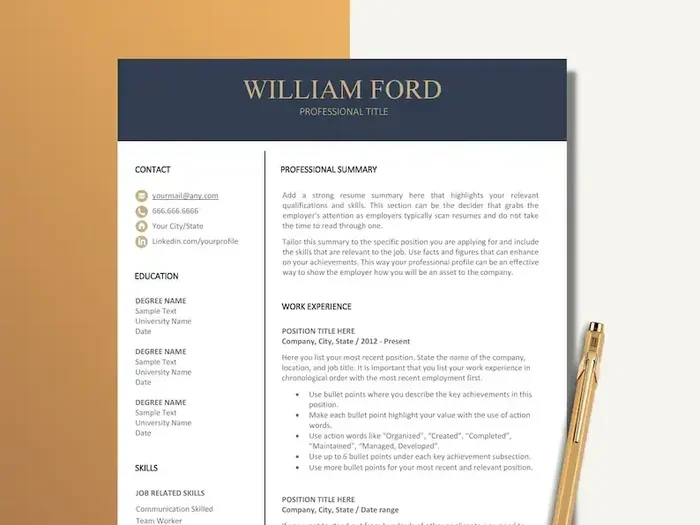
Should your education be at the top of your resume? The answer depends on your experience level, career stage, and the job you are applying for. Placing your education section strategically can make or break a first impression with hiring managers. This guide covers everything you need to know about resume education placement, from when to lead with your degree to when to move it lower.
Let us talk about something that confuses almost every job seeker out there. You have spent hours perfecting your resume format. You have polished your work experience section. But then comes the big question: should your education be at the top of your resume?
This might seem like a small detail. But trust me, it matters more than you think. The placement of your education section can shape how a hiring manager views your application from the very first glance. And in a competitive job market, that first impression can make all the difference.
Think of your resume like metaphors for your brain — every element tells a story about who you are professionally. The order in which you present your information guides the reader through that story. So let us break down exactly when, why, and how to place your education section for the best results.
Key Takeaways
- Early-career job seekers should place education at the top of the resume to highlight academic credentials.
- Experienced professionals should prioritize work experience and move education below.
- GPA, honors, and relevant coursework can strengthen your resume when included correctly.
- Formatting matters — use consistent fonts, clear dates, and clean layout for your education section.
- Career changers may benefit from leading with education to bridge gaps in direct experience.
- Avoid common mistakes like listing every degree or including irrelevant details.
- Always tailor your resume to the specific job description and industry norms.
📑 Table of Contents
- Why Education Placement Matters on Your Resume
- When to Put Education at the Top of Your Resume
- When to Move Education Lower on Your Resume
- How to Format Your Education Section Properly
- Common Mistakes People Make with Education on Resumes
- Expert Insights on Resume Education Strategy
- Final Thoughts on Where Education Belongs
Why Education Placement Matters on Your Resume
The way you organize your resume layout sends a signal. It tells the reader what you think matters most. And believe it or not, hiring managers often scan resumes in a specific pattern. They look at the top section first, then move down.
When you place your education at the top, you are saying, “My academic background is my strongest asset.” This works well for some people but not everyone. The key is understanding your unique situation and making a deliberate choice.
Just as similes for education help us describe learning in vivid ways, the right resume placement helps you describe your qualifications effectively. Let us explore the different scenarios where education placement changes everything.
The Science Behind Resume Scanning
Studies show that recruiters spend an average of six to seven seconds on an initial resume scan. In that tiny window, the top section gets the most attention. If your education is up top, it gets noticed. If your work experience is up top, that gets noticed instead.
This is why resume structure is not just about aesthetics. It is a strategic decision. Every section placement should serve your job search goals.
When to Put Education at the Top of Your Resume
There are clear situations where leading with your education makes perfect sense. Let us walk through them one by one.
You Are a Recent Graduate
If you just finished college or university and have limited work experience, your education deserves top billing. Employers want to see what you studied, where you went, and what you achieved academically.
In this case, your degree is likely your most impressive credential. You may not have years of professional work experience yet. So your academic record becomes the strongest selling point on your professional resume.
You Are Applying for Academic or Research Positions
Jobs in education, research, and academia often prioritize credentials above all else. If you are applying for a teaching position or a research role, putting your education details first is standard practice.
These fields value degrees, certifications, and academic achievements. Leading with this information shows you meet the core requirements right away.
You Are a Career Changer
Switching industries can be tricky. Your previous work experience may not directly align with your new career goals. In these cases, education on resume can serve as a bridge.
If you earned a degree or completed training relevant to your target field, placing it at the top helps redirect the reader’s attention. It signals that you have invested in your new career path.
You Have Strong Academic Credentials but Limited Experience
Maybe you have a stellar GPA, prestigious honors, or relevant coursework that directly relates to the job. If your academic achievements outweigh your work history, education deserves the top spot.
Think of it this way — just like idioms for education capture the essence of learning in memorable phrases, your top resume section should capture the essence of your strongest qualifications.
When to Move Education Lower on Your Resume
Now let us flip the coin. There are plenty of situations where pushing education below your work experience is the smarter move.
You Have Extensive Work Experience
If you have ten or more years of professional experience, your work history is your resume’s star attraction. Hiring managers want to see what you have accomplished in your career. They care more about your track record than your college degree.
In this scenario, moving education below your experience section is the standard approach. Your degree still matters, but it is not the main event anymore.
You Are Applying for a Skills-Based Role
Some jobs care more about what you can do than where you studied. Creative roles, technical positions, and trades often value demonstrable skills over academic credentials.
If the job description emphasizes hands-on abilities, lead with your skills and experience. Let education support your application from a lower position on the page.
Your Degree Is Not Directly Relevant
Let us be honest. Not every degree lines up perfectly with every job. If your academic background has little connection to the position, there is no need to lead with it.
Instead, focus on the experience and skills that prove you can do the job. Your education can still appear on the resume — just lower down where it belongs.
You Have Impressive Professional Certifications
Sometimes certifications carry more weight than a degree. If you have earned industry-recognized credentials, those deserve more prominent placement than your education section.
Think of your resume sections as a hierarchy of relevance. The most relevant information should always rise to the top.
How to Format Your Education Section Properly
Whether you place education at the top or lower on your resume, how you format it matters just as much as where it sits. A poorly formatted education section can undermine even the best resume writing strategy.
What to Include
Here is a simple checklist for your education section:
- Degree name and major
- Institution name
- Graduation date (or expected date)
- GPA (if 3.5 or higher)
- Relevant honors or awards
- Key coursework (only if directly relevant)
What to Skip
Less is often more when it comes to education details. Avoid listing your high school diploma if you have a college degree. Skip generic coursework that does not relate to the job. And never include your graduation year if you are worried about age discrimination.
Remember, every detail on your resume should serve a purpose. If a piece of education information does not add value, leave it off.
Formatting Tips for a Clean Look
Keep your education section consistent with the rest of your resume layout. Use the same font, font size, and spacing throughout. Align the information neatly. And leave enough white space so the section breathes.
A cluttered resume hurts readability. A clean, well-organized education section signals professionalism and attention to detail.
Common Mistakes People Make with Education on Resumes
Even experienced job seekers make avoidable errors when handling the education section. Let us highlight the most common ones so you can steer clear.
Lying About Your Degree
This one should go without saying, but people still do it. Never fabricate a degree or misrepresent your academic achievements. Background checks catch this more often than you think, and the consequences are severe.
Including Every Degree You Have Ever Earned
Your associate degree from 1998 probably does not need to take up valuable resume space. Focus on the degrees and credentials that are most relevant to the position you are targeting.
Using a Generic Education Section for Every Application
One size does not fit all. Tailor your education placement and content for each job application. What works for an academic role will not work the same way for a sales position.
Forgetting to Remove Outdated Information
Your resume should reflect your current qualifications. Remove old coursework, outdated honors, and irrelevant academic details that do not serve your present career goals.
Just like idioms about the past remind us that history shapes who we are, your education shaped your foundation. But your resume should focus on where you are going, not just where you have been.
Expert Insights on Resume Education Strategy
We spoke with several resume experts and hiring professionals to get their take on education placement. Here is what they had to say.
“The top of your resume is prime real estate,” says one career coach. “Use it for whatever makes the strongest case for why you are the right person for this job.”
Another recruiter shared this insight: “I do not care where education sits as long as it is easy to find. But if a candidate has five years of experience and leads with their high school diploma, that is a red flag.”
The consensus is clear: context is everything. There is no universal rule for education placement. The best approach depends on your background, the job, and the industry.
Final Thoughts on Where Education Belongs
So, should your education be at the top of your resume? The honest answer is: it depends. For recent graduates, career changers, and academic job seekers, the answer is usually yes. For seasoned professionals and those applying to skills-driven roles, the answer is usually no.
The best resume advice I can give you is this: always think about the reader. Put yourself in the hiring manager’s shoes. What do they want to see first? Lead with that.
Your resume is a marketing tool. Every section, every line, and every placement decision should work toward one goal — getting you the interview. So take the time to evaluate your education placement. Test different layouts. And never underestimate the power of a well-organized resume structure.
Remember, there is no one-size-fits-all answer. But now you have the knowledge and confidence to make the right choice for your unique situation. Go ahead and give your resume the polish it deserves.
Frequently Asked Questions
Should I always put my education at the top if I am a recent graduate?
In most cases, yes. When you are fresh out of school and have limited professional experience, your degree is your strongest credential. Leading with it helps hiring managers see your academic qualifications right away. However, if you have relevant internships or projects that shine, those might deserve the top spot instead.
Can I include my GPA on my resume if it is below 3.5?
Generally, it is best to leave off a GPA below 3.5. Most employers consider a 3.5 GPA to be the threshold for including it. If your GPA is lower, focus on other strengths like relevant coursework, honors, or projects that demonstrate your abilities.
How do I handle education if I have a degree but it is not related to the job?
You still list your degree, but you do not need to lead with it. Place your education section lower on the resume and focus your top sections on relevant experience and skills. Your degree shows you have completed a rigorous program, which is still valuable even if the field is different.
Should I include online courses or certifications in my education section?
Yes, but keep them separate if possible. Create a dedicated “Certifications” or “Professional Development” section for online courses. This keeps your education section clean and ensures that your most formal credentials stand out. Think of it the same way you would use metaphors for the beach to paint a vivid picture — each section should highlight its own strongest details.
Is it okay to leave off my graduation year to avoid age bias?
Yes, many career experts recommend this approach. Omitting the graduation year can help prevent unconscious bias based on age. Focus instead on the degree, institution, and any relevant achievements. This keeps the emphasis on your qualifications rather than your age.
What if I have multiple degrees — which one goes first?
List your most advanced degree first. If both degrees are equally relevant to the job, put the one from the more prestigious institution first. Always prioritize the degree that has the strongest connection to the position you are applying for.
=== CONCLUSION ===
The question of should your education be at the top of your resume does not have a single right answer. It is a strategic decision that depends on your experience, your industry, and the specific job you want. The good news is that now you have the tools to make that decision with confidence.
Whether you lead with your degree or place it lower, what matters most is that your resume tells a clear, compelling story about your qualifications. Take the time to review your resume with fresh eyes. Ask yourself what a hiring manager would notice first. Then adjust accordingly.
Your education is a valuable part of your professional identity. Present it in a way that works hardest for you, and you will be well on your way to landing the interview you deserve.


