
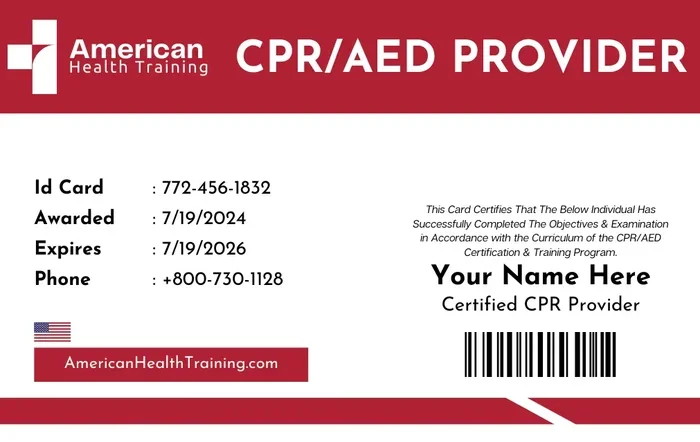
Does CPR certification count as continuing education? The short answer is yes, in many cases. CPR certification can fulfill continuing education requirements for healthcare workers, teachers, and other professionals. However, acceptance depends on your industry, state regulations, and accrediting body. This guide breaks down exactly how CPR training fits into your CE goals.
Does CPR certification count as continuing education? This is a question many professionals ask, especially those in healthcare, education, and workplace safety roles. The answer is not always a simple yes or no. It depends on your profession, your state, and the organization that sets your continuing education requirements.
In this article, we will walk through everything you need to know. We will cover how CPR training fits into professional development, who accepts it for CE credits, and how to make sure your certification counts. Whether you are a nurse, a teacher, or a fitness instructor, this guide has you covered.
## What Is CPR Certification?
CPR certification is a formal credential that proves you know how to perform cardiopulmonary resuscitation. It shows you can respond to cardiac arrest emergencies with confidence and skill. Most programs also cover first aid basics and how to use an automated external defibrillator (AED).
### Types of CPR Certification
Not all CPR courses are the same. Here are the most common types:
- Heartsaver CPR: Designed for lay responders and workplace responders.
- BLS (Basic Life Support): Required for healthcare providers like nurses and doctors.
- ACLS (Advanced Cardiovascular Life Support): For advanced medical professionals.
- PALS (Pediatric Advanced Life Support): Focused on emergency care for children.
Each type serves a different audience. The right choice depends on your job and your certification requirements.
### How Long Does CPR Certification Last?
Most CPR certification programs are valid for two years. After that, you must complete a CPR renewal course to stay current. Some organizations allow grace periods, but it is best not to let your certification lapse. Staying current ensures your skills remain sharp and your continuing education credits stay valid.
## What Counts As Continuing Education?
Before we dive deeper, let us clarify what continuing education actually means. Continuing education refers to any learning activity that helps professionals stay updated in their field. It can include courses, workshops, seminars, and certifications.
### Common CE Activities
Many activities qualify as continuing education. Here are some common examples:
- Attending professional conferences
- Completing online training modules
- Earning new certifications
- Participating in workshops or webinars
- Completing accredited CPR training
The key is whether the activity is recognized by your accrediting body. Not every training program automatically qualifies. You need to verify that your CPR certification meets the standards set by your profession’s governing organization.
### CEUs vs. Contact Hours
You may hear terms like CEUs (Continuing Education Units) and contact hours. These are not the same thing. One CEU typically equals ten contact hours. Some programs award contact hours directly, while others use CEUs. Always check which unit your profession uses when tracking your continuing education progress.
## Does CPR Certification Count As Continuing Education?
This is the big question. Does CPR certification count as continuing education? In most cases, yes. But the details matter a lot.
### Healthcare Professionals
For nurses, doctors, and other healthcare providers, CPR certification is often mandatory. The American Heart Association and the Red Cross are widely accepted providers. Many state licensing boards accept these certifications for continuing education credits.
However, the number of credits varies. A standard BLS course might award 4 to 6 contact hours. An advanced course like ACLS may offer more. Always ask your training provider how many CE credits your course provides before you enroll.
### Teachers and Education Professionals
Teachers also need ongoing professional development to maintain their licenses. CPR certification can count toward these requirements in many states. For educators who want to build their communication skills, resources like idioms for education can complement their teaching toolkit alongside their CPR training.
Some school districts even require CPR and first aid certification as a condition of employment. In these cases, the certification clearly counts as part of your continuing education obligations.
### Fitness and Recreation Professionals
Fitness trainers, lifeguards, and coaches often need CPR certification. Many national organizations in these fields accept CPR training as valid continuing education. For example, the American Council on Exercise (ACE) and the National Academy of Sports Medicine (NASM) recognize CPR credits from accredited providers.
### Workplace Safety and Corporate Training
Many employers require CPR training as part of their workplace safety training programs. While this may not always count as formal CE, some companies offer internal continuing education credit for completed training. Check with your HR department to find out your company’s policy.
## How To Get CPR Certification That Counts for CE
Not all CPR courses are created equal. If you need your certification to count for continuing education, follow these steps to make sure it does.
### Choose an Accredited Provider
This is the most important step. Only training from recognized organizations will count. Look for providers like:
- American Heart Association (AHA)
- American Red Cross
- National Safety Council
- Approved local training centers
Avoid random online courses that do not list their accreditation. A certification from an unrecognized provider may not be accepted for CE credits.
### Verify Before You Enroll
Before signing up, contact your licensing board or accrediting organization. Ask them directly: “Does this CPR course count for continuing education?” Save the written confirmation if possible. This protects you from wasting time and money on a course that does not qualify.
### Keep Your Documentation
After completing your course, keep all certificates and completion cards. You will need these to report your continuing education credits. Many renewal cycles require you to submit proof of completed training. Without documentation, your CPR certification may not be accepted.
### Consider Online vs. In-Person Training
Both online and in-person CPR courses can count for CE credits. However, some organizations prefer hands-on training with a certified instructor. Online courses offer flexibility, but they may not meet the practical skills requirement for certain professions.
Quick Tip: If you are unsure, choose a blended course that combines online learning with an in-person skills session. This approach satisfies most continuing education requirements and gives you the best of both worlds.
## How Many CE Credits Does CPR Certification Provide?
The number of credits you earn depends on the course type and your certifying body. Here is a general breakdown:
- Heartsaver CPR/AED: Typically 0.5 to 1 CEU
- BLS for Healthcare Providers: Typically 4 to 6 contact hours
- ACLS Certification: Typically 6 to 8 contact hours
- PALS Certification: Typically 6 to 8 contact hours
- CPR Renewal Courses: Typically 2 to 4 contact hours
These numbers can vary by provider and state. Always confirm the exact credit amount with your training provider before starting the course.
## Common Mistakes To Avoid
Many professionals make mistakes when trying to use CPR certification for continuing education credits. Here are the most common ones:
Assuming All CPR Courses Are Equal
Not every CPR course qualifies for CE credits. Courses from unaccredited providers will not count. Always verify the provider’s status before enrolling.
Letting Your Certification Expire
An expired CPR certification does not count as continuing education. Plan your CPR renewal well before the expiration date.
Skipping Documentation
If you do not keep your completion certificate, you have no proof of your CE credits. Store digital and physical copies in a safe place.
Not Checking State-Specific Rules
CE requirements vary by state and profession. What counts in one state may not count in another. Always check your local regulations.
## Expert Insights
Experts in professional development agree that CPR certification is one of the most valuable forms of continuing education. It provides both practical life-saving skills and official CE credits. Many professionals find that completing their CPR training early in the renewal cycle gives them more flexibility for other required courses.
According to the American Red Cross, over 22 million people receive CPR training each year in the United States. The vast majority do so for workplace or licensing requirements. This makes CPR one of the most widely accepted certification programs for continuing education purposes.
## Final Thoughts
So, does CPR certification count as continuing education? Yes, it does in most cases. Whether you are a healthcare worker, a teacher, or a fitness professional, your CPR certification can help you meet your CE requirements. The key is to choose an accredited provider, keep your documentation, and verify acceptance with your licensing board.
Taking a CPR renewal course every two years keeps your skills sharp and your credentials current. It also gives you peace of mind knowing you can help in an emergency. Make continuing education a priority, and let CPR training work double duty for your career and your community.
For those in education who also want to strengthen their classroom communication, exploring resources like similes for education or metaphors for education can add valuable depth to your teaching skills alongside your CPR credentials.
Key Takeaways
- CPR certification often counts as continuing education: Many professions accept it for CE credits, especially in healthcare and education.
- Accreditation matters: Only certifications from recognized providers count toward CE requirements.
- Renewal is required: CPR certification typically expires every two years, so plan your CPR renewal accordingly.
- Online and in-person options exist: Both formats can qualify, but check with your accrediting organization first.
- CEU conversion varies: Some programs award 0.5 to 2 CEUs per CPR course, depending on the provider.
- Documentation is key: Always keep your certification card and completion certificate for your records.
Frequently Asked Questions
Can I use online CPR certification for continuing education credits?
Yes, in most cases. Many accredited organizations offer online CPR courses that count for CE credits. However, some professions require a hands-on skills component. Check with your licensing board to confirm that an online course meets their standards.
How many CEUs does a standard CPR course provide?
A standard BLS course typically provides 4 to 6 contact hours, which equals 0.4 to 0.6 CEUs. Heartsaver courses usually offer fewer credits. Always ask your training provider for the exact number of CEUs before enrolling.
Does CPR certification expire, and does it still count for CE after expiration?
Yes, CPR certification typically expires after two years. Once expired, it no longer counts as continuing education. You must complete a CPR renewal course to maintain both your certification and your CE credits.
Is CPR certification accepted for teacher license renewal?
In many states, CPR certification counts toward teacher continuing education requirements. However, acceptance varies by state and school district. Contact your state’s department of education to verify that CPR training qualifies for your specific license renewal.
What is the difference between CEUs and contact hours?
Contact hours measure the time spent in training. One CEU equals ten contact hours. Some professions use contact hours, while others use CEUs. Always confirm which unit your profession tracks for continuing education purposes.
Can I count CPR certification toward multiple CE requirements?
Sometimes. If your profession requires both safety training and clinical education, CPR may count toward both. However, most accrediting bodies do not allow double-counting. Use your CPR credits for the category where they best fit your professional development plan.


