
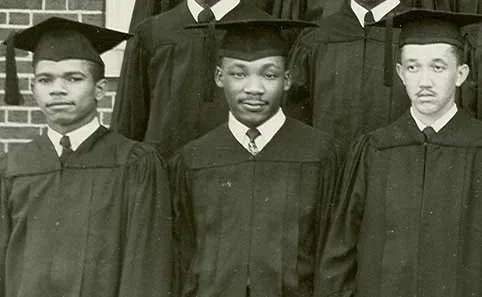
Martin Luther King Jr. earned a PhD in systematic theology from Boston University, along with degrees from Morehouse College and Crozer Theological Seminary. His rigorous education gave him the intellectual tools to lead a nation toward justice and equality. Understanding MLK’s academic background reveals how learning shaped one of history’s greatest civil rights leaders.
Martin Luther King Jr. is one of the most recognized names in American history. But many people don’t know the full story of his education. His academic journey played a huge role in shaping the leader the world came to admire. So, what education did MLK have, and how did it change everything?
The answer might surprise you. MLK didn’t just attend college. He pursued advanced degrees, studied theology deeply, and engaged with some of the brightest minds of his time. His education gave him more than a diploma. It gave him the language, the vision, and the strategy to lead a movement.
Let’s take a closer look at the schools he attended, the degrees he earned, and the ideas that shaped his thinking.
Key Takeaways
- MLK earned three advanced degrees: a BA from Morehouse, a BD from Crozer, and a PhD from Boston University.
- His education was deeply influenced by nonviolent philosophy: thinkers like Gandhi and Thoreau shaped his approach.
- Segregated schooling did not limit his potential: MLK excelled despite attending underfunded institutions.
- His academic training sharpened his rhetoric: his speeches reflected years of study in theology and philosophy.
- MLK’s educational journey shows the power of higher learning: it can fuel social change and inspire millions.
- His dissertation focused on the concept of God in theologies of Paul Tillich and Henry Nelson Wieman: showing his deep intellectual curiosity.
- His education connected him to mentors and networks: that amplified his impact on the civil rights movement.
📑 Table of Contents
- Early Education: Growing Up in Segregated Schools
- College Years: Morehouse College and Beyond
- Crozer Theological Seminary: Deepening His Faith and Knowledge
- Boston University: Earning His PhD
- How MLK’s Education Shaped His Leadership
- Comparing MLK’s Education to Other Civil Rights Leaders
- Lessons We Can Learn from MLK’s Educational Journey
- Key Takeaways
- Conclusion
Early Education: Growing Up in Segregated Schools
Martin Luther King Jr. was born in Atlanta, Georgia, in 1929. He grew up in a time when racial segregation was the law of the land. Black children and white children attended separate schools, and resources for Black communities were often scarce.
Despite these challenges, young MLK was a bright student. He skipped both the ninth and twelfth grades. By the time he was fifteen, he was ready for college. His early education in segregated schools did not hold him back. In fact, it fueled his desire to learn and fight for equality.
The Role of His Parents and Teachers
MLK’s parents placed a strong value on education. His father, Martin Luther King Sr., was a pastor and a firm believer in learning. His mother, Alberta Williams King, was a schoolteacher. She taught young Martin to read before he even entered school.
His teachers at Booker T. Washington High School noticed his talent early. They encouraged him to aim high. This support system made a real difference. It shows how important mentorship and encouragement can be in a child’s educational journey.
College Years: Morehouse College and Beyond
At just fifteen years old, MLK enrolled at Morehouse College in Atlanta. Morehouse was a historically Black college, and it had a reputation for producing leaders. This was where MLK first began to think seriously about social justice and equality.
He initially considered studying law or medicine. But over time, his interests shifted toward theology and ministry. By the time he graduated in 1948, he had decided to follow in his father’s footsteps as a pastor.
Why Morehouse Mattered
Morehouse gave MLK more than academic knowledge. It exposed him to ideas about race, justice, and leadership. The college had a tradition of fostering critical thinking. Students were encouraged to question the world around them.
This environment helped MLK develop his intellectual foundation. He learned how to think deeply and speak clearly. These skills would become essential in his later work as a civil rights leader.
Crozer Theological Seminary: Deepening His Faith and Knowledge
After Morehouse, MLK moved to Chester, Pennsylvania, to attend Crozer Theological Seminary. This was a major step up academically. Crozer was a prestigious institution, and MLK was one of only a few Black students enrolled there.
He threw himself into his studies. He read widely in theology, philosophy, and history. He also began to explore the teachings of Mahatma Gandhi, whose philosophy of nonviolent resistance would later influence MLK’s approach to civil rights.
Academic Excellence at Crozer
MLK graduated from Crozer as the valedictorian of his class in 1951. He also earned the Bachelor of Divinity degree. His academic performance was outstanding. But more importantly, his time at Crozer helped him refine his beliefs about nonviolence and social change.
He studied under professors who challenged him to think critically. He engaged with ideas from both Western and Eastern traditions. This broad education gave him a unique perspective that would set him apart from other leaders of his time.
Boston University: Earning His PhD
In 1951, MLK enrolled at Boston University for graduate studies. This was a pivotal chapter in his educational journey. Boston University offered him the chance to study systematic theology at the highest level.
He completed his coursework and began working on his dissertation. His research focused on the concept of God in theologies of Paul Tillich and Henry Nelson Wieman. This was rigorous academic work that required deep thinking and careful analysis.
The Dissertation and Doctoral Journey
MLK earned his PhD in systematic theology in 1955. His dissertation was a significant scholarly achievement. It demonstrated his ability to engage with complex theological ideas and present them clearly.
During his time in Boston, MLK also met Coretta Scott, who would become his wife. The city exposed him to new ideas, diverse perspectives, and a vibrant intellectual community. These experiences enriched his worldview and strengthened his resolve.
How MLK’s Education Shaped His Leadership
You might wonder why MLK’s education matters so much. The answer is simple. His academic training gave him the tools to lead effectively. Let’s break down how his education influenced his work.
Rhetoric and Public Speaking
MLK was one of the greatest orators in American history. His speeches moved millions of people. But this didn’t happen by accident. Years of studying theology, philosophy, and rhetoric gave him the foundation for powerful communication.
He understood how to use language to inspire and persuade. His education taught him the importance of clear, compelling arguments. He also drew on a rich tradition of educational idioms and figurative language that made his words memorable and impactful.
Strategic Thinking and Nonviolent Resistance
MLK’s education exposed him to the ideas of Gandhi, Thoreau, and other thinkers. These influences shaped his commitment to nonviolent resistance. He didn’t just believe in protest. He studied it, planned it, and executed it with precision.
His academic background helped him understand the broader context of social justice. He could connect the struggles of Black Americans to global movements for freedom and equality. This intellectual depth set him apart from many other leaders.
Building a Network of Allies
His time at Morehouse, Crozer, and Boston University connected him to influential people. Professors, classmates, and colleagues became allies in the civil rights movement. Education opened doors that segregation would have otherwise kept closed.
These connections mattered. They amplified his message and extended his reach. MLK’s education didn’t just benefit him personally. It created a network of support that helped the movement grow.
Comparing MLK’s Education to Other Civil Rights Leaders
It’s interesting to look at how MLK’s education compared to other leaders of the civil rights movement. Different backgrounds led to different approaches, but all shared a commitment to justice.
| Leader | Highest Degree | Field of Study | Key Influence |
|---|---|---|---|
| Martin Luther King Jr. | PhD in Systematic Theology | Boston University | Gandhi, Christian theology |
| Rosa Parks | High School Diploma | Vocational Training | Personal experience with injustice |
| Malcolm X | Self-Educated | Autodidact | Prison studies, Islamic teachings |
| Thurgood Marshall | JD (Law Degree) | Howard University School of Law | Constitutional law, legal strategy |
| Medgar Evers | BA in Business | Alcorn State University | Community organizing, activism |
As you can see, MLK’s formal education was among the most extensive of his peers. But education took many forms in the movement. Each leader brought unique strengths shaped by their own learning experiences.
Lessons We Can Learn from MLK’s Educational Journey
MLK’s story offers powerful lessons for anyone today. His education teaches us that learning is not just about degrees. It’s about growth, purpose, and impact.
Never Stop Learning
MLK continued learning throughout his life. Even after earning his PhD, he kept reading and studying. He believed that education was a lifelong process. This mindset helped him stay sharp and relevant in a rapidly changing world.
Education Can Break Barriers
Growing up in segregated America, MLK faced enormous obstacles. But his education helped him break through those barriers. His degrees opened doors and gave him a platform to speak out against injustice.
Knowledge Leads to Action
MLK didn’t just study ideas. He put them into action. His education gave him the knowledge to understand systemic problems. And it gave him the tools to propose real solutions. This combination of knowledge and action is what made him so effective.
The Power of Diverse Learning
MLK studied theology, philosophy, history, and social science. This diverse education gave him a well-rounded perspective. He could speak to people from many different backgrounds. His broad knowledge base made him a more effective communicator and leader.
Mentorship Matters
Throughout his education, MLK was guided by mentors. Professors at Crozer and Boston University shaped his thinking. These relationships were invaluable. They remind us that having the right mentors can transform our educational experience.
Key Takeaways
- MLK’s education was extensive and rigorous: he earned a BA, a BD, and a PhD from respected institutions.
- His academic training shaped his leadership style: it gave him the rhetorical skill and strategic thinking needed to lead a movement.
- Segregation could not contain his potential: MLK overcame systemic barriers through determination and intellect.
- His education connected him to influential ideas and people: from Gandhi to Paul Tillich, his learning shaped his worldview.
- MLK’s legacy reminds us that education is a tool for change: it can empower individuals and transform communities.
- His use of powerful language reflected years of study: his speeches drew on deep knowledge of rhetoric, philosophy, and faith.
Conclusion
So, what education did MLK have? He had a BA from Morehouse College, a Bachelor of Divinity from Crozer Theological Seminary, and a PhD in systematic theology from Boston University. But his education was about more than degrees on a wall.
His learning shaped his vision. It sharpened his voice. And it gave him the intellectual foundation to lead one of the most important movements in American history. MLK’s education changed everything. It changed him. And through him, it changed the world.
His story reminds us that education has the power to transform lives. Whether you are a student just starting out or a lifelong learner, MLK’s journey shows that knowledge can fuel justice, inspire action, and create lasting change.
His legacy continues to inspire millions. And at the heart of that legacy is the belief that learning and growth can lead to a better world for everyone.
Frequently Asked Questions
What degrees did Martin Luther King Jr. earn?
MLK earned a Bachelor of Arts from Morehouse College, a Bachelor of Divinity from Crozer Theological Seminary, and a PhD in systematic theology from Boston University. Each degree built on the last and deepened his understanding of theology, philosophy, and social justice.
How did MLK’s education influence his approach to civil rights?
His education exposed him to the ideas of Gandhi, Thoreau, and Christian theologians. These influences shaped his commitment to nonviolent resistance. His academic training also sharpened his ability to communicate complex ideas clearly and persuasively.
Did MLK face discrimination in his education?
Yes. Despite his brilliance, MLK attended segregated schools throughout his early life. At Crozer, he was one of very few Black students. His achievements in the face of these barriers highlight his determination and the importance of equal access to education.
What was the topic of MLK’s doctoral dissertation?
His dissertation explored the concept of God in theologies of Paul Tillich and Henry Nelson Wieman. It was a rigorous piece of theological scholarship that reflected his deep intellectual curiosity and academic excellence.
Can MLK’s educational journey inspire today’s students?
Absolutely. MLK’s story shows that education can be a powerful force for change. His journey from a segregated classroom in Atlanta to earning a PhD demonstrates that determination and a love of learning can overcome even the toughest obstacles.
What role did mentors play in MLK’s education?
Mentors were crucial throughout MLK’s academic journey. Professors at Morehouse, Crozer, and Boston University guided his thinking and challenged him to grow. These relationships helped shape him into the thoughtful, strategic leader the world came to know and admire.


