
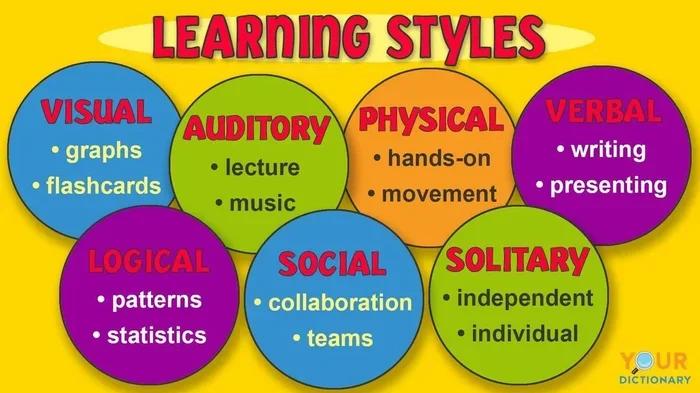
Modalities in education refer to the different ways students learn best — visual, auditory, reading/writing, and kinesthetic. Understanding these learning styles helps teachers create lessons that reach every student. When educators match their methods to the right modalities in education, engagement and retention improve dramatically. This guide breaks down each modality and shows you how to use them effectively.
What are modalities in education, and why should you care? If you have ever wondered why some students thrive with diagrams while others need to hear the lesson out loud, the answer lies in learning modalities.
Modalities in education are the different channels through which students take in, process, and retain new information. Think of them as the pathways your brain uses to learn. Some people learn best by seeing. Others learn by listening. Some need to read and write. And many need to move and do things with their hands.
Understanding these modalities is not just a nice-to-have. It is a game-changer for teachers, students, and parents alike. When educators match their teaching methods to the right modalities in education, lessons stick better. Students feel more confident. And classrooms become places where everyone can succeed.
In this article, we will break down each learning modality in simple terms. We will explore why they matter, how to identify your own style, and practical ways to blend them for the best results. Let us dive in.
Key Takeaways
- Modalities in education describe how students prefer to receive and process information.
- The four main modalities are visual, auditory, reading/writing, and kinesthetic.
- Using multiple modalities at once boosts comprehension and memory for all learners.
- Teachers who adapt their methods see higher engagement and better outcomes.
- Students benefit when they understand their own preferred learning style.
- Blending modalities creates a more inclusive and effective classroom.
- Figurative language tools like similes for education, metaphors for education, and idioms for education can enhance teaching across all modalities.
📑 Table of Contents
- What Are Modalities in Education?
- The Four Main Learning Modalities Explained
- Why Modalities in Education Matter
- How to Identify Your Preferred Learning Modality
- Blending Modalities for Better Learning Outcomes
- Common Mistakes Teachers Make With Modalities
- Quick Tips for Using Modalities Effectively
- Expert Insights on Modalities in Education
- Conclusion
What Are Modalities in Education?
The term modalities in education refers to the sensory channels or methods people use to learn. Each modality connects to a different sense or way of processing information. The most widely accepted framework comes from the VARK model, developed by Neil Fleming in the 1990s.
VARK stands for Visual, Auditory, Reading/Writing, and Kinesthetic. These four categories cover the main ways humans absorb new material. No single modality is better than the others. They are simply different paths to the same destination — understanding.
Here is a quick look at what each modality means:
- Visual: Learning through images, charts, diagrams, and colors.
- Auditory: Learning through listening, discussing, and hearing explanations.
- Reading/Writing: Learning through text, notes, lists, and written exercises.
- Kinesthetic: Learning through hands-on activities, movement, and physical experience.
Most people use a mix of these styles. But one usually feels more natural and comfortable. That is your dominant modality. Recognizing it is the first step toward smarter learning.
The Four Main Learning Modalities Explained
Each modality in education has its own strengths. Let us look at them one by one so you can see how they work in real life.
Visual Modality
Visual learners prefer to see information laid out clearly. They think in pictures. When you explain a concept to them, a diagram or a color-coded chart makes it click.
These learners often benefit from:
- Infographics and visual summaries
- Videos and demonstrations
- Mind maps and flowcharts
- Highlighted notes with different colors
- Flashcards with images
If you are a visual learner, try drawing out ideas instead of just reading about them. When studying history, for example, sketch a timeline. When learning science, draw the water cycle. Visual tools turn abstract ideas into something you can see and remember.
Teachers can support visual learners by using slides with clear images, posting anchor charts on the walls, and encouraging students to doodle while listening. A well-placed simile for education paired with a visual diagram can make a lasting impression on these learners.
Auditory Modality
Auditory learners thrive when they can listen and speak. They remember things they hear. Group discussions, lectures, and even podcasts work well for them.
Auditory learners often do well with:
- Listening to lectures and audio recordings
- Explaining concepts out loud to a partner
- Using rhymes, songs, or rhythmic repetition
- Participating in class debates
- Recording their own notes and playing them back
If you are an auditory learner, reading aloud can help you understand tough material. Study groups are also powerful because talking through ideas reinforces memory. You might also benefit from turning facts into a song or a rhyme that is easy to recall.
Teachers can help by incorporating class discussions, think-pair-share activities, and oral presentations. Using a metaphor for education during a lesson can also spark auditory learners’ attention, since they love the rhythm and imagery of well-chosen words.
Reading/Writing Modality
People with a reading/writing preference learn best through text. They love taking detailed notes, making lists, and reading textbooks. Writing things down helps them process and remember information.
Strategies that work well for this modality include:
- Rewriting notes in your own words
- Creating flashcards with written definitions
- Reading textbooks and articles thoroughly
- Writing summaries after each lesson
- Keeping a learning journal
If this sounds like you, you already have a built-in advantage in most traditional classrooms. But you can take it further. Try rewriting your notes from memory, then check what you missed. Write questions about the material and answer them in writing. The act of putting pen to paper strengthens your memory.
Teachers can support these learners by providing reading materials, assigning written reflections, and encouraging essay-style responses. You can also introduce a common idiom for education as a writing prompt to engage these learners in creative expression.
Kinesthetic Modality
Kinesthetic learners learn by doing. They need to touch, move, build, and experience things directly. Sitting still for a long lecture can feel impossible for them.
These learners shine when they get to:
- Conduct science experiments
- Build models or prototypes
- Role-play historical events
- Use manipulatives in math class
- Take field trips and explore real-world settings
If you are a kinesthetic learner, try acting out what you are studying. For example, if you are learning about the solar system, walk around a room representing the orbits of planets. In math, use blocks or counters to solve problems. Physical movement helps your brain encode the information.
Teachers can create hands-on activities, lab experiments, and interactive games. Even simple movements like standing up to answer a question or using gesture-based learning can make a huge difference for these students.
Why Modalities in Education Matter
You might wonder why this topic deserves so much attention. The answer is simple: every student learns differently, and one-size-fits-all teaching does not work.
When teachers understand modalities in education, they can design lessons that reach more students at once. Instead of relying on just one method, they blend approaches. A great lesson might include a short video, a group discussion, a reading passage, and a hands-on activity. This way, every learner has a chance to connect with the material.
Research shows that multi-modal teaching improves retention. When students engage more than one sense during a lesson, they form stronger memory traces. They also stay more focused because variety keeps the brain alert.
Beyond academic results, understanding modalities builds student confidence. When a child realizes they learn best through movement, they stop feeling “slow” in a lecture-based class. They understand their brain works differently — not worse. That shift in mindset can change a student’s entire school experience.
For teachers, knowing about modalities also reduces burnout. Instead of struggling to reach every student with a single approach, they have a toolkit of strategies. They can adapt on the fly and respond to what each student needs.
How to Identify Your Preferred Learning Modality
Figuring out your learning style is easier than you might think. Start by reflecting on past experiences. When you learned something new, what helped you the most?
Ask yourself these questions:
- Do I remember things better when I see them written or displayed?
- Do I prefer listening to someone explain a concept rather than reading it?
- Do I retain information better when I write it down myself?
- Do I need to physically do something to truly understand it?
If you answered mostly 1, you lean toward visual learning. Mostly 2 means auditory. Mostly 3 points to reading/writing. Mostly 4 suggests kinesthetic.
You can also take a free VARK questionnaire online. These short quizzes ask about your habits and preferences and give you a score for each modality. They are a great starting point for self-awareness.
Keep in mind that your preferred modality is not fixed forever. As you grow and encounter new subjects, your dominant style might shift. The goal is not to label yourself but to understand your tendencies so you can study smarter.
Blending Modalities for Better Learning Outcomes
While knowing your preferred modality is helpful, the real power comes from blending them. Research in educational psychology supports the idea that multi-modal instruction benefits all learners, not just those with a single strong preference.
Here is what blending modalities looks like in practice:
- A science lesson starts with a short video (visual), followed by a group discussion (auditory), then a reading handout (reading/writing), and ends with a lab experiment (kinesthetic).
- A history class uses a timeline poster (visual), a storytelling session (auditory), a written primary source analysis (reading/writing), and a role-play activity (kinesthetic).
- A math class uses a graph on the board (visual), a verbal walkthrough of the problem (auditory), written practice problems (reading/writing), and hands-on manipulatives (kinesthetic).
When you blend modalities, you create multiple entry points into the same content. This means more students find a way in. It also means the same concept gets reinforced through different channels, which strengthens memory.
For students studying at home, you can apply this principle yourself. If you are reviewing for a test, do not just read your notes. Watch a video, say the information out loud, write a summary, and then quiz yourself by moving around or using flashcards. The more pathways you activate, the stronger your recall will be.
Common Mistakes Teachers Make With Modalities
Even well-meaning educators can stumble when it comes to learning modalities. Here are a few pitfalls to avoid:
- Assuming all students share one style: This is the biggest mistake. Every classroom has a mix of learners. Relying on just one modality leaves many students behind.
- Labeling students too rigidly: A child might be primarily visual today but benefit from kinesthetic activities tomorrow. Flexibility matters more than fixed labels.
- Overcomplicating lesson design: Blending modalities does not mean creating five separate lesson plans. Small adjustments — like adding a visual aid or a brief discussion — go a long way.
- Ignoring student feedback: Students often know what works best for them. Asking them directly can save time and improve results.
- Confusing modalities with abilities: A modality is a preference, not a measure of intelligence. Every student can learn through any modality with the right support.
Avoiding these mistakes keeps your approach practical and student-centered. The goal is progress, not perfection.
Quick Tips for Using Modalities Effectively
Whether you are a teacher or a student, these quick tips can help you put modalities to work right away:
- Start every lesson or study session with a visual overview — a simple diagram or outline works.
- Add a verbal or discussion element to break up passive listening.
- Encourage students to write a short summary in their own words.
- Include at least one hands-on activity per lesson or study block.
- Use color-coding and highlighting to organize written material.
- Record lectures or lessons so auditory learners can replay them.
- Rotate between modalities every 10 to 15 minutes to maintain engagement.
These small changes add up. Over time, they transform a classroom or study routine from one-dimensional to dynamic.
Expert Insights on Modalities in Education
Educational researchers have studied modalities for decades. While the idea of “learning styles” has been debated, most experts agree on one thing: variety in teaching methods helps all students.
Dr. John Medina, a developmental molecular biologist, has noted that the human brain processes information through multiple channels simultaneously. This supports the case for multi-modal instruction. When we see, hear, read, and do — we learn more deeply.
Dr. Barbara Oakley, a professor of engineering, emphasizes that alternating between focused and diffuse modes of thinking — which often involve different sensory channels — is key to mastering complex material. She advocates for varied study techniques that engage different modalities throughout a learning session.
The takeaway from these experts is clear: do not limit yourself or your students to one way of learning. Embrace variety. It works.
Conclusion
Modalities in education are the different ways people take in and process new information. Whether you learn best by seeing, hearing, reading, or doing, understanding your preferred style gives you a powerful advantage. It helps you study more efficiently and retain knowledge longer.
For teachers, knowing about modalities means reaching every student in the room. It means designing lessons that are inclusive, engaging, and effective. For students, it means taking ownership of your learning and finding strategies that work for you.
The beauty of modalities in education is that they are not rigid boxes. They are flexible tools. Use them alone or combine them. The goal is the same: to make learning meaningful, enjoyable, and lasting. Start today by trying one new modality in your next lesson or study session. You will be surprised at the difference it makes.
Frequently Asked Questions
What are the four main modalities in education?
The four main modalities are visual, auditory, reading/writing, and kinesthetic. Each one represents a different way students prefer to take in and process new information. Most people use a mix of all four, but one usually feels more natural.
Why do modalities in education matter for teachers?
Understanding modalities helps teachers design lessons that reach every student. When educators blend different teaching methods, they create a more inclusive classroom. This leads to higher engagement, better retention, and improved academic outcomes for all learners.
Can a student have more than one preferred learning modality?
Absolutely. Many students use two or even three modalities comfortably. The VARK model acknowledges that people often have a combination of preferences. The key is to identify which styles feel most natural and use them as a starting point.
How can I apply modalities in education to self-study?
Start by identifying your preferred style. Then, build your study routine around it. If you are visual, use diagrams and color-coded notes. If you are auditory, record yourself and listen back. Add other modalities gradually to strengthen your overall learning.
Is the concept of learning modalities scientifically proven?
The idea of fixed learning styles has been debated in research. However, most experts agree that using multiple modalities in teaching improves learning outcomes. Even if a student does not have one dominant style, engaging different senses during study leads to better memory and understanding.
How do modalities in education connect to blended learning?
Blended learning naturally incorporates multiple modalities by combining online resources, in-person instruction, and hands-on activities. This approach ensures students see, hear, read, and do — engaging all the main learning channels at once for a richer educational experience.


