
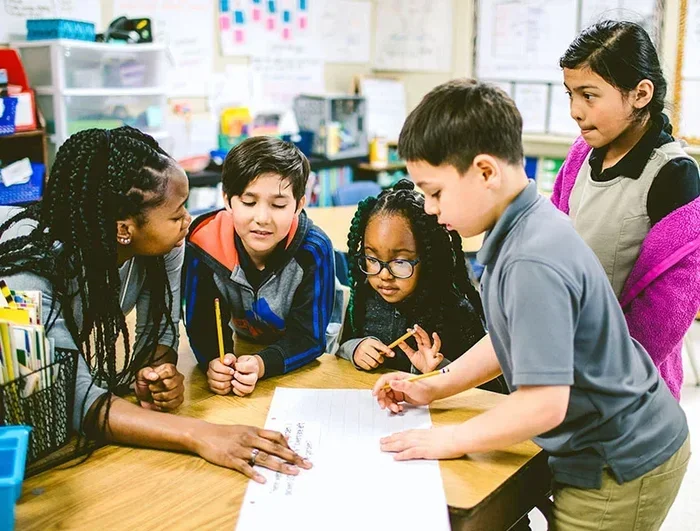
Many people ask, “Is the american education system bad?” The truth is more nuanced than a simple yes or no. American schools face real challenges like funding gaps, teacher shortages, and outdated testing methods. However, the system also has strong points, including world-class universities and diverse learning opportunities. This article breaks down the problems, the progress, and what it all means for students and families.
Is the american education system bad? That is a question millions of parents, teachers, and students ask every single day. The short answer is no, but the longer answer is much more complicated. The American education system has serious flaws that need fixing. At the same time, it offers opportunities that many countries simply cannot match. Understanding both sides is the first step toward real change.
When we dig into the data, the picture becomes clearer. Some American students thrive in excellent schools with amazing resources. Others attend underfunded schools where basic supplies are hard to find. This gap is not just about money. It is about opportunity, equity, and the future of an entire generation. Let us explore what is really going on.
Key Takeaways
- The American education system has real problems: Funding inequality, teacher burnout, and standardized testing stress are major concerns.
- It also has real strengths: Access to higher education, innovation in learning, and strong research programs set it apart.
- Global rankings show mixed results: The U.S. performs well in some areas but lags behind several countries in core subjects.
- Student inequality is a big issue: Zip codes often determine school quality, which affects learning outcomes for millions of kids.
- Reform is possible and underway: Many states and communities are pushing for meaningful education reform.
- Parents and students can take action: Advocacy, community involvement, and informed choices drive real change.
📑 Table of Contents
- Why People Say “Is the American Education System Bad”
- The Strengths of the American Education System
- How Does the U.S. Compare to Other Countries?
- Common Problems That Hurt Student Success
- What Can Be Done to Improve American Education?
- Why It Matters to You
- Common Mistakes People Make When Thinking About Education
- Expert Insights on American Education
- Key Takeaways
Why People Say “Is the American Education System Bad”
The phrase “is the american education system bad” shows up everywhere. People say it at dinner tables, in news articles, and on social media. But why do so many people feel this way? Let us look at the biggest reasons behind this growing concern.
Funding Inequality Between Schools
One of the biggest problems in American education is funding. Schools in wealthy neighborhoods get more money. Schools in poor areas get less. This creates a unfair system where your zip code decides your future. A child born in a rich suburb might have access to modern labs and small class sizes. A child born in a low-income area might share broken textbooks and crowded classrooms.
Studies show that school funding directly affects student performance. When schools lack money, they cannot hire enough teachers. They cannot update technology. They cannot offer after-school programs. The result is a cycle of low achievement that is very hard to break.
Teacher Shortages and Burnout
Teachers are the backbone of any school system. But right now, America faces a serious teacher shortage. Many educators leave the profession within five years. The reasons are clear. Low pay, long hours, and lack of support push talented people away from teaching. Those who stay often feel overwhelmed and undervalued.
When classrooms are short on teachers, class sizes grow. Students get less one-on-one time. Learning suffers. It is a simple math problem with no easy fix. Many experts say that better pay and working conditions would help attract and keep great teachers.
Standardized Testing Stress
American schools rely heavily on standardized tests. Students spend hours each year taking exams that measure their progress. Teachers feel pressure to “teach to the test” instead of encouraging real learning. This approach narrows the curriculum and kills creativity.
Many parents and educators argue that testing does not reflect a student’s true abilities. A test score cannot capture curiosity, resilience, or leadership. Yet these tests often decide school funding and teacher evaluations. The system needs a better way to measure student growth.
The Strengths of the American Education System
It is easy to focus on the problems. But the American education system has real strengths too. Understanding these helps us see the full picture.
World-Class Universities and Research
The United States is home to many of the best universities in the world. Schools like Harvard, MIT, and Stanford attract top talent from every country. American higher education drives innovation and research that benefits the entire globe. Students who earn degrees from these institutions often enjoy strong career outcomes.
Even beyond the elite schools, America offers a wide range of colleges and universities. Community colleges provide affordable paths to careers. Trade schools teach hands-on skills that are in high demand. This variety gives students many options to find their path.
Diversity and Access to Learning
American schools bring together students from many different backgrounds. This diversity enriches the learning experience. Students learn to work with people who are different from them. They gain perspectives that prepare them for a global workforce.
Public education in the U.S. is also widely accessible. Every child has the right to attend school, regardless of income or background. Laws like the Individuals with Disabilities Education Act ensure that students with special needs receive support. These protections are not available everywhere in the world.
Innovation in Teaching and Technology
Many American schools embrace new technology and creative teaching methods. Online learning platforms, interactive apps, and digital tools make education more engaging. During the pandemic, schools quickly adapted to remote learning. This flexibility showed that American education can evolve when needed.
Project-based learning, STEM programs, and arts integration are growing in popularity. These approaches help students develop critical thinking and problem-solving skills. They prepare young people for jobs that do not even exist yet.
How Does the U.S. Compare to Other Countries?
When we ask “is the american education system bad,” it helps to compare it with other nations. Different countries approach education in very different ways. Let us look at how the U.S. stacks up.
International Rankings and Test Scores
Organizations like the OECD track student performance around the world. In the Program for International Student Assessment (PISA), American students often score in the middle of the pack. Countries like Finland, Singapore, and Japan tend to outperform the U.S. in math and science.
However, rankings do not tell the whole story. The U.S. leads the world in higher education. American universities produce more Nobel laureates and research breakthroughs than any other country. The issue is not always about being the best. It is about making sure every student has a fair shot.
What Other Countries Do Differently
Several countries offer lessons that America could learn from. Finland, for example, pays teachers well and gives them strong professional support. Singapore invests heavily in teacher training and development. These countries focus on equity and quality across all schools, not just the ones in wealthy areas.
Some nations also delay standardized testing and trust teachers to assess students more holistically. These approaches produce strong results without the stress that American students face. Borrowing ideas from successful systems could help improve education outcomes here at home.
Common Problems That Hurt Student Success
Understanding the challenges is the first step toward solving them. Here are some of the most common problems that affect students in the American system today.
Lack of Early Childhood Education
Not every American child has access to quality preschool. Research shows that early learning experiences shape brain development and future success. Children who attend preschool tend to do better in reading and math. Yet many families cannot afford quality early education programs.
Expanding access to pre-K could help close achievement gaps before they even start. Countries that invest in early childhood education often see stronger long-term results. America has a lot to gain from this kind of investment.
Overcrowded Classrooms
When classrooms are too full, teachers struggle to give individual attention. Students who need extra help can fall behind quickly. Overcrowding also increases stress for both teachers and learners. Many schools in urban areas face this problem every day.
Smaller class sizes have been linked to better learning outcomes, especially in the early grades. But hiring more teachers costs money. It is a challenge that requires commitment from policymakers and communities alike.
Student Mental Health and Wellbeing
Mental health challenges among students have grown in recent years. Anxiety, depression, and stress affect the ability to learn. Many schools do not have enough counselors or support staff to help. Students suffer in silence, and their grades and attendance drop as a result.
Investing in school mental health services is not just the right thing to do. It is also smart policy. Healthy students learn better. Schools that prioritize wellbeing see improvements in both behavior and academic performance.
What Can Be Done to Improve American Education?
Nobody wants to hear that the system is broken. But there is good news. Many communities, educators, and leaders are working hard to make things better. Here are some of the most promising approaches.
Investing in Teachers
The best thing we can do for students is to support their teachers. That means better pay, smaller class sizes, and more professional development. When teachers feel valued, they stay in the profession. They do their best work. Students benefit directly from this investment.
Some states have started offering loan forgiveness and housing assistance for teachers. These programs help attract new talent to the profession. Expanding these efforts nationwide could make a big difference.
Reducing Reliance on Standardized Tests
Many experts call for a shift away from heavy testing. Instead of using test scores as the main measure of success, schools could use portfolios, projects, and teacher assessments. This approach gives a fuller picture of each student’s abilities and growth.
Several states have already started experimenting with alternative assessment methods. The results are promising. Students feel less stressed and show deeper engagement with the material.
Closing the Funding Gap
Fixing school funding inequality is one of the most important steps we can take. All students deserve access to quality education, no matter where they live. Some proposals include weighted funding formulas that direct more money to high-need schools. Others call for federal investment in underfunded districts.
When we treat every school as a priority, we create a system where every child can succeed. This is not just an education issue. It is a justice issue. And it affects the health of our entire society.
Why It Matters to You
You might be thinking, “Why does this matter to me?” Whether you are a parent, a student, a teacher, or just a taxpayer, education affects your life. Strong schools build strong communities. When students succeed, local economies grow. Crime rates drop. Civic participation increases.
The phrase is the american education system bad might come from frustration, but it can also be a starting point. Frustration leads to action. When people care enough to ask hard questions, change becomes possible. Your voice matters in this conversation. Voting for school board members, supporting teachers, and advocating for fair funding all make a difference.
Think about it this way. If someone told you that your car was running poorly, you would not just ignore it. You would look under the hood and try to fix what was broken. The same logic applies to our schools. We can acknowledge the problems and still believe in the system. We can demand better while also recognizing what works.
Sometimes people describe a broken system using similes for bad things to express how serious the problems feel. Others might use idioms for bad things to capture the frustration many feel about education. Similarly, when we talk about what is wrong, we often use similes for bad comparisons or metaphors for bad language to describe the challenges. These expressions reflect real emotions that millions of Americans share every day.
The goal is not to tear down the system. The goal is to build it up. Every small improvement helps. Every voice that speaks up adds weight to the push for change. The future of American education depends on the choices we make today.
Common Mistakes People Make When Thinking About Education
When people discuss whether the American education system is failing, they often fall into the same traps. Here are a few mistakes to avoid.
- Assuming all schools are the same: There is a huge range of quality across American schools. Some are excellent. Others are struggling. Generalizing the entire system ignores this reality.
- Ignoring the progress that has been made: Graduation rates have improved over the past two decades. More students from diverse backgrounds are earning degrees. These gains deserve recognition.
- Blaming teachers for systemic problems: Teachers work incredibly hard under difficult conditions. The real issues are funding, policy, and support structures that need to change at a higher level.
- Comparing only test scores: Education is about more than test results. It is about developing character, creativity, and critical thinking. A narrow focus misses the bigger picture.
Expert Insights on American Education
Education researchers and leaders have shared their thoughts on where things stand. Many agree that the system is not broken beyond repair. It needs investment, innovation, and a renewed focus on equity. Dr. Linda Darling-Hammond, a leading education scholar, has pointed out that high-performing countries invest more in teacher quality and less in testing. This insight resonates with many educators across the nation.
Other experts emphasize the importance of community involvement. Schools do not operate in a vacuum. They are shaped by the neighborhoods, families, and policies around them. When communities come together to support their local schools, everyone benefits. Parents who volunteer, businesses that sponsor programs, and civic groups that advocate for funding all play a role.
The consensus among most experts is clear. The American education system is not inherently bad. It is underfunded, overburdened, and uneven. But with the right investments and reforms, it can be transformed into something truly great. The tools and knowledge exist. What is needed is the will to act.
Key Takeaways
- The American education system has real problems: Funding inequality, teacher shortages, and standardized testing stress are major concerns that affect millions of students.
- It also has real strengths: Access to world-class universities, diverse learning opportunities, and innovation in teaching set the U.S. apart from many nations.
- Global rankings show mixed results: The U.S. performs well in higher education but lags behind some countries in K-12 core subjects like math and science.
- Student inequality is a big issue: Zip codes often determine school quality, which directly impacts learning outcomes and future opportunities.
- Reform is possible and underway: Many states and communities are pushing for meaningful changes in funding, testing, and teacher support.
- Parents and students can take action: Advocacy, community involvement, and informed choices drive real and lasting change in education.
Frequently Asked Questions
Is the american education system bad compared to other countries?
The answer depends on what you measure. In K-12 test scores, the U.S. often ranks in the middle of the pack. But in higher education and research, America leads the world. The real issue is inequality, not overall quality. Some American schools are excellent, while others struggle with basic resources.
What are the biggest problems with the American education system?
The biggest problems include funding inequality, teacher shortages, overcrowded classrooms, and too much reliance on standardized testing. These issues are connected. Underfunded schools cannot attract or keep good teachers. Large class sizes make teaching harder. Testing takes time away from real learning. Fixing one problem often helps address the others.
Can the American education system be fixed?
Yes, it can be improved. Many experts believe that better funding, stronger support for teachers, and less emphasis on testing would make a big difference. Countries like Finland and Singapore offer models that could inspire change. The key is having the political will and public support to make reforms happen.
How does school funding affect student outcomes?
School funding has a direct impact on what students experience. Well-funded schools can hire qualified teachers, buy updated materials, and offer enrichment programs. Underfunded schools struggle with basic needs. Research consistently shows that increased funding leads to better graduation rates and higher student achievement.
Why do teachers leave the profession so often?
Teachers leave because of low pay, long hours, and lack of support. Many feel that their work is undervalued. When schools do not provide enough resources or respect, talented educators look for other careers. Improving working conditions and compensation is essential to keeping good teachers in the classroom.
What can parents do to support better education?
Parents can get involved in their local schools by volunteering, attending school board meetings, and advocating for fair funding. Supporting teachers through appreciation and understanding also helps. Reading with children at home and staying engaged with their learning makes a real difference. Every parent has a role to play in improving education.
=== CONCLUSION ===
So, is the american education system bad? The honest answer is that it is not simple. The system has deep flaws that demand attention and action. Funding gaps, teacher burnout, and testing pressure are real problems that affect real students every day. But the American education system also has tremendous strengths. It offers access, diversity, and innovation that many countries envy.
The conversation about “is the american education system bad” should not end with frustration. It should lead to solutions. Every person who cares about education has a role to play. Whether you are a parent volunteering at your child’s school, a teacher fighting for better conditions, or a citizen voting for education-friendly policies, your efforts matter.
Change does not happen overnight. But it happens when people refuse to accept the status quo. The American education system is not beyond saving. With smart investments, honest conversations, and a commitment to equity, we can build a system that works for every student. The future starts with the choices we make today.


